
Why Deoriatal–Chandrashila Is a Complete Himalayan Experience for Beginners
For someone stepping into the Himalayas for the first time, a great trek should offer more than a summit. It should introduce you to mountain villages, forest trails, alpine scenery, local traditions, wildlife, meaningful cultural landmarks and the feeling of standing before a vast Himalayan panorama. Ideally, it should do all this without demanding the endurance or technical experience required on a difficult high-altitude expedition.
The Deoriatal–Chandrashila trek brings these experiences together in one itinerary. Beginning near Sari village, the trail leads to the beautiful Deoriatal Lake, continues through the forests and meadows of the Chopta region, reaches the ancient Tungnath Temple and climbs to the Chandrashila summit at approximately 12,500 ft.
Along the way, the scenery changes remarkably. You move from village life to a reflective mountain lake, from shaded woodland to open meadows, and finally to exposed mountain slopes with sweeping views of the Garhwal Himalayas. The trail offers enough variety to captivate experienced trekkers too, making it far more than just a beginner's introduction.
1. Begin with Himalayan Village Life
The journey begins near Sari village, a traditional mountain settlement surrounded by forested slopes, terraced fields and Himalayan views. The village provides a glimpse of everyday life in Uttarakhand's mountain communities, where agriculture, seasonal weather, local customs and close-knit social ties remain part of the rhythm of life.
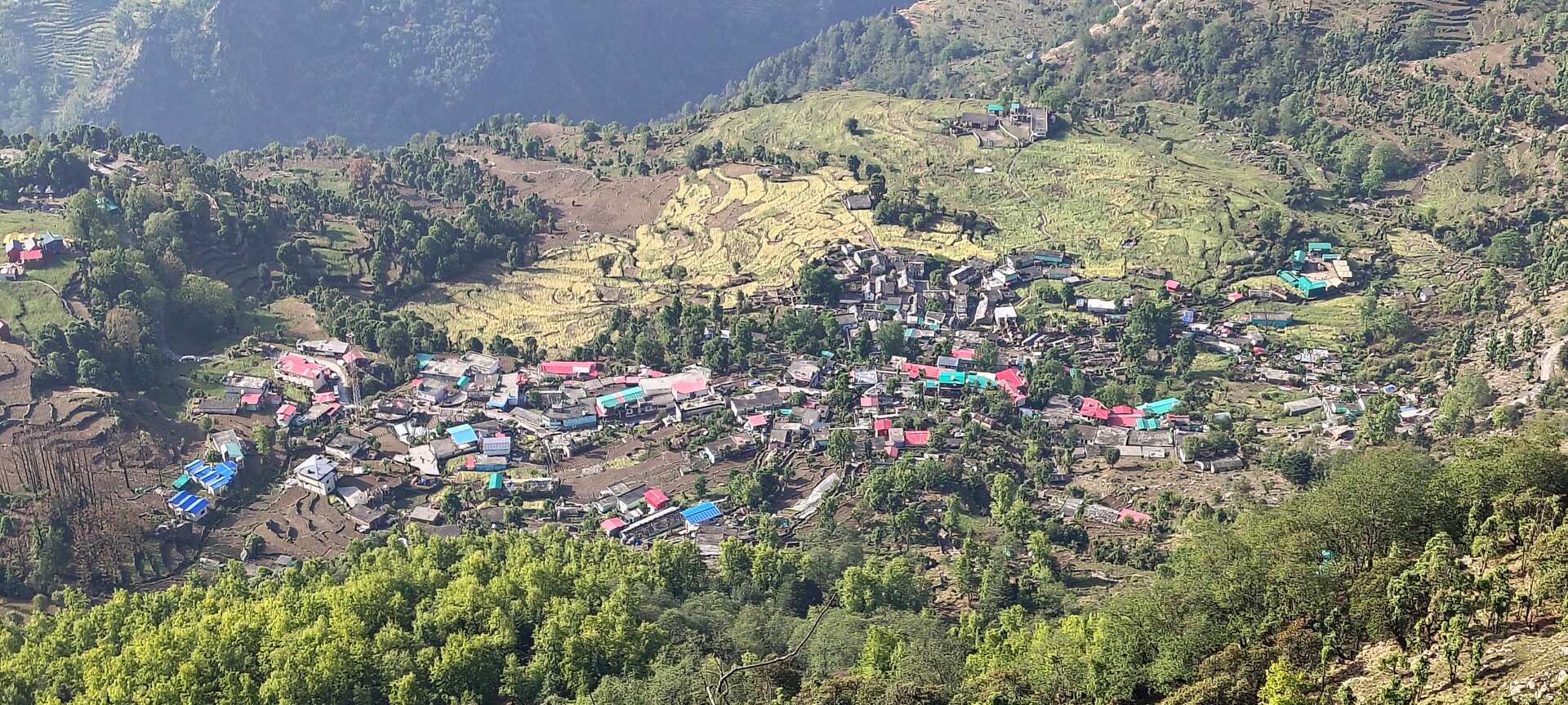

Walking through the village and its surroundings offers a gentler introduction to the region before the trail begins climbing towards Deoriatal. The experience is not simply about reaching the next campsite; it is also about seeing the human landscape that exists alongside the mountains.
As you leave the settlement behind, the trail gradually transitions into woodland. This change from cultivated slopes and village paths to quieter forest surroundings is the first of several distinct landscapes you encounter on the trek.
2. Deoriatal Lake: Reflections of the Great Himalayas
Deoriatal is one of the defining highlights of the trek. Set amid forested mountain slopes, this high-altitude lake is renowned for its reflections of the magnificent Chaukhamba massif on clear, calm days. The surrounding Himalayan skyline, with peaks of the Kedarnath region visible from suitable viewpoints and conditions, creates an extraordinary setting for photography and quiet observation.
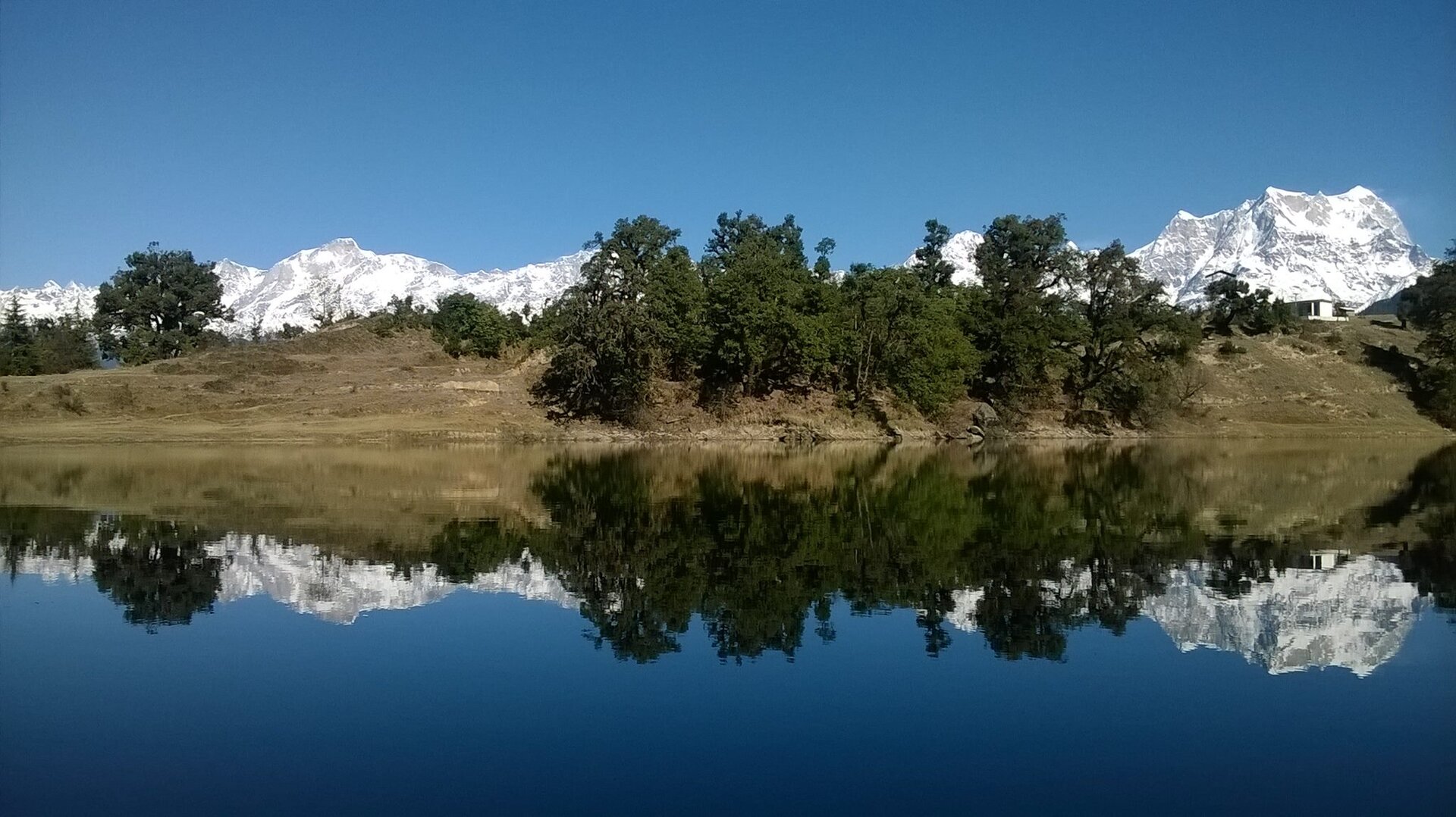
The lake is also associated with Indian mythology. Popular local and religious traditions connect Deoriatal with the Mahabharata, adding a cultural dimension to its natural beauty. The stories surrounding the lake have become part of how visitors understand and appreciate this landscape.
Spend time by the water and you may see the surrounding mountains reflected almost perfectly on its surface. Early mornings are particularly rewarding when the wind settles and the light begins to illuminate the peaks. In winter, the lake and its surroundings can take on a very different character, while spring and autumn bring their own colours and atmosphere.
Deoriatal is not merely a stop on the way to the summit. It is a destination in its own right, offering a chance to slow down, observe the changing light and experience the stillness of the mountains.
3. Enter the Forests and Meadows of Chopta
Beyond Deoriatal, the wider Chopta region introduces trekkers to the rich forest landscapes of the Garhwal Himalayas. Depending on the itinerary, the route passes through woodland, open clearings and mountain meadows, with the scenery changing as the trail gains and loses elevation.
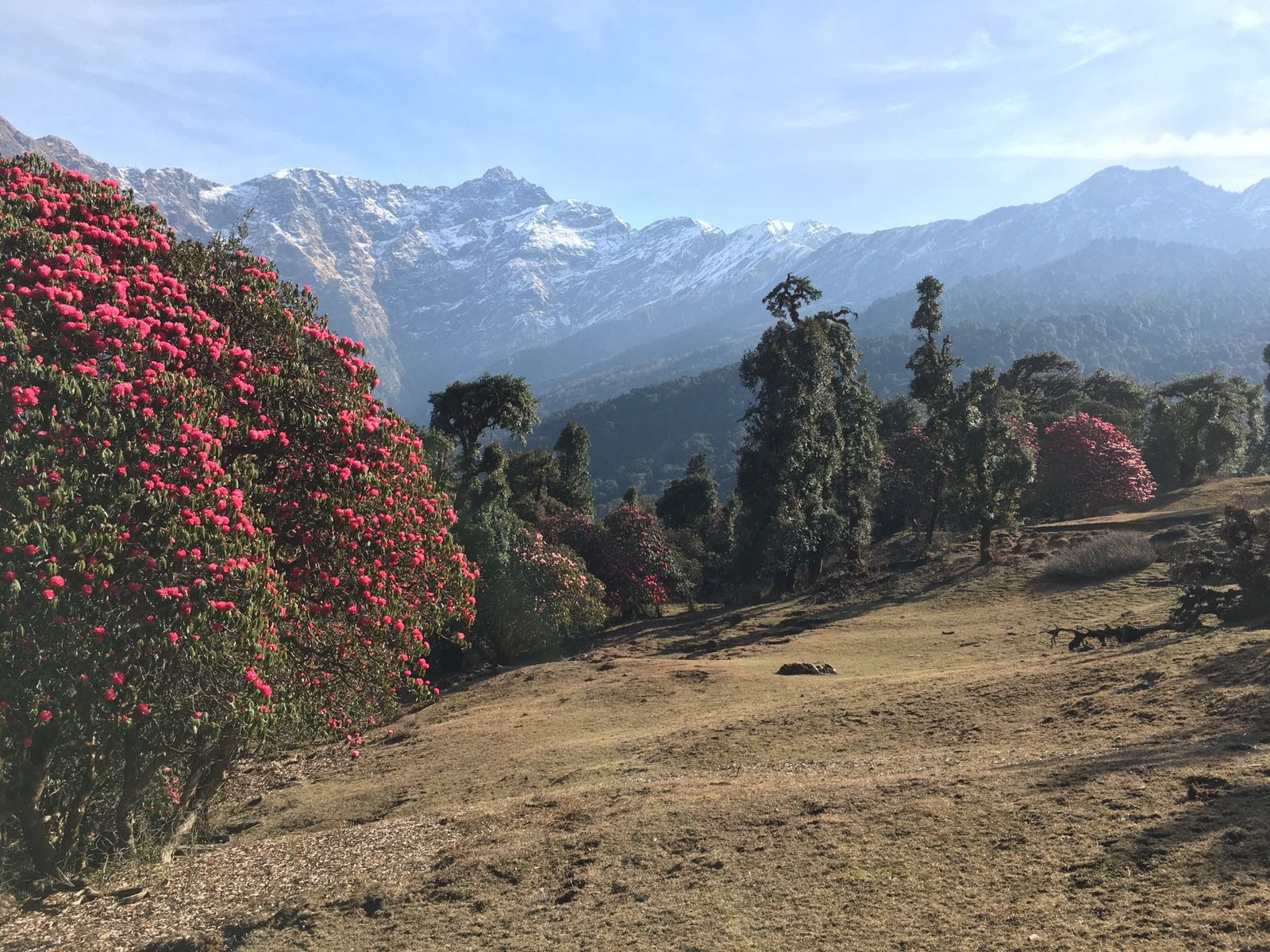
Oak, rhododendron and other Himalayan forest species create a varied canopy, while birdsong often accompanies the walk. These forests are an important part of the experience: the trail becomes quieter, the views open and close between the trees, and every bend can reveal a different perspective of the surrounding ridges.
The region supports wildlife including deer, wild boar, foxes, leopards and bears. These animals are naturally elusive, and sightings are never guaranteed. Trekkers are more likely to notice signs of wildlife or hear birds in the forest than to encounter larger animals at close range. Respecting their space and keeping a safe distance is essential.
One of the most memorable bird encounters is the Himalayan monal, the state bird of Uttarakhand. The trail towards Tungnath passes through habitat where monals are found, and they can be seen relatively easily on suitable days. Their iridescent plumage makes them particularly striking, although sightings still depend on season, time of day and the bird's movements. Carrying binoculars and walking quietly can improve your chances.
4. Tungnath: A Sacred Temple in the High Mountains
The ascent to Tungnath adds a distinctive cultural and spiritual dimension to the trek. Situated at approximately 3,680 metres, or 12,073 ft, Tungnath is widely recognised as the highest Shiva temple in the world. Its stone structure stands amid an immense mountain setting, with the surrounding ridges and peaks creating a powerful sense of scale.
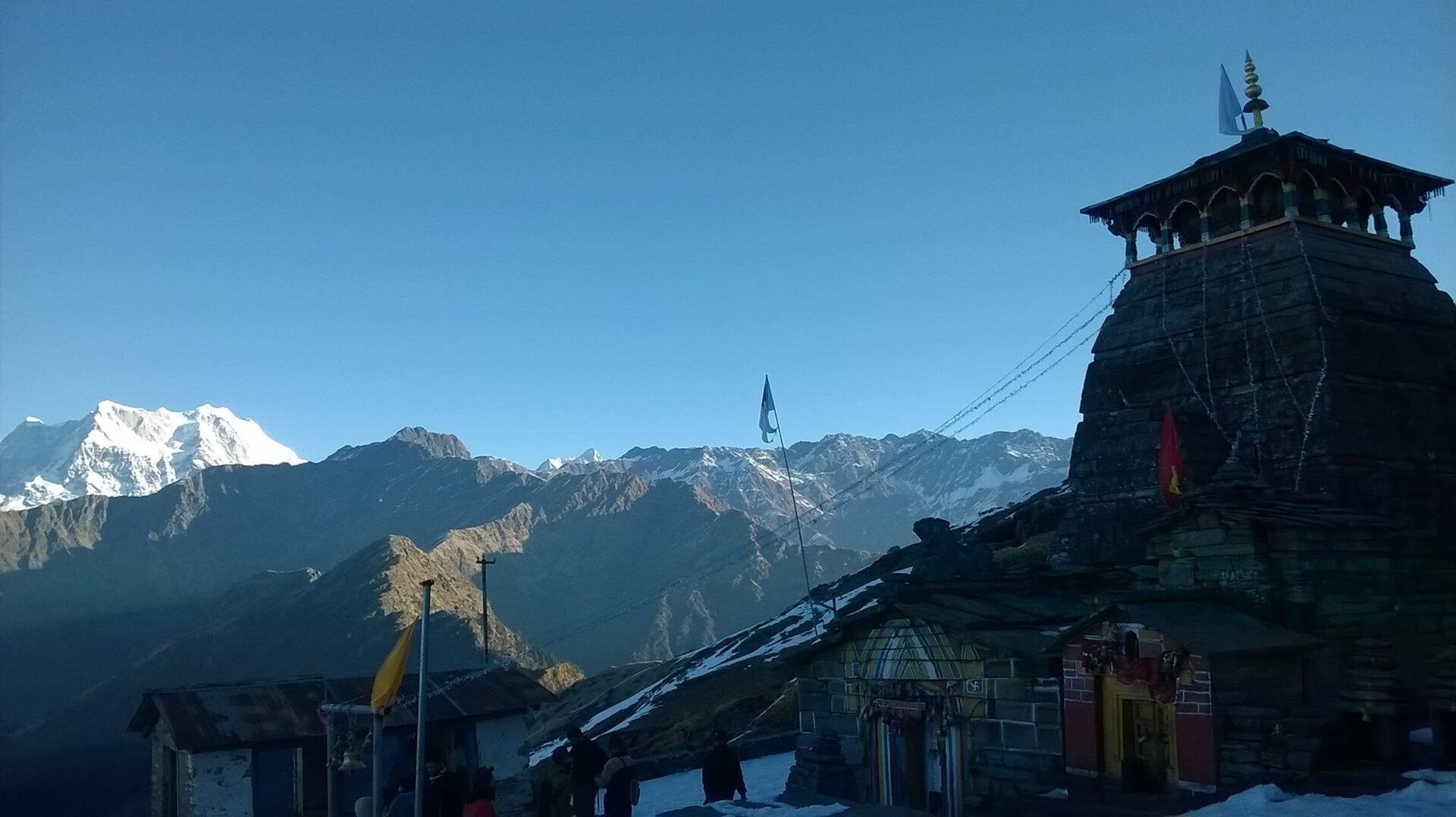
The approach is generally along a defined pilgrim trail, much of it paved. This makes the route relatively straightforward to follow in suitable conditions, although the sustained uphill walk and altitude still require a steady pace and adequate rest.
Tungnath is more than a landmark on the way to the summit. It is a place of religious significance, visited by pilgrims as well as trekkers, and the temple's setting connects the journey to the region's living traditions.
During winter, snow can cover the trail and temple surroundings, changing both the appearance and difficulty of the approach. Temple access and opening arrangements can also vary seasonally, so winter itineraries should be planned around current local conditions.
5. Chandrashila Summit: A Panoramic Himalayan Finale
Above Tungnath, the trail continues towards Chandrashila, whose summit stands at approximately 12,500 ft. This final ascent is one of the most exciting sections of the trek. The terrain becomes more exposed, the gradient feels steeper and the surrounding landscape expands with every stretch of elevation gained.
On a clear day, the summit rewards trekkers with an extensive panorama of the Garhwal Himalayas. The skyline can include Nanda Devi, Sunanda Devi, Trishul, Chaukhamba and other prominent peaks, depending on visibility and viewing conditions.
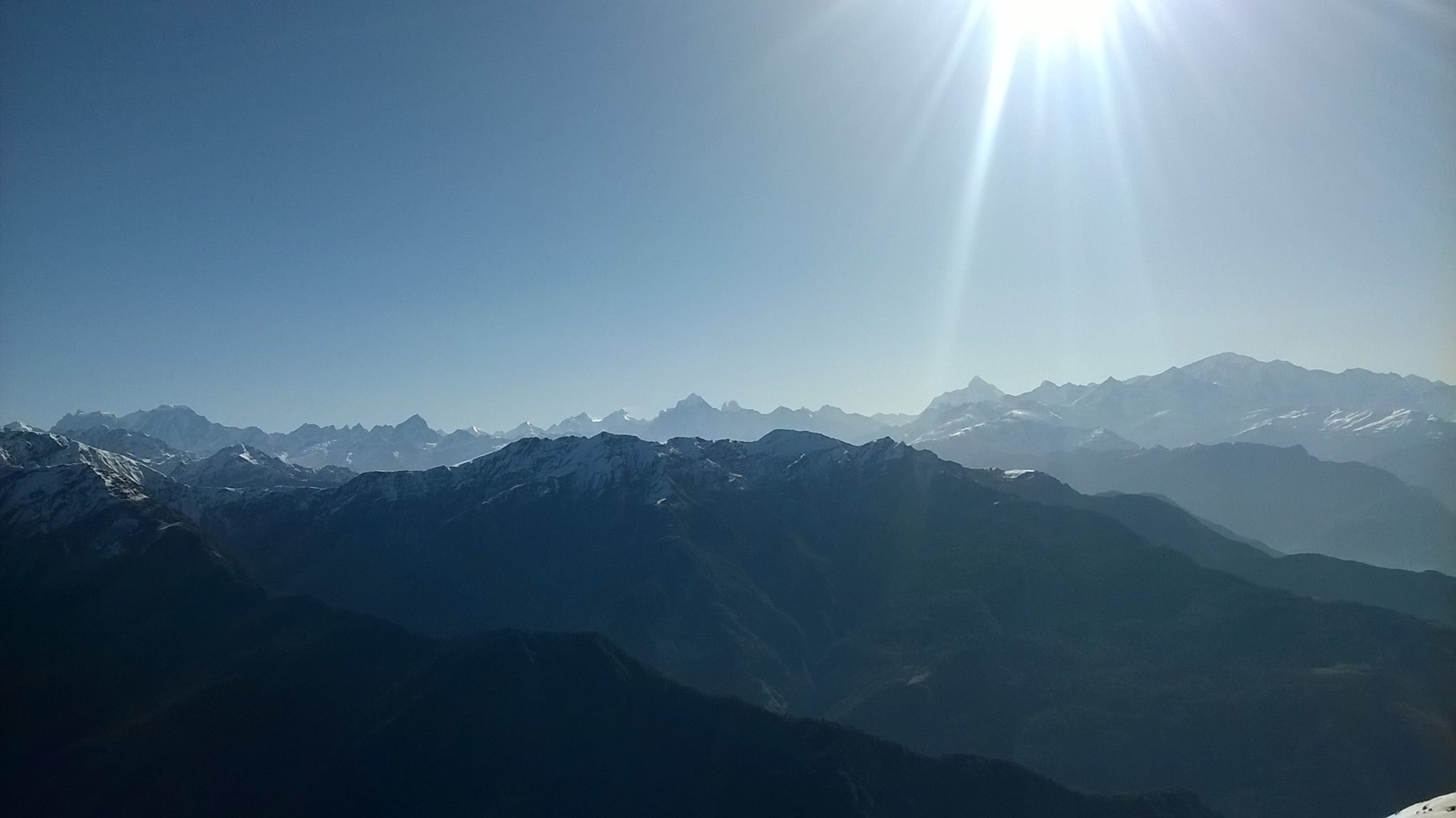
The summit experience brings together everything that makes this trek so rewarding: the effort of the climb, the changing terrain, the vast mountain skyline and the satisfaction of reaching a high viewpoint without undertaking a technical mountaineering route.
The path is defined, but it should not be mistaken for an effortless walk. Snow, ice, strong winds and poor visibility can make the final ascent substantially harder, especially in winter. Trek leaders should assess the conditions before proceeding, and reaching the summit should never take priority over safety.
6. Deoriatal–Chandrashila Through the Seasons
One of the greatest strengths of the Deoriatal–Chandrashila trek is how dramatically it changes throughout the year. The same lake, forest, meadow and summit can offer very different experiences depending on the season. Spring brings fresh growth and rhododendron flowers, winter transforms the higher trail with snow, and autumn reveals clear mountain views and forests shifting into warm seasonal colours.
Spring: Rhododendron Blooms and Fresh Forest Colours
Spring is an especially rewarding season for trekkers who enjoy forests, flowers and the return of colour after winter. As temperatures begin to rise, rhododendrons bloom across sections of the Himalayan woodland. Their vivid red and pink flowers stand out against dark tree trunks, fresh foliage and the deep green tones of the forest.
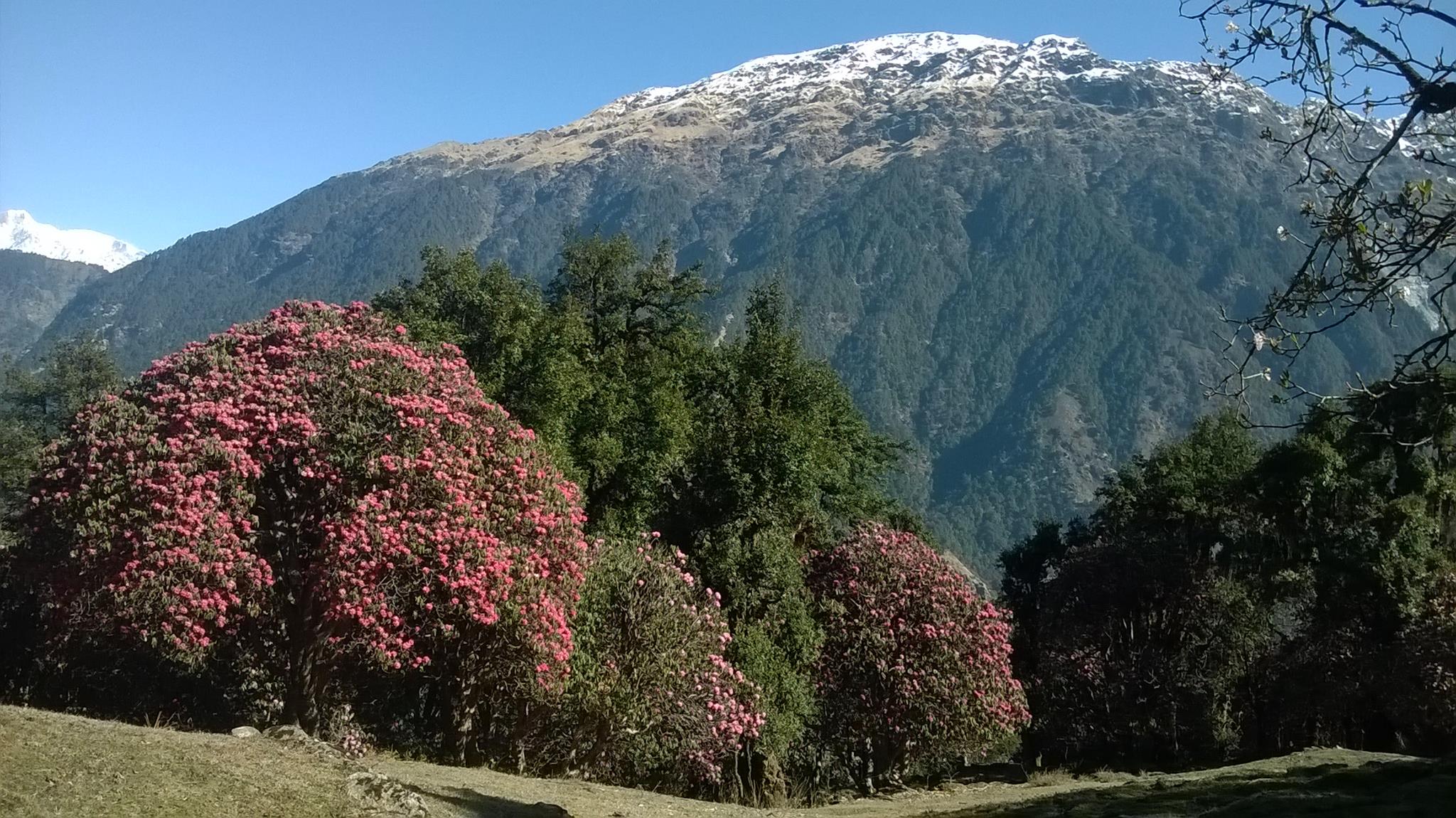
Walking through the Chopta region during the flowering period brings a different kind of beauty to the trek. Rather than focusing only on distant peaks, you begin noticing the smaller details: blossoms along the trail, new leaves, birds moving through the canopy and changing patterns of sunlight on the forest floor.
Deoriatal can look particularly inviting in spring, with the surrounding slopes coming alive while the higher mountains may still retain snow. On clear days, the contrast between fresh woodland and snow-covered peaks makes for excellent photography.
Spring conditions vary with altitude and the progress of the season. Higher sections can remain cold, and snow may persist near Tungnath and Chandrashila early in the season. Rhododendron flowering also varies from year to year, so the exact timing and intensity of blooms cannot be guaranteed.
Best for: Forest walks, rhododendron flowers, birdwatching, fresh mountain colours and a mix of spring greenery with lingering snow at higher elevations.
Winter: Snow-Covered Forests, Frozen Trails and White Mountain Landscapes
Winter gives Deoriatal–Chandrashila a completely different personality. Snowfall can transform the forest, cover open meadows and settle along the slopes around Tungnath and Chandrashila. The familiar trail becomes a landscape of white clearings, snow-laden branches and dark woodland framed by distant Himalayan peaks.
Deoriatal's surroundings can feel especially atmospheric in winter. Snow on the forest floor and nearby ridges creates a striking contrast with the lake and the mountains beyond. When the weather clears, the white slopes and crisp mountain air can make the views feel exceptionally sharp. The lake's appearance itself varies with temperature and conditions, so it should not be assumed to freeze completely.
As the route approaches Chopta and Tungnath, snow conditions can become more pronounced. Forest sections may alternate between exposed trail and deep snow, while the higher, open stretch towards Chandrashila can be windy and icy. These changing conditions add a genuine sense of winter adventure and make the trek feel very different from a snow-free walk.
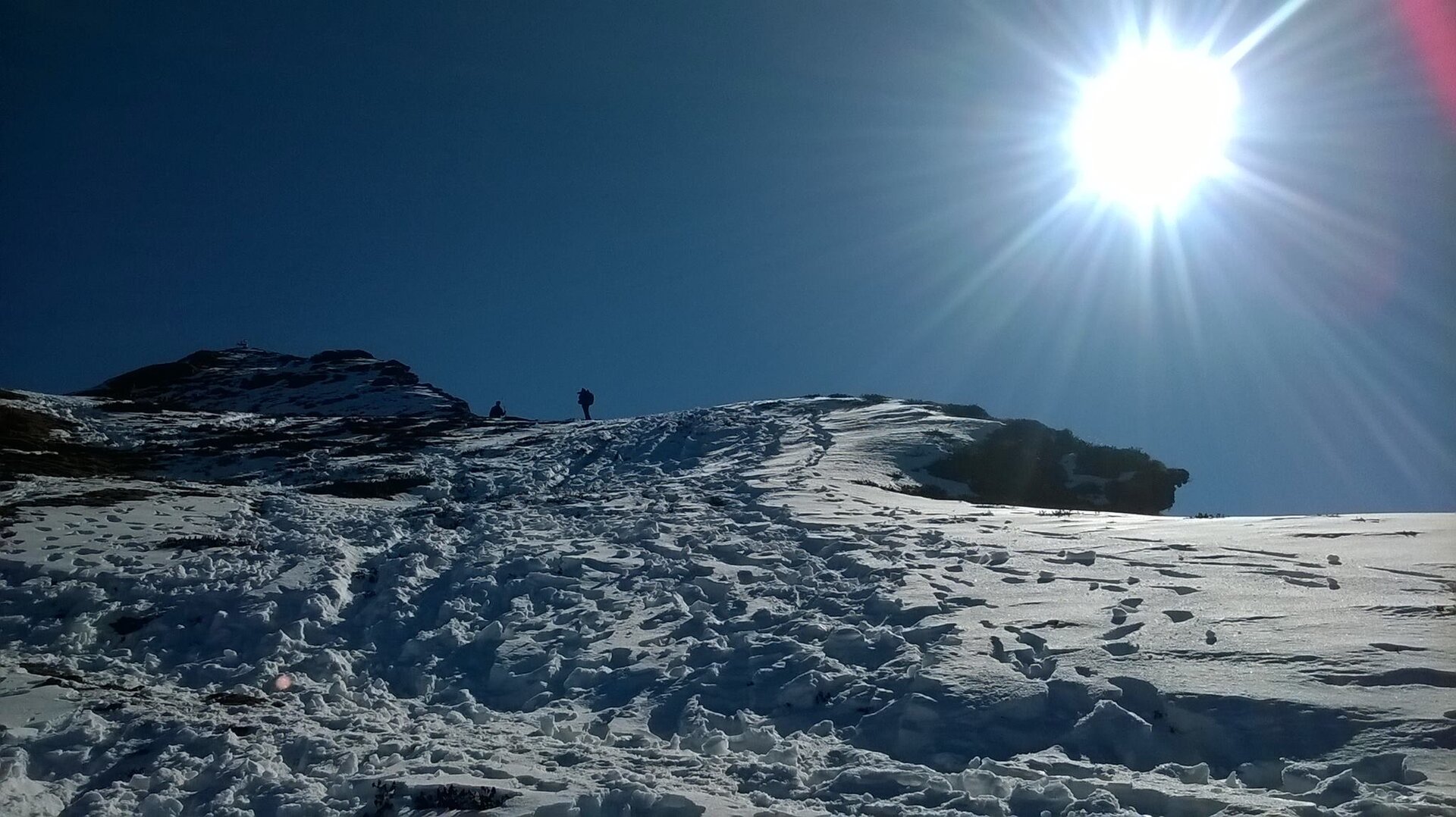
Snow is not guaranteed throughout winter, and conditions can change significantly after fresh snowfall. Early winter may bring intermittent snow, while periods of heavier snowfall can make the higher trail more demanding. Microspikes or other suitable traction equipment, warm layers, waterproof footwear and guidance from an experienced trek team are important when snow or ice is present.
The final ascent to Chandrashila requires particular care in winter. Trek leaders should assess snow stability, ice, wind and visibility before allowing the group to continue. Sometimes the best winter experience is to enjoy the snowy forest and Tungnath surroundings without attempting the summit. The itinerary should remain flexible enough to make that decision.
Best for: Snow scenery, winter photography, snow-covered forest trails and the dramatic contrast of white slopes against the high Himalayan skyline, subject to actual weather and trail conditions.
Autumn: Golden Forests and Clear Himalayan Views
Autumn offers a quieter, more subdued kind of beauty. After the monsoon, the skies often become clearer, and the mountain ranges can appear exceptionally crisp on settled days. Long-distance views from the Deoriatal area, Tungnath and Chandrashila are among the season's biggest attractions.
As the season progresses, the forest palette begins to change. Fallen leaves gather along the trail, grasses take on golden and tawny tones, and the landscape develops an earthy mix of brown, ochre, muted green and gold. The changes are not uniform across every species, but the overall effect gives the forest a distinct autumn character.
Deoriatal is particularly rewarding when calm conditions allow the mountain reflections to settle on the water. Clear mornings can reveal the outline of Chaukhamba against a deep blue sky, while the surrounding slopes catch the warm light of sunrise and late afternoon.
Autumn is also a wonderful season for the summit walk. With less of the spring flowering palette and typically no widespread deep winter snow early in the season, the attention shifts towards the shapes of the mountain ranges, the textures of the forest and the broad views across Garhwal. Cold conditions can still occur at altitude, particularly in the mornings and evenings.
Best for: Clear mountain panoramas, golden forest tones, photography, crisp mornings and the changing colours of the post-monsoon landscape.
7. Comfortable Stays Along the Journey
A Himalayan trek does not have to mean sacrificing every comfort. Depending on the itinerary and campsite arrangements, this trek can include comfortable Swiss-tent accommodation with attached toilets. After a day of walking, having a sheltered place to rest, change and recover adds to the overall experience.
Accommodation standards and facilities can vary with location, season and operational conditions. In winter, freezing temperatures may affect water availability and the use of campsite facilities, so the exact arrangements should be confirmed before departure.
These comforts make the trek more approachable for people new to multi-day Himalayan walking, while the route itself still offers the satisfaction of exploring forests, gaining elevation and reaching a spectacular summit.
8. Sunrise and Sunset: The Mountains in Changing Light
The landscape changes again when the sun sits low on the horizon. Early morning light can illuminate the high peaks while the forests below remain in shadow. As the day progresses, the mountain colours shift from cool blue and grey to warmer gold, rose and orange, depending on the weather and the season.
At Deoriatal, sunrise can bring the mountain reflections into focus when the lake is calm. Around the Chopta region, sunset paints the ridgelines and distant peaks with warm light. From suitable viewpoints, the changing colours of the sky become a memorable part of the journey.
These moments are a reminder that the trek is not only about walking from one place to another. It is also about spending enough time in the mountains to notice the light, weather and landscape as they change.
Is Deoriatal–Chandrashila Suitable for Beginners?
For many first-time trekkers, Deoriatal–Chandrashila is an excellent introduction to the Himalayas. The itinerary combines a range of landscapes and experiences without requiring technical climbing skills in normal, snow-free conditions. The approach to Tungnath follows a defined pilgrim trail, and the route offers a clear progression from forest walking to a high mountain viewpoint.
However, the final climb to Chandrashila is steep enough to require reasonable fitness, and the altitude can affect people differently. Beginners should be comfortable walking for several hours, maintain a steady pace and follow the trek leader's guidance. In winter, snow and ice can significantly change the difficulty, so the trek should not be treated as an easy walk simply because the summer route is accessible.
The best introduction is one that allows you to enjoy the journey rather than rush towards the summit. Take time at Deoriatal, look for birds in the forest, appreciate the cultural significance of Tungnath and enjoy the mountain views when conditions allow.
One Trek, Many Himalayan Experiences
Few introductory treks bring together this many different aspects of the Himalayas in one itinerary. Deoriatal offers a beautiful lake and mountain reflections; the Chopta region introduces dense forests, meadows and birdlife; Tungnath adds a significant cultural landmark; and Chandrashila delivers a panoramic mountain viewpoint.
Across spring, winter and autumn, the landscape changes from blooming rhododendron forests to snow-covered trails and golden woodland. Comfortable campsite arrangements can make the experience more welcoming, while the steady progression of the route gives beginners a chance to build confidence as they gain elevation.
Whether it is your first Himalayan trek or a return to a familiar mountain region, the Deoriatal–Chandrashila trek offers a rewarding combination of nature, culture, wildlife, seasonal scenery and summit views. Its greatest strength is not one particular viewpoint, but the variety of experiences that unfold along the way.
Frequently Asked Questions
1. Is the Deoriatal–Chandrashila trek good for beginners?
Yes. It is a popular introductory Himalayan trek because it combines forests, a mountain lake, meadows, a sacred temple and a summit viewpoint along a defined trail. Beginners still need reasonable fitness, and the final ascent can be demanding, particularly in snow or icy conditions.
2. What is the altitude of Deoriatal and Chandrashila?
Deoriatal Lake is at approximately 2,438 metres (8,000 ft), Tungnath Temple at around 3,680 metres (12,073 ft), and Chandrashila summit at approximately 3,810 metres (12,500 ft). Figures can vary slightly between published sources.
3. Can I see snow on the Deoriatal–Chandrashila trek in winter?
Snow is possible during winter, especially around Chopta, Tungnath and the Chandrashila trail. The amount depends on recent snowfall, temperature and weather conditions. Snow cover is not guaranteed on every departure, and icy sections may require traction equipment and changes to the itinerary.
4. What is the best season for rhododendron flowers?
Spring is the main season for rhododendron blooms in the region. The flowering period varies with altitude, temperature and the year's weather, so the exact timing and intensity of the blooms can differ between seasons.
5. What does the trek look like in autumn?
Autumn often brings clear mountain views, crisp mornings and warm golden or earthy tones in the forest and meadows. It is an excellent season for landscape photography and enjoying the Himalayan panorama from Deoriatal and Chandrashila.
6. Can I see the Himalayan monal on this trek?
The Himalayan monal, Uttarakhand's state bird, inhabits the region, and the forest trail towards Tungnath offers opportunities to spot it. Sightings are never guaranteed, so walk quietly, watch the forest edges and avoid disturbing birds or other wildlife.
7. Is Tungnath Temple open during winter?
Tungnath has seasonal temple arrangements, and access can be affected by snowfall and local conditions. Check current opening information and trail access before planning a winter visit.
8. How difficult is the Chandrashila summit climb?
The route follows a defined trail, but the final ascent is steep and exposed in places. It requires reasonable fitness and careful pacing. Snow, ice, strong winds or poor visibility can make it considerably more difficult, and the trek leader may decide not to continue to the summit if conditions are unsuitable.
9. What kind of accommodation is available?
Depending on the itinerary, the trek may include Swiss tents with attached toilets. Facilities can vary by campsite and season, particularly during freezing winter conditions, so confirm the accommodation arrangements for your departure.
10. What makes Deoriatal–Chandrashila different from other beginner treks?
Its variety is the defining feature. In a single itinerary, trekkers can experience a traditional mountain village, a reflective lake, forest trails, meadows, birdlife, a sacred high-altitude temple and a summit with sweeping Garhwal Himalayan views. The scenery also changes substantially between spring, winter and autumn.
