
Some Himalayan treks are celebrated for their lush meadows, colourful forests or towering mountain passes. Others are remembered for the challenge they offer. Then there are a handful of trails that reveal something much deeper—the very forces that created the Himalayas and continue to reshape them every single day.
The Gaumukh Tapovan Trek belongs to that rare category.
This isn't simply a walk to another beautiful campsite or another high-altitude lake. It is a journey into one of the youngest, most dynamic and geologically active mountain landscapes on Earth, where glaciers grind mountains into valleys, rivers are born from ancient ice, and some of the most revered Himalayan peaks rise directly above you.
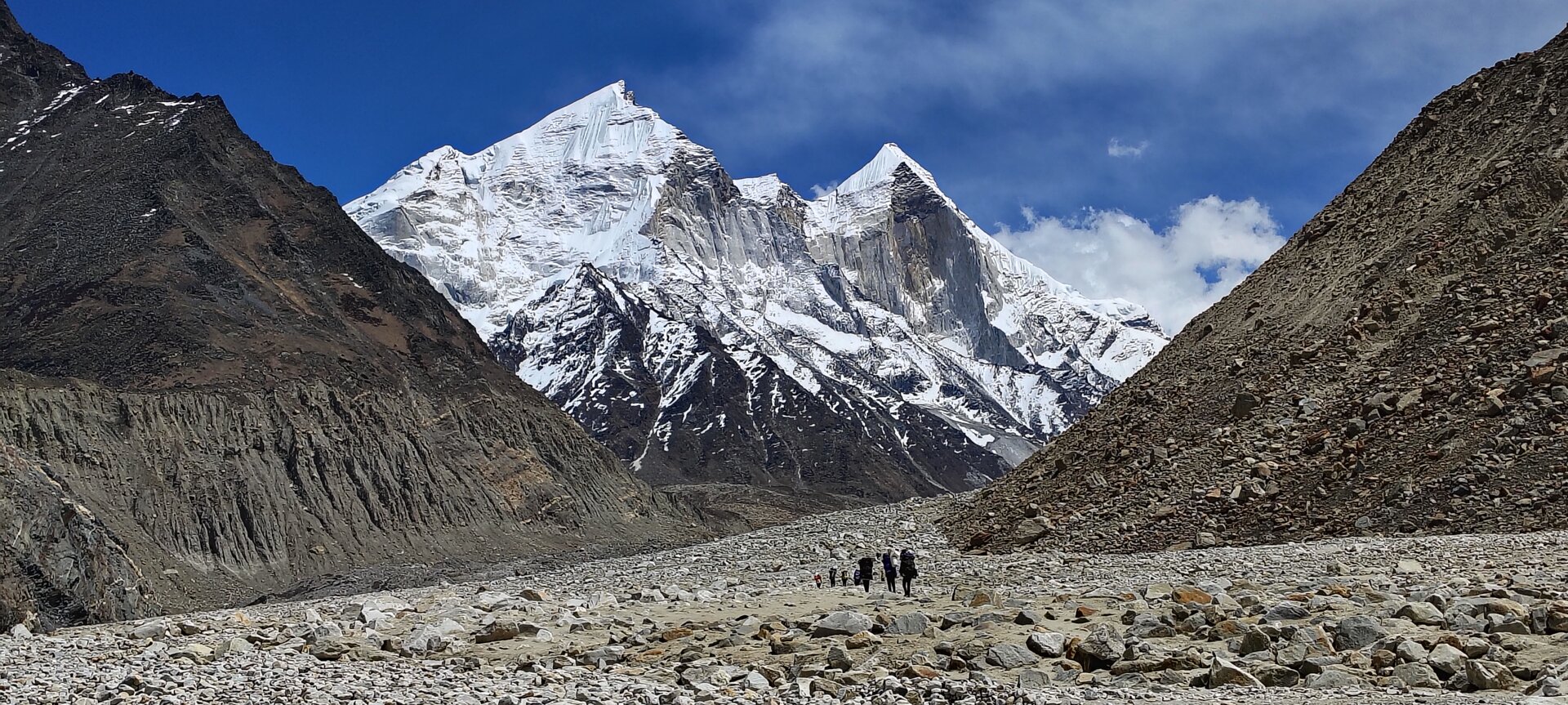
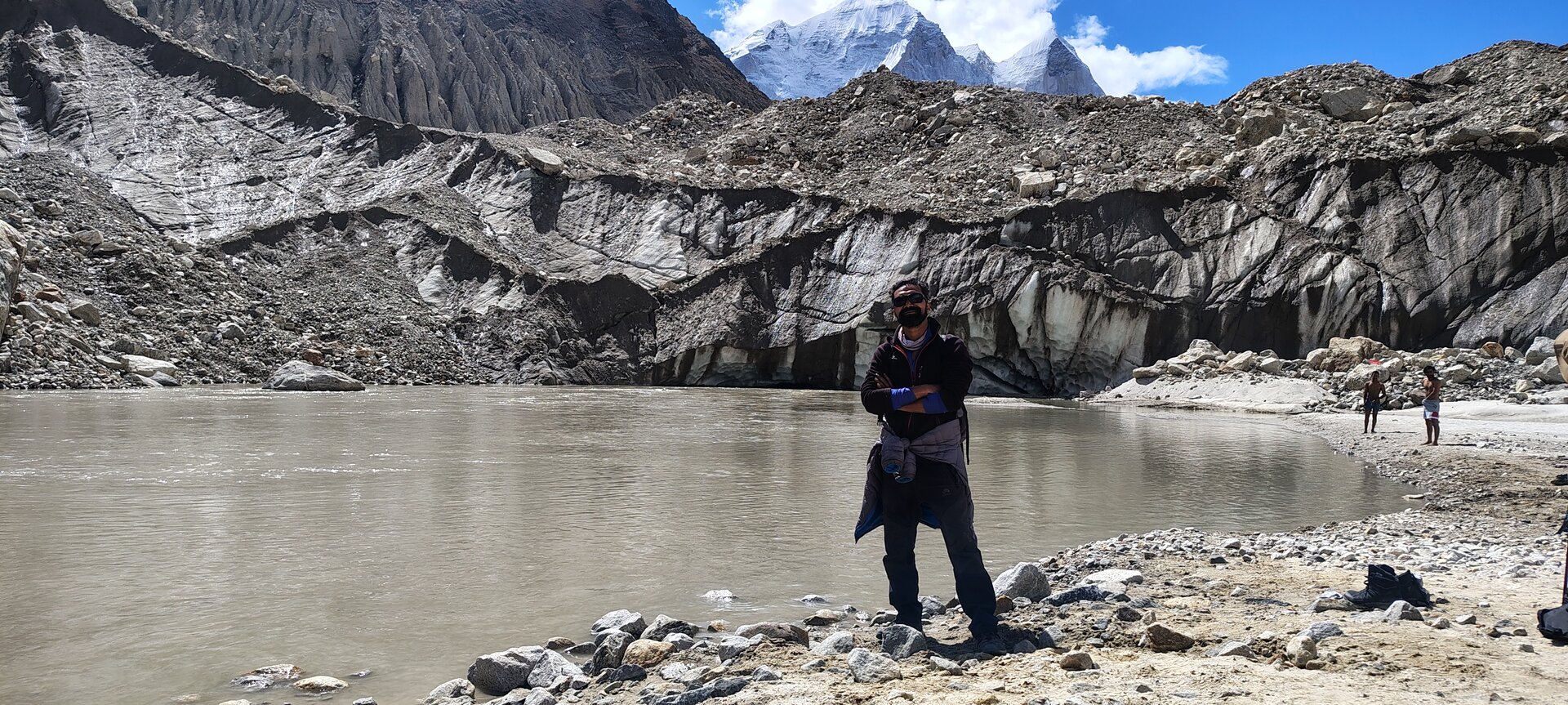
Usually, experiencing such raw Himalayan terrain requires long expeditions deep into remote mountain ranges, often lasting several weeks and involving technical mountaineering. Gaumukh Tapovan is remarkable because it compresses that experience into a week-long trek that remains achievable for well-prepared beginners.
Within just a few days you leave behind the busy pilgrimage town of Gangotri and enter a landscape where civilisation rapidly disappears. Forests become sparse, valleys widen, enormous cliffs rise overhead, glaciers dominate the horizon and every stream tells the story of melting snow thousands of metres above.
Few Himalayan treks allow you to stand directly in front of the snout of one of India's largest glaciers, walk over centuries-old moraine, climb onto the shoulder of that glacier and finally camp beneath one of the most beautiful mountains ever created—Mount Shivling.
This is not only a trek through the Himalayas.
It is a trek that explains the Himalayas.
Ready to witness the birthplace of the Ganga, stand beneath the magnificent Mount Shivling and walk alongside one of the Himalayas' greatest glaciers?
👉 Explore our Gaumukh Tapovan Trek and join us for an unforgettable journey into the heart of the Himalayas.
Gaumukh Tapovan Trek at a Glance
| Region | Gangotri National Park, Uttarakhand |
| Duration | Typically 7–8 Days |
| Highest Altitude | Tapovan – approximately 14,650 ft (4,463 m) |
| Difficulty | Moderate |
| Total Trek Distance | Approximately 46 km |
| Starting Point | Gangotri (10,000 ft) |
| Best Season | May–June & September–October |
| Highlights | Gangotri Glacier • Gaumukh • Mount Shivling • Tapovan • Bhagirathi Peaks • Meru Peak |
📑 Table of Contents
- Why Gaumukh Tapovan is Unlike Any Other Himalayan Trek
- Experience the Himalayas in Their Rawest Form
- Walking to the Source of the Ganga
- Understanding the Gangotri Glacier
- Mount Shivling – The Mountain That Defines Tapovan
- Moments You'll Remember Forever
- Best Time to Visit
- Summer vs Autumn
- Difficulty
- Who Should Attempt This Trek?
- Flora
- Wildlife
- Accommodation
- Permits
- Network & Electricity
- Itinerary
- Packing List
- Altitude & Safety
- FAQs
- Beyond the Trail
- The Planethimalayas Way
Why Gaumukh Tapovan is Unlike Any Other Himalayan Trek
Every Himalayan trek has its own personality.
Some impress you with endless flower-filled meadows. Others reward you with dramatic mountain passes, pristine alpine lakes or dense forests. The Gaumukh Tapovan Trek is different because it takes you to the birthplace of an entire Himalayan ecosystem.
Here, you don't merely observe mountains—you witness how mountains are built, how glaciers carve valleys, how rivers are born and how nature continues to reshape the landscape every season.
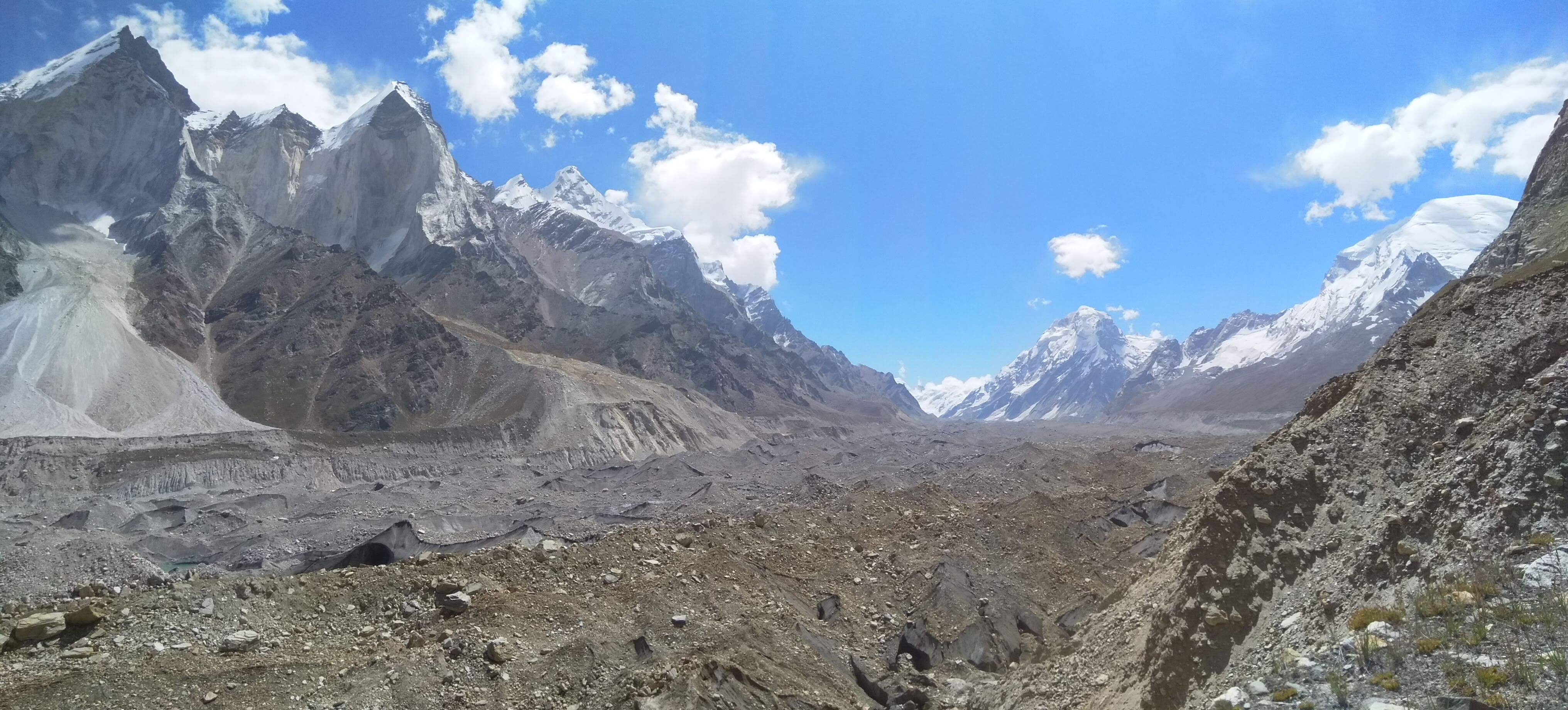
The trail follows the mighty Gangotri Glacier, one of the largest glaciers in the Indian Himalayas. Unlike most glaciers that are admired from distant viewpoints, this one becomes your companion for much of the journey. You walk beside it, climb onto its lateral moraine and stand before its immense snout at Gaumukh, where the Bhagirathi River emerges from beneath ancient ice.
Above the glacier rises another reason why trekkers from across the world come here—Mount Shivling.
Standing at approximately 6,543 metres, Shivling is regarded as one of the most beautiful peaks in the Himalayas. Its elegant granite pyramid has earned it the nickname "The Indian Matterhorn," inspiring generations of climbers, photographers and mountaineers.
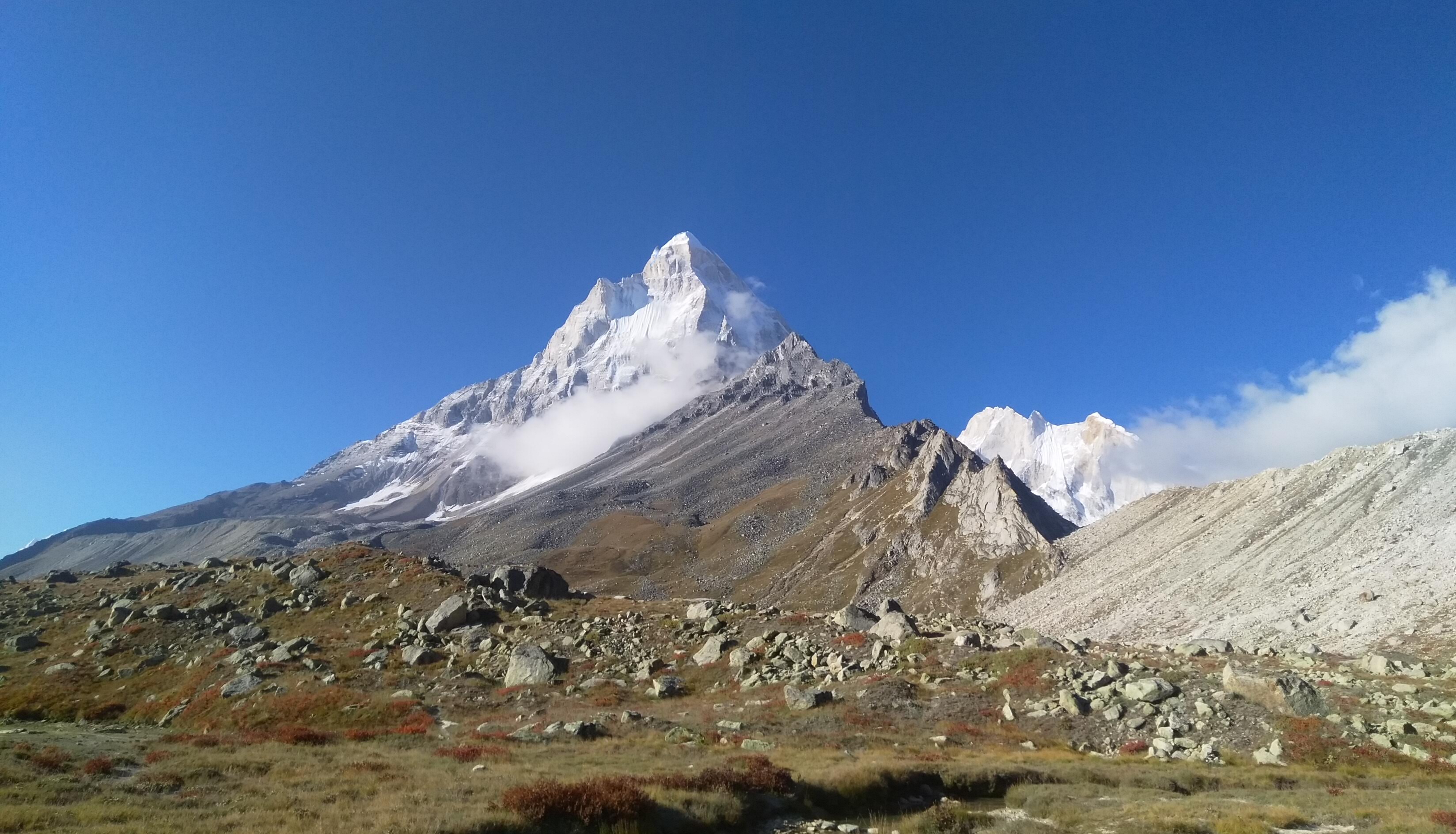
Unlike many famous Himalayan peaks that are seen only from afar, Shivling dominates the skyline at Tapovan. From your campsite, it appears impossibly close, filling the horizon from base to summit. It is difficult to describe the scale until you stand beneath it yourself.
This combination of glaciers, sacred geography, legendary mountaineering peaks and raw Himalayan geology makes Gaumukh Tapovan unlike any other trek in India.
Experience the Himalayas in Their Rawest Form
The Himalayas are often described as beautiful.
Gaumukh Tapovan reminds you that they are also immensely powerful.
The entire trek unfolds inside the Gangotri National Park, one of India's highest protected landscapes. Here, vegetation gradually disappears, exposing the mountains almost exactly as they are—rock, ice, wind and water locked in an endless cycle of creation and destruction.
The transformation begins almost immediately after leaving Gangotri.
The bustling pilgrimage town, surrounded by deodar, pine, birch and juniper forests, slowly gives way to an increasingly barren valley where towering cliffs rise almost vertically from the river below. The roar of pilgrims is replaced by the constant sound of the Bhagirathi River carving its way through rock that has been sculpted over thousands of years.
Every few kilometres, a patch of green appears almost unexpectedly.
First comes Chirbasa, literally meaning "the abode of pine," followed later by Bhojwasa, once known for its extensive birch forests. These small pockets of vegetation feel like natural oases amid an otherwise rugged landscape.
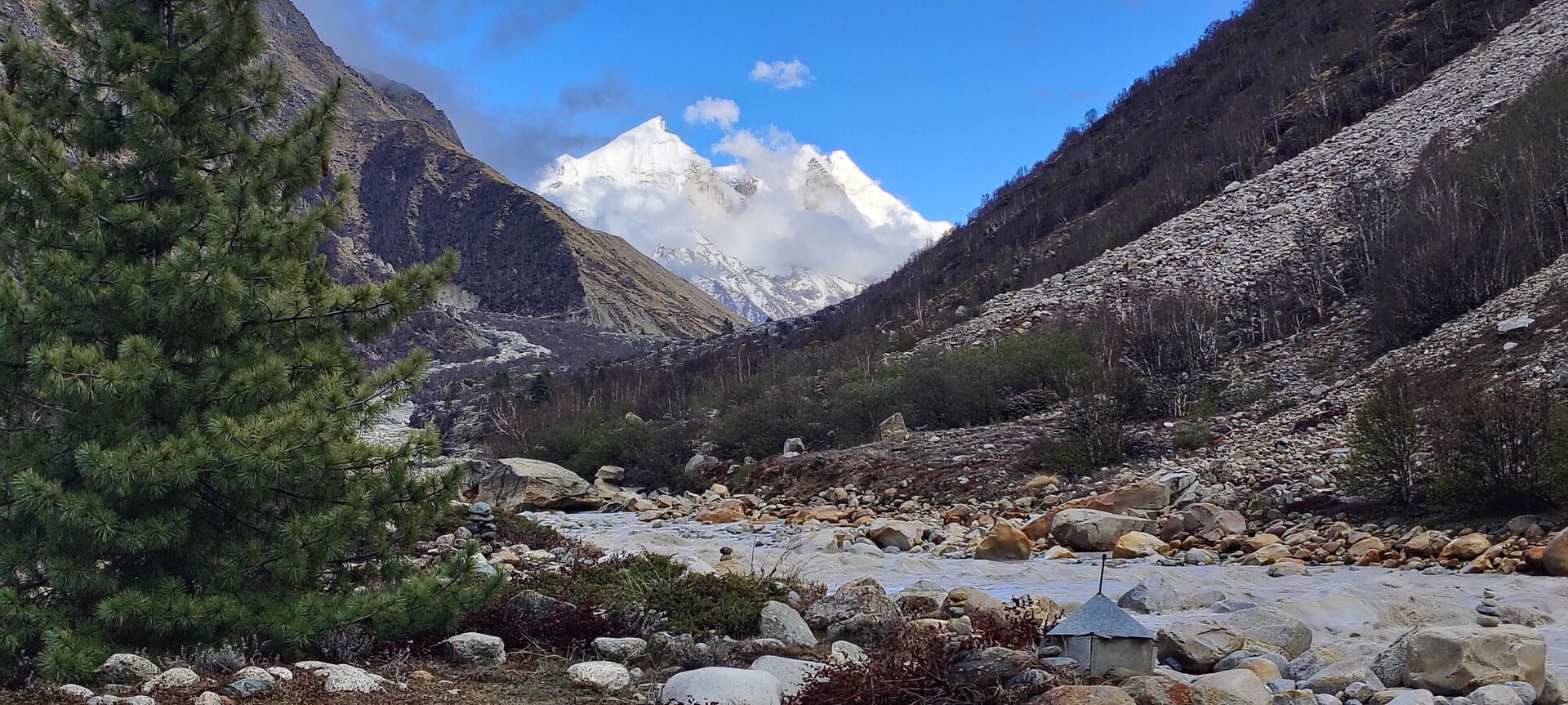
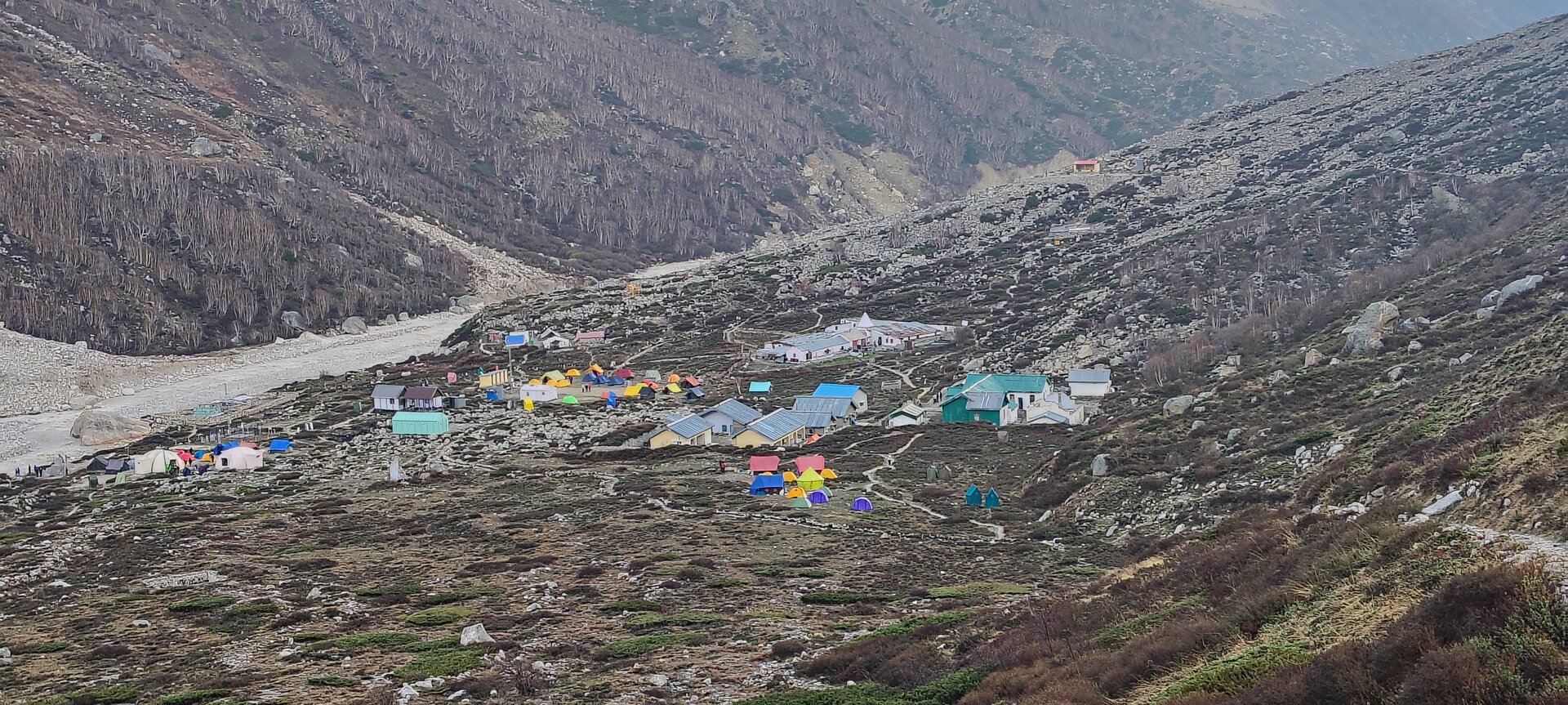
As you continue deeper into the valley, countless unnamed streams tumble down from unseen glaciers high above. Some disappear beneath moraine before joining the Bhagirathi. Others plunge directly over cliffs, reminding you that the mountains continue to feed the river long before it reaches the plains.
By the time you reach Gaumukh, almost every trace of civilisation has disappeared.
Only the glacier remains.
Walking to the Source of the Ganga
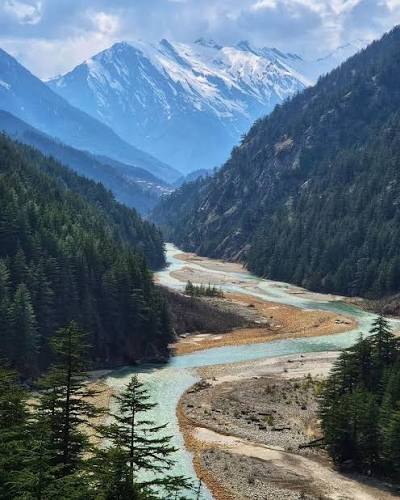
Every river has a beginning, but very few can match the significance of the Ganga.
For millions of people, it is India's holiest river—a symbol of faith, life and purification. Along its journey across the plains, it nurtures some of the oldest cities and supports one of the largest human populations on Earth.
Yet here in the Himalayas, the river looks nothing like the calm and sacred stream people know downstream.
Its journey begins as the Bhagirathi River, bursting violently from beneath the immense Gangotri Glacier at a place known as Gaumukh, literally meaning "the mouth of a cow." According to Hindu mythology, this is where the sacred Ganga first descended to Earth after Lord Shiva received her mighty force in his matted locks, preventing the river from destroying the world.
Whether you approach Gaumukh through the lens of geology, mythology or simple curiosity, standing before it is an unforgettable experience.
The glacier suddenly ends in a towering wall of ancient ice and moraine. Beneath it, the Bhagirathi River erupts with astonishing force, carrying icy water, rocks and glacial sediment into the valley below.
Unlike many famous Himalayan viewpoints where the destination remains distant, Gaumukh places you directly before the source itself. You are not looking at the glacier from afar—you are standing beside it, hearing it, feeling its cold breath and witnessing a river being born.
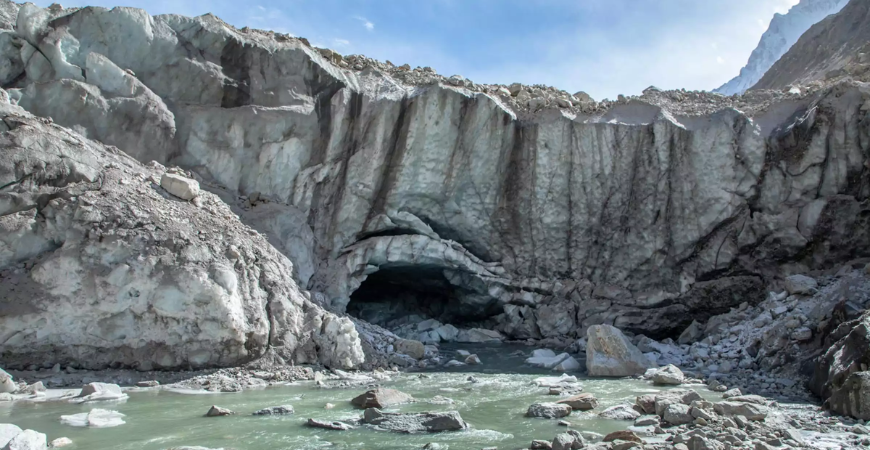
Very few treks anywhere in the Himalayas offer such an intimate encounter with one of nature's most powerful processes.
Understanding the Gangotri Glacier
Most trekkers know the Gangotri Glacier because it gives birth to the Bhagirathi River. Fewer realise that it is also one of the largest and most scientifically important glaciers in the Indian Himalayas.
Stretching for nearly 30 kilometres, the glacier is constantly moving—slowly but relentlessly. Although it may appear frozen in time, the entire body of ice is gradually flowing downhill under its own immense weight, carrying thousands of tonnes of rock with it every year.
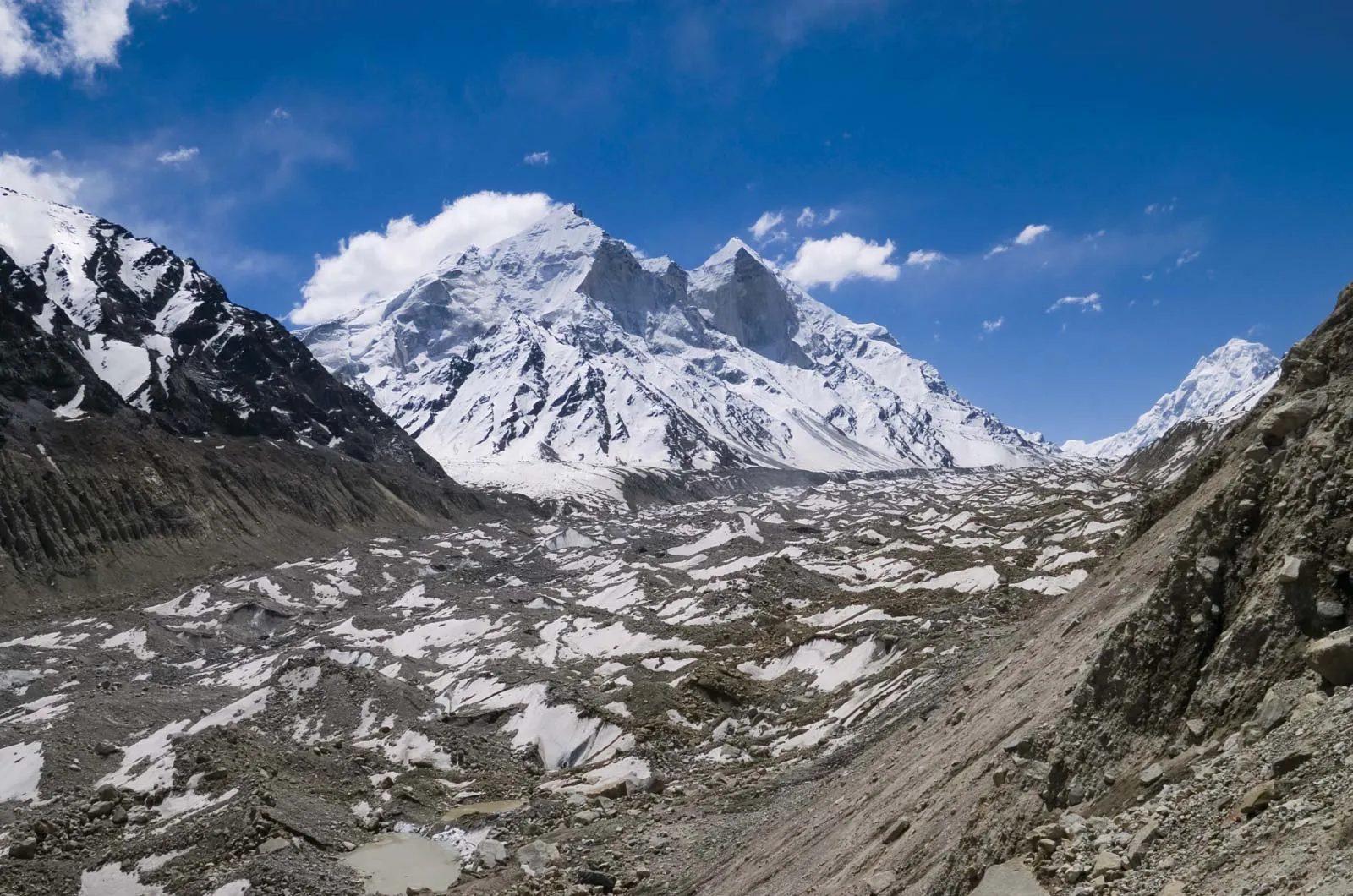
This movement is what created the broad U-shaped Gangotri Valley. Over thousands of years, the glacier scraped, carved and polished the mountains beneath it, leaving behind the dramatic landscape visible today.
As the glacier advances and retreats, it pushes enormous quantities of rock forward and sideways. These deposits are known as moraines, and they dominate much of the terrain beyond Bhojwasa.
Walking across these moraines is unlike trekking on ordinary mountain trails. Every step demands attention as loose gravel shifts beneath your boots while massive boulders—some the size of small houses—appear to balance precariously on unstable slopes.
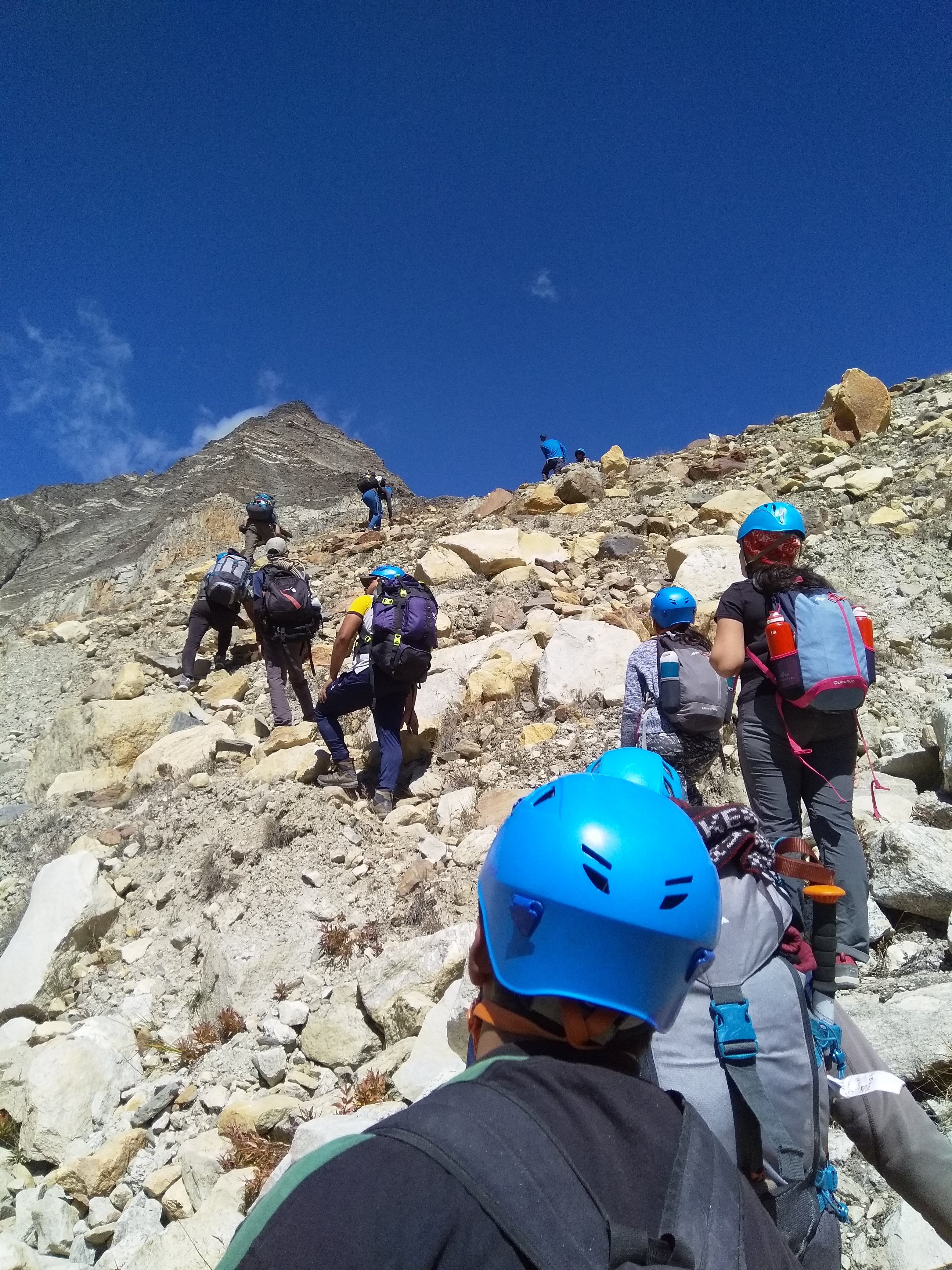
It is a humbling reminder that the Himalayas are still young mountains. They continue to rise, erode and transform with every passing season.
The Gangotri Glacier itself has become one of the world's most closely monitored glaciers because its gradual retreat offers scientists valuable insight into changing Himalayan climate patterns. While these long-term changes are a serious concern, the glacier remains an extraordinary classroom where geology can be understood not from textbooks but from the landscape beneath your own feet.
Mount Shivling – The Mountain That Defines Tapovan
If Gaumukh is the soul of this trek, then Mount Shivling is undoubtedly its face.
Ask anyone who has completed the Gaumukh Tapovan Trek what image stayed with them the longest, and chances are they will mention Shivling.
Towering to an elevation of approximately 6,543 metres (21,467 ft), Shivling rises dramatically above the meadows of Tapovan in one of the most breathtaking mountain settings anywhere in the Himalayas.
Its sharply sculpted granite pyramid has earned it the nickname "The Indian Matterhorn," drawing admiration from mountaineers around the world. Yet photographs never quite prepare you for the reality.
Unlike many Himalayan peaks that remain distant silhouettes on the horizon, Shivling dominates every moment spent at Tapovan. From your campsite, it rises directly overhead, revealing every ridge, buttress, glacier and rock face in astonishing detail.
Depending on the angle and the changing light, many people see different forms within the mountain. Some recognise the shape of a Shivling, while others believe the mountain resembles the face of Lord Ganesha.
Perhaps that is why the mountain inspires such strong emotions—not because everyone sees the same thing, but because everyone sees something personal.
For mountaineers, Shivling represents one of India's most iconic climbing objectives. For photographers, it becomes an endless study of changing light. For trekkers, it quietly dominates every sunrise, every sunset and every evening spent gazing out from camp.
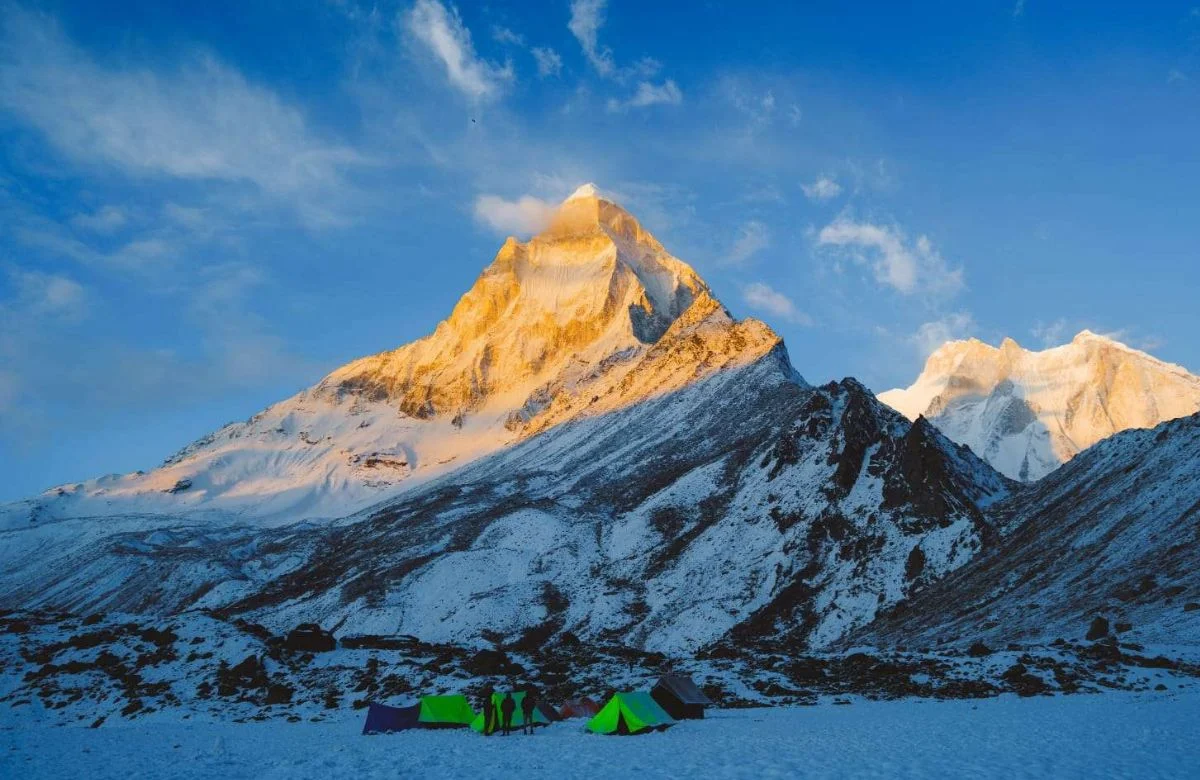
Watching the first rays of sunlight strike Shivling while the rest of Tapovan still lies in shadow is one of those rare Himalayan moments that no photograph fully captures.
Tapovan – Where Mountains, Glaciers and Sky Meet
It is tempting to describe Tapovan simply as an alpine meadow.
That would be a tremendous understatement.
Tapovan is an elevated world suspended above the Gangotri Glacier, shaped by ice, nourished by glacial streams and surrounded by some of the finest mountain architecture in the Himalayas.
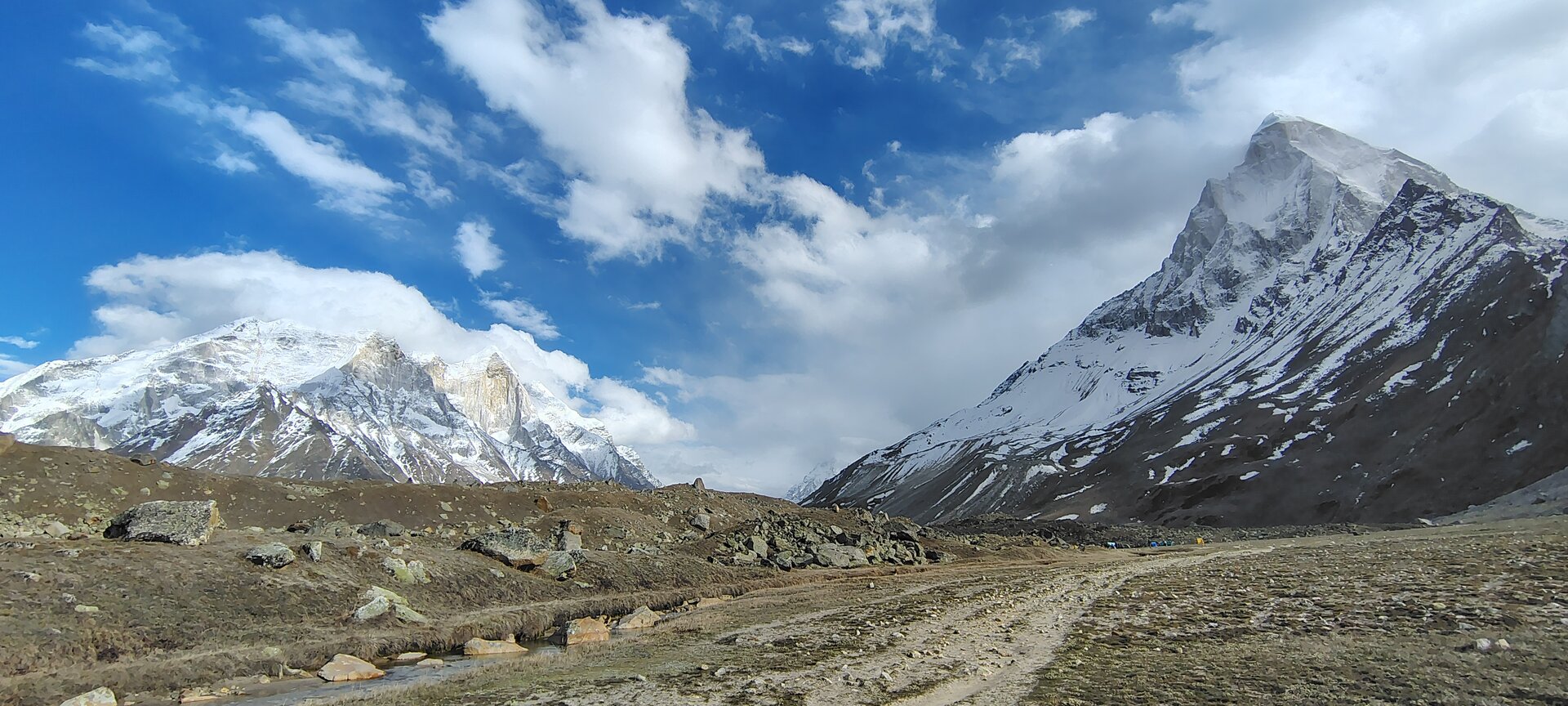
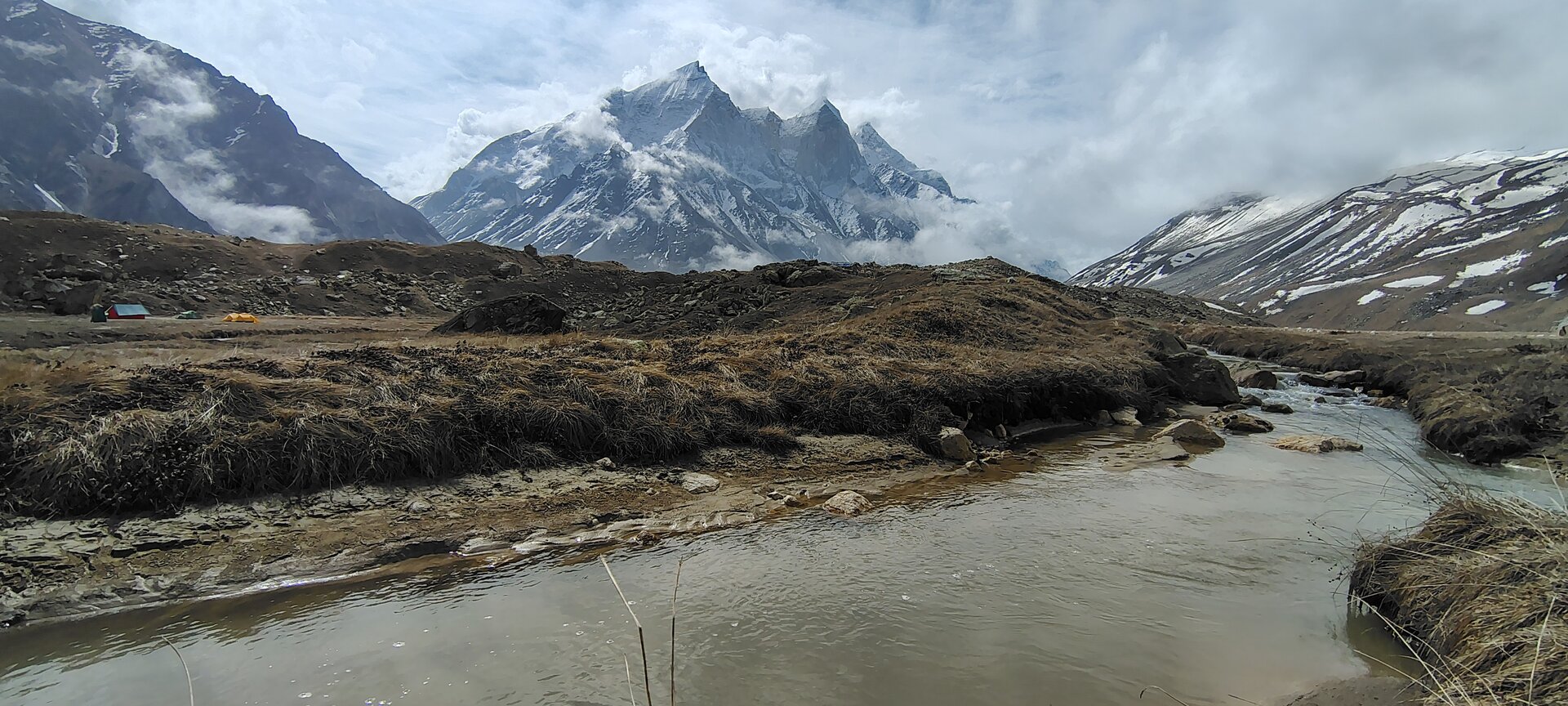
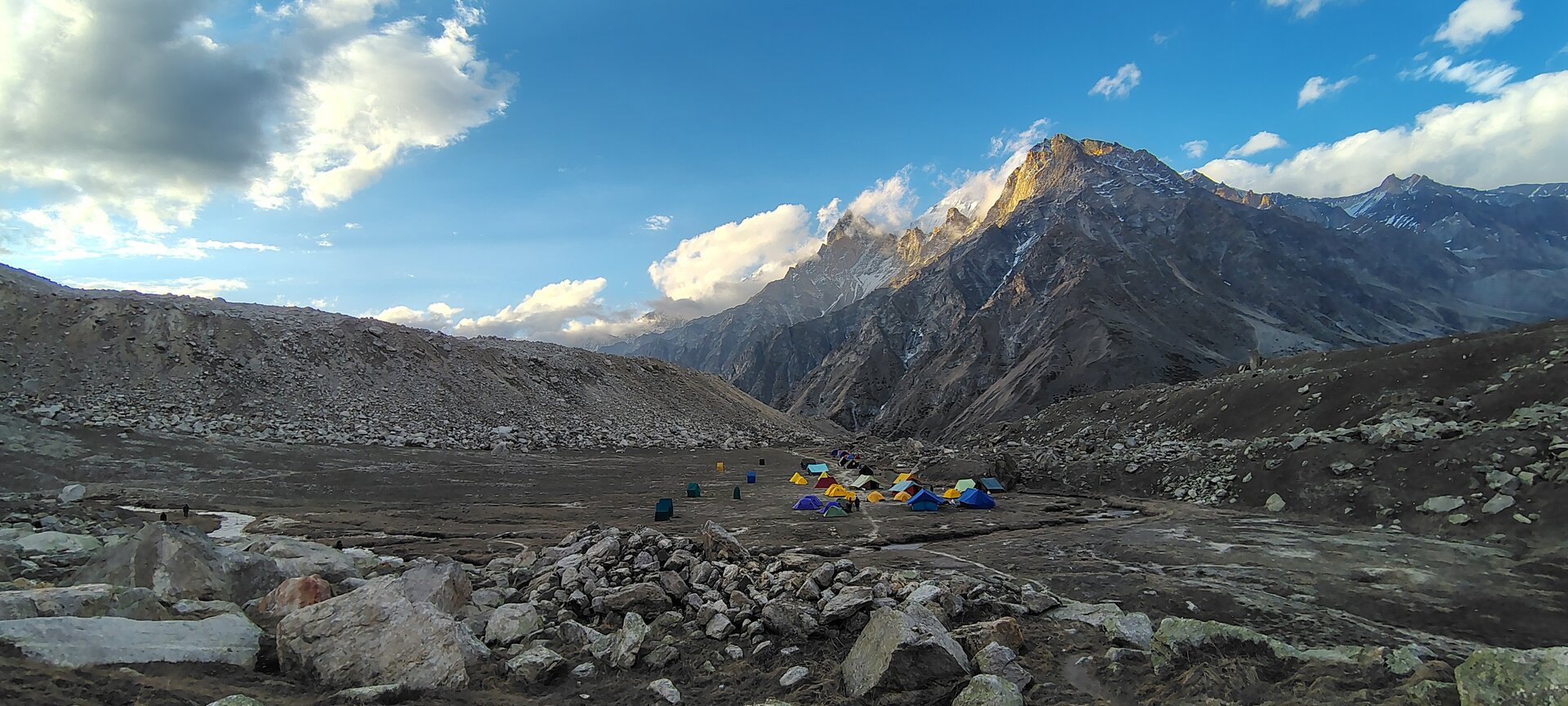
The meadow is crossed by the crystal-clear waters of Akash Ganga, while patches of alpine grass soften an otherwise rugged glacial landscape.
Standing anywhere within Tapovan, your eyes naturally travel from one remarkable peak to another.
- Mount Shivling dominates the southern skyline.
- The Bhagirathi Group of Peaks rises dramatically across the Gangotri Glacier.
- Meru Peak, revered among climbers worldwide for its technical difficulty, reveals itself from the shoulder ridge beyond Shivling.
- Sudarshan, Thelu and Kharchakund complete one of the finest mountain panoramas found anywhere in India.
Across the Gangotri Glacier lies another spectacular meadow—Nandanvan. Although it requires an additional glacier crossing, many experienced trekkers and mountaineers consider it to offer one of the finest viewpoints of the Bhagirathi massif.
If your itinerary allows an additional day at Tapovan, a short hike towards the shoulder of Shivling reveals even broader views of Meru and the surrounding glaciers. It is one of the most rewarding acclimatisation walks in the region.
Clouds constantly drift across the valley, revealing and concealing different peaks throughout the day. Every hour changes the landscape.
Morning brings crisp blue skies. Afternoon clouds create dramatic shadows across the glacier. Evenings paint Shivling in shades of gold before darkness reveals an extraordinary Himalayan night sky.
It is hardly surprising that sages chose this place for meditation centuries ago.
Standing here, surrounded by glaciers, towering granite walls and silence broken only by flowing water and distant rockfall, it becomes easy to understand why Tapovan has remained a place of spiritual retreat for generations.
Moments You'll Remember Long After the Trek Ends
Every trek leaves behind a collection of memories, but Gaumukh Tapovan has a remarkable way of creating moments that stay with you for years. Some are dramatic, others unexpectedly simple, yet together they define the journey.
- Beginning the trek from the sacred town of Gangotri, where pilgrimage, mythology and Himalayan adventure come together.
- Watching the Bhagirathi River snake through the broad glacial valley like a silver ribbon cutting through stone.
- Walking through Chirbasa and Bhojwasa, the final islands of vegetation before the landscape becomes entirely glacial.
- Crossing the Bhagirathi River near Bhojwasa using the manually operated trolley maintained by the authorities.
- Stepping onto the vast moraine fields where the true power of glaciers becomes impossible to ignore.
- Standing before Gaumukh, close enough to hear the glacier and watch the Bhagirathi River emerge from beneath ancient ice.
- Climbing the lateral moraine to Tapovan, one careful step at a time, gaining a completely different perspective of the Gangotri Glacier.
- Watching Mount Shivling fill the entire skyline as you arrive at Tapovan.
- Experiencing sunrise and sunset as the surrounding peaks transform with changing light.
- Sleeping beneath one of the finest mountain skylines in the Himalayas, surrounded by glaciers, silence and stars.
Best Time to Do the Gaumukh Tapovan Trek
The Gaumukh Tapovan Trek is generally undertaken during two distinct trekking windows—late spring to early summer (May to June) and post-monsoon autumn (September to October). Although the route remains largely the same, the landscape changes subtly between these seasons, giving each journey its own character.
Unlike many Himalayan treks where forests dramatically change colour with the seasons, Gaumukh Tapovan lies mostly in an arid glacial environment. Here, the difference is less about lush greenery and more about atmosphere, light and the colours of the surrounding mountains.
| Season | What to Expect |
|---|---|
| May – June | Comfortable daytime temperatures, fresh alpine vegetation around Gangotri, longer daylight hours and clear views after spring snowmelt. |
| September – October | Crystal-clear mountain views, crisp air, golden-brown alpine vegetation and colder nights. Late October may receive fresh snowfall around Tapovan. |
Both seasons offer excellent trekking conditions. Choosing between them depends more on the experience you seek than on the trail itself.
How Difficult is the Gaumukh Tapovan Trek?
The Gaumukh Tapovan Trek is generally graded as Moderate, but that rating deserves a little explanation.
The trail itself is surprisingly straightforward for much of the journey. From Gangotri to Bhojwasa, the route follows a well-defined path with mostly gradual ascents alongside the Bhagirathi River. There are no technical climbing sections, ropes or specialised mountaineering equipment involved.
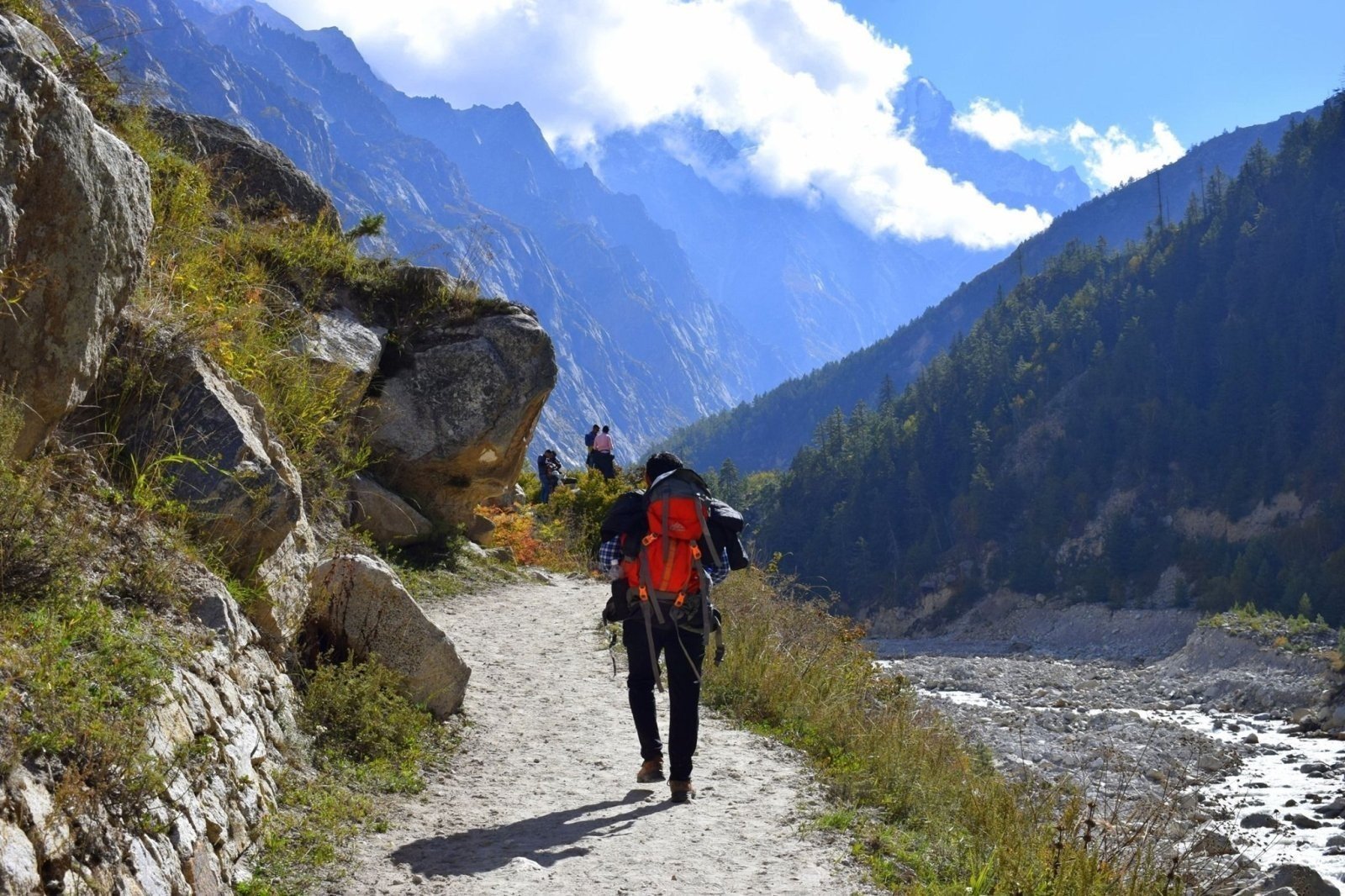
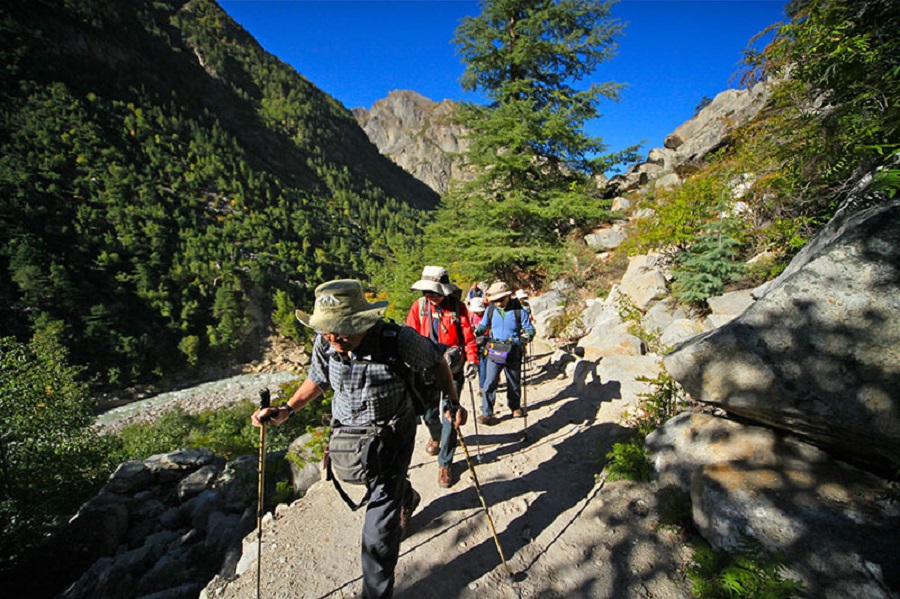
The character of the trek changes after Gaumukh.
The climb from the Gangotri Glacier to Tapovan involves negotiating steep lateral moraines, loose scree, shifting gravel and large boulders. Although this section is not technically difficult, it demands concentration, careful foot placement and the guidance of an experienced trek leader who understands the constantly changing route.
There are also a few stretches along the valley where rockfall is possible, requiring trekkers to cross efficiently without unnecessary delays. These sections are routinely negotiated by organised trekking groups under proper supervision.
The greatest challenge, however, is not the terrain—it is the altitude.
The trek begins at approximately 10,000 feet in Gangotri, which is already higher than many Himalayan trek summits. Tapovan itself stands at nearly 14,650 feet, making proper acclimatisation essential for a safe and enjoyable experience.
This is why responsible trekking organisations always include an acclimatisation day before beginning the trek.
Who Should Attempt the Gaumukh Tapovan Trek?
Despite its dramatic setting, Gaumukh Tapovan is not reserved only for experienced trekkers.
Anyone with good physical preparation, a positive mindset and respect for high-altitude conditions can successfully complete this trek.
If you are planning your first Himalayan trek, proper preparation becomes even more important. Cardiovascular endurance, leg strength and the ability to walk comfortably for six to eight hours over consecutive days will make the experience far more enjoyable.
We strongly recommend reading our guide on preparing for a Himalayan trek before joining this expedition.
- ✔ Suitable for physically fit beginners.
- ✔ Ideal for trekkers wanting to experience glaciers and high mountains for the first time.
- ✔ Previous trekking experience is helpful but not mandatory.
- ✔ Participants below 18 years should be accompanied by parents or guardians.
- ✔ We generally do not recommend this trek for children below 15 years because of the altitude and demanding terrain.
The mountain rewards patience far more than speed.
Flora Along the Gaumukh Tapovan Trek
Unlike meadow treks such as Har Ki Dun or Dayara Bugyal, vegetation along the Gaumukh Tapovan trail becomes progressively sparse as you gain altitude.
The journey begins amidst the rich forests surrounding Gangotri, where towering deodar, pine, birch (Bhoj Patra) and juniper dominate the landscape.
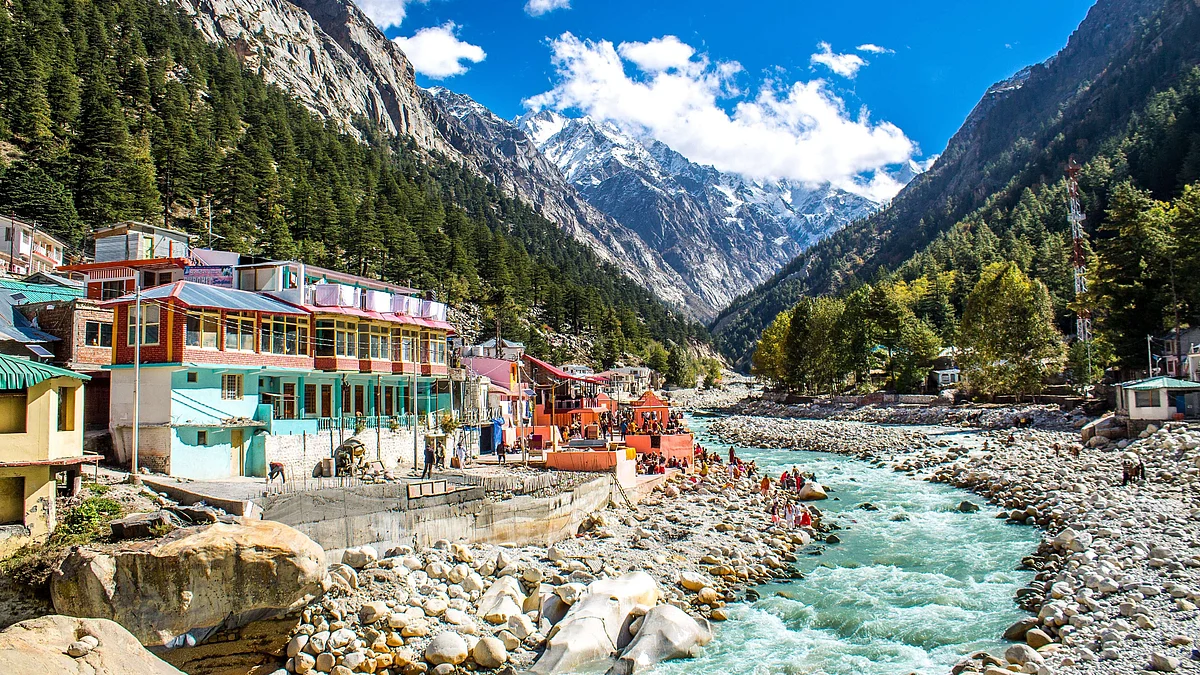
As the valley narrows and altitude increases, trees gradually disappear, surviving only in isolated pockets like Chirbasa and Bhojwasa, whose names themselves reflect the forests that once flourished here.
Scattered shrubs of rhododendron, hardy alpine bushes, thorny vegetation and seasonal wildflowers continue to survive wherever enough soil and moisture accumulate between glacial rocks.
Beyond Bhojwasa, however, the landscape becomes overwhelmingly geological rather than botanical. Rock, moraine, glaciers and snow replace forests almost entirely.
Wildlife of Gangotri National Park
The Gaumukh Tapovan Trek passes through the heart of Gangotri National Park, one of India's most important protected Himalayan ecosystems.
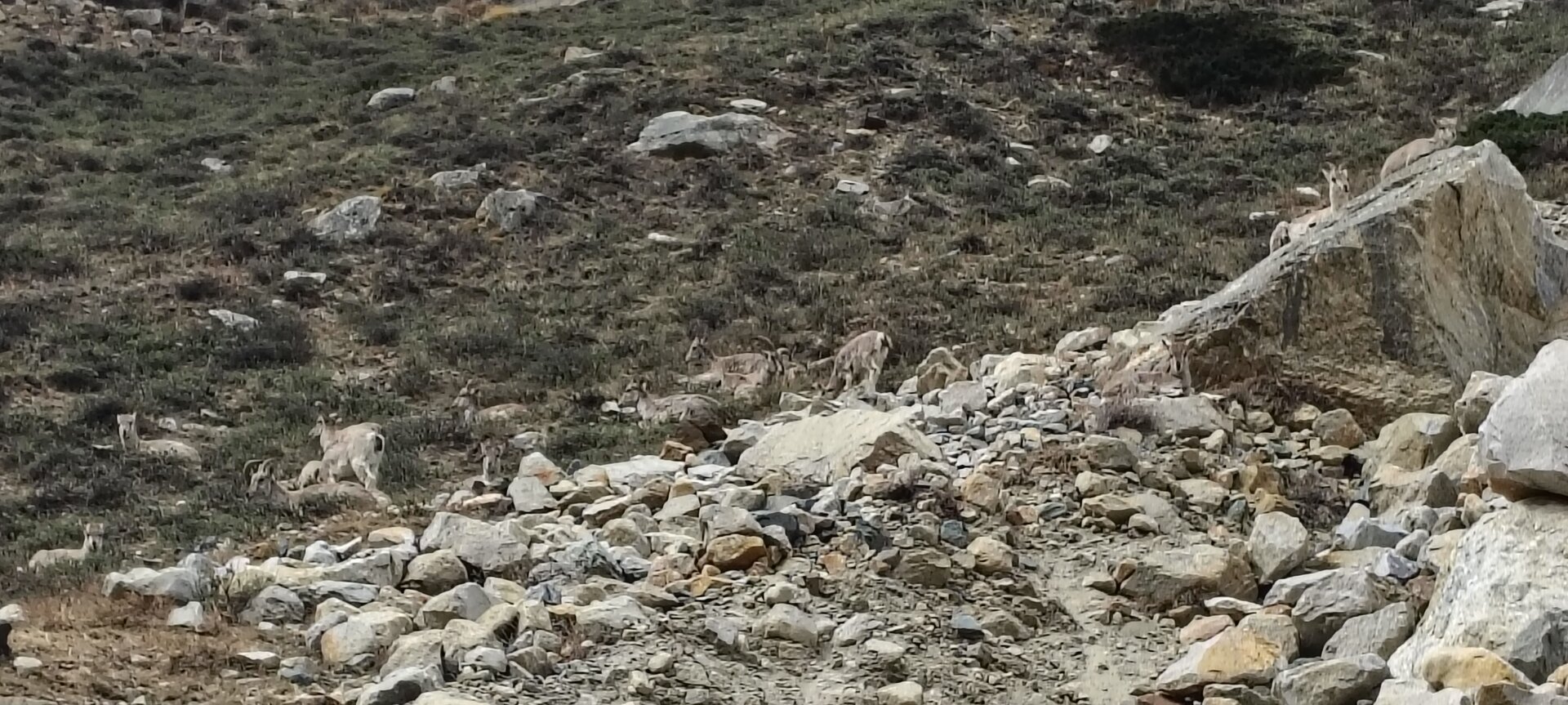
Although the terrain appears harsh, it supports an impressive diversity of wildlife specially adapted to life at high altitude.
Mammals
- Himalayan Blue Sheep (Bharal) – frequently sighted
- Himalayan Black Bear
- Red Fox
- Himalayan Wolf (rare)
- Common Leopard
- Snow Leopard (extremely rare and elusive)
Birdlife
- Golden Eagle
- Himalayan Griffon Vulture
- Lammergeier (Bearded Vulture)
- Various Himalayan Sunbirds
- Snow Pigeon
- Rosefinches and other alpine birds
Bharal are among the most commonly sighted mammals along this route, particularly on rocky slopes around Tapovan. Their presence also explains why this landscape remains one of the important habitats for the elusive snow leopard.
As with every wildlife habitat, patience and silence greatly increase your chances of observing these remarkable animals while ensuring that they remain undisturbed in their natural home.
Accommodation on the Gaumukh Tapovan Trek
One of the unique aspects of the Gaumukh Tapovan Trek is that it can be completed without carrying camping equipment if you plan your journey independently. Unlike many Himalayan treks where tents are the only option, this route offers basic accommodation at different stages of the trail.
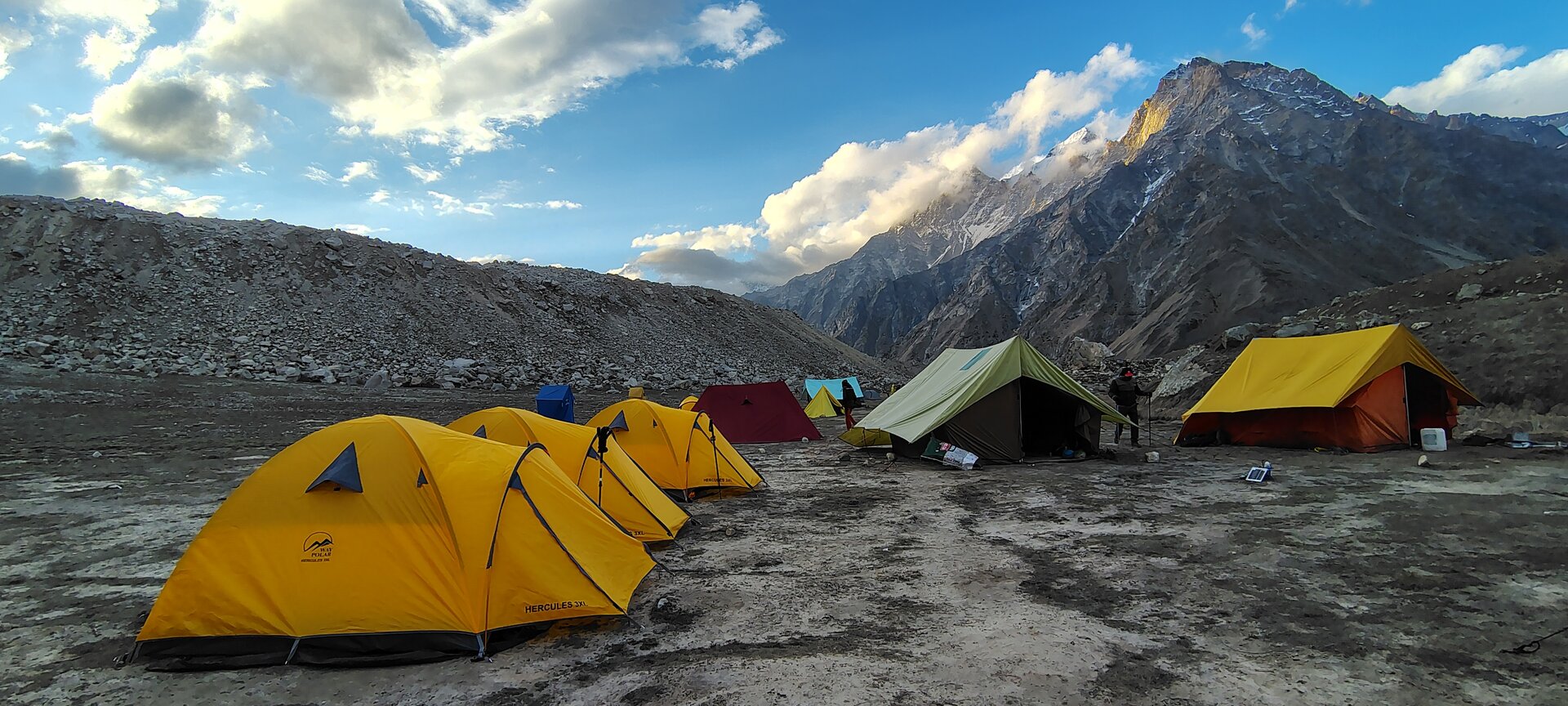
Most trekkers spend the night at Gangotri in hotels or guesthouses. Since Gangotri is one of the four sacred Char Dhams of Uttarakhand, accommodation options are plentiful, although they become extremely busy during the pilgrimage season.
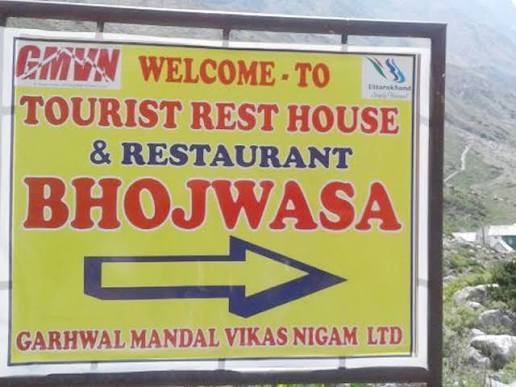
At Bhojwasa, trekkers can choose between the GMVN Tourist Rest House and a few simple ashrams that provide basic accommodation.
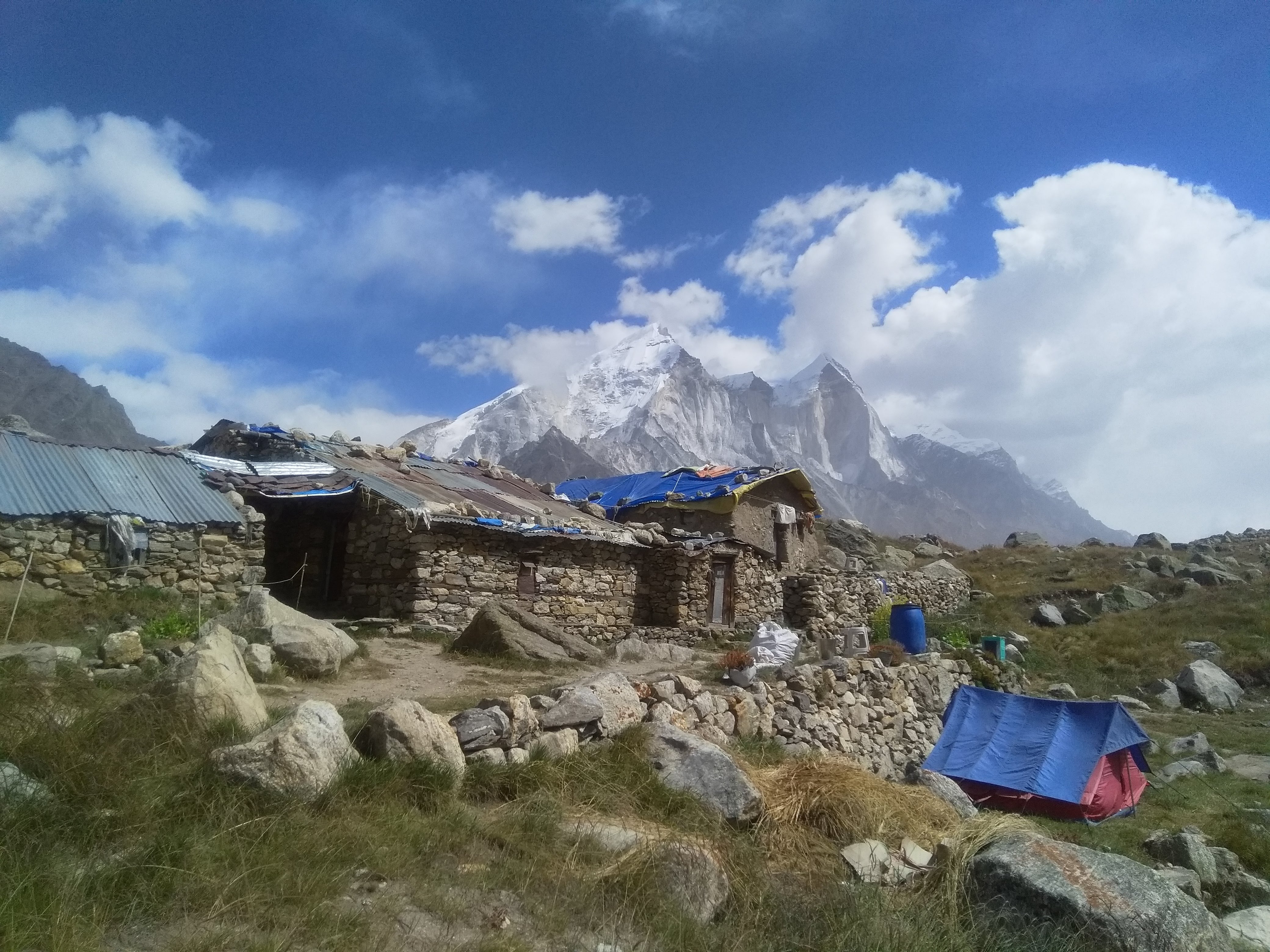
At Tapovan, a saint (Sadhu Baba) has been serving trekkers and pilgrims for many years by providing simple shelter and food at his ashram. His hospitality has become part of the Tapovan experience itself.
Because of these facilities, experienced trekkers planning the route independently often complete the trek without carrying tents or elaborate cooking equipment. However, accommodation remains basic and should never be compared with hotels or mountain lodges found elsewhere.
Gangotri National Park Permit
A permit is mandatory for everyone entering Gangotri National Park.
Shortly after leaving Gangotri, every trekker must report at the Forest Department check-post where permits are verified before allowing entry into the protected area.
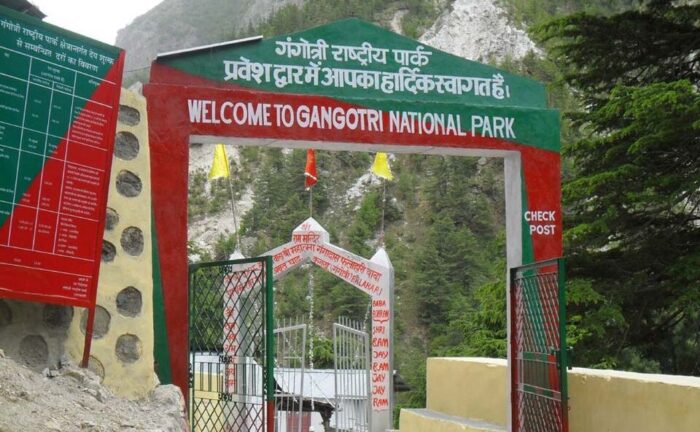
Permits can be obtained through the Forest Department or are generally arranged by trekking organisations before the trek begins.
The permit fee varies for:
- Indian nationals
- Foreign nationals
- Number of camping tents (where applicable)
Since permit regulations and fees may change over time, we always recommend checking the latest guidelines before planning your trek.
If you're joining one of our departures, all permit formalities are taken care of by our team so you can focus entirely on the experience.
Network & Electricity
Mobile connectivity and electricity are available only up to Gangotri.
Once you leave the town and enter Gangotri National Park, mobile networks disappear completely.
This digital disconnect is one of the reasons many trekkers cherish the Gaumukh Tapovan experience. Without notifications or phone calls, your attention naturally shifts to the mountains, the glacier and the rhythm of the trail.
We recommend informing your family before the trek begins that you will remain out of network coverage until you return to Gangotri.
Detailed Itinerary
Different trekking organisations follow slightly different itineraries depending on acclimatisation plans, weather conditions and group requirements.
At Planethimalayas, we believe proper acclimatisation should never be compromised simply to shorten the itinerary.
You can find our complete day-wise itinerary, altitude profile and trek details on the Gaumukh Tapovan Trek page.
Essential Packing List
Although the trail itself is not technically difficult, the weather at Gaumukh Tapovan can change rapidly.
Warm layers, waterproof clothing, proper trekking shoes and protection against strong Himalayan sun are essential throughout the season.
Instead of repeating the complete checklist here, we've created a detailed guide covering everything you'll need.
👉 Read our complete Himalayan Trek Packing Checklist.
Altitude & Safety
The trek begins at nearly 10,000 feet, making acclimatisation one of the most important aspects of the journey.
Even experienced trekkers should never underestimate high altitude. Staying hydrated, walking at a comfortable pace and allowing the body sufficient time to adapt significantly reduces the risk of Acute Mountain Sickness (AMS).
Understanding the symptoms before your trek is one of the best safety measures you can take.
👉 Read our detailed guide on Altitude Sickness (AMS), and prevention and treatment.
Frequently Asked Questions
Can beginners do the Gaumukh Tapovan Trek?
Yes. With good physical preparation and proper acclimatisation, well-prepared beginners can complete the trek successfully.
Is Gaumukh the source of the River Ganga?
Gaumukh is the snout of the Gangotri Glacier from where the Bhagirathi River emerges. The Bhagirathi later meets the Alaknanda at Devprayag, after which the river is officially known as the Ganga.
How difficult is the climb from Gaumukh to Tapovan?
This is the steepest section of the trek and involves loose moraine, boulders and scree. It is not technical but requires careful footing and experienced guidance.
Which peak is visible from Tapovan?
Mount Shivling dominates the landscape. Other prominent peaks include the Bhagirathi massif, Meru, Sudarshan, Thelu and Kharchakund.
Why is Mount Shivling called the Indian Matterhorn?
Its beautifully symmetrical granite pyramid resembles Switzerland's famous Matterhorn and has become one of India's most iconic mountaineering peaks.
Is a permit required?
Yes. Entry into Gangotri National Park is strictly regulated and requires a Forest Department permit.
Can I do the trek without camping?
Yes. Basic accommodation is available at Gangotri, Bhojwasa and Tapovan, making it possible for independent trekkers to complete the route without carrying camping equipment.
Is mobile network available?
Only till Gangotri. There is no reliable mobile connectivity once you enter the national park.
Which is better—summer or autumn?
Both seasons are excellent. Summer offers greener surroundings while autumn provides exceptionally clear mountain views and crisp weather.
Beyond the Trail
Standing before Gaumukh, you realise that rivers are not born gently.
They do not begin as calm streams flowing peacefully through temples and cities.
They burst out of ancient glaciers with tremendous force, carrying ice, rock, mud and the energy of mountains that are still rising even today.
The Ganga that millions worship across India begins here as the wild Bhagirathi, untamed and unstoppable.
Perhaps that is why Gaumukh Tapovan feels different from most Himalayan treks.
You come expecting magnificent mountains, but you leave understanding something much greater—the immense forces that created them.
Walking beside a glacier, crossing its moraine and standing beneath Mount Shivling has a way of putting life into perspective. Problems that once felt overwhelming suddenly seem insignificant against landscapes that have existed for thousands of years and will continue evolving long after we are gone.
For us, this is what trekking has always been about.
Views are memorable.
Photographs are wonderful.
But the greatest journeys quietly reshape the way we think.
Gaumukh Tapovan has a remarkable way of doing exactly that.
The Planethimalayas Way
At Planethimalayas, we believe that every trek should leave you with more than beautiful photographs.
Our goal is to help you understand the mountains—their geography, ecology, history and culture—while experiencing them responsibly and safely.
Small groups, experienced trek leaders, thoughtful acclimatisation and respect for the fragile Himalayan environment form the foundation of every journey we organise.
Whether this is your first Himalayan trek or one among many, our aim remains the same: to help you experience the mountains not as tourists, but as learners.
Ready to witness the birthplace of the Ganga, stand beneath the magnificent Mount Shivling and walk alongside one of the Himalayas' greatest glaciers?
👉 Explore our Gaumukh Tapovan Trek and join us for an unforgettable journey into the heart of the Himalayas.
