WhatsApp FAQs
×

Trek Grade Guide:


Trekking in the Himalayas is a true adventure experience — a journey into high-altitude wilderness where nature exists in its most raw and powerful form. Every trek comes with physical challenges, unpredictable weather, and varying terrain. Choosing the right trek grade is essential not just for a great experience, but also for safety and proper acclimatization.

To help you make the right choice, treks are categorized into three levels based on altitude, terrain, duration, and overall difficulty:

Easy (Beginner-Friendly Treks):
Ideal for first-time trekkers or those looking for an easy trek in the Himalayas. These treks usually last up to a week, with shorter hiking days, gradual altitude gain, and a maximum altitude of around 14,000 ft. The terrain remains well-defined, often within or near the tree line, with civilization relatively accessible. Weather conditions are more predictable, making these treks safer and easier to manage, with quicker rescue access if required.

Moderate Treks:
Designed for trekkers with some prior experience or good fitness levels. These treks may extend beyond a week and include a mix of short and long trekking days, with altitudes reaching up to 16,000 ft. You move above the tree line into more rugged landscapes — including alpine meadows, moraines, and high-altitude terrain. Weather becomes more unpredictable, and conditions can change suddenly. While still manageable, these treks require better preparation, endurance, and mental strength.

Difficult (Expedition-Level Treks):
These are high-altitude expeditions meant for experienced trekkers. Routes often exceed 17,000 ft and pass through glaciers, snowfields, steep ascents, river crossings, and technical terrain. Treks can last up to two weeks, taking you far from civilization into extreme Himalayan conditions. Weather can shift rapidly, and sections may require technical equipment like ropes or ice axes. Rescue in such regions is complex, making experience, self-sufficiency, and strong mental resilience absolutely essential.

Understanding these categories helps you choose a trek that matches your fitness, experience, and expectations — ensuring a safe, enjoyable, and truly memorable Himalayan adventure.

×


PriceNote – Listed Price & Customisation Rules:
The listed trek price applies to our fixed departures for the specified itinerary. Trek fees including any add-ons for customized groups may vary based on your preferences, ensuring every adventure is tailored to your needs.

Group Booking Offer:
For groups of 8 or more booking together, the trek fee for 1 participant will be waived as a token to encourage shared adventures.

Scholarship for Kids:
Children under 15 years receive a 30% discount on the trek price, making it easier for families to explore the Himalayas together.

×


Transport Price Note:
The transport price mentioned is only an current indicative estimate per person, assuming a Non-AC vehicle like Bolero shared by at least 4 participants.
Fewer participants → cost rises;
More participants → cost decreases.

Transport Selection During Booking:
Selecting transport during booking informs us of your preference. No payment is collected at booking.

Final Cost & Payment:
Final transport cost will be communicated before departure and to be paid directly to the cab driver.

×

Itinerary Note:
This itinerary represents the most updated plan, but minor adjustments may occur due to operational needs or mountain conditions.

Dzongri Trek

A Journey Through Alpine Forests, Open Meadows & The Majestic Khangchendzonga

Gallery

Trek Overview

  • ⏳ Trek Duration: 6 Nights / 7 Days
  • ⚡ Trek Grade: Moderate ?
  • 🏔️ Max Altitude: 13,675 ft (Dzongri Top)
  • ⚡ Trek Distance: ≈50 Km
  • 🌤️ Best Time: October – April
  • 🗺️ Region: Khangchendzonga National Park, Sikkim
  • 📍 Start / End: Yuksom
  • 🧥 Cloakroom Facility: Available

Price starting from ?

INR 17,900 * Yuksom to Yuksom

*Price inclusive of all applicable taxes (GST included).

Small group sizes • High guide-to-trekker ratio • No hidden costs

Addons (Optional)

  • Transportation – INR 5,000 (* Siliguri / Bagdogra to Siliguri / Bagdogra) ?
  • Offloading Bags – INR 4,000 (* Maximum weight 9kg / bag)

Choose Your Trek Dates

Limited slots per batch to ensure safety & experience

December 2026

12 Dec - 18 Dec Loading…

January 2027

February 2027

**Looking for a date that works for you?**

We can arrange a custom departure if 3+ trekkers align.

Walking The Trail

The Dzongri Trek is one of the most rewarding journeys into the Eastern Himalayas — a trail that leads through ancient mountain forests, traditional Himalayan settlements, spectacular alpine meadows and some of the finest views of the Kangchendzonga massif. Located in the heart of West Sikkim's Khangchendzonga National Park, this trek offers an extraordinary combination of natural beauty, mountain culture and high-altitude adventure.
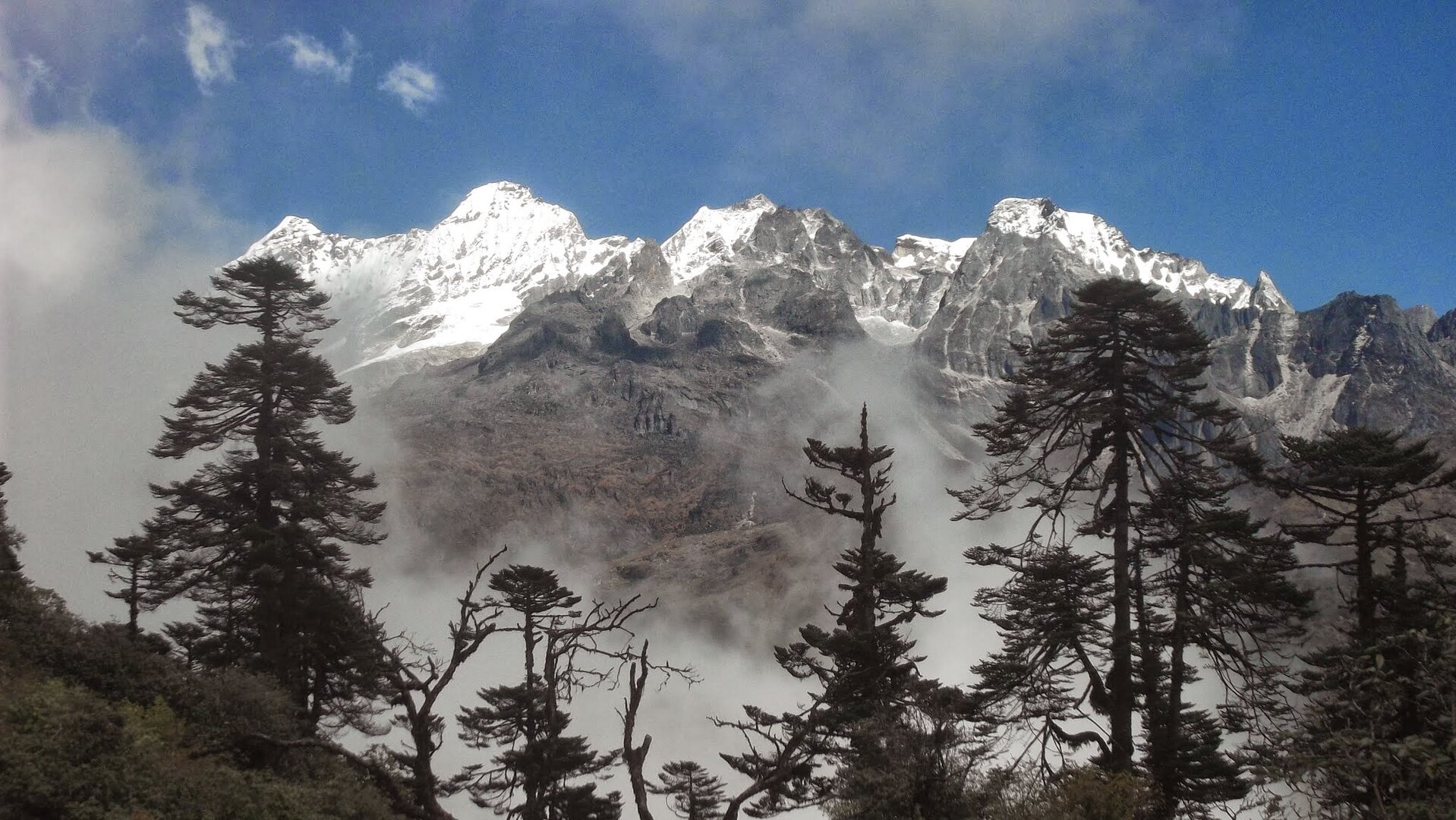
The journey begins in Yuksom, the historic first capital of Sikkim and the gateway to the mighty Khangchendzonga range. From here, the trail gradually enters a world of dense oak, magnolia and rhododendron forests. Wooden bridges cross mountain streams, stone pathways wind through shaded valleys, and the sound of the Prek Chhu River accompanies much of the ascent. As you move higher, the forest changes character, revealing occasional openings through which distant Himalayan peaks begin to emerge.
One of the most memorable aspects of the Dzongri route is its remarkable diversity of landscapes. The lower trail passes through lush forests and quiet campsites at Sachen and Bakhim before reaching Tshoka, a beautiful Himalayan settlement perched above the valley. Traditional wooden structures, fluttering prayer flags and the surrounding mountain scenery give this section a distinctly Sikkimese character. Beyond Tshoka, the trail climbs through magnificent rhododendron forests towards Phedang, where the landscape gradually opens up.
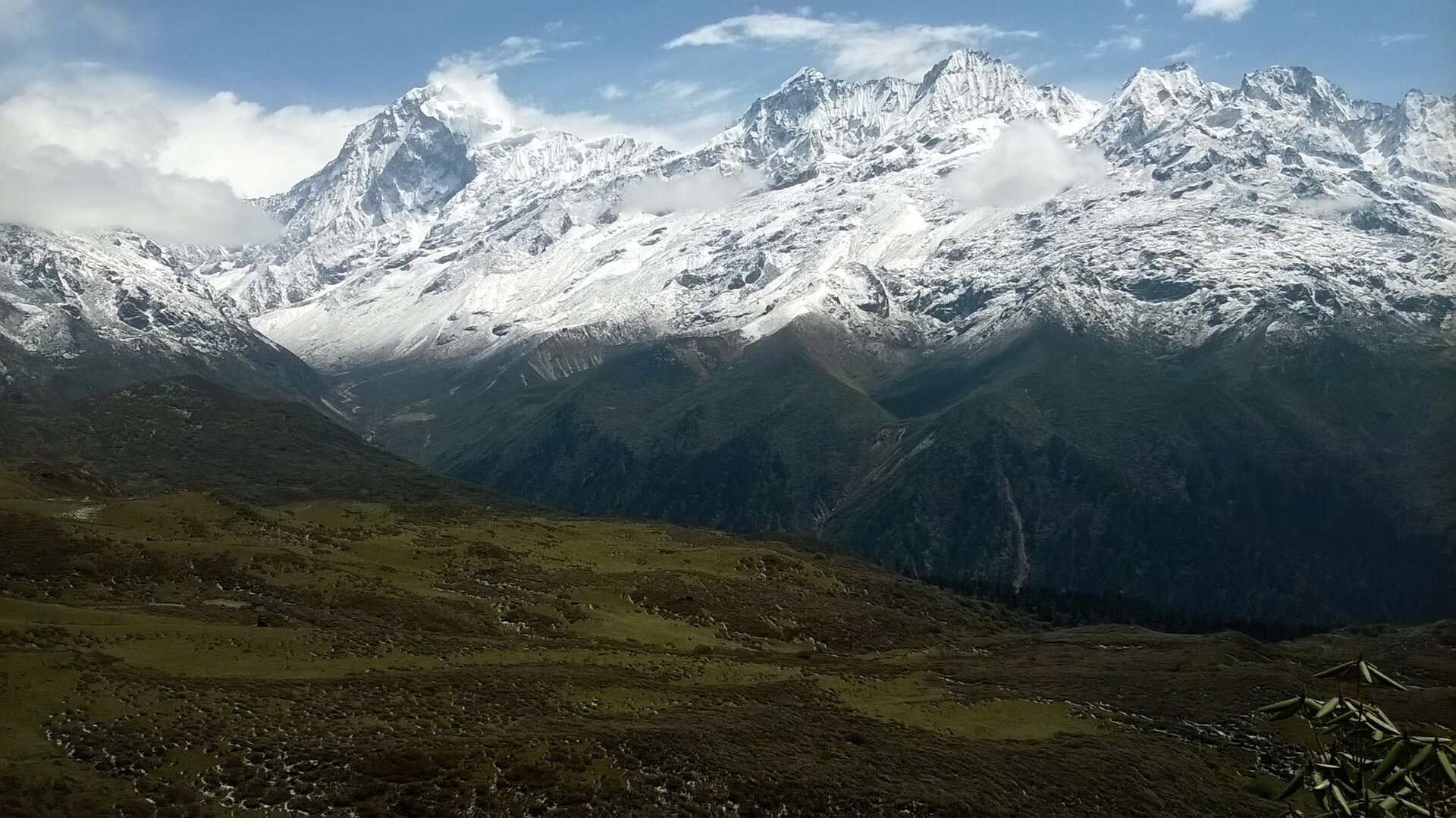
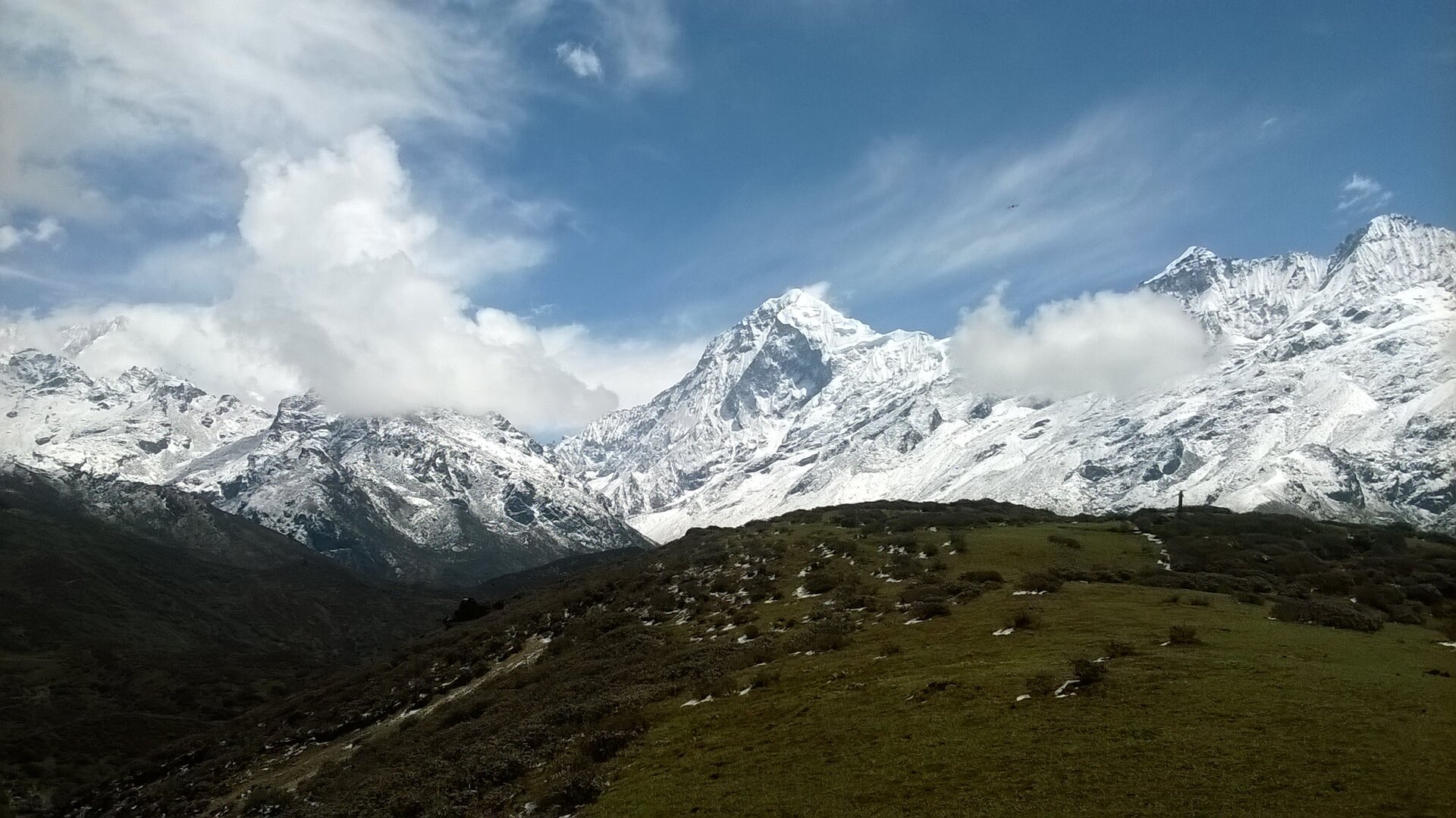
The ascent to Deorali Top marks a dramatic transition into the high alpine region. Forest cover begins to thin, revealing expansive mountain views and the rugged terrain of the Eastern Himalayas. From here, a relatively gradual trail leads towards Dzongri, a spectacular high-altitude meadow surrounded by towering Himalayan peaks. Depending on the season, these meadows may be covered in fresh snow, dotted with alpine vegetation, or illuminated by the rich colours of changing mountain landscapes.
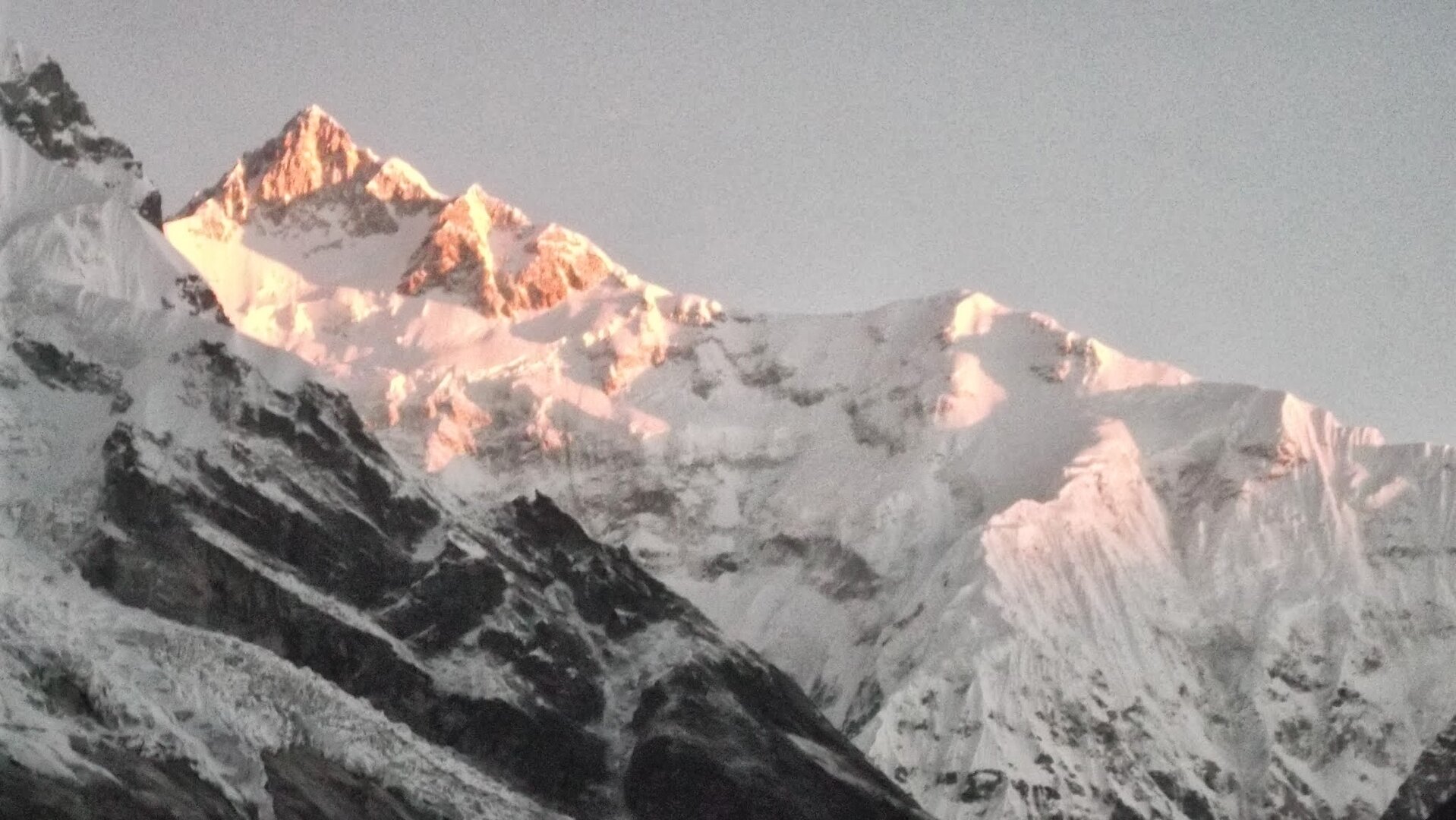
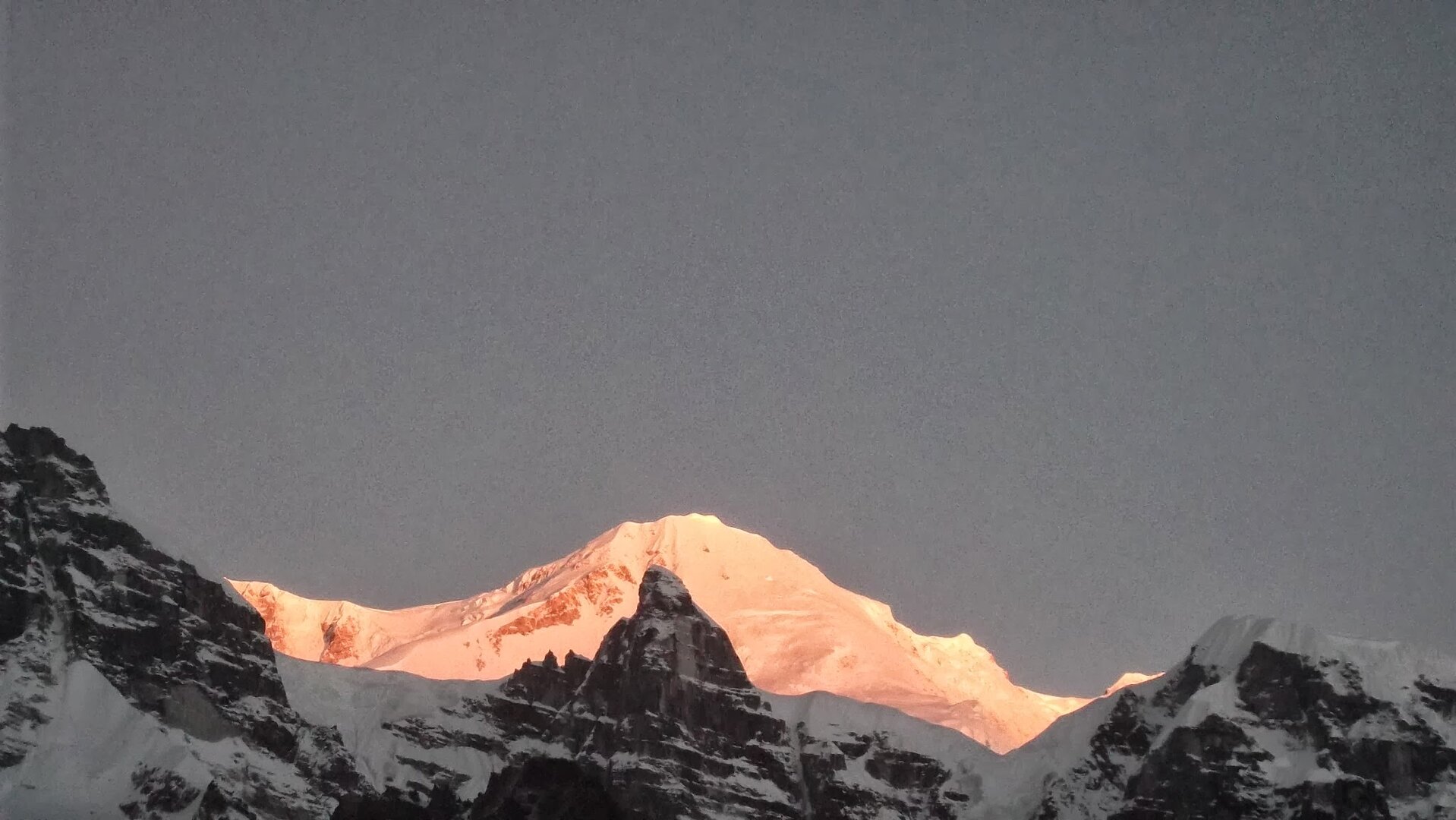
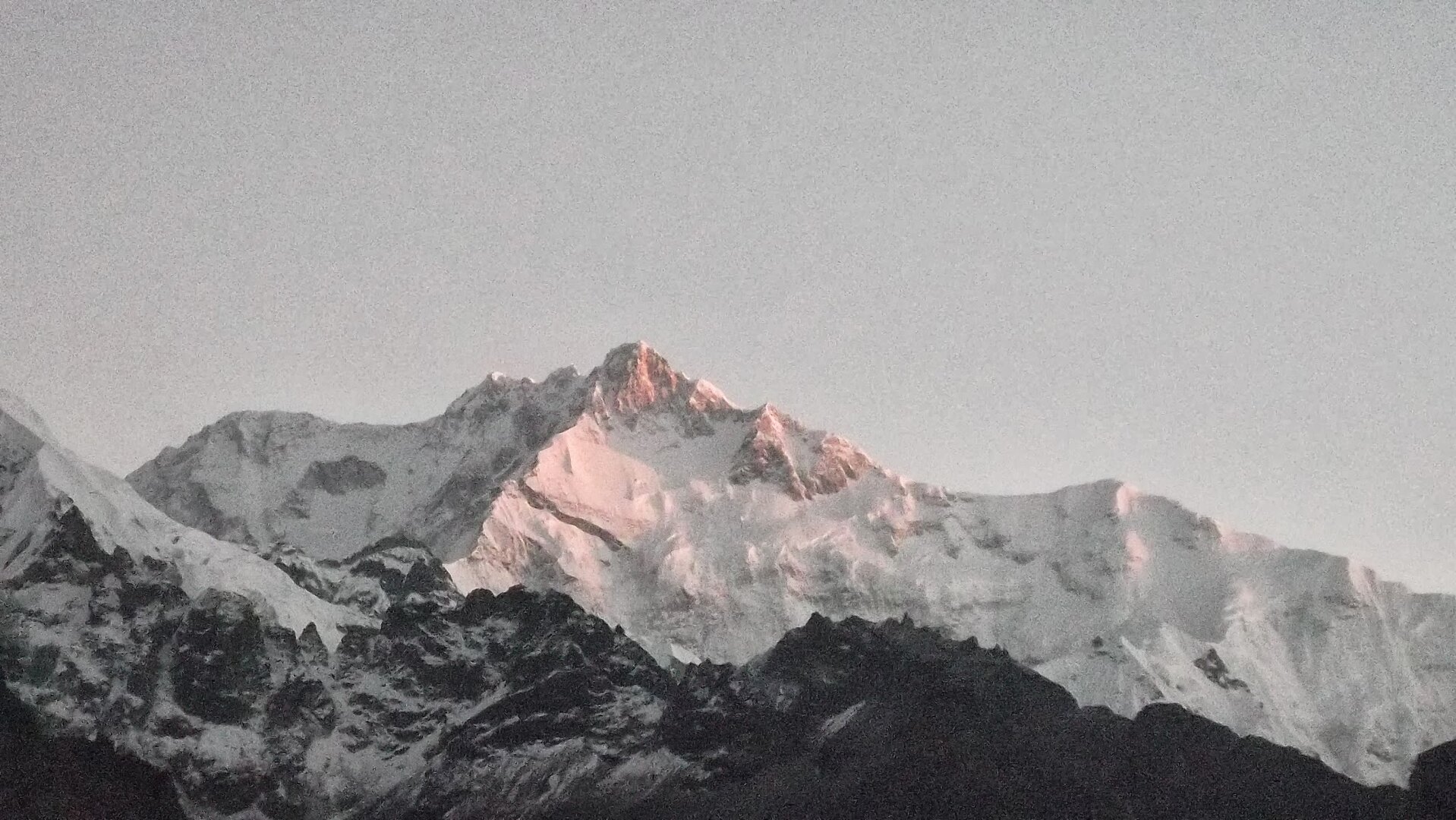
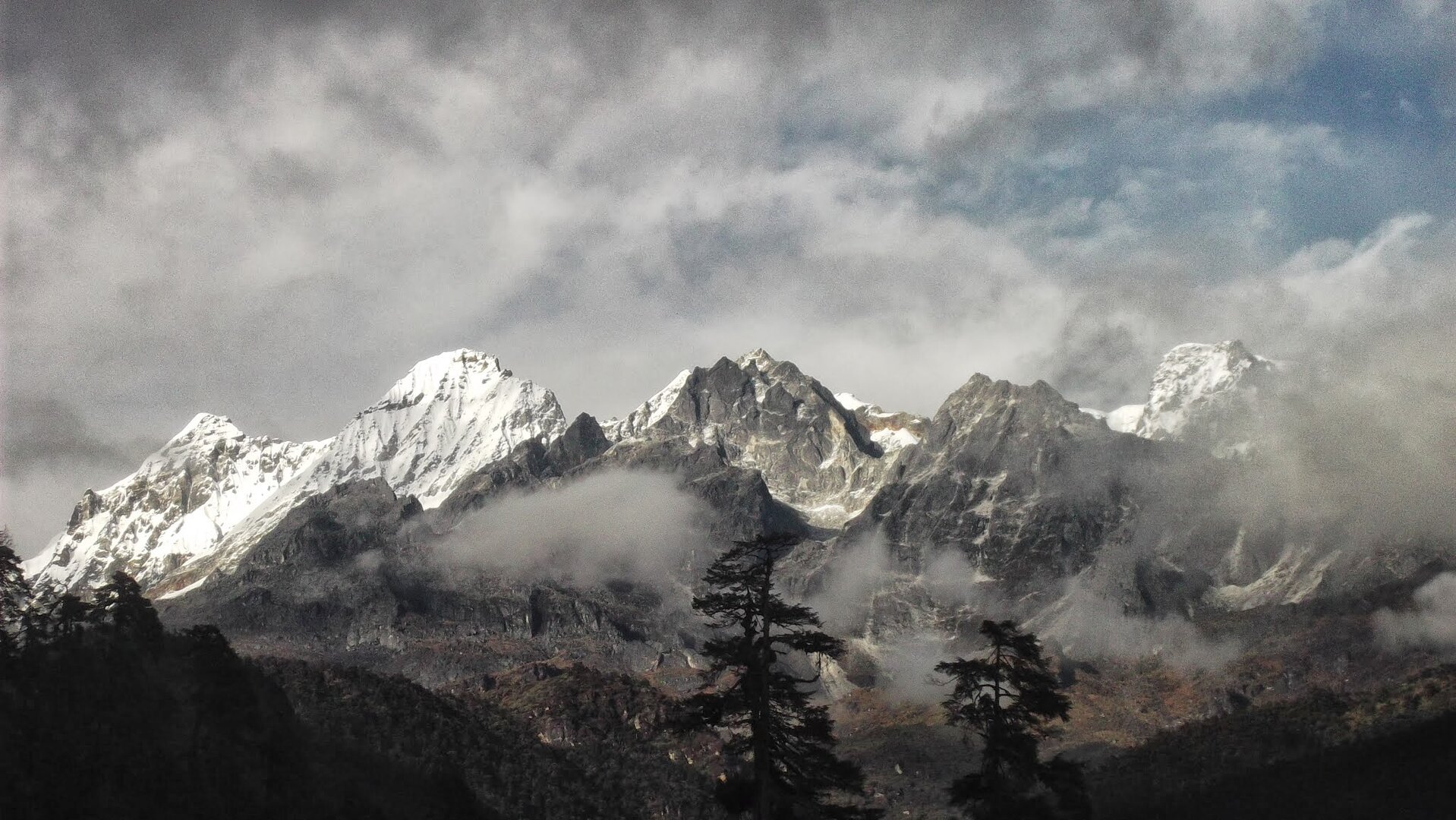
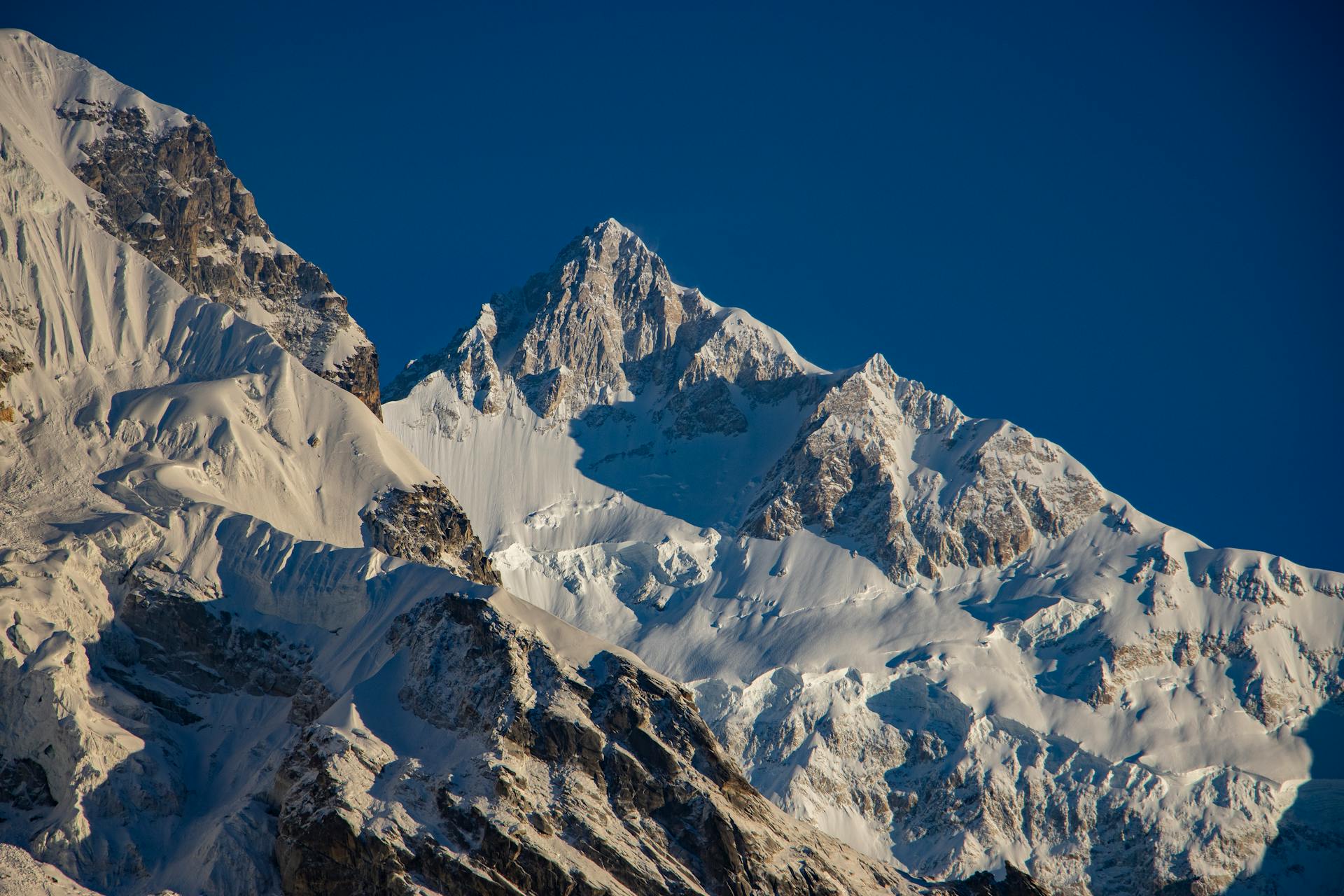
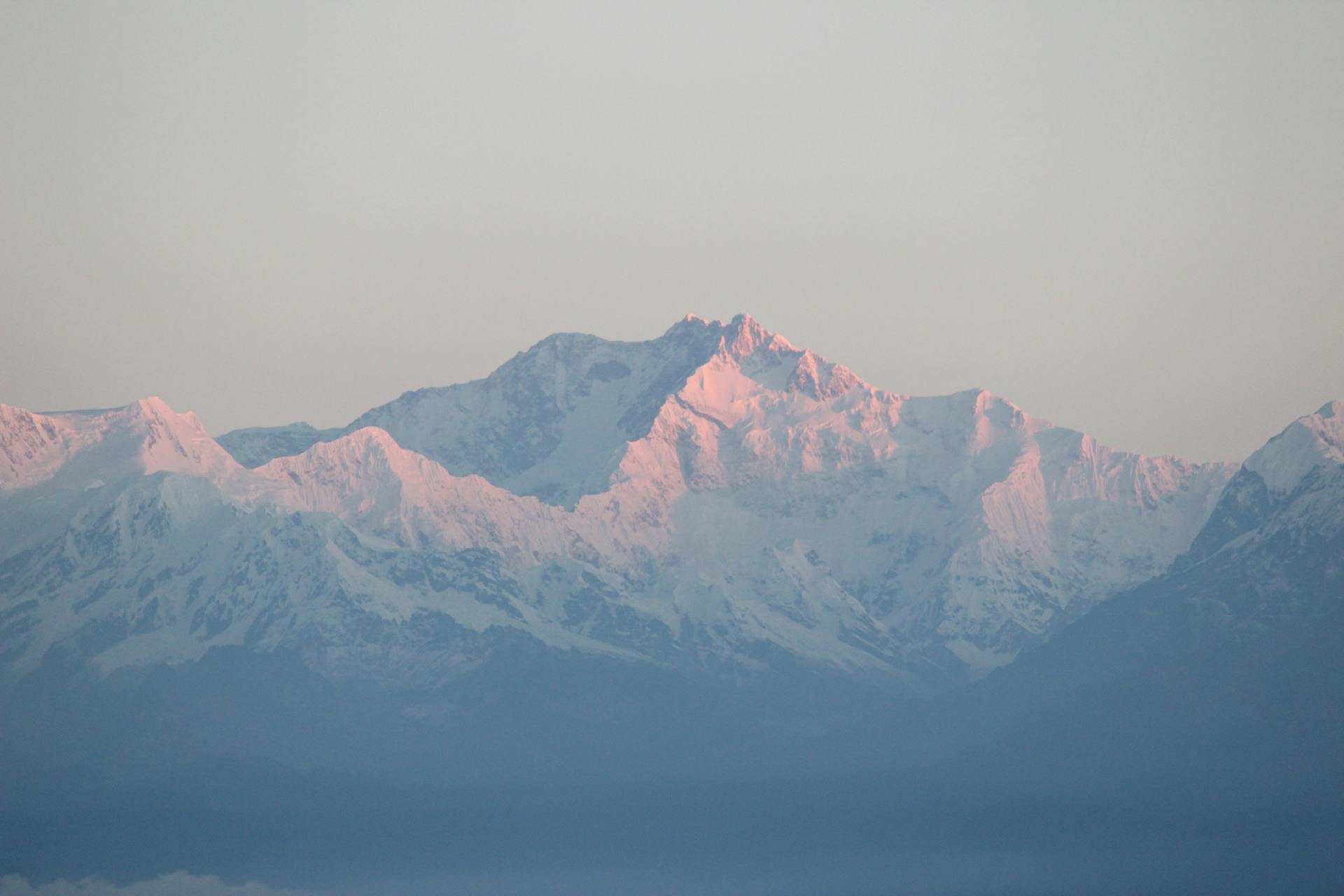
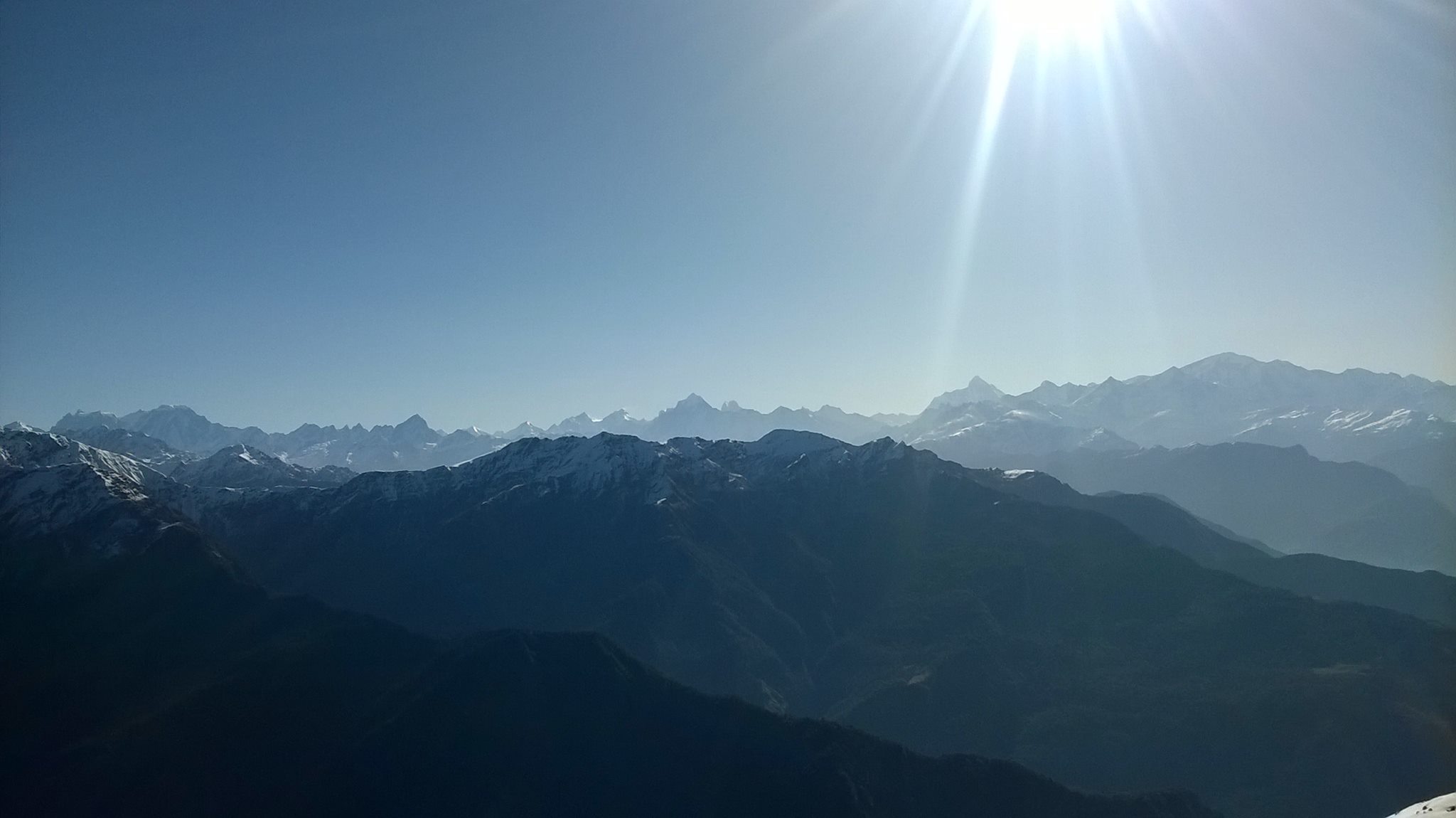
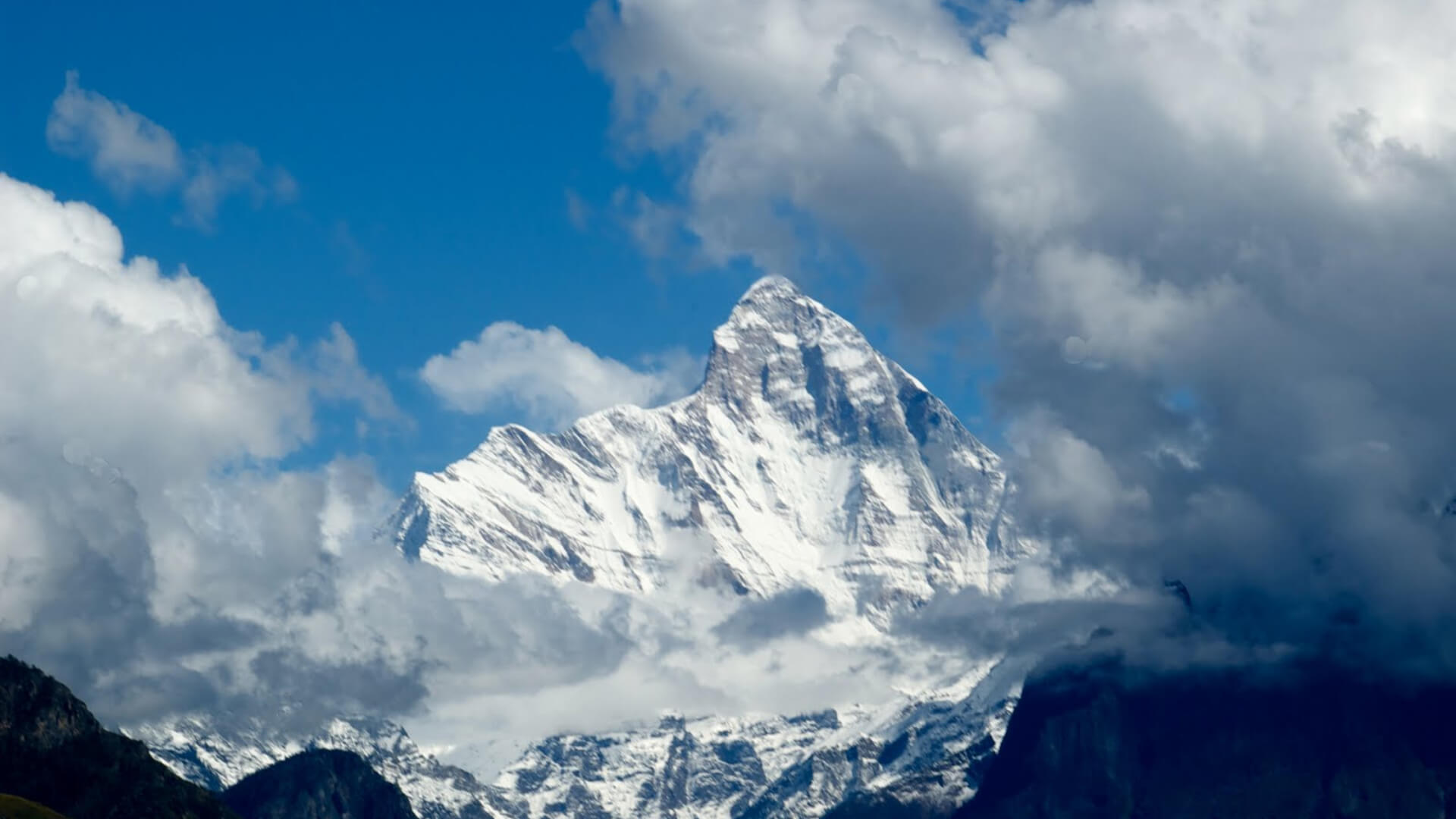
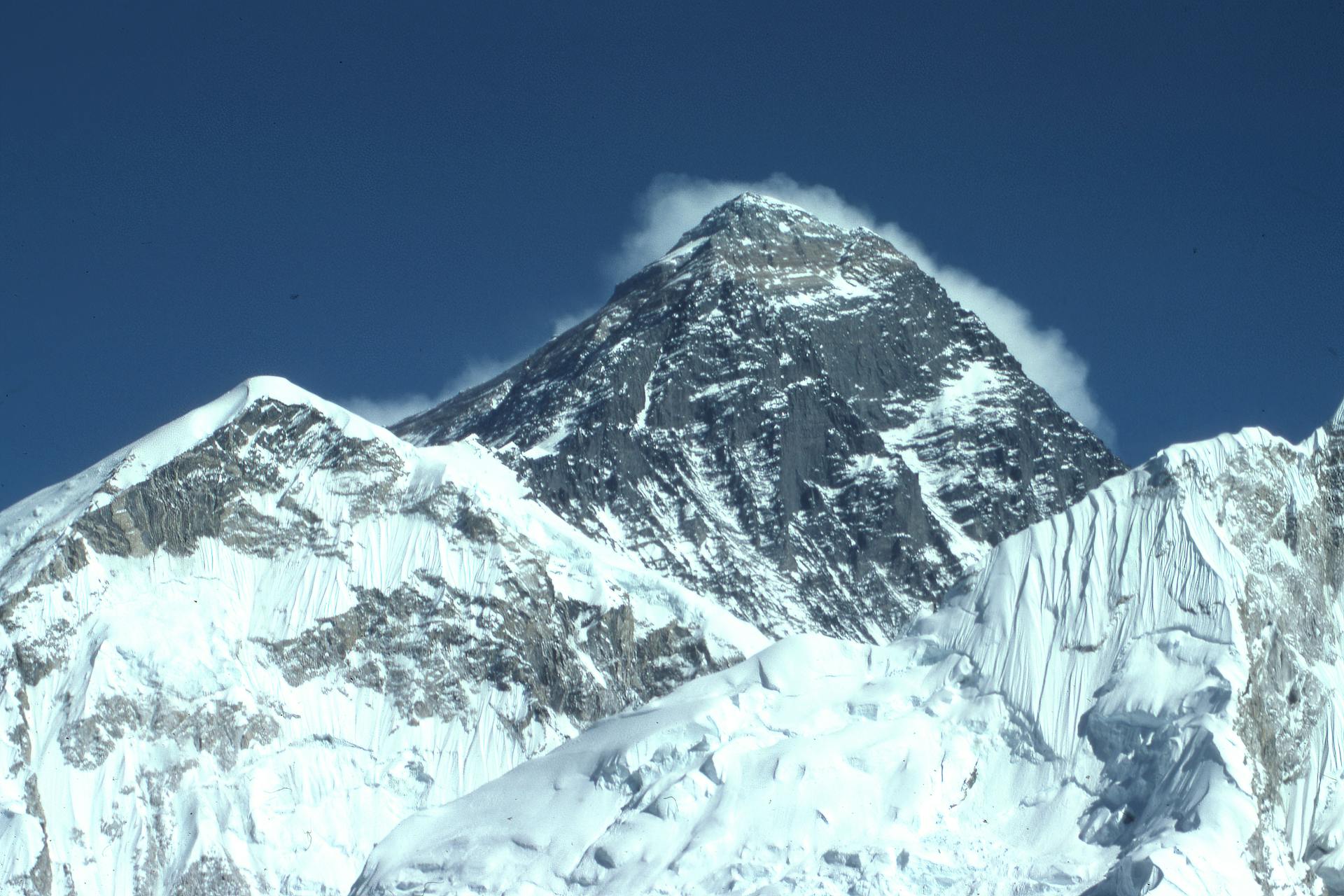
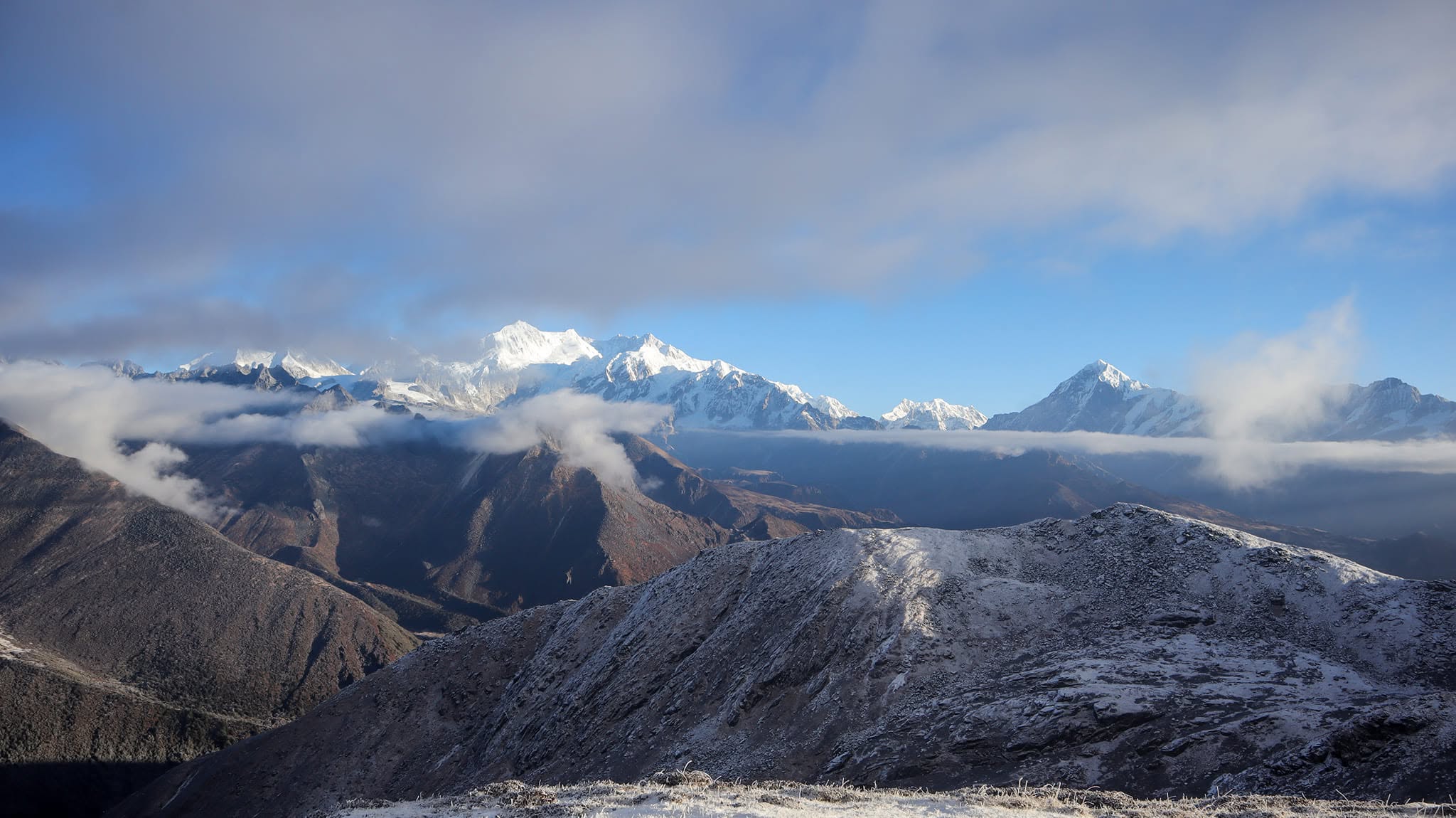
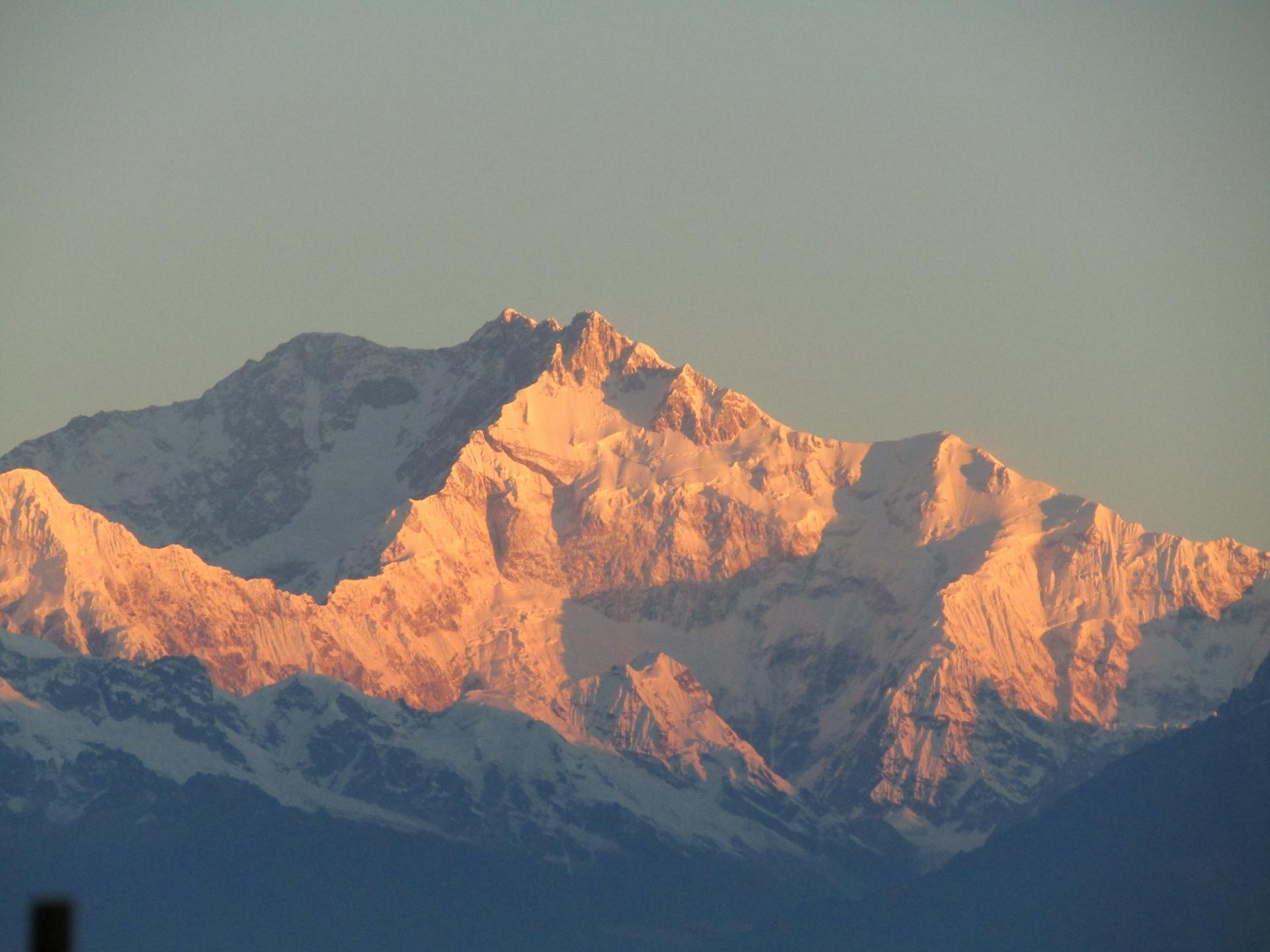
The defining experience of the trek awaits at Dzongri Top, approximately 4,170 metres above sea level. An early morning ascent rewards trekkers with an extraordinary panorama of the Kangchendzonga massif. As the first rays of sunlight reach the mountains, Kanchenjunga, Pandim, Kabru North and South, Rathong, Kokthang and several surrounding summits gradually light up against the morning sky. The scale of the mountains, the changing colours of the snowfields and the vastness of the surrounding landscape create a sunrise experience that remains etched in memory.
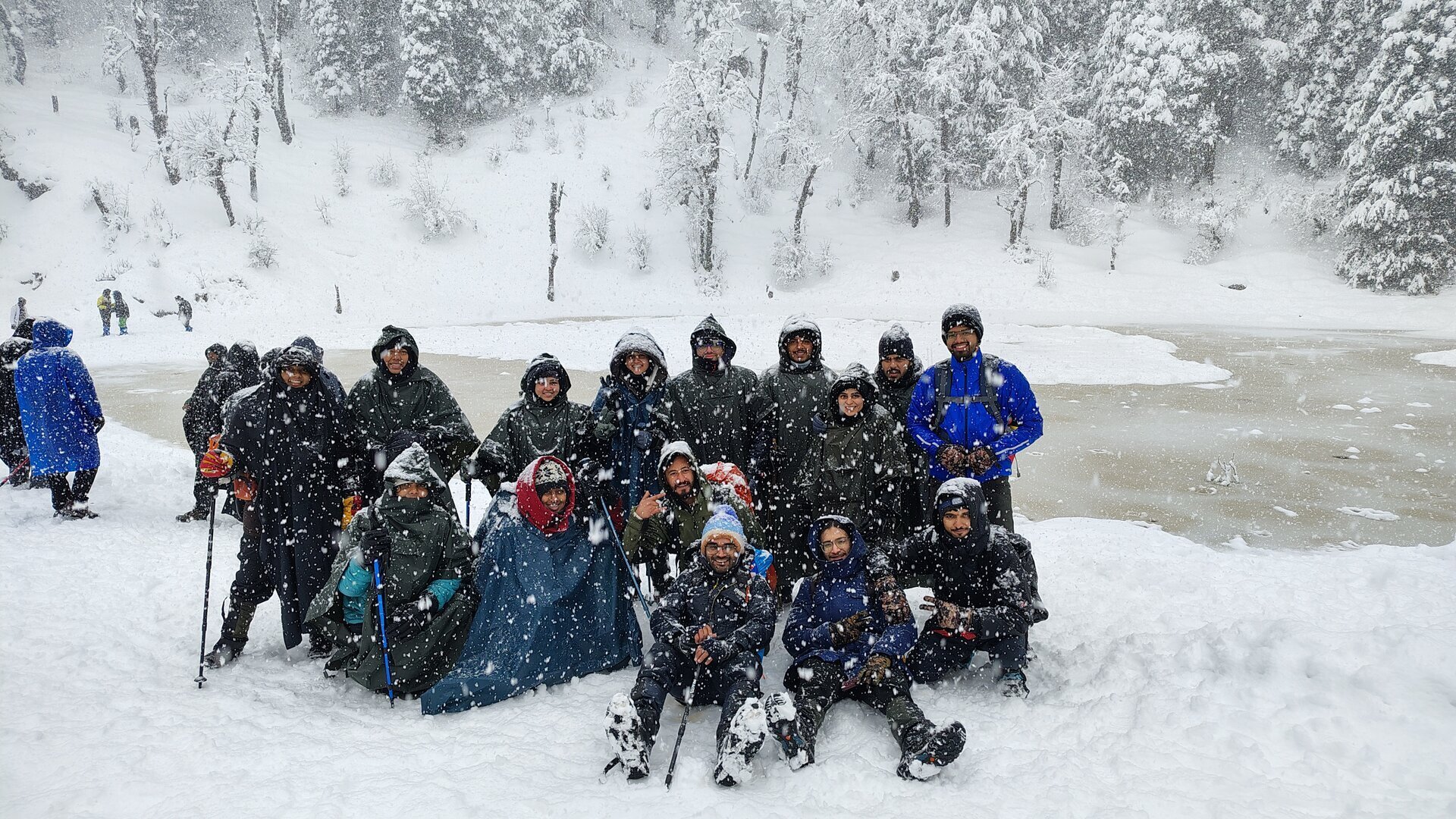
October and November are particularly rewarding for trekkers seeking clear skies, excellent mountain visibility and crisp autumn landscapes. December to February brings a completely different character to Dzongri, with the possibility of snow-covered meadows, frozen trails and an extraordinary sense of solitude. March and April introduce the beauty of spring, when rhododendron forests begin to bloom and the mountain landscape gradually awakens. May can also be considered a shoulder-season option, subject to weather and trail conditions, although the approaching monsoon makes it less dependable.
Unlike treks that rely on a single summit or viewpoint, Dzongri offers an immersive mountain experience throughout the journey. Every section of the trail has its own character — from the forested river valleys below to the open alpine landscapes above. The gradual change in vegetation, terrain, temperature and mountain scenery makes the journey as rewarding as the final viewpoint.
At an altitude approaching 4,000 metres, the Dzongri Trek is a physically demanding high-altitude adventure despite its moderate grading. Long ascents, significant altitude gain and changing mountain conditions require good cardiovascular fitness, endurance and proper preparation. During colder months, snow and low temperatures can increase the difficulty considerably, while wet-season conditions make the route unsuitable for trekking.
For trekkers looking to experience the grandeur of the Eastern Himalayas without committing to the longer Goechala route, Dzongri offers an exceptional alternative. It brings together magnificent mountain panoramas, beautiful forests, alpine meadows and the cultural charm of Sikkim in one unforgettable journey.
More than just a trek to a viewpoint, Dzongri is an opportunity to experience the many moods of the Himalayas — from the golden forests of autumn and the pristine silence of winter to the blooming trails of spring. A journey that reveals the true character of the mountains, one step at a time.
Read More

Highlights

✅ Witness an extraordinary sunrise over Mt. Khangchendzonga from Dzongri Top

✅ Explore the spectacular high-altitude alpine meadows of Dzongri

✅ Trek through ancient oak, magnolia and rhododendron forests

✅ Experience the changing landscapes of the Eastern Himalayas across seasons

✅ Enjoy panoramic views of Kanchenjunga, Pandim, Kabru, Rathong and Kokthang

✅ Discover the traditional Himalayan settlement of Tshoka and the beautiful Prek Chhu Valley

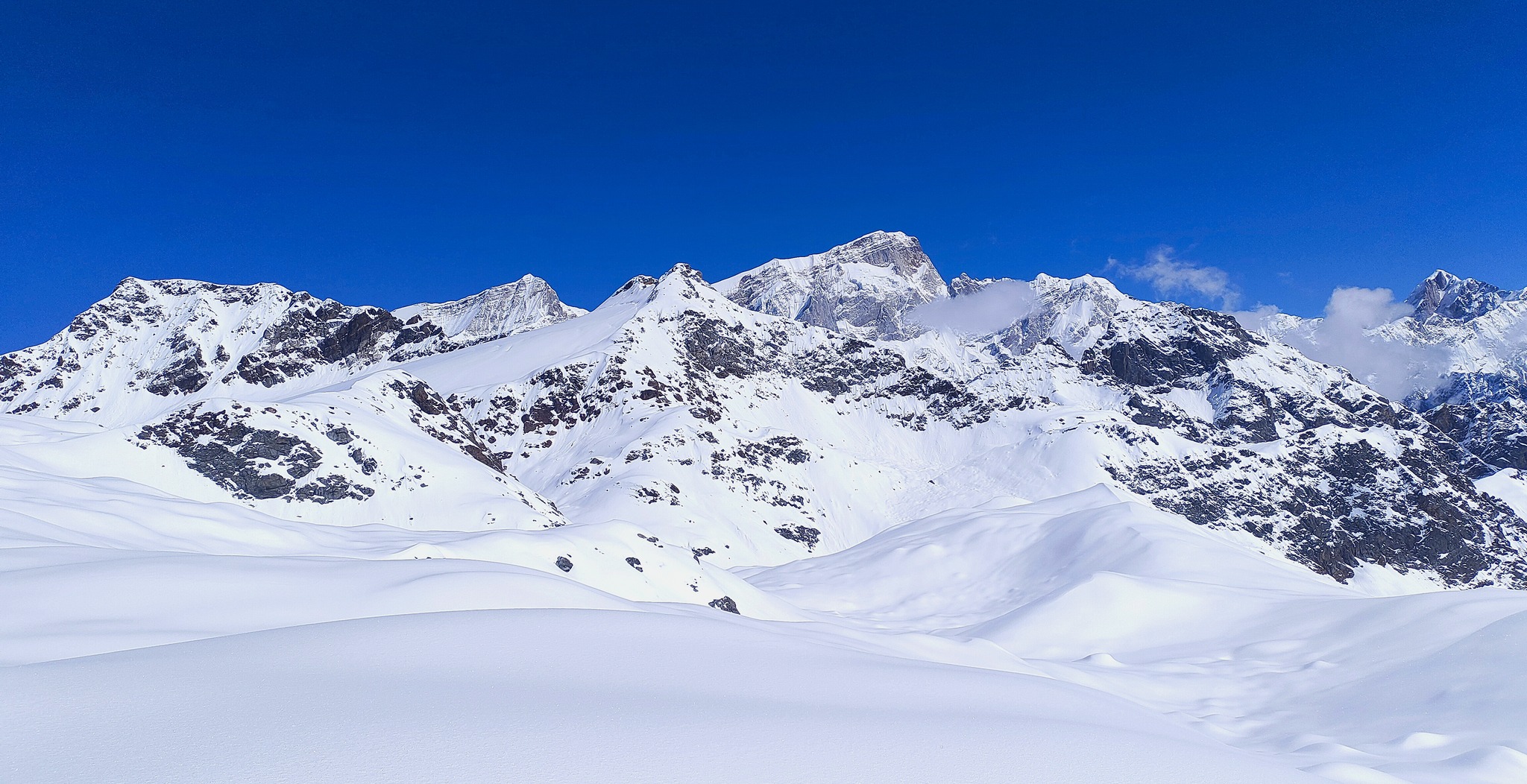
✅ Experience the possibility of pristine snow landscapes during the winter months

Itinerary

?
• ~150 km | 6–7 hr drive.
• The journey to Yuksom takes you through a scenic 6–7 hour drive from NJP or Bagdogra, winding past emerald tea gardens, river valleys and the rolling foothills of Sikkim. As you ascend into the Himalayas, the air turns cooler and the rhythm of life slows down. Yuksom, once the first capital of Sikkim (established in 1642), still carries the charm of an ancient Himalayan settlement — fluttering prayer flags, old monasteries and quiet lanes lined with traditional homes. After checking into a guesthouse, spend the evening sorting out documents for trek permits and checking your gear. If you reach Yuksom early, take a short acclimatization walk to Kathok Lake or the Norbugang Coronation Throne, both steeped in Sikkim's royal and spiritual history. As dusk settles over the valley, meet your trek crew over dinner, discuss the trail ahead and get a good night's rest.
• Trek: ~8 km | 5–6 hrs.
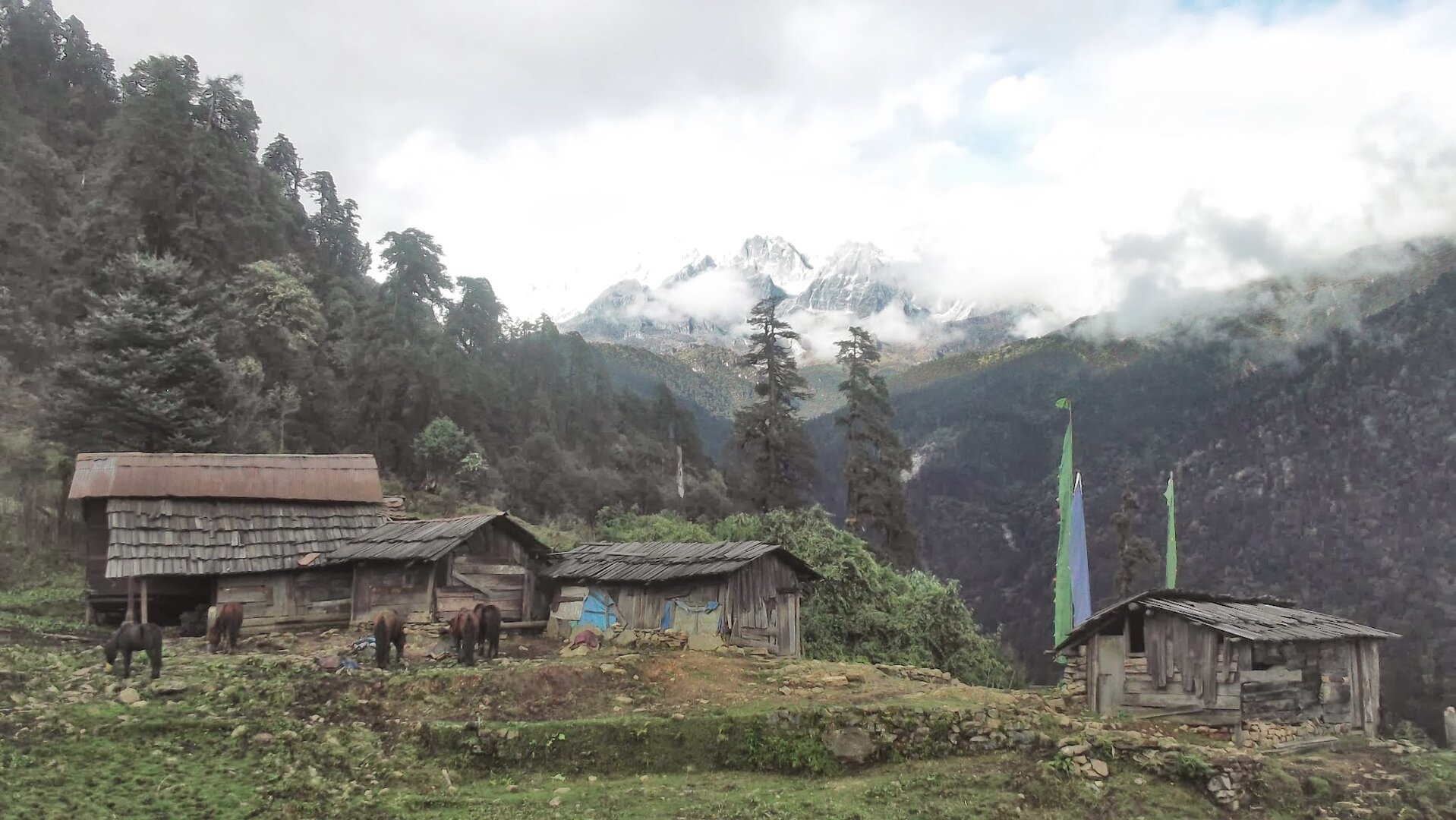
• Your adventure begins with the first trek from Yuksom to Sachen — a beautiful introduction to the forests and rivers of Khangchendzonga National Park. After breakfast, the trail takes you past traditional wooden homes and cultivated fields before gradually leading into the wilderness. Mobile networks fade, human settlements become less frequent, and the sounds of nature begin to take over.
You will soon pass through the entrance area of Khangchendzonga National Park, a UNESCO World Heritage site known for its remarkable biodiversity. The path meanders through broadleaf, oak and silver oak forests, with ferns, orchids and Himalayan vegetation lining the trail. Wooden bridges span the Prek Chhu River, providing peaceful stops where you can enjoy the cool mountain air and the sound of flowing water.
The gradient remains relatively moderate until after the river crossings, from where a steeper ascent begins towards Sachen. As you climb higher, the forest becomes denser and the trail more secluded.
By late afternoon, you reach the Sachen campsite, tucked inside a quiet forest clearing above the Prek Chhu Valley. The sound of the distant river adds to the tranquillity of this beautiful campsite. Rest well and recharge for the next day's ascent towards Tshoka.
• Trek: ~7 km | 4–5 hrs.
• Today's trail takes you from the forested campsite of Sachen to the picturesque Himalayan settlement of Tshoka, with a refreshing halt at Bakhim along the way. After breakfast, begin a beautiful forest walk that winds through oak, maple and rhododendron forests, following the Prek Chhu River valley below.
Soon, you reach the Prek Chhu Bridge, a scenic wooden crossing above a rushing mountain stream and a wonderful place for a short break. From here, the trail climbs steadily through lush forests. Keep an eye out for the colourful Himalayan birds that inhabit this region.
A series of steep zigzags brings you to Bakhim, a small resting point offering lovely views of the Yuksom Valley far below. Trekkers often stop here for tea and snacks before continuing the ascent. Beyond Bakhim, the path becomes steeper as you climb through magnificent magnolia and rhododendron forests.
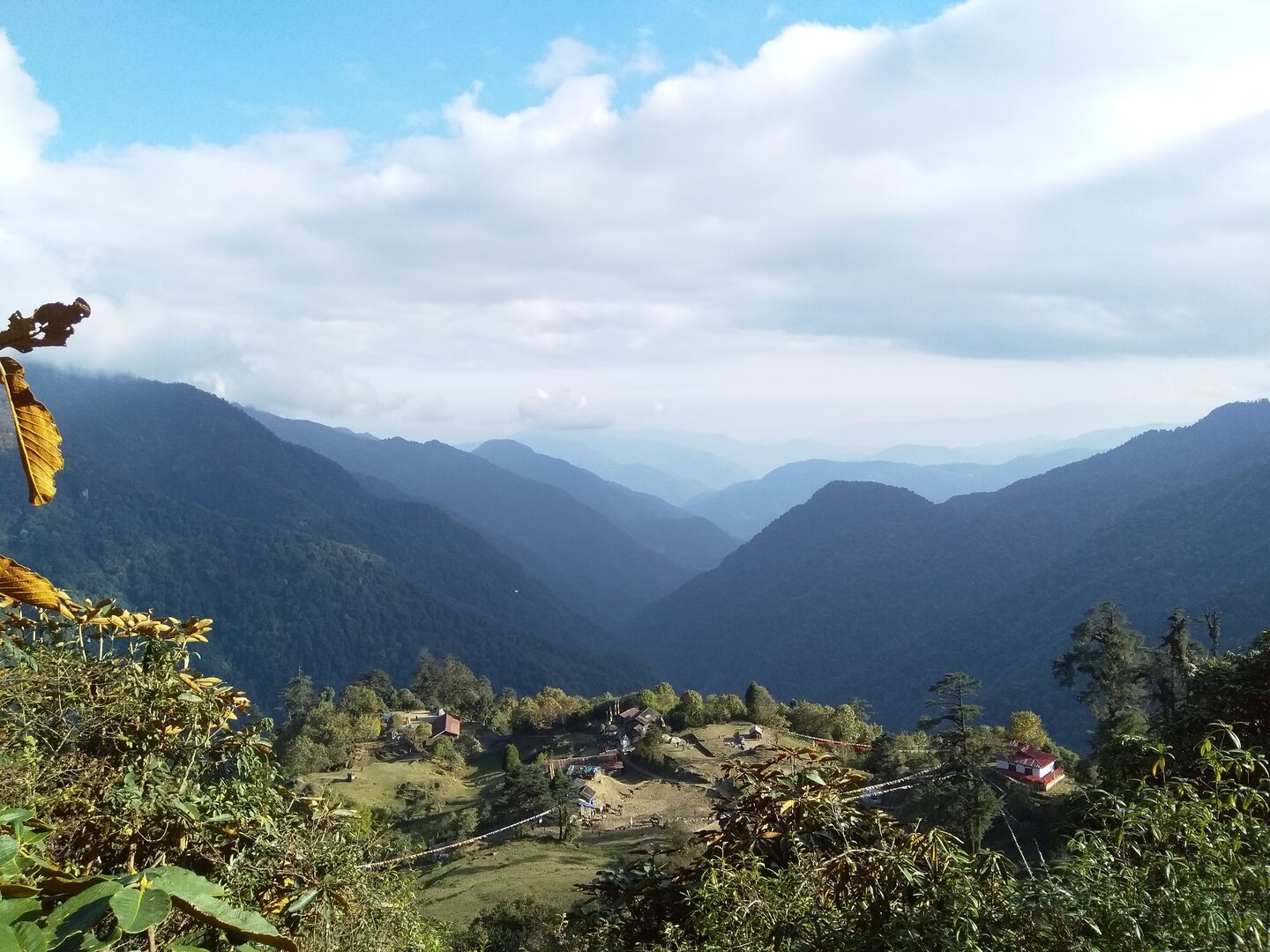
A little later, you reach Tshoka, a picturesque settlement perched on an open shelf overlooking the Eastern Himalayas. Traditional wooden huts, fluttering prayer flags and a small monastery give this place a distinct mountain charm. Depending on the season, the surrounding forests may display fresh green foliage, vibrant rhododendron blooms or the muted colours of the colder months.
Spend the evening exploring the settlement or simply enjoying the views from camp. Rest well — tomorrow, the trail climbs towards the spectacular alpine landscapes of Dzongri.
• Trek: ~8 km | 6–8 hrs.
• This is one of the most rewarding and demanding sections of the journey as you climb from Tshoka towards the high-altitude meadows of Dzongri. Begin the morning with a steady ascent through beautiful rhododendron and oak forests. The trail passes through some of the finest forest sections of the trek, where the character of the landscape changes with the seasons. Spring brings the possibility of colourful rhododendron blooms, while autumn and winter offer a quieter and more subdued mountain atmosphere.
Gradually, the path grows steeper as you climb towards Phedang, a scenic clearing surrounded by mountain forests and expansive views. This is an ideal place to rest, enjoy a snack and hydrate before the final ascent.
Beyond Phedang, the vegetation begins to thin and the landscape opens up. The climb towards Deorali Top becomes more demanding, with increasing altitude and exposed mountain terrain. Move steadily and allow your body enough time to adjust.
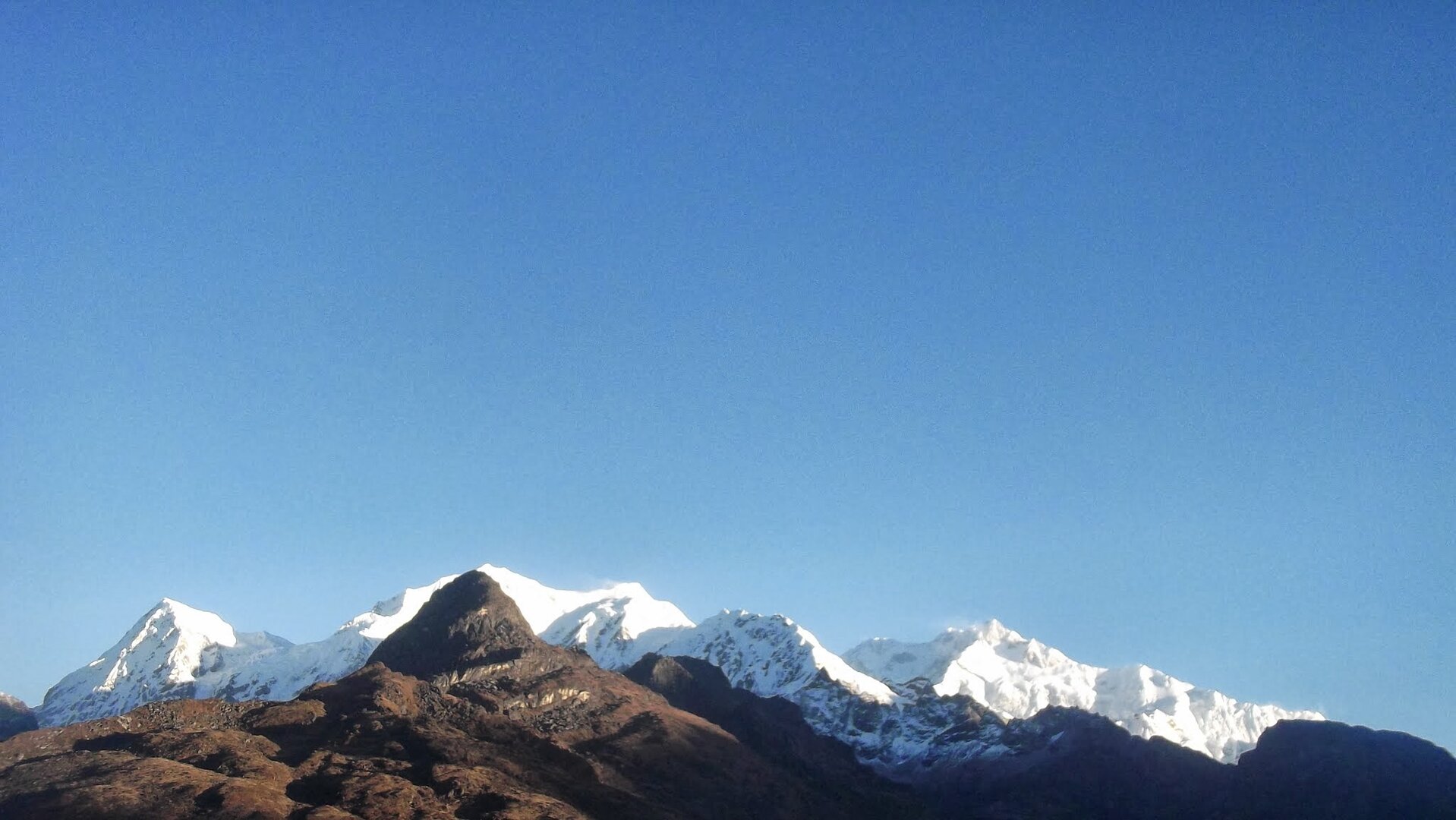
At Deorali Top, the views open dramatically. On clear days, the surrounding Himalayan peaks rise across the skyline, offering a magnificent introduction to the high-altitude scenery ahead.
From here, the trail becomes more gradual as it approaches Dzongri. The landscape transforms into open alpine meadows, dwarf rhododendrons and sweeping mountain slopes. Depending on the season, you may encounter fresh alpine vegetation, frost-covered grass or snow-covered terrain.
By afternoon, you arrive at the Dzongri campsite, surrounded by the spectacular peaks of the Eastern Himalayas. After a warm meal, settle into camp and rest well. The next morning brings the highlight of the trek — sunrise from Dzongri Top.

• Wake up early at Dzongri campsite for one of the most memorable experiences of the trek. Begin the short ascent towards Dzongri Top, approximately an hour from camp depending on trail conditions and pace. Arrive before sunrise to witness the first light illuminating the magnificent Khangchendzonga massif.
As the sun rises, Kanchenjunga, Pandim, Kabru North and South, Kokthang, Rathong and several surrounding peaks gradually emerge in shades of gold and copper. Take your time to enjoy the panorama and capture photographs before returning to camp for breakfast.
After breakfast, explore the vast Dzongri Meadows. These high-altitude alpine landscapes offer a completely different perspective of the surrounding mountains. With expansive slopes, open ridgelines and magnificent views in every direction, Dzongri is a place where you can truly appreciate the scale and beauty of the Eastern Himalayas.
The character of the meadows changes throughout the year. During the colder months, sections may be blanketed in snow, creating a pristine alpine landscape. In spring, the snow gradually retreats and vegetation begins to emerge, while autumn offers crisp mountain air and clear views across the surrounding peaks.
Spend the day exploring at a comfortable pace, taking short walks and enjoying the remarkable mountain scenery. Return to camp well before evening, as temperatures can fall rapidly at this altitude. Enjoy a warm meal and a restful night surrounded by the mountains.
• Trek: ~15 km | 8–10 hrs.
• Begin early after breakfast for the long descent from Dzongri to Yuksom. Retrace the familiar trail through Deorali Top, Phedang and Tshoka, gradually descending from the open alpine meadows into the beautiful forested slopes of Khangchendzonga National Park.
The trail continues through Bakhim and Sachen, passing wooden bridges and following the Prek Chhu River valley. As you lose altitude, the landscape gradually changes from exposed mountain terrain to dense forests and warmer surroundings. Take regular breaks, maintain a comfortable pace and watch your footing on the steep downhill sections, particularly where the trail is wet or icy.
After a long and rewarding day on the trail, arrive at Yuksom by late afternoon or evening. With this, your Dzongri Trek comes to an end. Check into your guesthouse, relax and celebrate the completion of an unforgettable Himalayan journey through the magnificent landscapes of the Khangchendzonga region.
• Drive: ~150 km | 6–7 hrs.
• After breakfast, bid farewell to the beautiful mountain village of Yuksom and begin your return journey towards NJP Railway Station, Siliguri or Bagdogra Airport. The drive takes you through the scenic landscapes of West Sikkim, descending past Legship, Jorethang and Melli before reaching the plains of North Bengal.
Depending on your onward travel arrangements, you can continue to NJP for your train, Bagdogra for your flight or Siliguri for an overnight stay. We recommend booking onward flights and trains with sufficient buffer time, keeping in mind possible road delays and mountain traffic.
Alternatively, you can extend your stay in Sikkim or continue with your own travel plans to explore more of the Eastern Himalayas. Your Dzongri adventure may be over, but the mountains always leave a reason to return.

Packing list

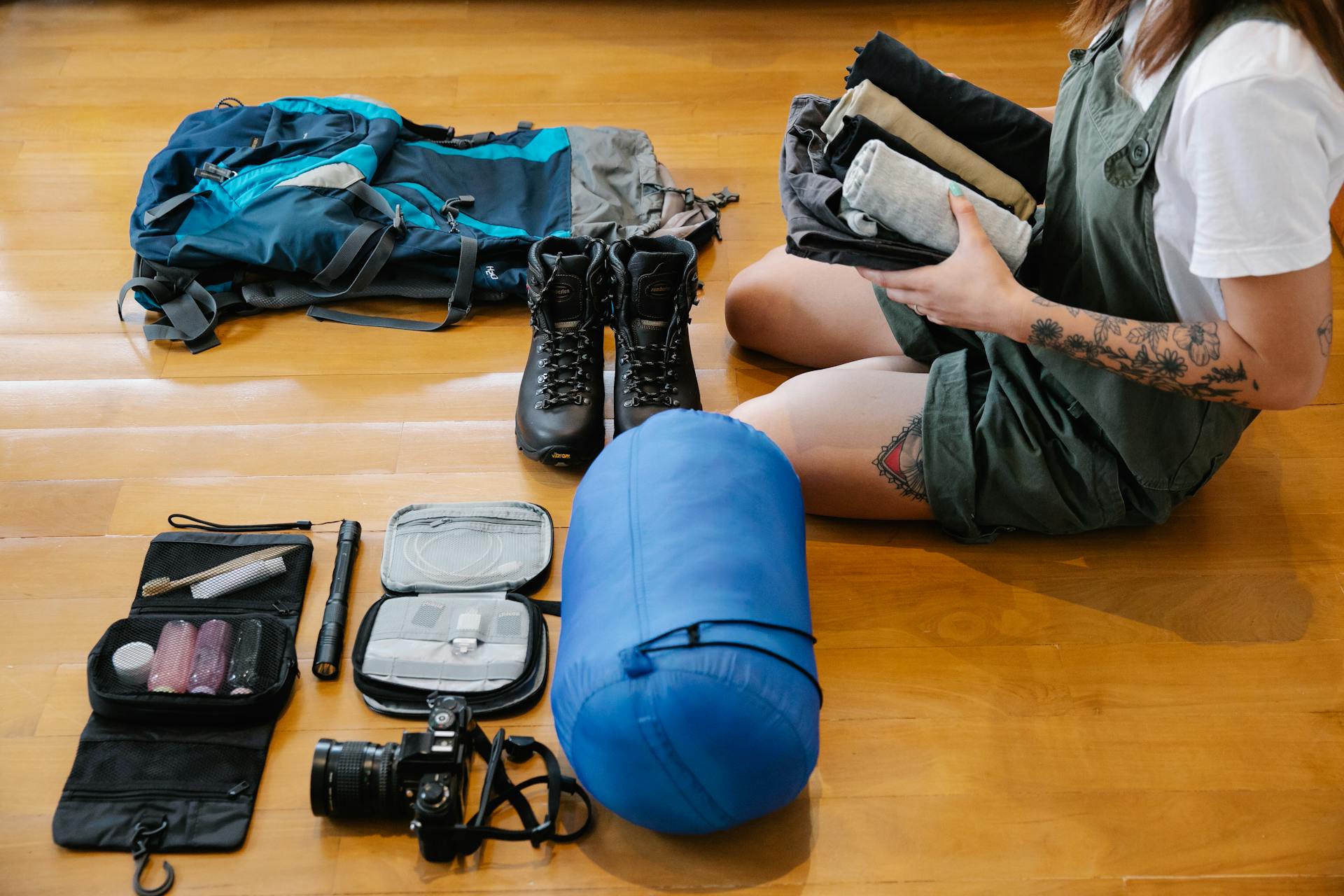
For a comprehensive packing list, download the PDF below: Download Packing List

Did you know?

✅ Dzongri is considered a sacred resting ground in local belief.
The high-altitude meadows lie within the sacred mountain landscape of Khangchendzonga. Trekkers are expected to respect local beliefs, avoid disturbing the natural environment and tread lightly.
✅ Kangchendzonga is never climbed to its true summit out of reverence.
The third-highest mountain in the world is revered as a living deity in Sikkim. The first successful expedition in 1955 stopped short of the actual summit in respect for local traditions, a practice followed by subsequent expeditions.
✅ The Kabru–Pandim skyline creates one of Sikkim's most spectacular mountain panoramas.
From Dzongri, Kabru North and South, Pandim, Rathong and other Himalayan peaks rise dramatically around the Khangchendzonga massif, creating an extraordinary mountain amphitheatre.
✅ Dzongri changes dramatically with the seasons.
Autumn brings crisp air and clear mountain views, winter can transform the meadows into snow-covered landscapes, and spring brings the possibility of colourful rhododendron blooms along the forest trails.
✅ The meadows were once seasonal grazing grounds.
Before conservation restrictions, local herders used high-altitude areas around Dzongri as seasonal pastures for yaks. The region still reflects traces of its traditional pastoral history.
✅ Winter navigation in the high mountains requires particular care.
Snow can cover familiar trail markers and alter the appearance of the terrain. Experienced local guides and careful assessment of weather and trail conditions are particularly important during the colder months.
✅ Traditional Sikkimese food is an important part of mountain life.
Local dishes such as thukpa, phagshapa and butter tea reflect the food traditions of the Eastern Himalayas. Warm, nutritious meals are especially welcome during long trekking days and cold mountain nights.

Route Map

How to reach

✈️ Air:
• Bagdogra Airport (West Bengal) is the most practical air gateway (~150 km from Yuksom; approximately 6–7 hr by road).
• Pakyong Airport (Sikkim) is another option (~130 km away), but flights are limited and weather-dependent.
From either airport, you can arrange a private cab to Yuksom. Approximate cab costs may range between ₹4,000 and ₹8,000, depending on the vehicle and season.

🚆 Train: New Jalpaiguri (NJP) or Siliguri is the nearest major railway gateway, approximately 145–153 km from Yuksom (6–7 hr by road).

🛣️ Road:
• Route: Siliguri → Sevoke → Melli → Jorethang → Legship → Yuksom.
• Shared vehicles are available from Siliguri towards Jorethang, subject to availability.
• From Jorethang, arrange a connecting vehicle to Yuksom.

🗺️ Travel Tip: Start early from Siliguri if travelling by shared vehicle. Connecting transport from Jorethang to Yuksom can be limited, particularly in the afternoon. Confirm the latest departure timings before travelling.

TrekFAQs

  • The Dzongri Trek is graded moderate, but it is a demanding high-altitude Himalayan trek. The route involves sustained ascents, significant altitude gain and long trekking days. Snow, icy trails and sub-zero temperatures can make it considerably more challenging during winter. Good cardiovascular fitness, leg strength and prior trekking experience are strongly recommended.
  • The trek is suitable for fit individuals who have good endurance and are comfortable walking for several hours on mountain trails. Previous Himalayan trekking experience is recommended, particularly for winter departures. First-time trekkers should have a structured fitness preparation plan and understand the demands of high-altitude trekking.
  • The best overall trekking window is October to April. October and November are excellent for clear skies and mountain visibility. December to February offer a beautiful winter experience, with the possibility of snow-covered meadows and frozen landscapes. March and April bring spring conditions and the possibility of rhododendron blooms. May may be considered a shoulder-season option, subject to weather and trail conditions. The monsoon months are not recommended.
  • No. Snow is not guaranteed throughout the year. The possibility of snow-covered trails and meadows is considerably higher during the winter months, particularly from December to February. Conditions vary with snowfall and weather patterns. Autumn and spring generally offer different landscapes, with clearer trails and changing forest vegetation.
  • Temperatures vary considerably with the season and weather. During winter, daytime temperatures at higher camps can hover around or below freezing, while nights at Dzongri may drop to approximately -8°C to -12°C or lower during cold spells. Autumn and spring are generally more comfortable during the day, although nights remain cold at high altitude. Wind chill at exposed viewpoints can make conditions feel significantly colder.
  • Preparation should focus on cardiovascular endurance, leg strength and balance. Stair climbing, brisk walking, weighted hikes, squats and endurance training are effective ways to prepare. Aim to build the ability to walk for several consecutive hours with a daypack. Winter trekkers should also prepare for walking on snow and using appropriate winter clothing and equipment.
  • Yes. Dzongri is located at approximately 3,960 m, while Dzongri Top reaches around 4,170 m. Altitude-related symptoms can occur at these elevations. Proper acclimatization, a controlled ascent, hydration and honest communication with trek leaders are essential. Never ignore symptoms of altitude sickness or continue ascending when unwell.
  • Winter Dzongri requires additional preparation because of snow, ice, low temperatures and shorter daylight hours. Safety depends on experienced local staff, appropriate winter equipment, daily weather and trail assessments, and the flexibility to modify or turn back when conditions demand it. The route should never be attempted independently during difficult winter conditions.
  • No. The monsoon season is generally unsuitable for the Dzongri route. Heavy rainfall, slippery forest trails, leeches, landslides and poor mountain visibility can significantly affect trekking conditions. The recommended trekking window is October to April, with May treated as a conditional shoulder-season option.
  • Yes. Foreign nationals require the applicable Protected Area Permit (PAP) and other permissions required for entry into this region. These arrangements must be made through the appropriate registered authorities and operators. Passport, visa and other required documents should be shared well in advance. Permit rules can change, so the latest requirements should always be confirmed before travel.
  • Yes. Offloading through porter support is available and can be particularly useful during the colder months. It allows trekkers to carry only their daypacks while the remaining luggage is transported separately, subject to the agreed weight limit and local trail conditions.
  • Accommodation generally includes guesthouses or lodges at Yuksom and camping arrangements at designated locations along the trekking route. Facilities at higher camps are basic, and trekkers should be prepared for simple mountain accommodation. Arrangements may vary depending on season, local permissions and weather conditions.
  • Mobile connectivity is limited. Basic network access may be available at Yuksom and occasionally at lower sections of the route, depending on the service provider. Beyond the lower settlements, including Dzongri, there is no reliable mobile network or internet connectivity. Trekkers should be prepared to remain offline for most of the journey.
  • Meals are nutritious and designed to support the energy requirements of high-altitude trekking. Expect a combination of Indian, local Sikkimese and simple continental dishes, along with soups and hot beverages. The menu may vary depending on the availability of supplies and the season.
  • Each season gives the Dzongri Trek a distinct character. Autumn is known for crisp weather and excellent mountain visibility. Winter can bring snow-covered alpine meadows and a quieter mountain atmosphere. Spring brings the possibility of rhododendron blooms and fresh vegetation. The changing landscapes make Dzongri a rewarding multi-season trekking destination, although the monsoon period is best avoided.
  • Absolutely. Dzongri is an excellent standalone trek for experiencing the spectacular mountain landscapes of the Khangchendzonga region. Dzongri Top offers magnificent panoramic views of the surrounding peaks without requiring trekkers to continue towards Goechala. It is a rewarding alternative for those looking for a shorter high-altitude adventure in Sikkim.

Helpful Resources

Explore our collection of trek-specific guides and practical articles covering preparation, mountain safety, gear, weather, permits, logistics, and more—designed to help you make informed decisions before every Himalayan adventure.

Why Deoriatal–Chandrashila Is a Complete Himalayan Experience for Beginners
Flagship Guides

Why Deoriatal–Chandrashila Is a Complete Himalayan Experience for Beginners

Discover why the Deoriatal–Chandrashila trek is one of the most rewarding introductory Himalayan treks. From the reflections of Chaukhamba in Deoriatal Lake and the forests and birdlife of Chopta to the sacred Tungnath Temple and the panoramic Chandrashila summit, explore its villages, landscapes, comfortable stays and seasonal beauty in spring, winter and autumn.

Himalayan Trekking Safety: How Planethimalayas Manages Risk on Every Trek
Flagship Guides

Himalayan Trekking Safety: How Planethimalayas Manages Risk on Every Trek

Himalayan trekking safety starts long before a trekker steps onto the trail. Discover how Planethimalayas approaches mountain safety through trained trek leaders, acclimatization protocols, technical and rescue equipment, small groups, communication planning, and disciplined decision-making.

Responsible Trekking in the Himalayas: How Planethimalayas Practices Sustainable Travel
Flagship Guides

Responsible Trekking in the Himalayas: How Planethimalayas Practices Sustainable Travel

Responsible trekking is more than carrying a waste bag down a mountain. Discover how Planethimalayas approaches sustainable trekking through practical waste reduction, respect for local cultures, protection of water sources, minimal disturbance to wildlife and ecosystems, and responsible behaviour in the Himalayas.

Best Spring Treks in the Himalayas (2026 Guide): Region-Wise Trails, Snow Views & Blooming Landscapes
Trek Guides

Best Spring Treks in the Himalayas (2026 Guide): Region-Wise Trails, Snow Views & Blooming Landscapes

Discover the best spring treks in the Himalayas with this complete 2026 guide. Explore region-wise treks across Himachal, Uttarakhand (Garhwal & Kumaon), and Sikkim with detailed insights on difficulty, altitude, best time, and what makes each trek unforgettable.

Best Summer Treks in the Himalayas (May–June): Snow, High Passes & Endless Days
Trek Guides

Best Summer Treks in the Himalayas (May–June): Snow, High Passes & Endless Days

Discover the best summer treks in the Himalayas (May–June), from snow-covered trails to lush alpine meadows. Explore beginner-friendly treks with detailed insights and prepare for the ultimate trekking season.

Best Post Monsoon Treks in India (September–December): The Complete Autumn Himalayan Trekking Guide
Trek Guides

Best Post Monsoon Treks in India (September–December): The Complete Autumn Himalayan Trekking Guide

Discover the best post monsoon and autumn treks in India from September to December. Explore Himalayan high passes, alpine valleys, glacier trails, autumn forests, alpine meadows and crystal-clear mountain views across Himachal Pradesh, Uttarakhand, Kashmir, Ladakh and Sikkim.

Best Winter Treks in India (December–March): The Complete Himalayan Snow Trekking Guide
Trek Guides

Best Winter Treks in India (December–March): The Complete Himalayan Snow Trekking Guide

Discover the best winter treks in the Indian Himalayas from December to March. Explore snow-covered forests, frozen lakes, alpine meadows, mountain summits and crystal-clear winter skies across Uttarakhand, Himachal Pradesh and West Bengal—with practical guidance on snow conditions, difficulty, preparation and choosing the right winter trek.

Offbeat Winter Treks in India: Peaceful Himalayan Trails Away from the Crowds
Trek Guides

Offbeat Winter Treks in India: Peaceful Himalayan Trails Away from the Crowds

Looking for offbeat winter treks in India away from busy Himalayan trails? Explore Ali-Bedni Bugyal, Gulabi Kantha, Winter Markha Valley, Winter Dzongri, Dhakuri Pass and Dodital–Darwa Top, with trek highlights, altitude, duration, winter conditions and practical planning advice.

Mountain Manners - Responsible Trekking (LNT Principles & Best Practices)
Preparation Tips

Mountain Manners - Responsible Trekking (LNT Principles & Best Practices)

Learn the essential Leave No Trace (LNT) principles for responsible trekking in the Himalayas. Discover how to respect nature, minimize impact, and preserve mountain beauty for future generations.

Complete Himalayan Trek Packing List | Essential Trekking Gear & Tips
Preparation Tips

Complete Himalayan Trek Packing List | Essential Trekking Gear & Tips

Packing smart is the key to a safe and comfortable trek. Here’s a complete checklist of everything you’ll need for a week-long Himalayan adventure. Download the full PDF packing list inside.

The Ultimate Winter Trek Preparation Guide for the Himalayas
Preparation Tips

The Ultimate Winter Trek Preparation Guide for the Himalayas

A complete, deeply detailed Himalayan winter trek preparation guide covering layering, gear breakdowns, snow survival, hypothermia treatment, cold-injury prevention, hydration strategy, fitness prep, night routines, weather behaviour, packing lists, myths, FAQs, and expert safety insights based on real Himalayan scenarios — written for both beginners and experienced trekkers.

AMS - Acute Mountain Sickness
Health & Wellness

AMS - Acute Mountain Sickness

If you’re planning a high-altitude trek in the Himalayas, it’s important to understand one of the most common health risks in the mountains: Mountain Sickness, also known as Acute Mountain Sickness (AMS).

Preventing AMS-Mountain Sickness
Health & Wellness

Preventing AMS-Mountain Sickness

Trekking in the Himalayas is an unforgettable experience—but it comes with a silent danger: Mountain Sickness, also known as Acute Mountain Sickness (AMS). The good news? With the right precautions, mountain sickness is completely preventable.

Advanced Health & Survival Guide for Himalayan Treks (Real Problems Trekkers Face)
Health & Wellness

Advanced Health & Survival Guide for Himalayan Treks (Real Problems Trekkers Face)

A deep dive into real health challenges faced on Himalayan treks — from gut issues and menstrual health to sleep deprivation, infections, and mental health. Practical solutions based on real trekking scenarios.

Similar Treks

View of Nanda Devi East Base Camp Trek trek moderate

Nanda Devi East Base Camp Trek

8 Nights / 9 Days
uttarakhand-kumaon
View of Pindari & Kafni Glacier Trek trek moderate

Pindari & Kafni Glacier Trek

7 Nights / 8 Days
uttarakhand-kumaon
View of Gaumukh Tapovan Trek trek moderate

Gaumukh Tapovan Trek

6 Nights / 7 Days
uttarakhand-garhwal
View of Satopanth Lake Trek trek moderate

Satopanth Lake Trek

5 Nights / 6 Days
uttarakhand-garhwal
View of Goechala Trek trek difficult

Goechala Trek

9 Nights / 10 Days
sikkim
View of Dafeybhir La Trek trek difficult

Dafeybhir La Trek

9 Nights / 10 Days
sikkim
View of Winter Markha Valley Trek trek moderate

Winter Markha Valley Trek

9 Nights / 10 Days
ladakh
View of Ranthan Kharak Trek trek easy, moderate

Ranthan Kharak Trek

6 Nights / 7 Days
uttarakhand-kumaon

What our trekkers say

Suvajit Ghosh

Suvajit Ghosh

Kolkata, West Bengal

★★★★★

We did a small trek to Dodital in Uttarakhand with Planethimalayas. I did this trek with my family.My daughter of 9years was the most excited member. As it was a family trek, I requested Planethimalayas to be mindful of the probable challenges as a family. Planethimalayas made all necessary arrangements for timely meals, suitable tent, sleeping bag, toilet tent, etc. The support team consisting of guide, cook, porter has been very helpful. Thank you Planethimalayas for making this possible.

Atul Azad

Atul Azad

Jaipur, Rajasthan

★★★★★

Pin Parvati Pass — my first trek and expedition ever. 🏔️
I first heard about Planethimalayas through a few friends, and what an experience it turned out to be!
Pin Parvati Pass is one hell of a ride. It’s not just another trek — it demands immense physical strength, mental resilience, and the right knowledge to be out there for 10 days in such challenging terrain.
A huge part of this experience goes to Kamal and the entire team. Kamal was not just our leader, but more importantly, a great companion throughout the journey. What I appreciated most was that he never treated us like clients. There was no unnecessary strictness — just the right balance of discipline, guidance, support, and freedom to experience the mountains.
With the team’s guidance and encouragement, I discovered a lot about my own potential and what I’m capable of pushing through.
Can’t thank you guys enough for making my first expedition such a memorable one. ❤️
More adventures to come. ⛰️

Jytte Scheepens

Jytte Scheepens

Freelancer | Breda, Netherlands

★★★★★

I had the best experience with Planethimalayas. I went on Pin Parvati trek this august with them which is for sure a very challenging trek, however because of the great organization, well arranged team and the best trek leader you could ever wish for, Kamal Ji, this was something I will never forget!!!!
There isn’t anything which could or should have been done differently. I felt safe all the way throughout.
I’d also like to mention that i was the only female in the team and was so well looked after. Everyone looked after me like one big family, just like Kamal feels like a big brother to me now. It was my second trek with Kamal, and im a 1000% sure it wouldnt be my last. Thank you for everything Planethimalayas and Kamal in special! ❤️

Himanshu Sharma

Himanshu Sharma

Delhi

★★★★★

Had the best experience with Planethimalayas. I did the Pin Parvati trek with them and everything was organised so well. We had very experienced guides, incredible porters and the best chef!! The food was actually even better than in most restaurants. Big thanks to the trek leader Kamal Ji who is such a genuine and knowledgeable soul. He made this trek even more special than it already was. Thanks for everything Planethimalayas!!

Abhay Poddar

Abhay Poddar

Pune

★★★★★

The experience with Planethimalays on the Beas Kund Trek was really Great. I took a group of College students on a Himalayan Trek for the 1st Time. Everything was planned very well. The 2 female guides Raksha and Deepika ensured the group especially the girls were made comfortable. The safety of the group, food and tents were all araangd very well. Looking forward to trekking with them next year too.

Yashesh Vora

Yashesh Vora

Pune

★★★★★

We had an amazing experience with Planethimalayas organized by Kamal sir. Everything from stay and food to overall arrangements was perfectly managed. Manish, Satish and Ashish were extremely supportive throughout the trip. We completed Tungnath and Deoriatal treks, and the food was simple, local, and delicious. The beautiful Sari village visit was truly beautiful my parents even walked 5 km, which was a big surprise for us!
The itinerary was very thoughtfully planned and suitable for my parents as well as my little one. Highly recommended for all kind of treks in the Himalayan ranges!

Ananya Mitra

Ananya Mitra

Kolkata

★★★★★

Kamal Das the leader and founder is a great person and had good knowledge about the route. The food was great and the stays were comfortable which was above the expectation in that altitude.
Thanks to Planethimalayas.

Jytte Scheepens

Jytte Scheepens

Freelancer | Breda, Netherlands

★★★★★

I did the Kashmir Great Lakes trek with Kamal. This was such an unforgettable experience. Kamal is such an amazing guide. He told us so many interesting facts, I had beautiful deep talks with him about the mountains and listened to many of his stories about the experiences he's had while trekking. He's such a genuine and pure soul. I was the only female in the team, but not once I felt uncomfortable or left out. Everyone was incredibly respectful and nice. We were allowed to walk on our own pace and didn't feel rushed or pushed. Everyone can do the trek as they want, in the way they want. He respects you and really goes out of his way to make you enjoy the most. Till this day he's still a dear friend of mine and I hope to have the privilege to go to the mountains again, together with him. If you're planning to do a trek, definitely do it with Kamal — he will 100% make sure this trip is something you'll never forget.

Clare Fisher

Clare Fisher

Marketing | Canada

★★★★★

I had some nerves about going on a trek solo but Kamal took excellent care of me and made sure I felt safe and looked after. He was able to customize the trek to my needs and we went on lots of side quests to explore the area. Kamal is very knowledgeable and has some fantastic stories to tell, so was the best company the entire time — it felt like I had friends adventuring with me! Thanks again :)

Suramita Chakrabarty

Suramita Chakrabarty

Kolkata

★★★★★

Amazing staff with good and decent behaviour. Food quality was also very good. Throughout the trek they had taken utmost care of everything.
Will definitely plan again with Mr. Kamal Das.

Samar

Samar

Automotive UX Designer | Pune

★★★★★

I made friendship with the mountains through Kamal sir’s experience. The moment I met him at my last trek at Kedarkantha, I was impressed by his mountaineering knowledge and friendly nature that this year too (to Tungnath) and every year hereafter I am going to partner him to a new peak and new experiences in those journeys. Kudos to Planethimalayas for the exceptional work in making the love of mountains more accessible and enjoyable.

Akshata Poojari

Akshata Poojari

Bangalore

★★★★★

The trekking experience was absolutely unforgettable. Our guide was friendly and knowledgeable, making the whole journey fun and safe.

How Our Treks Are More Than Just a Trek

Every journey with us is carefully crafted for a deeply personal mountain experience.

Not Just a Trek — A Journey That Stays With You

Every trail we walk is a carefully chosen path into the heart of the Himalayas — not just to witness their grandeur, but to feel them under your skin and soul. Our treks are designed not as bucket list checkmarks, but as life-affirming journeys. At Planethimalayas, we believe a mountain journey is deeply personal — and that belief runs through everything we do.

Individual Care, Every Step of the Way

We keep our groups small and intimate so we can focus on you — your pace, your concerns, your joy. From pre-trek guidance to trail-side support, our leaders walk with intention, offering safety and attention without intrusion. It’s this deep care that turns strangers into friends and walks into memories.

Built on Genuine Love for the Himalayas

We don’t just operate in the Himalayas — we live and breathe them. From respecting mountain communities to following Leave No Trace ethics, our treks are shaped by humility and care. With Planethimalayas, your trek becomes a way of giving back to the mountains that give us so much.

Why Choose Us

Experience the difference of trekking with genuine mountain experts who truly care.

Trek Leader & Guide

Led by certified mountaineers with wilderness first aid training, ensuring your safety and confidence at every step.

Cook & Support Staff

Our mountain crew comprises local experts who bring unmatched experience, warmth, and deep knowledge of the region.

Small Group Size

We cap our group departures at just 8 trekkers — ensuring individual attention, deeper connections, and better trail discipline.

Safety Standards

From personal well-being to technical preparedness, we maintain the highest safety standards — using certified high-altitude gear and comprehensive safety protocols to ensure a secure and reliable Himalayan experience.

24×7 Online Support

We're always available — before, during, or after your trek. Reach out anytime, and you'll always hear back from a real human.

We Care for the Mountains

We strictly follow Leave No Trace ethics. Limited group sizes and mindful practices help protect the fragile Himalayan ecosystem.