WhatsApp FAQs
×


PriceNote – Listed Price & Customisation Rules:
The listed trek price applies to our fixed departures for the specified itinerary. Trek fees including any add-ons for customized groups may vary based on your preferences, ensuring every adventure is tailored to your needs.

Group Booking Offer:
For groups of 8 or more booking together, the trek fee for 1 participant will be waived as a token to encourage shared adventures.

Scholarship for Kids:
Children under 15 years receive a 30% discount on the trek price, making it easier for families to explore the Himalayas together.

×


Transport Price Note:
The transport price mentioned is only an indicative estimate per person, assuming a small vehicle shared by at least 4 participants.
Fewer participants → cost rises;
More participants → cost decreases.

Transport Selection During Booking:
Selecting transport during booking informs us of your preference. No payment is collected at booking.

Final Cost & Payment:
Final transport cost will be communicated before departure and to be paid directly to the cab driver.

×

Itinerary Note:
This itinerary represents the most updated plan, but minor adjustments may occur due to operational needs or mountain conditions.

Ali Bedni Bugyal Trek

A Timeless Himalayan Meadow Walk

Gallery

Trek Overview

  • Trek Duration: 5 Nights / 5 Days
  • 🏔️ Max Altitude: 11,500 ft (Bedni bugyal)
  • Trek Grade: Easy
  • Trek Distance: 28 Km
  • 🌤️ Best Time: September-May
  • 🗺️ Region: Chamoli district, Uttarakhand
  • 📍 Start Point: Lohajung / Wan
  • 🏁 End Point: Wan
  • 🧥 Cloakroom facility: Available

Price starting from ?

INR 10,900 * Lohajung to Lohajung

Terms & Conditions | Inclusions & Exclusions | Cancellation & Refunds

Addons (Optional)

  • Transportation – INR 6,000 (* Rishikesh to Rishikesh) ?
  • Offloading-Bags – INR 1,500 (* Maximum weight 9kg / bag)

Customize your trek to suit your preferences.

Sign up for our fixed departure dates below.

Registration Dates January 2026

05 Jan - 09 Jan Loading…

Registration Dates February 2026

Registration Dates March 2026

Registration Dates April 2026

Walking The Trail

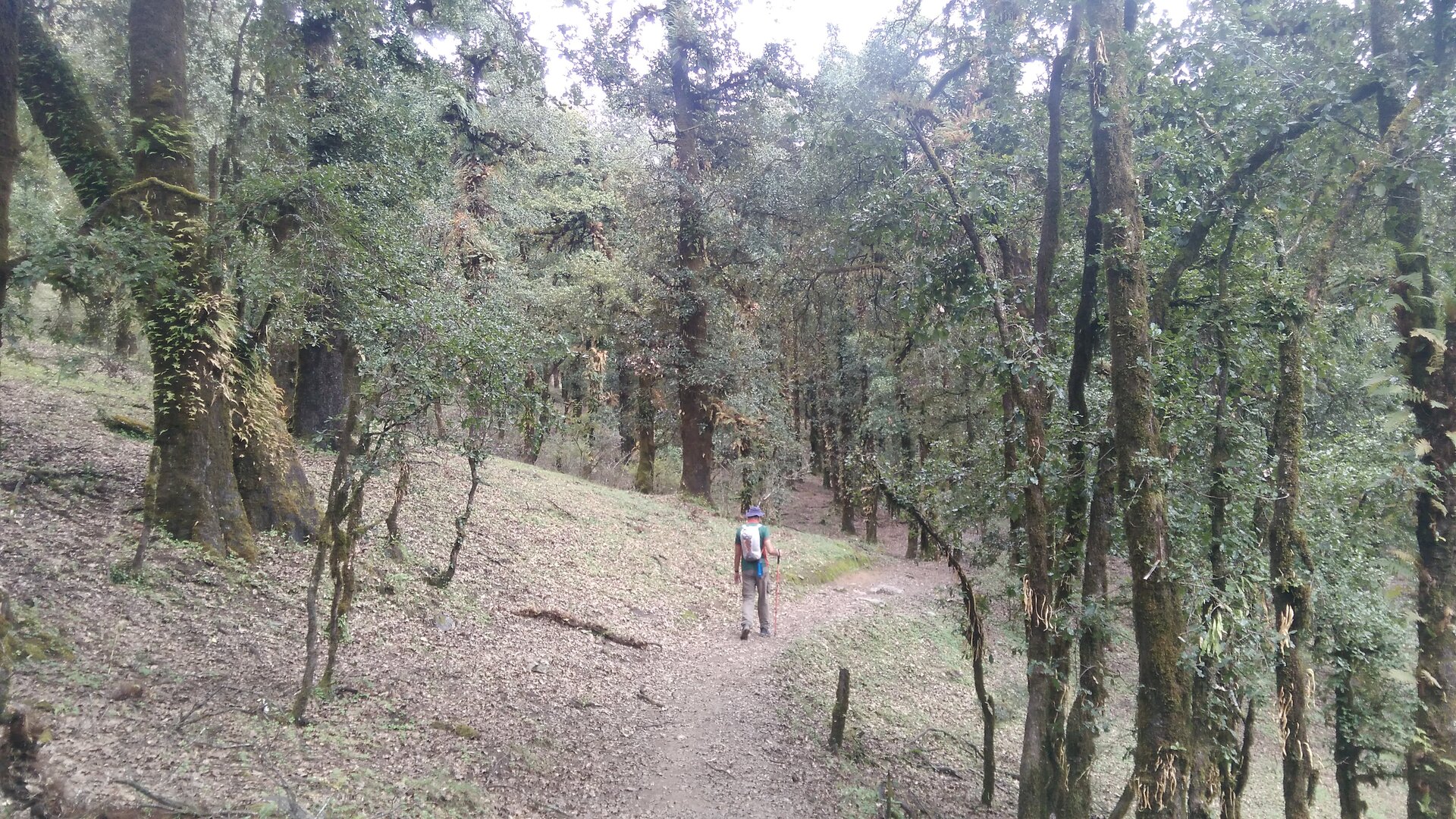
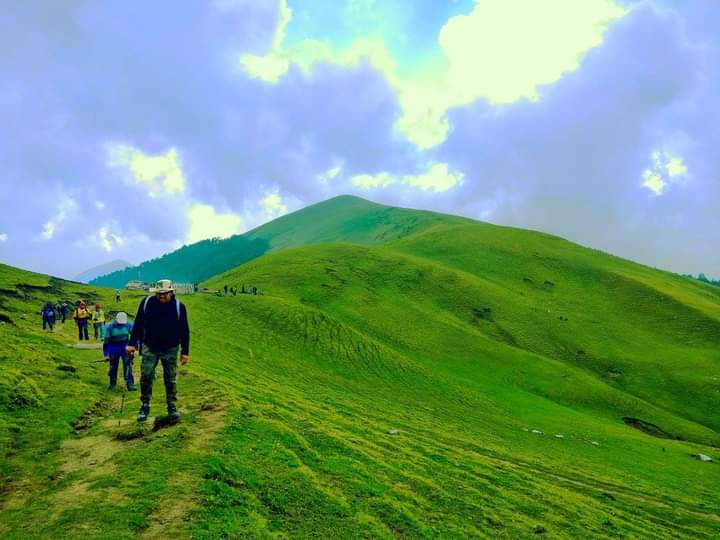
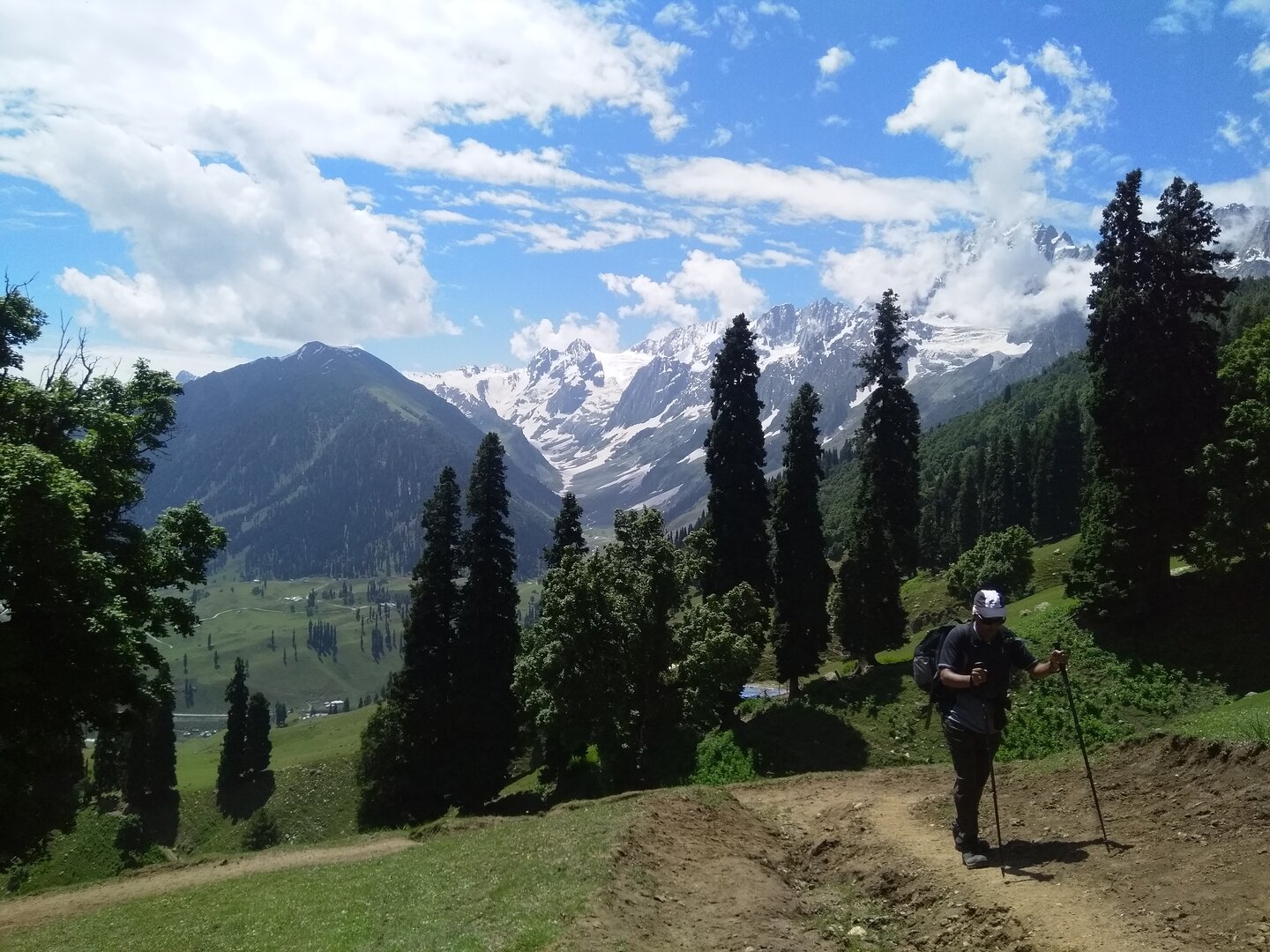
The Ali–Bedni Bugyal Trek is a journey into the heart of Uttarakhand’s most enchanting high-altitude meadows — vast rolling grasslands that look like they’ve been brushed onto the earth by the hands of the gods. Starting from the quiet mountain village of Lohajung, the trail gently climbs through ancient oak and rhododendron forests where sunlight filters in golden beams and the woods echo with Himalayan thrushes, woodpeckers, and the occasional rustle of a mountain fox slipping between the shadows.
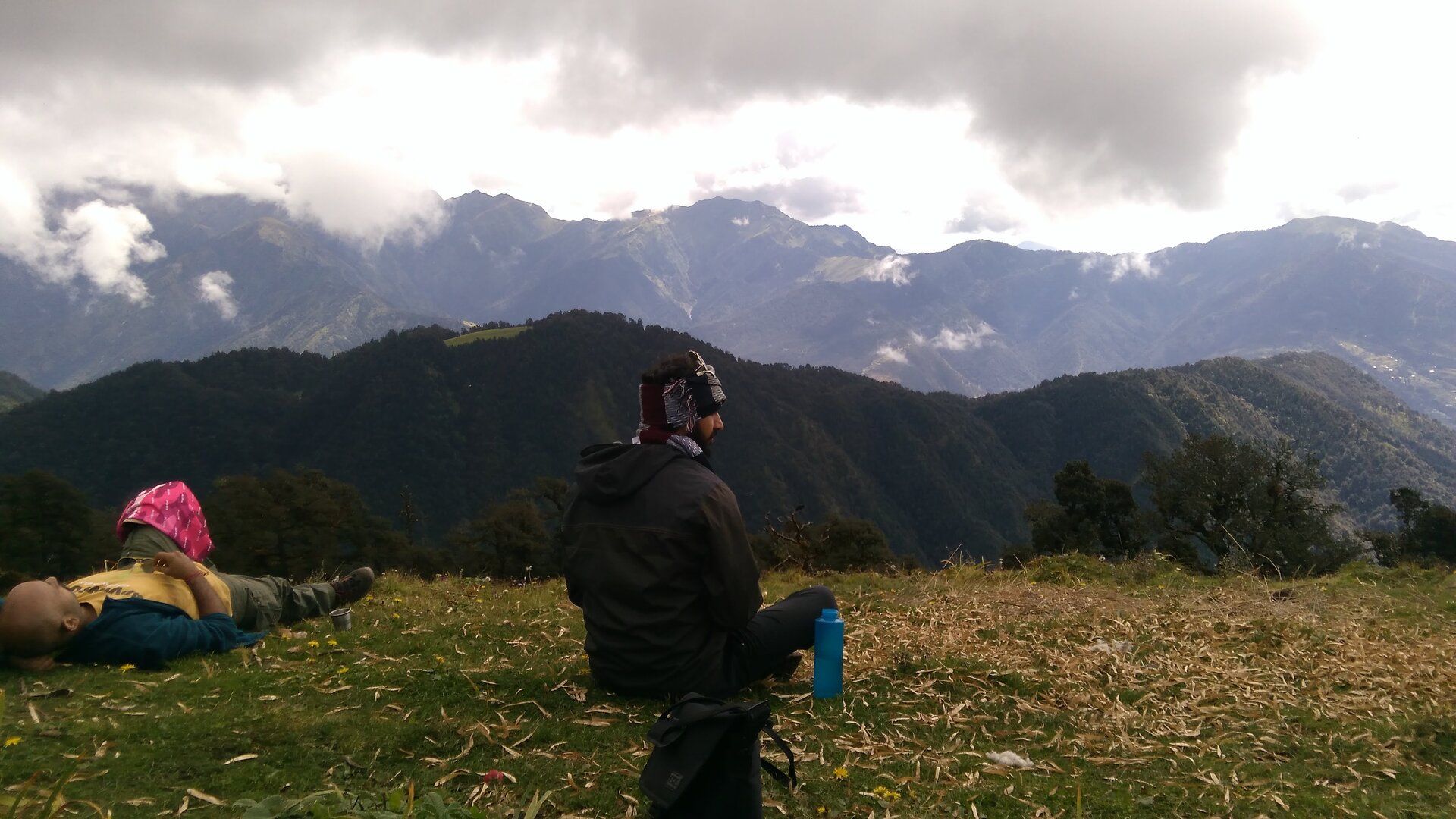
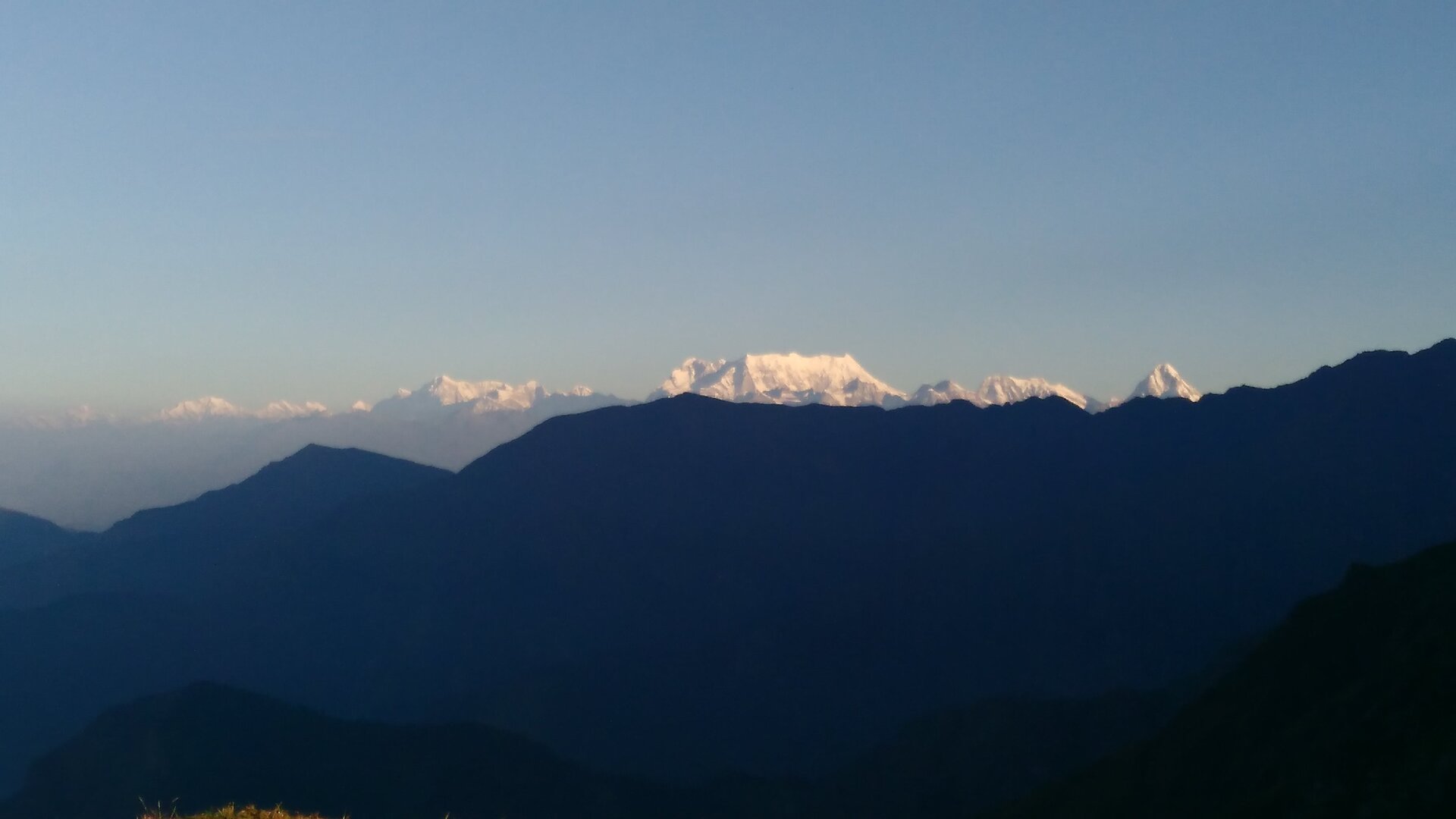
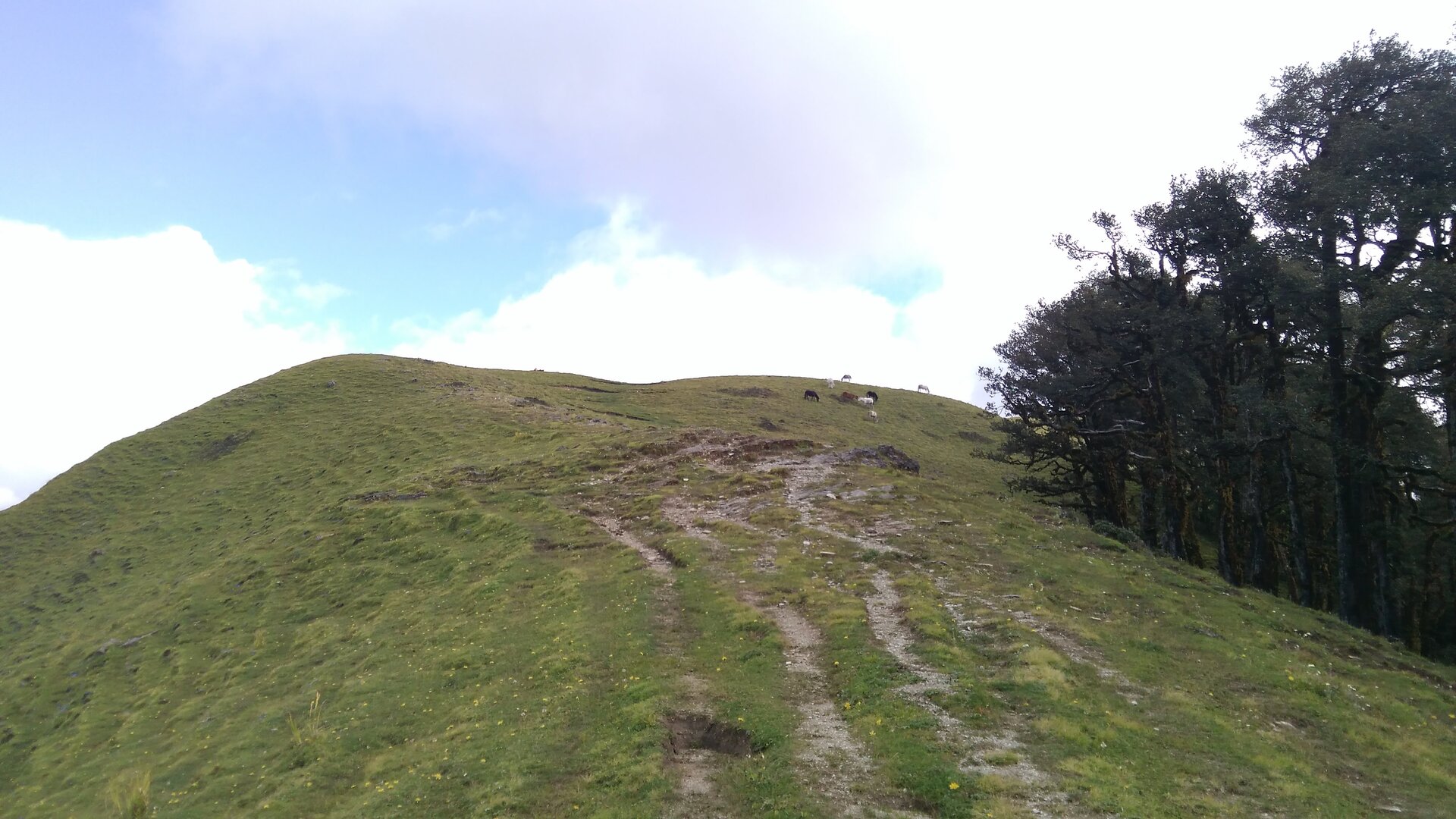
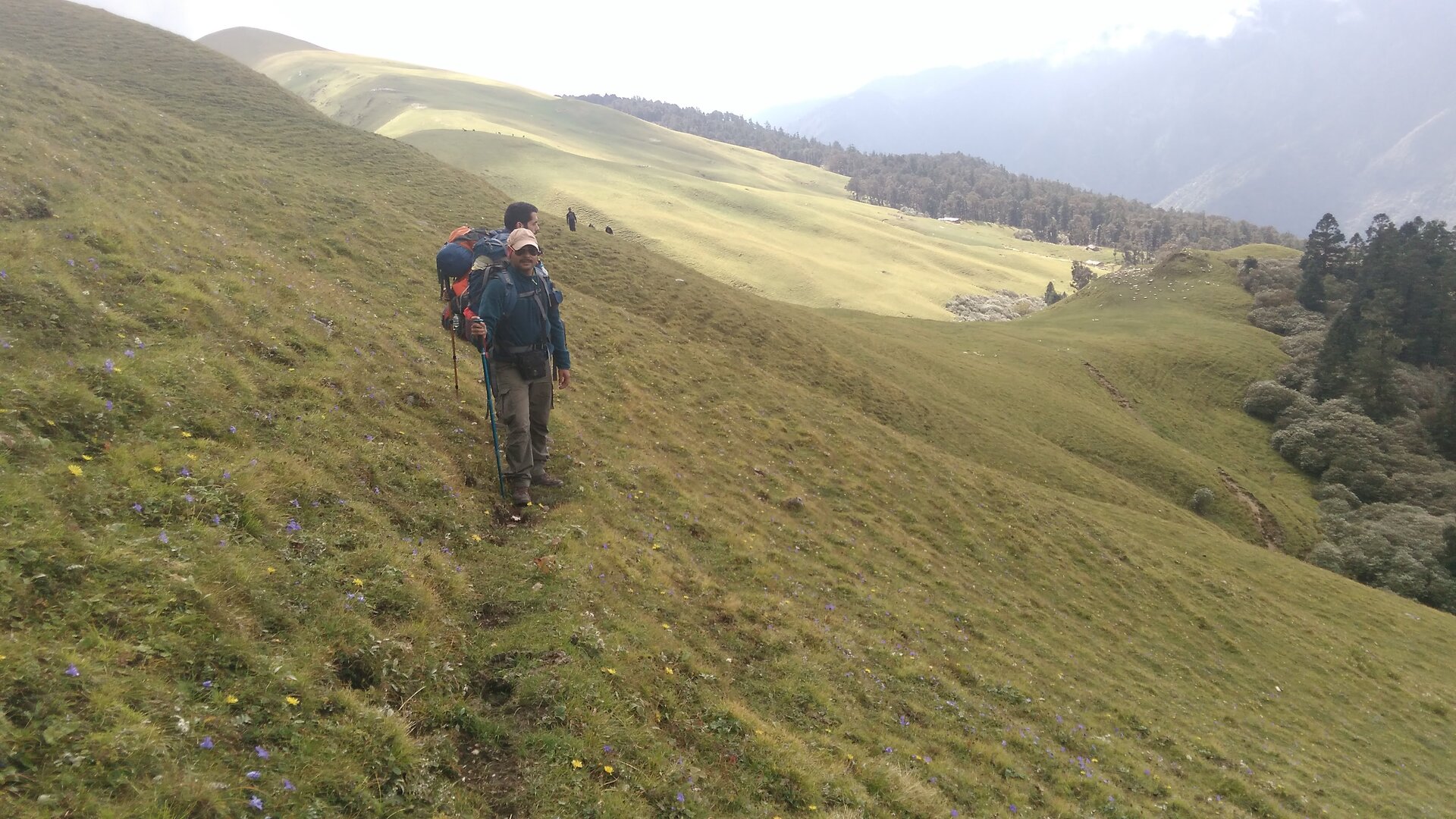
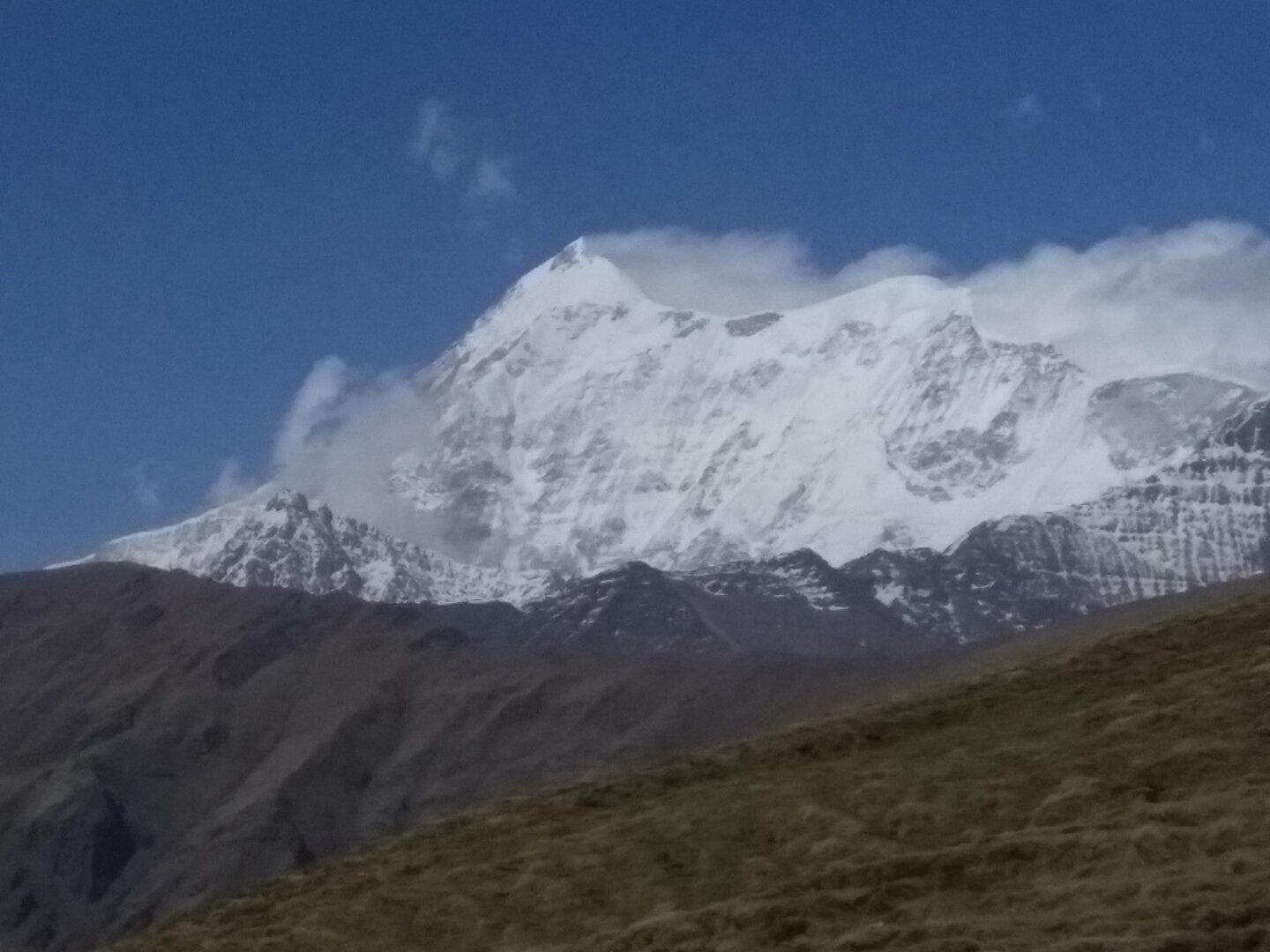
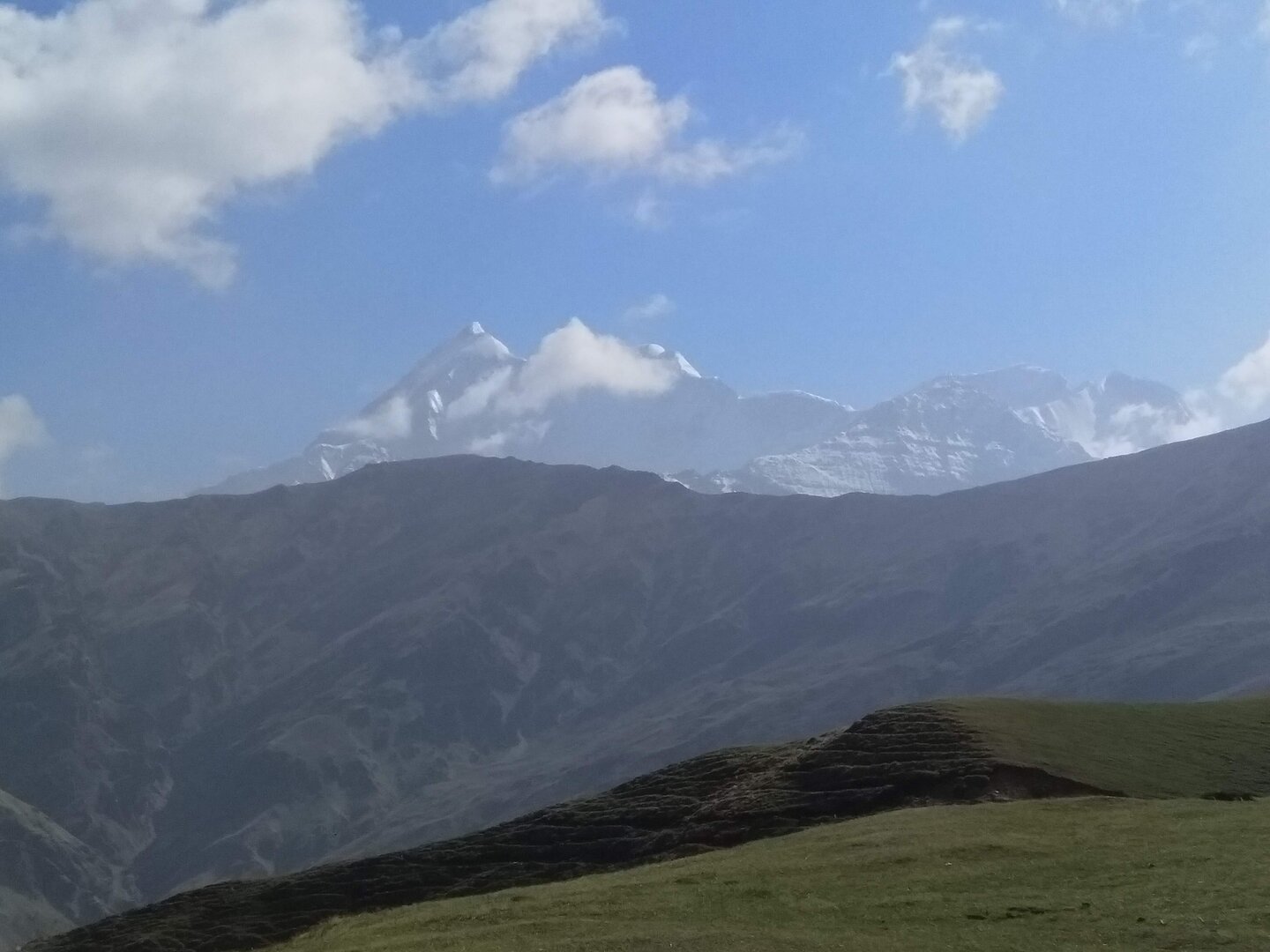
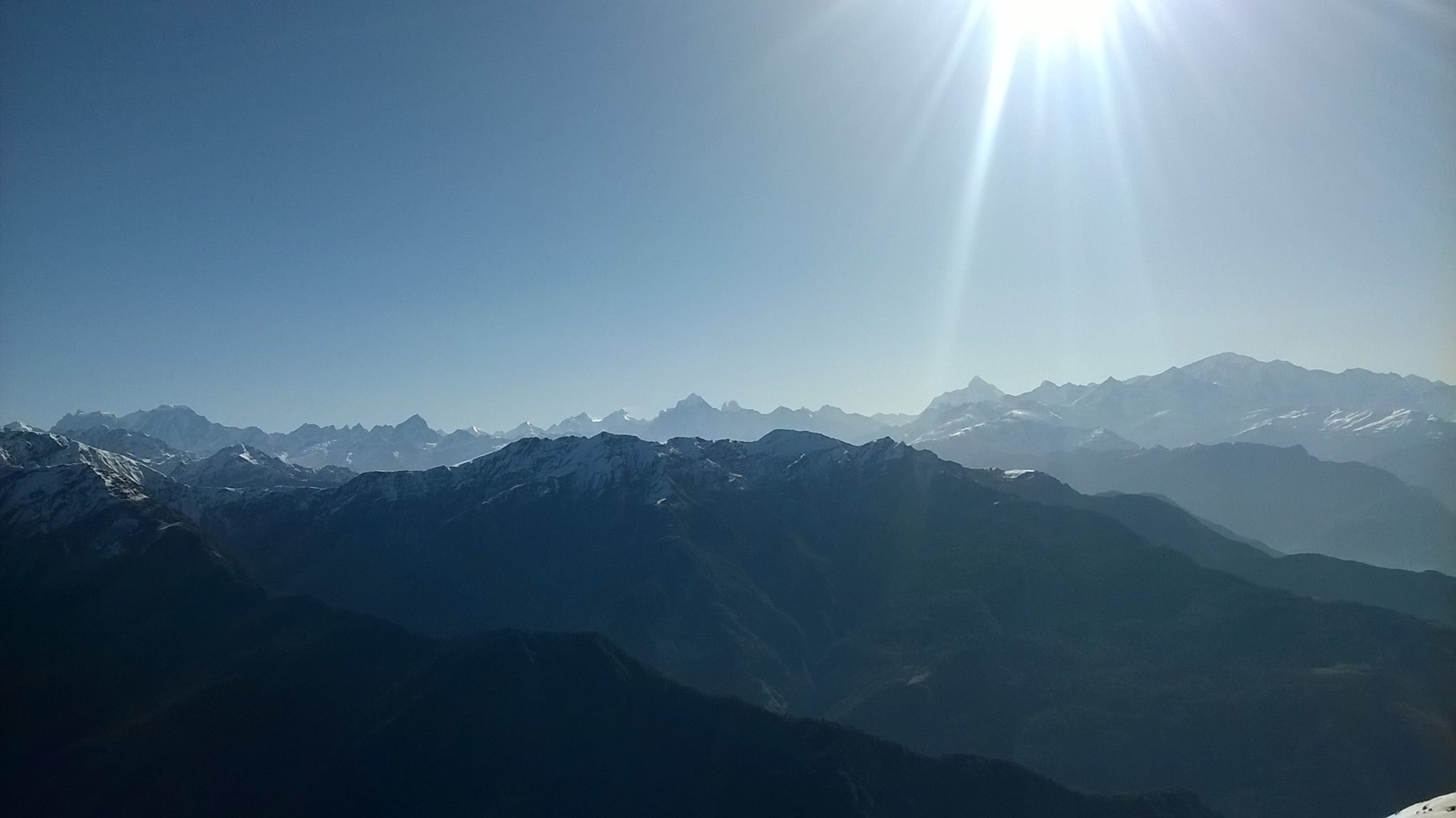
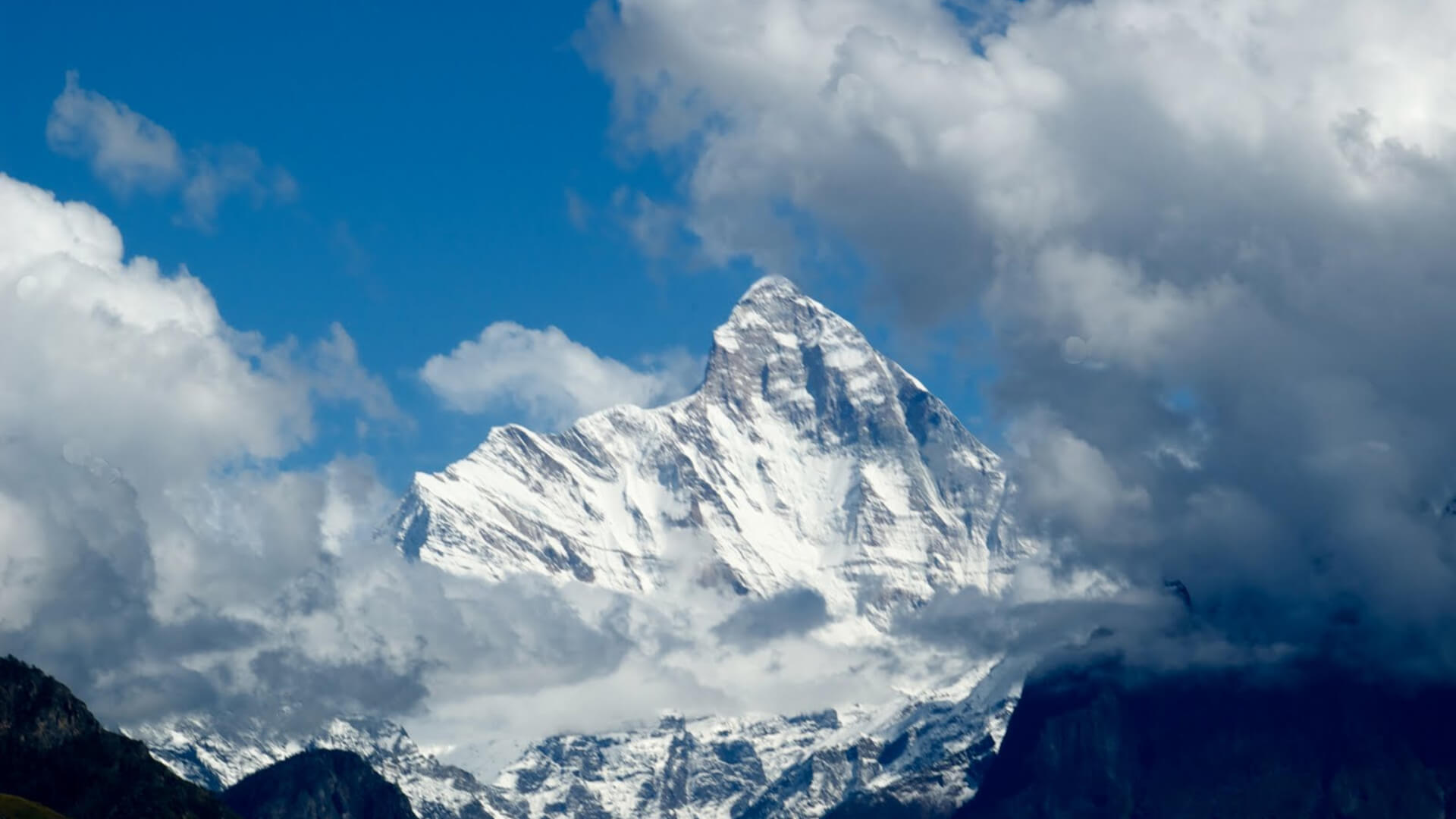
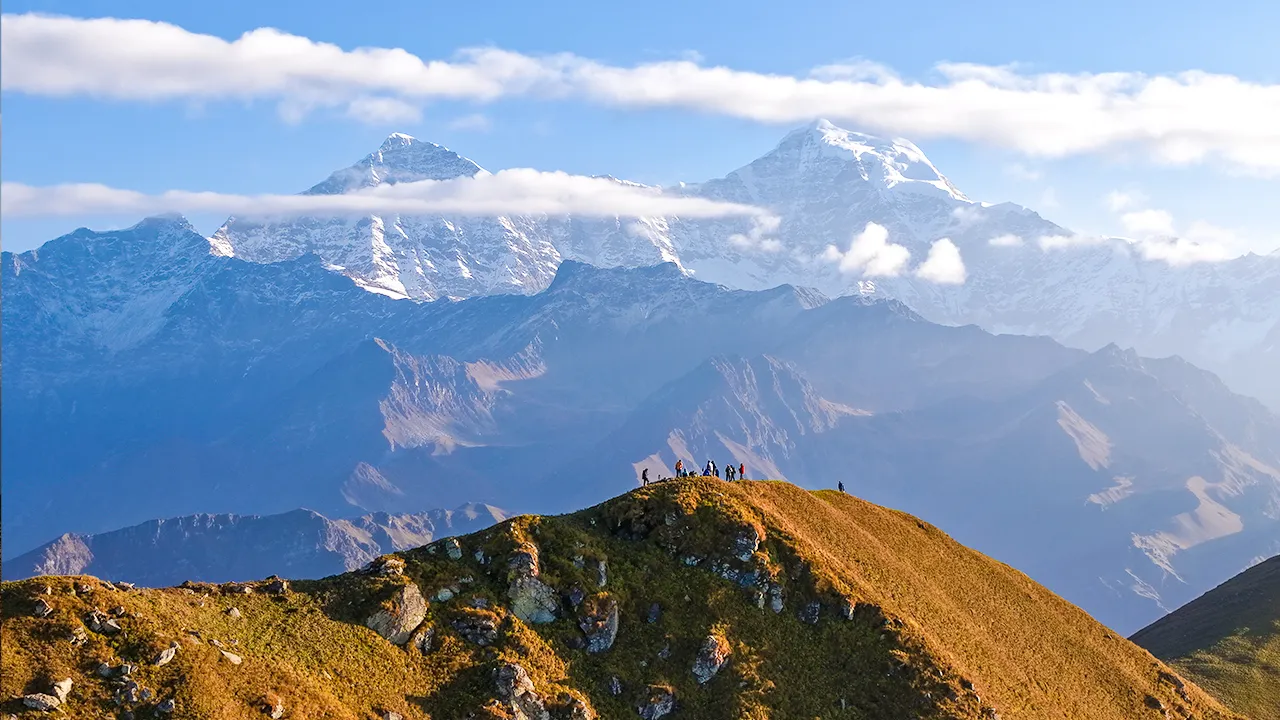
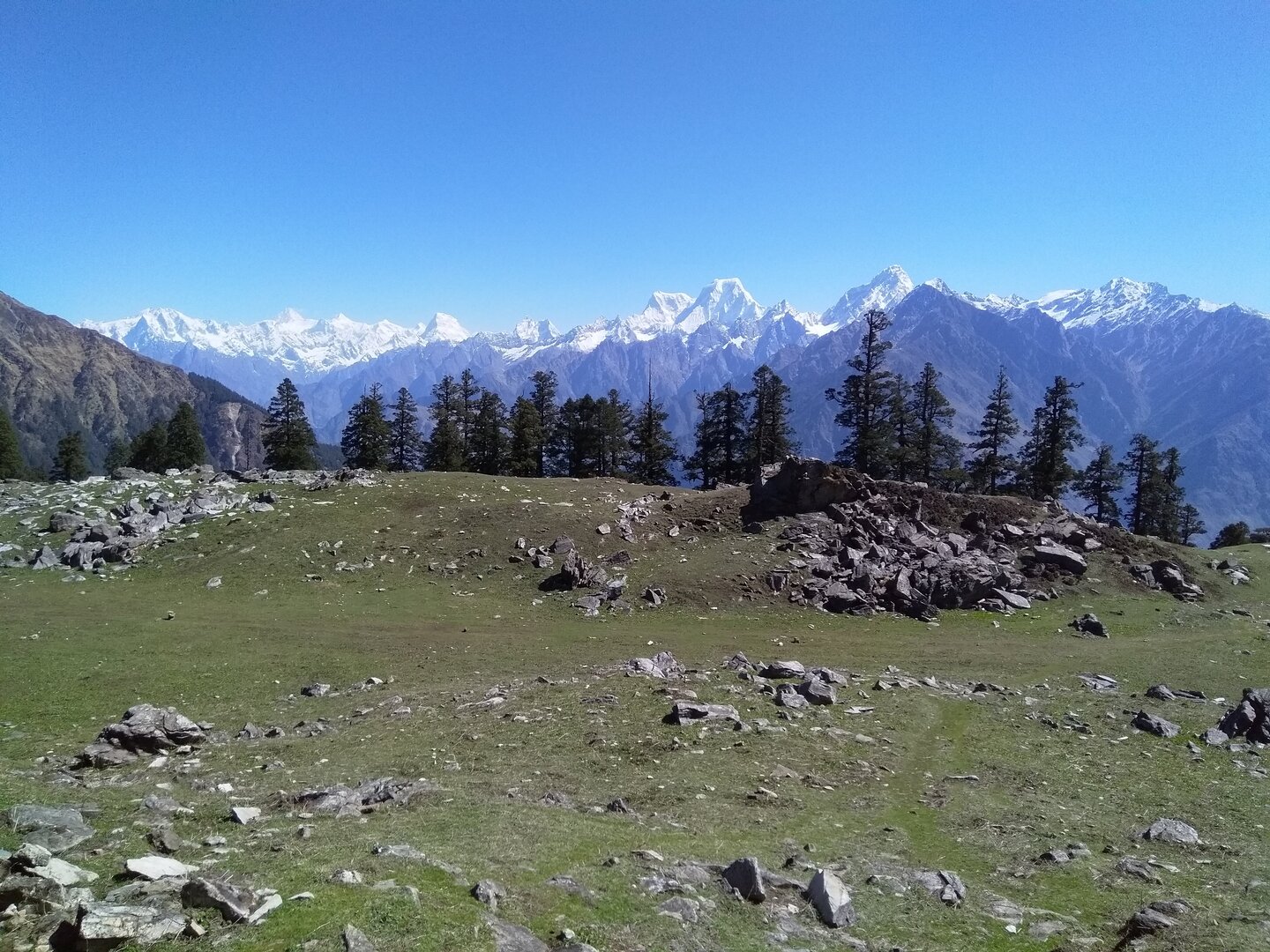
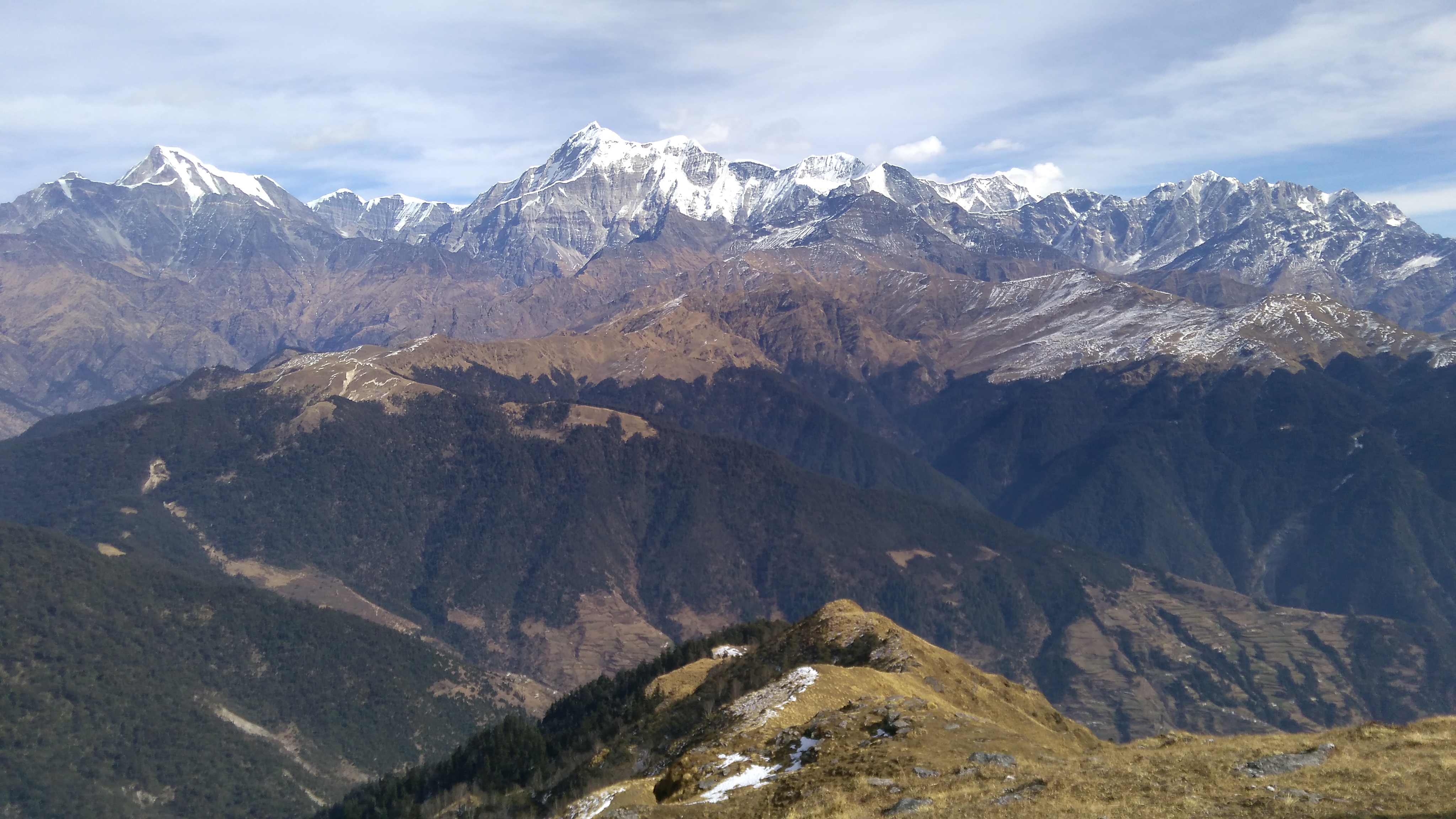
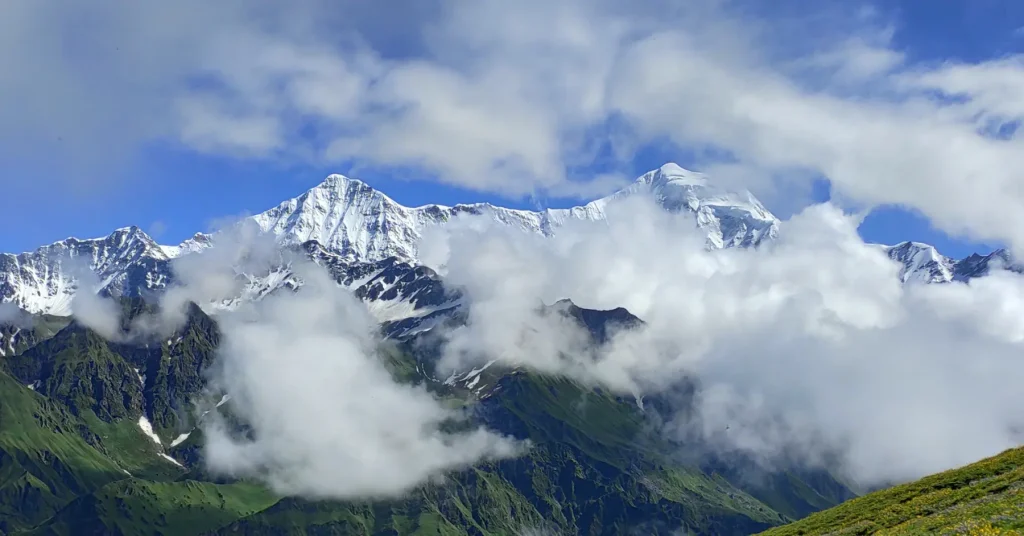
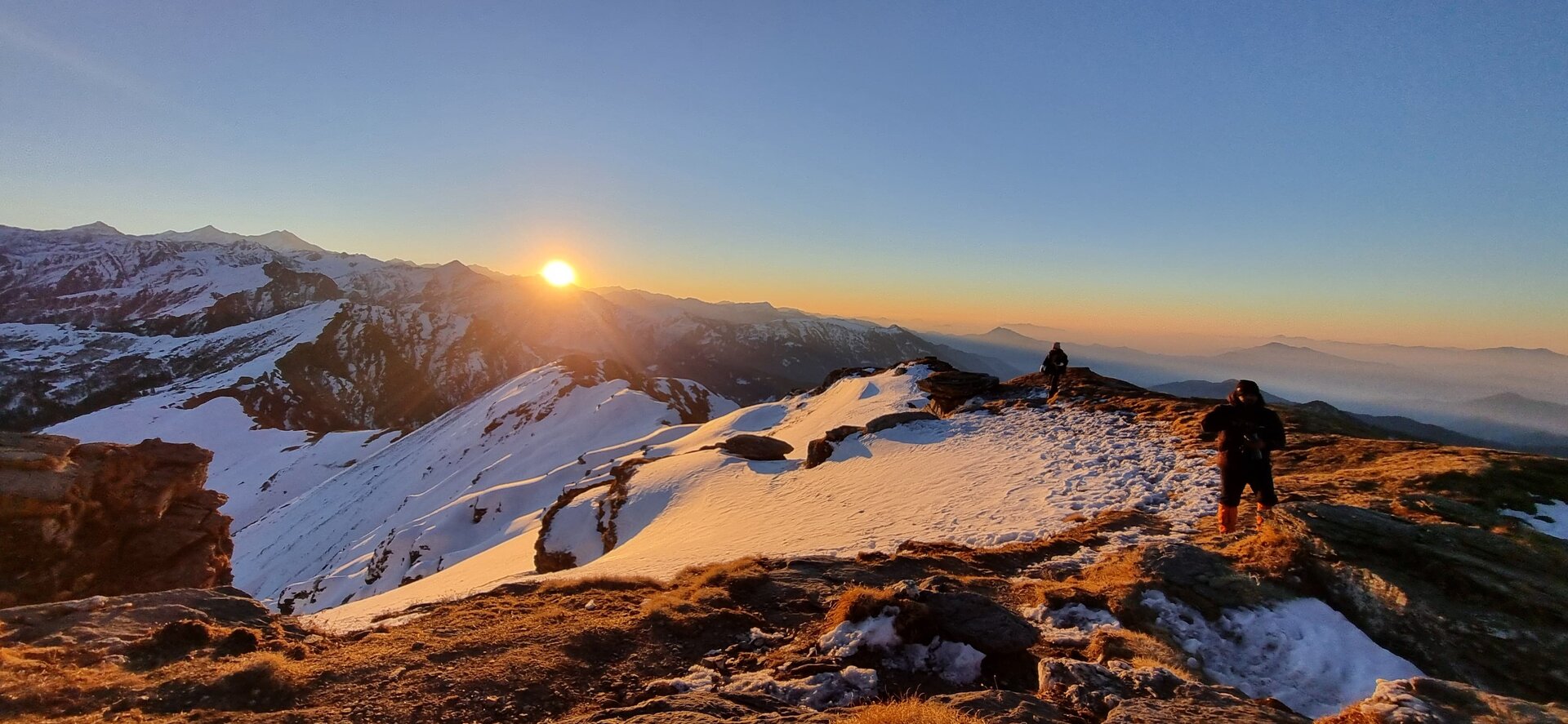
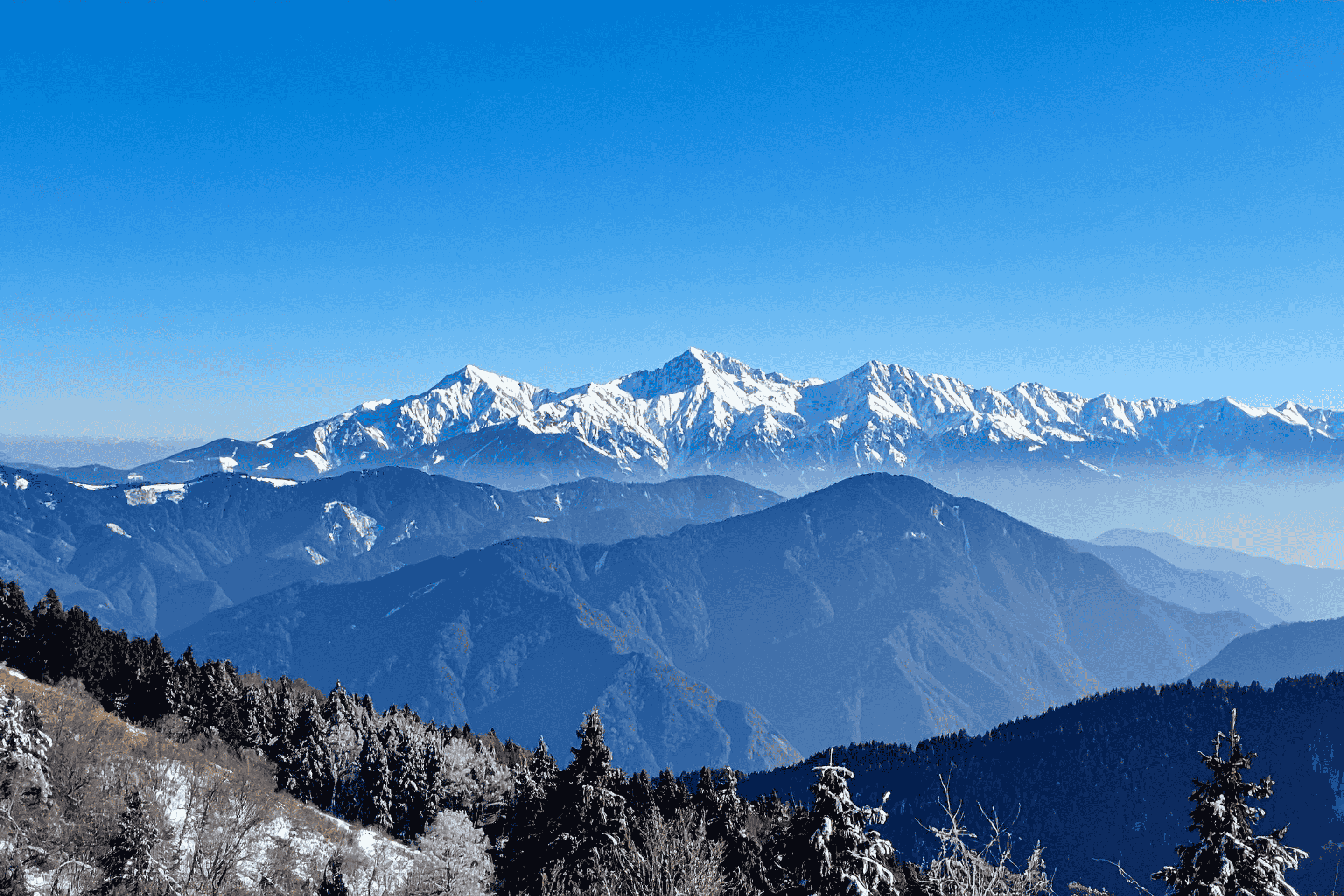
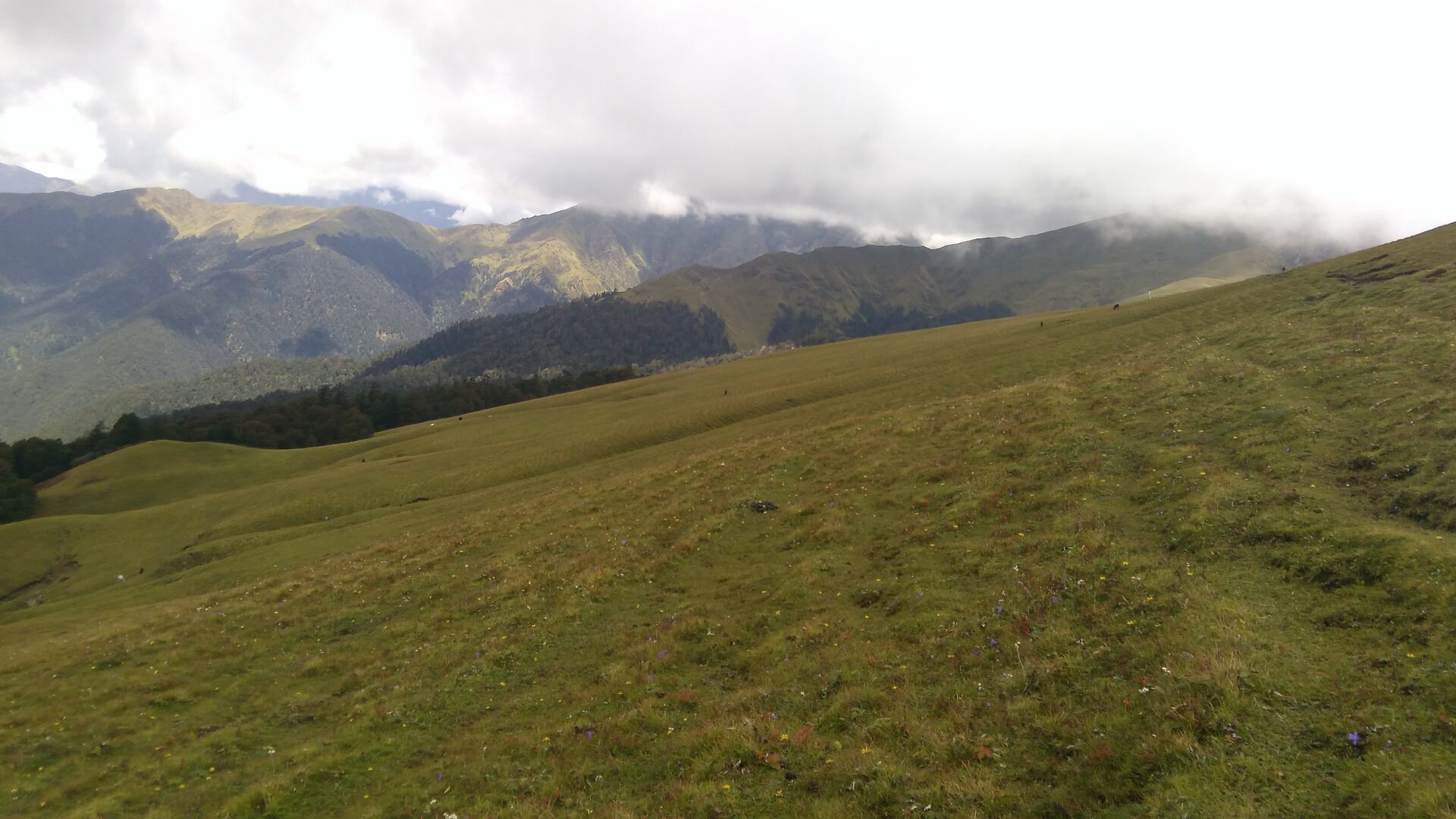
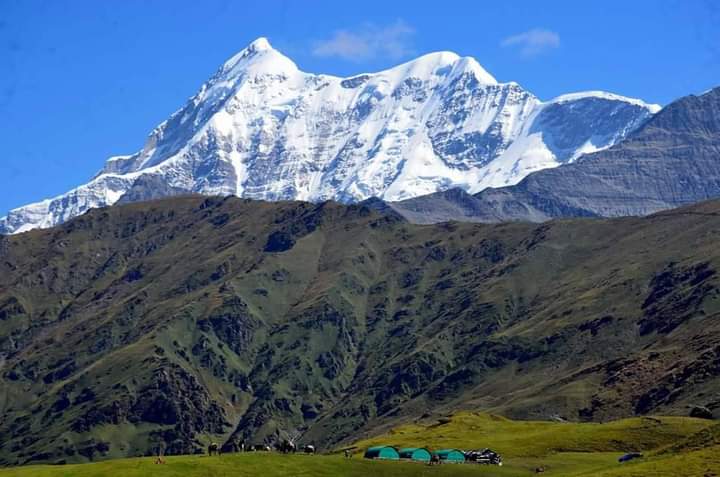
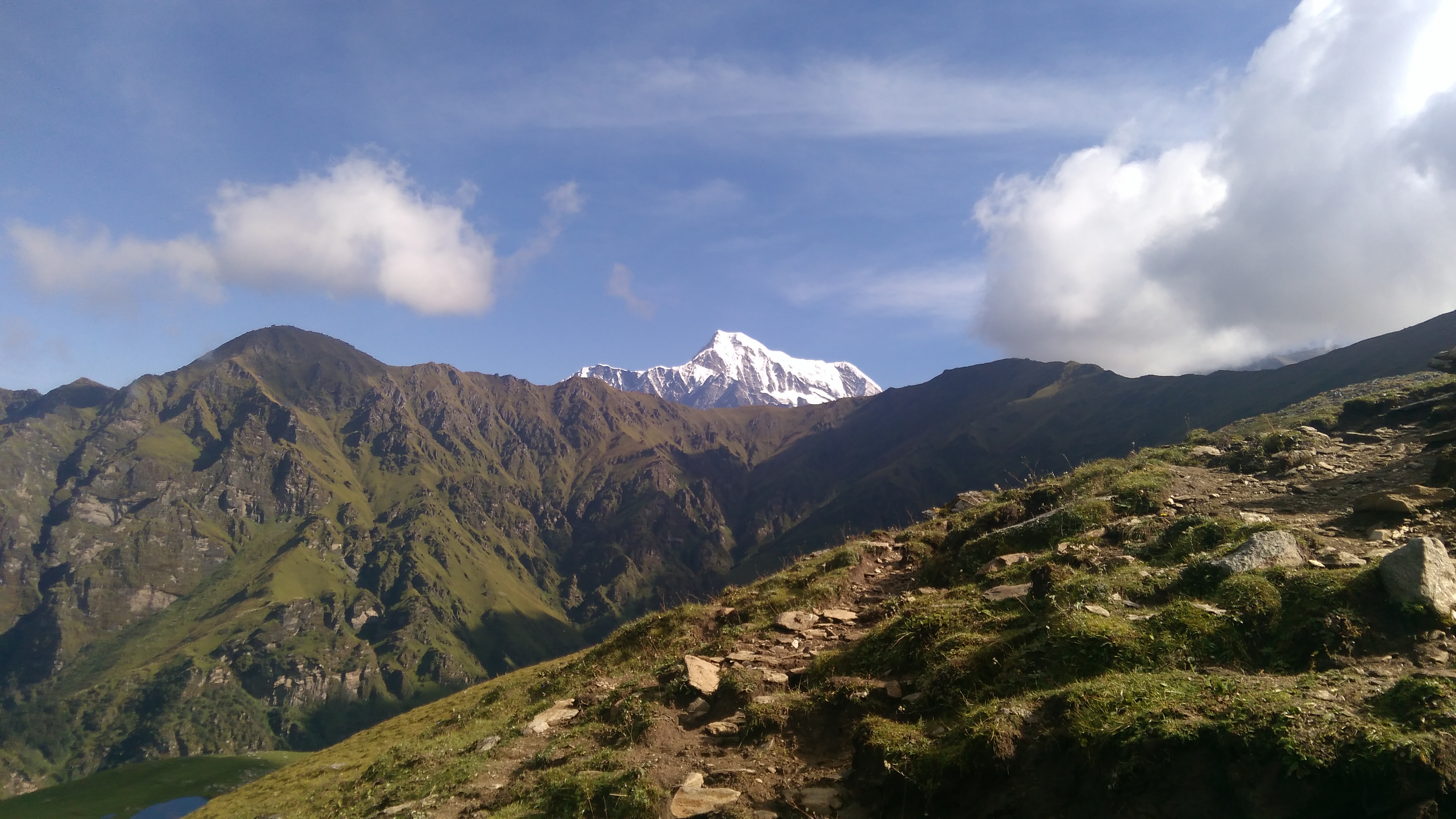
Then, almost without warning, the forests fall away and the world opens up into the endless green waves of Ali Bugyal — one of the largest alpine meadows in Asia. Walking here feels surreal. The air becomes crisp, the earth soft underfoot, and far on the horizon rise the great guardians of the Garhwal Himalayas: Mt. Trishul, Nanda Ghunti, and Chaukhamba, glowing white under the morning sun or flushed in shades of rose and gold at dusk. It’s a landscape so vast and quiet that you can hear the wind travel across the grass.
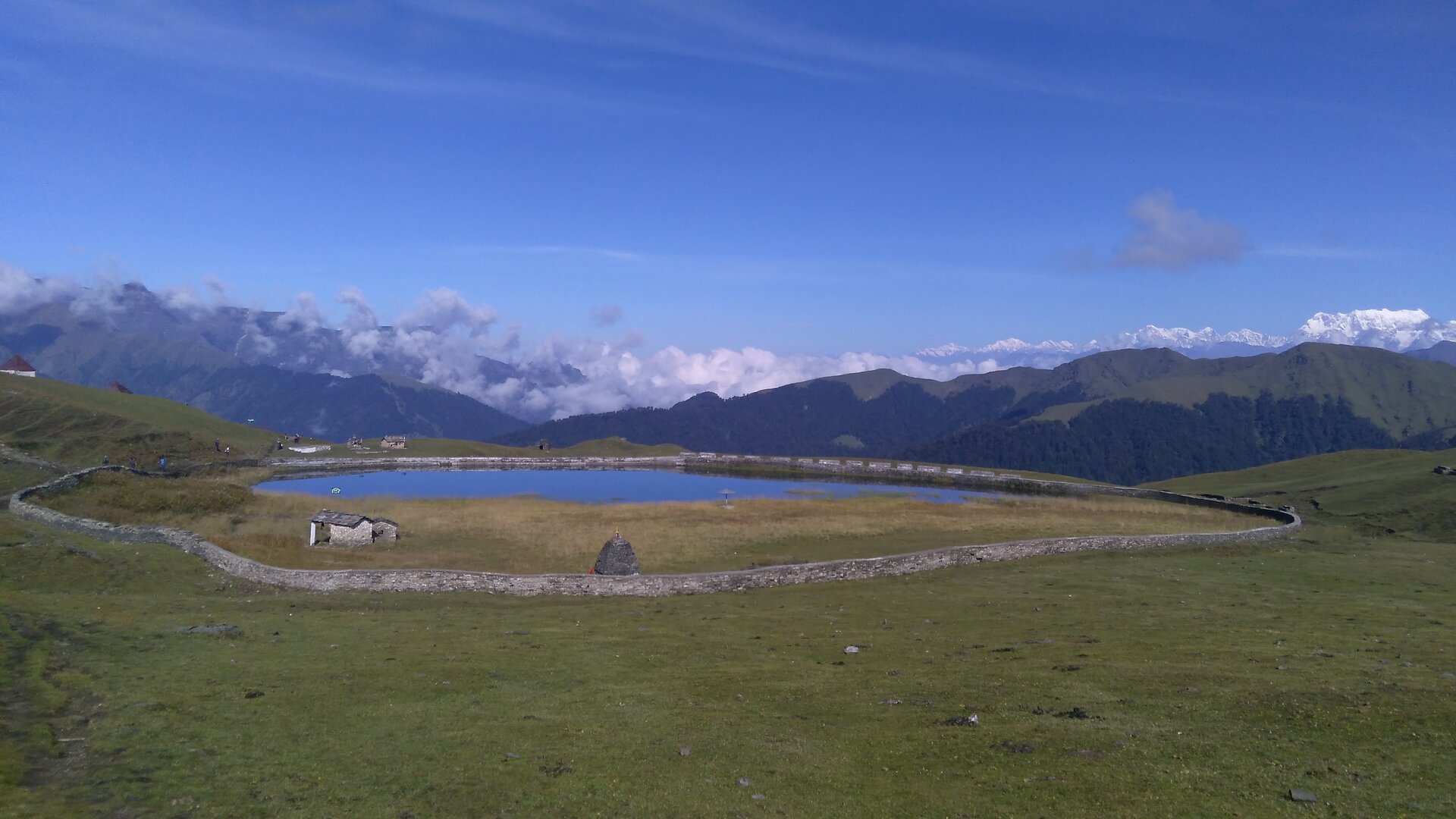
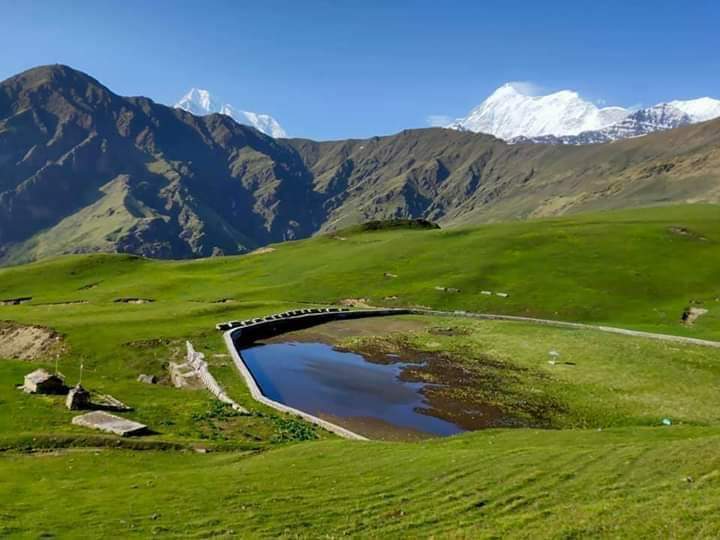
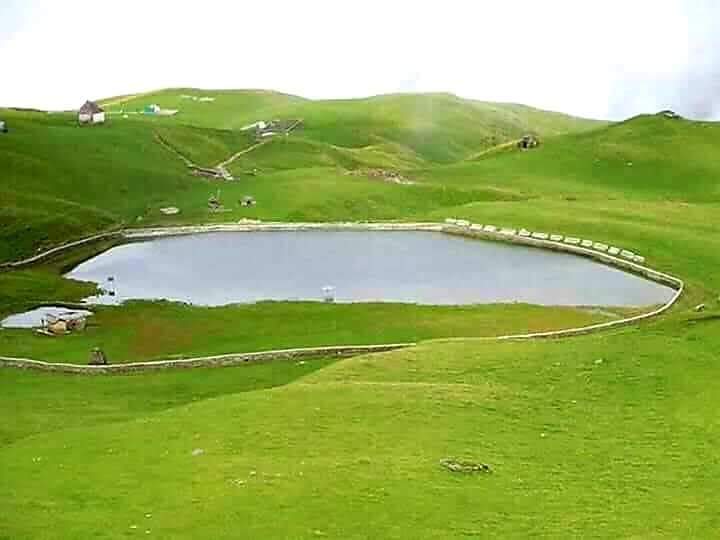
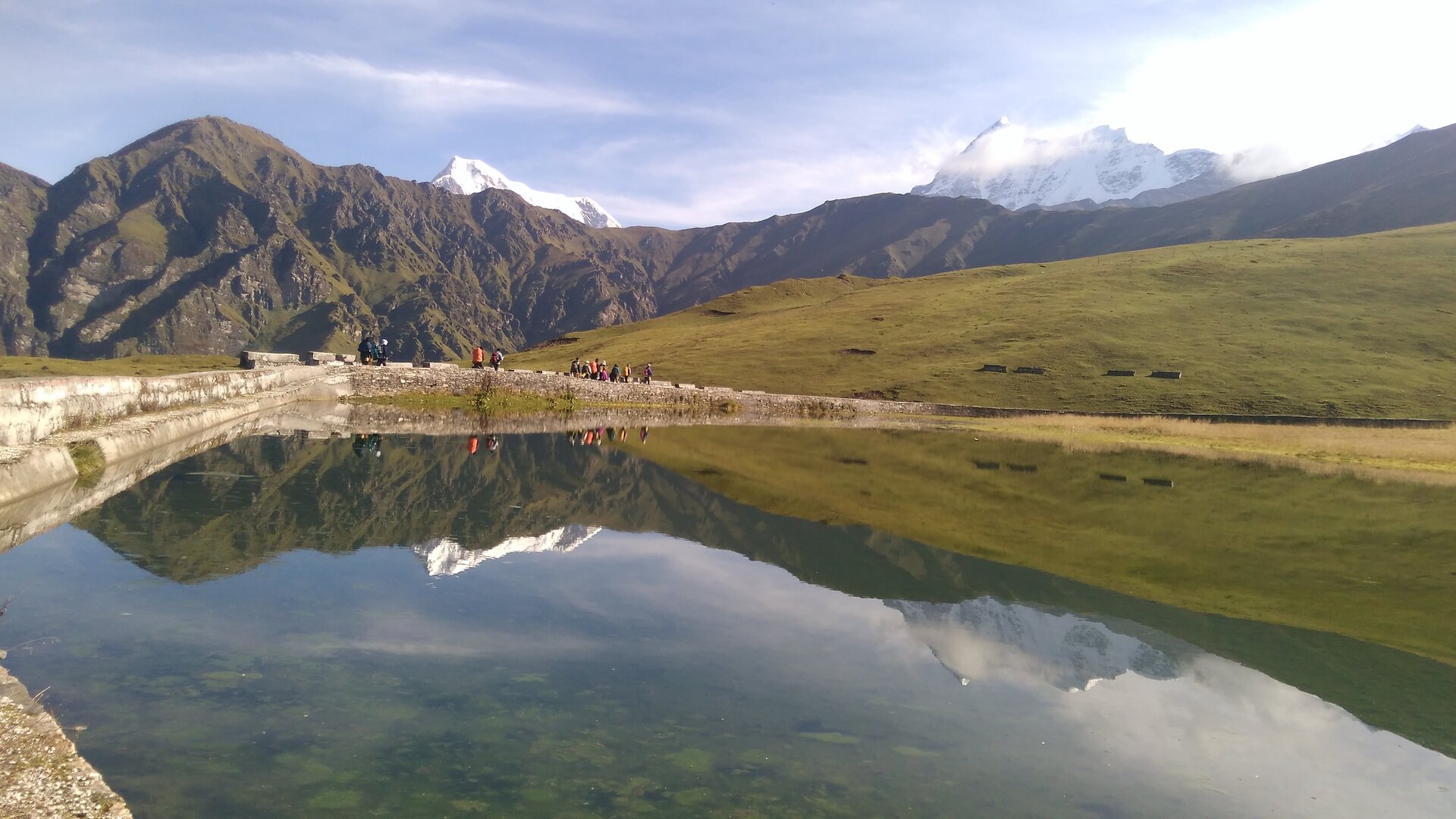
A gentle traverse leads you to Bedni Bugyal, equally magical yet imbued with a deeper spiritual energy. At its center lies Bedni Kund, a sacred, mirror-like pond believed to have witnessed centuries of rituals and the legendary Nanda Devi Raj Jat Yatra, one of the Himalayas’ most revered pilgrimages. The meadows here are dotted with wildflowers — blue poppies, brahmakamal, bistorts, and primulas — turning the terrain into a vibrant tapestry during summer.
Ali and Bedni are more than just meadows; they are living, breathing landscapes where nature, culture, and ancient lore blend seamlessly. Whether you are a first-time trekker or an experienced wanderer, these bugyals welcome you into a world where the sky feels close enough to touch, the mountains watch silently over the valleys, and every step fills you with a quiet sense of wonder.
Read More

Highlights

✅ Panoramic views of Trishul and Nanda Ghunti

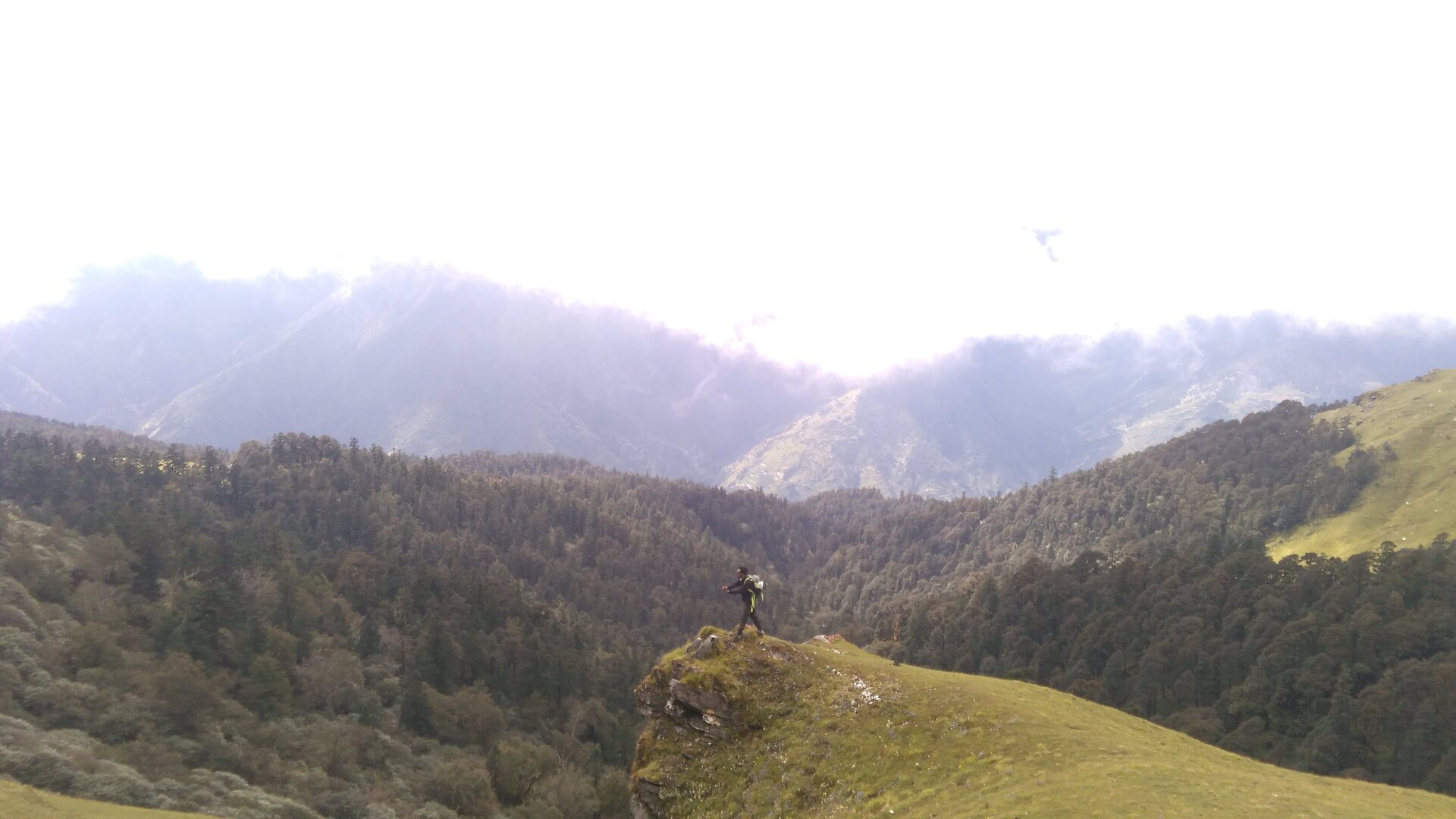
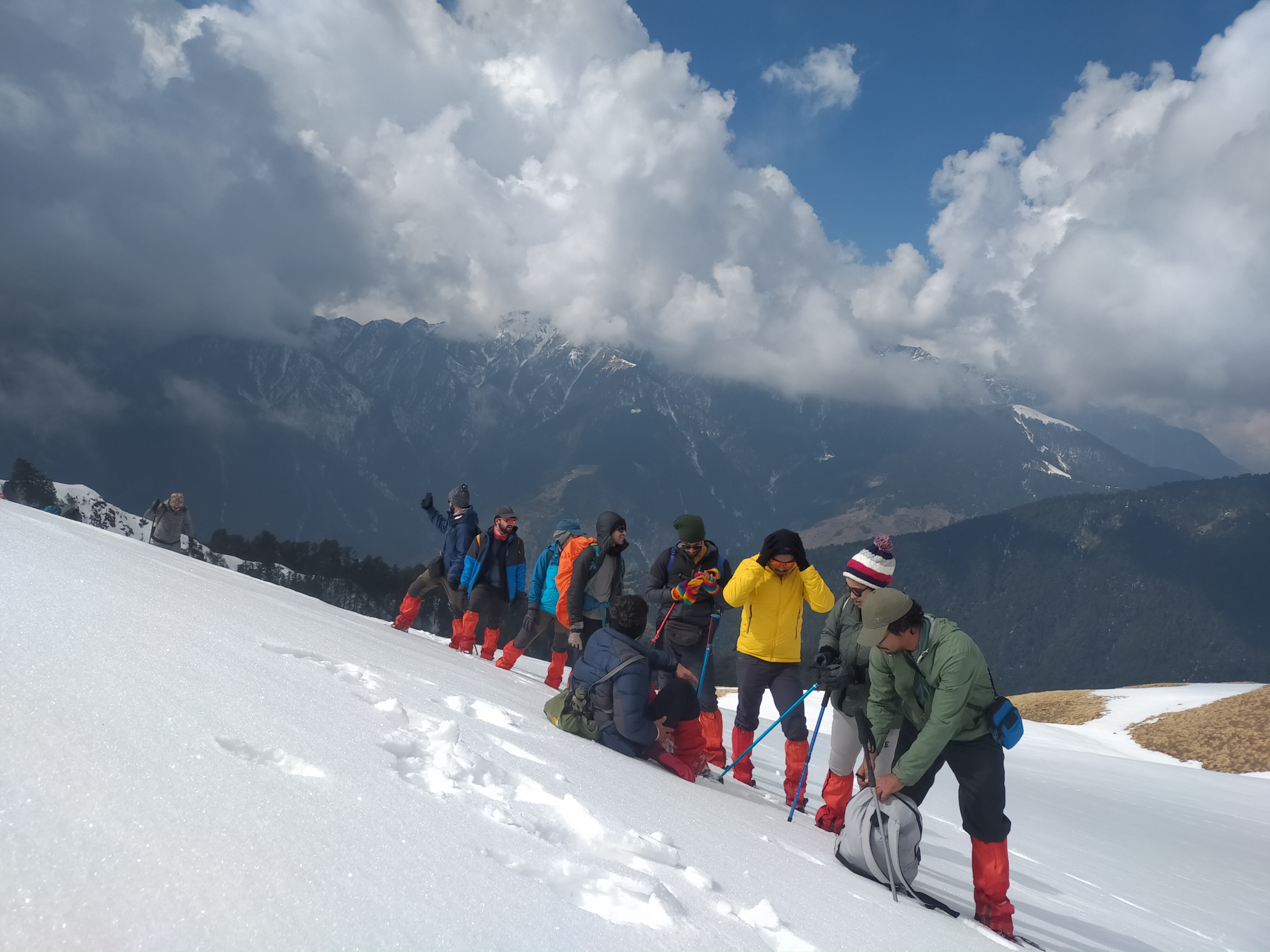
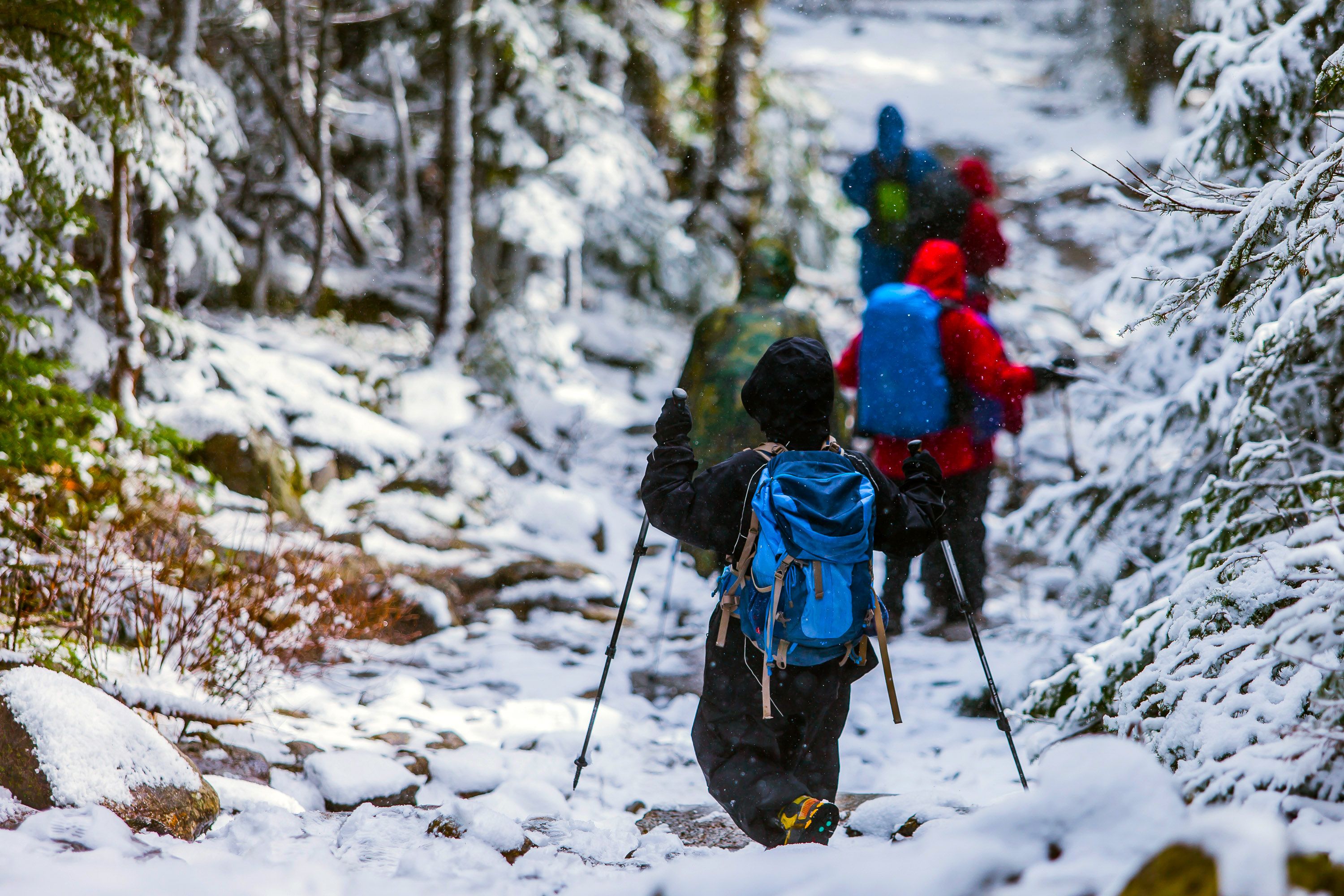
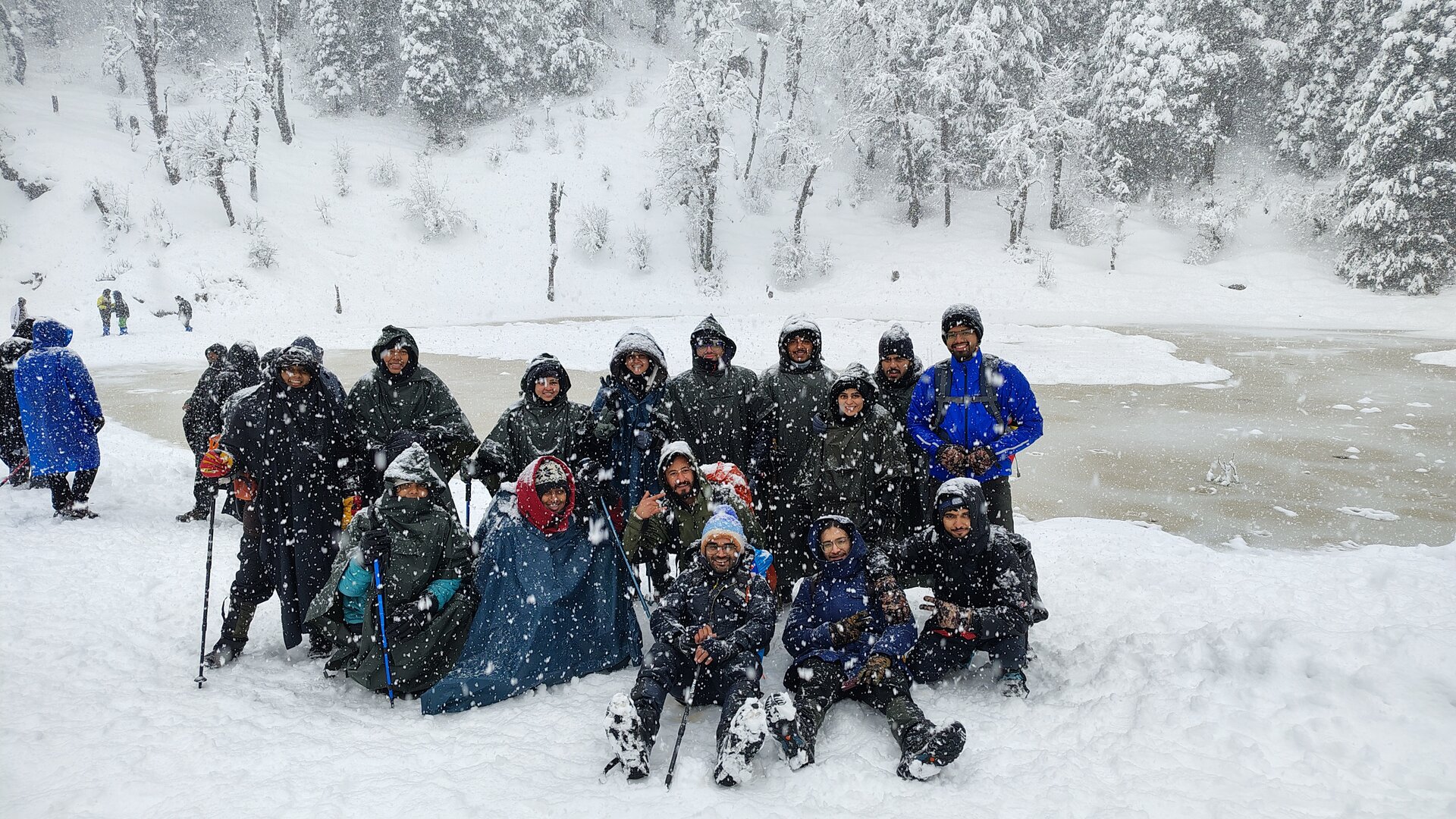
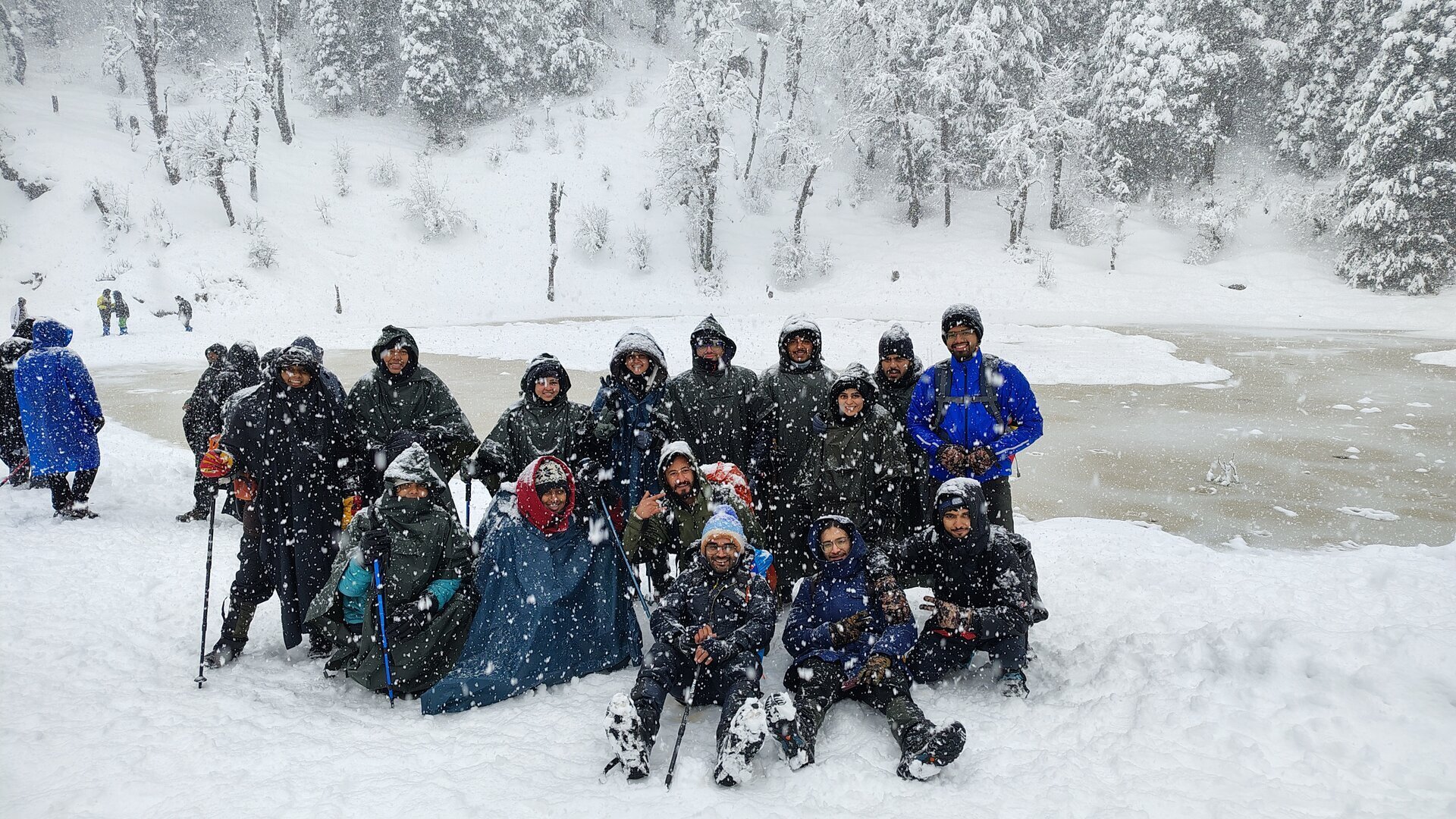
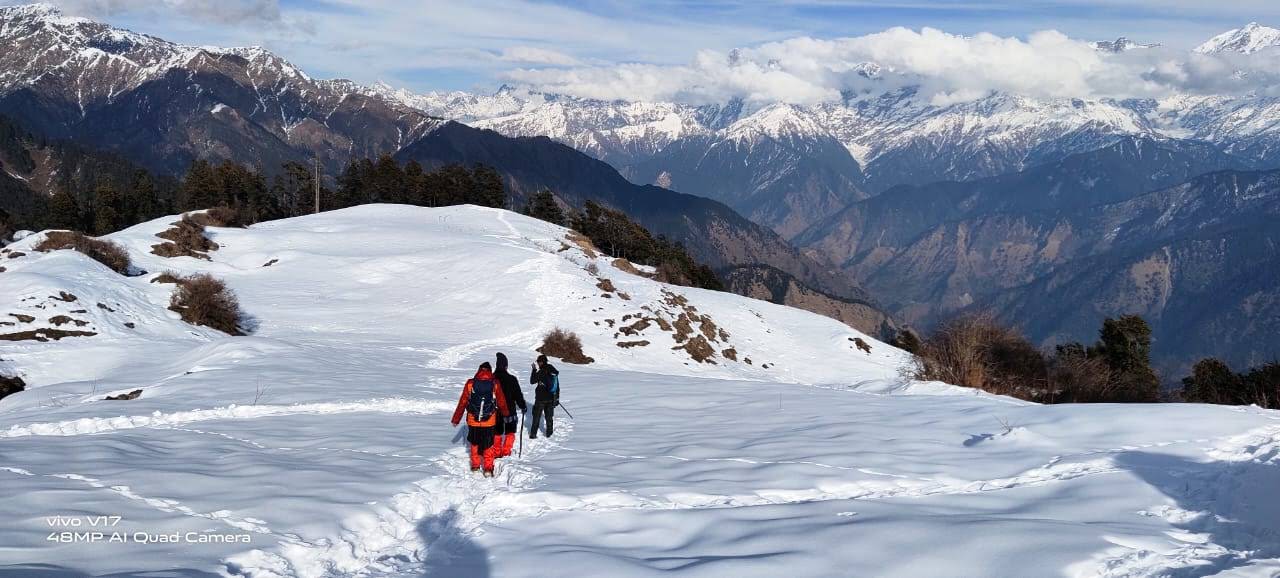
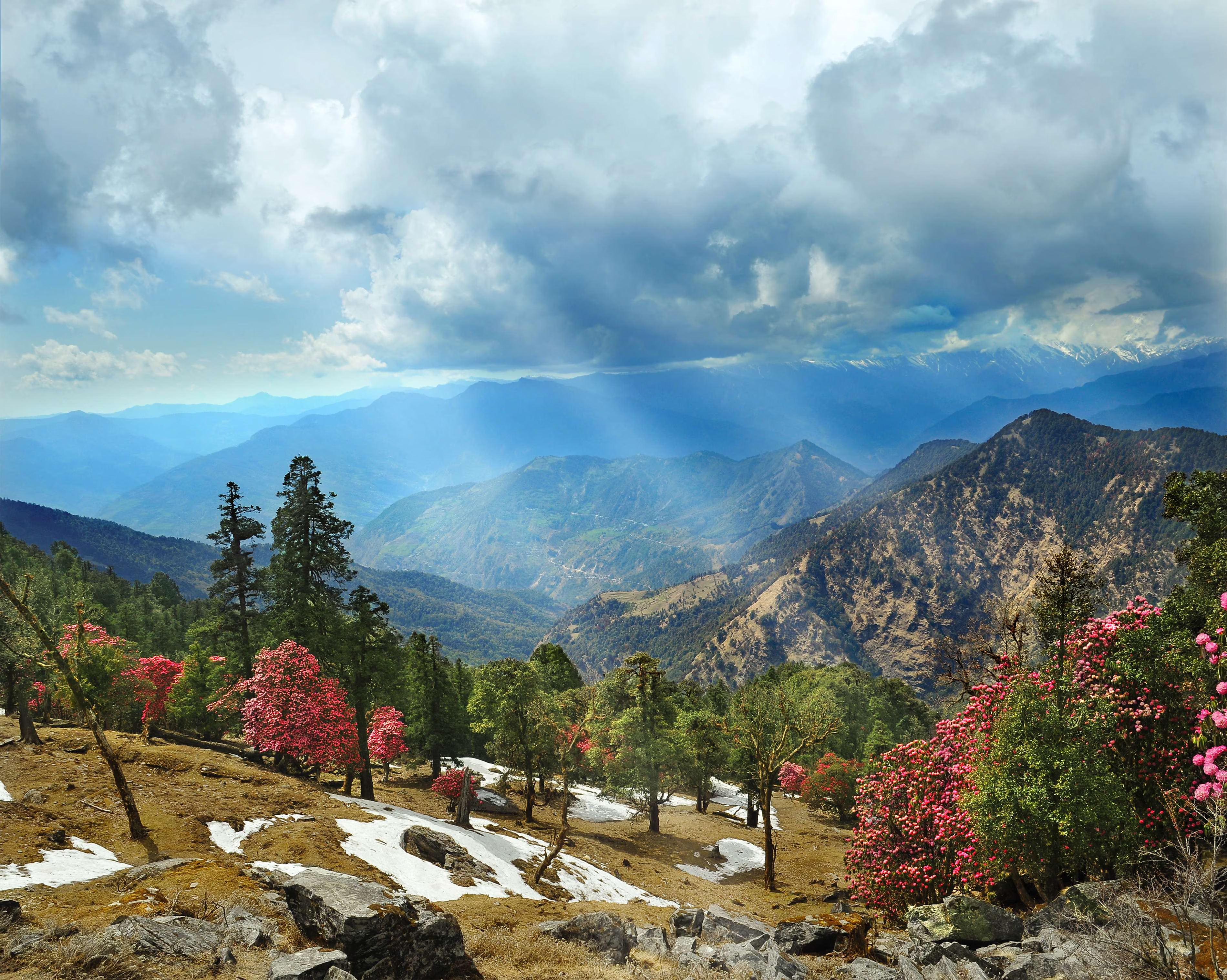
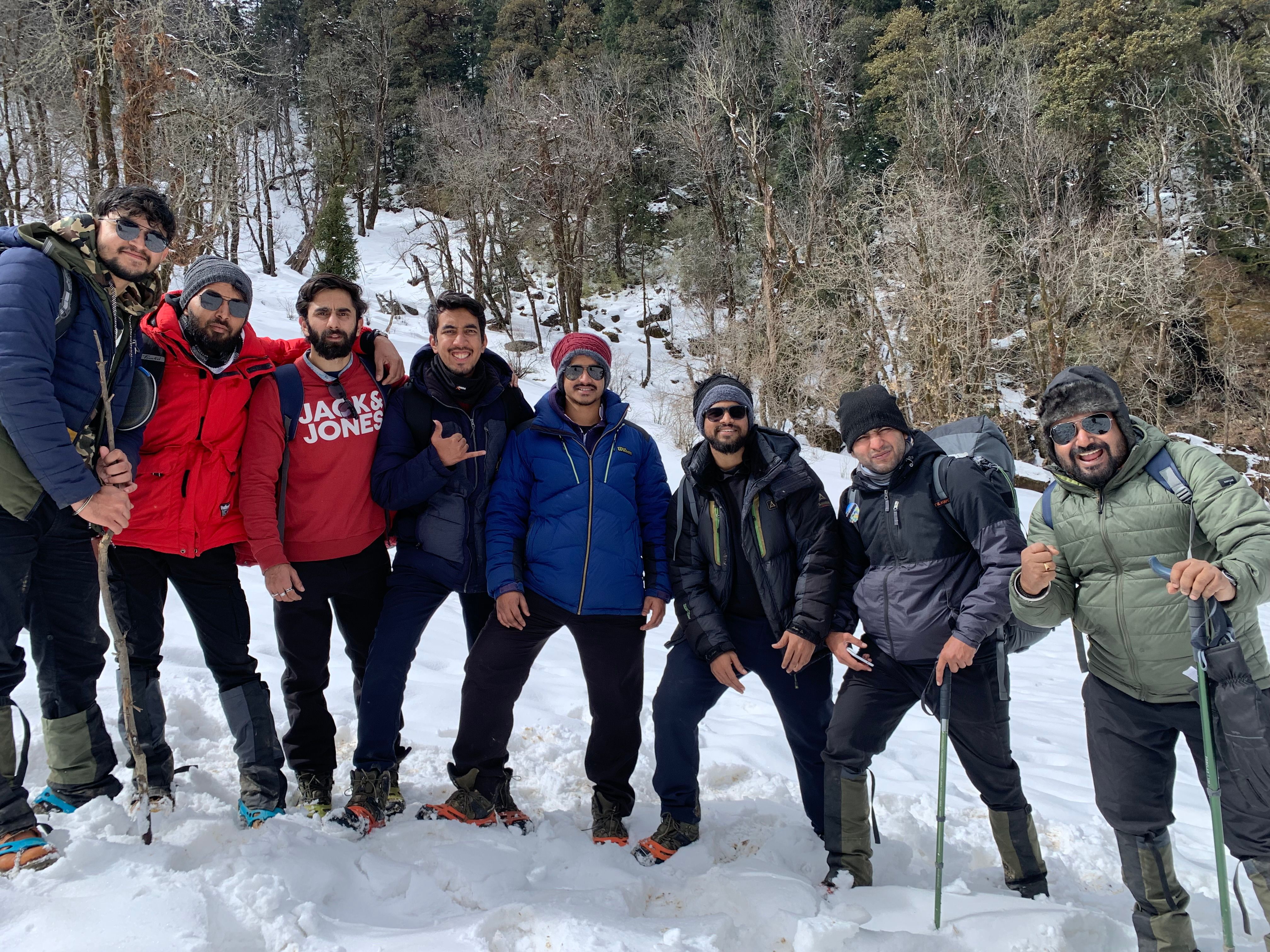
✅ Lush oak and rhododendron forests burst into vibrant bloom during spring, painting the trail in shades of red and pink — while in winter, the same forests turn magical under a soft blanket of snow, offering a calm, fairy-tale-like charm.

✅ Easy-moderate trail suitable for fit beginners

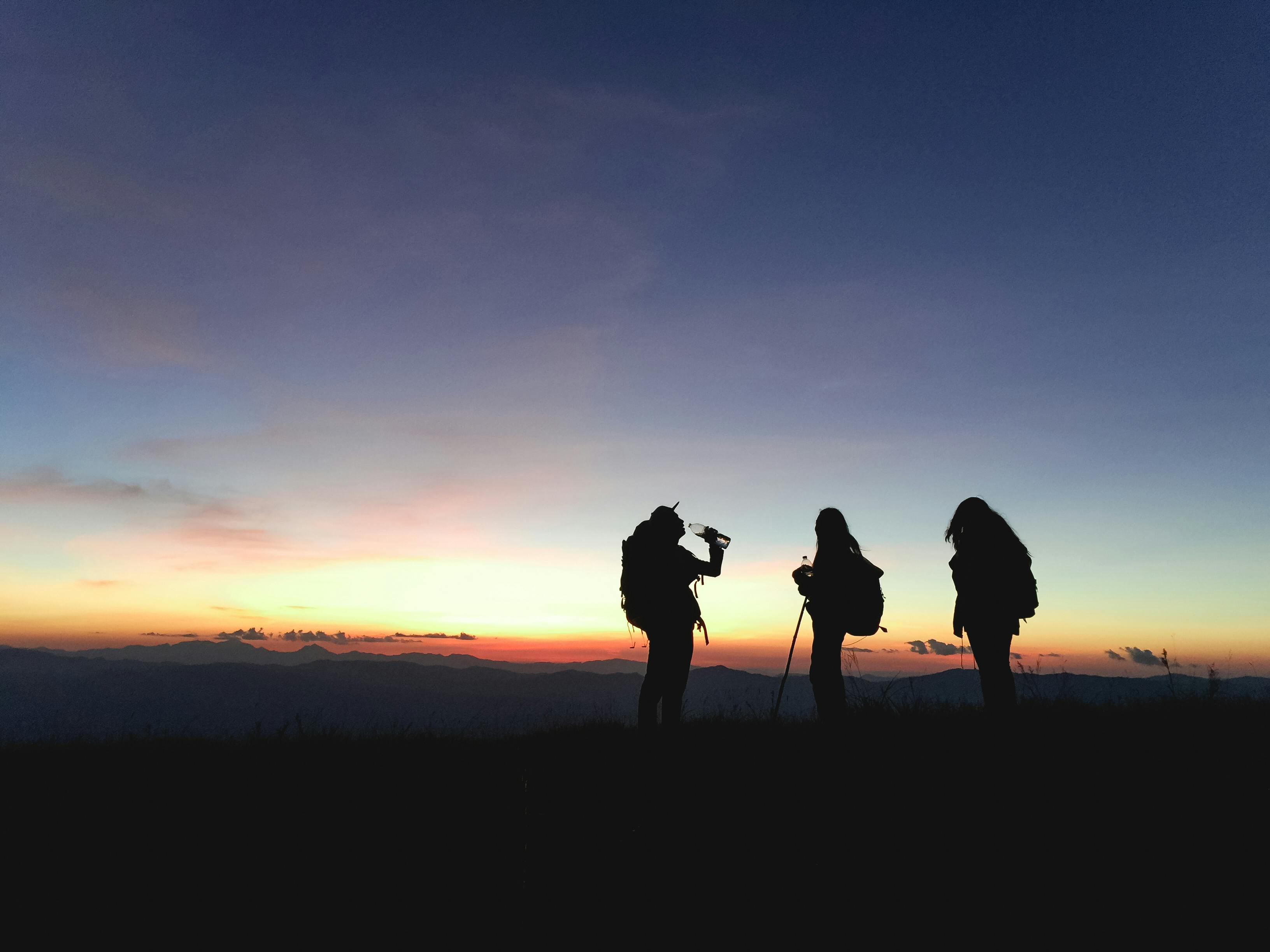
✅ Vibrant sunrises and starry night skies from campsites

✅ Cultural exposure to mountain life in villages like Didna and Wan

✅ A balanced mix of forests, meadows, and ridge walks

Itinerary

?
• Distance: ~250 km | Duration: 9–10 hrs.
• Your journey to Ali Bedni Bugyal Trek begins with an early morning drive from Rishikesh to Lohajung, a scenic Himalayan village that serves as the base for many treks in Uttarakhand. The drive takes around 10–11 hours, covering roughly 220 km through winding mountain roads and breathtaking river valleys.
As you leave behind the spiritual town of Rishikesh, where the holy Ganga flows gracefully, the landscape transforms into steep ridges and dense pine forests. Along the way, you’ll pass through three of the Panch Prayags — Devprayag, Rudraprayag, and Karnaprayag — each a sacred confluence where tributaries of the Alaknanda meet other rivers.
At Devprayag, witness the iconic meeting of the Bhagirathi and Alaknanda Rivers, marking the birth of the mighty Ganga. It’s a spectacular sight that captures both the serenity and power of the Himalayas.
The road continues through charming mountain towns and terraced fields, with the Alaknanda River keeping you company for most of the journey. As you approach Lohajung (7,600 ft), the first views of the Nanda Ghunti Peak emerge — a glimpse of the snowy giants awaiting you in the coming days.
Lohajung is a small yet lively settlement with a few local shops and guesthouses. If you arrive before sunset, take a gentle walk around the village to acclimatize and enjoy the mountain air. According to local folklore, the name Lohajung comes from an ancient tale — it’s believed that Goddess Parvati fought a demon named Lohasur here, hence the name ‘Lohajung,’ meaning ‘the war with Lohasur’.
End your day with a hot, comforting dinner at the guesthouse and prepare for the trek ahead — tomorrow, the real adventure begins.
• Trek Distance: ~6 km | Duration: 4–5 hrs.
• The trek to Didna (8,200 ft) starts with a clearly defined forest path that meanders through oak and rhododendron trees. The initial section includes gentle ascents and descents through shaded woodland, making it a pleasant start to your Himalayan journey.
After about an hour and a half of hiking, we’ll reach the Neel Ganga River, a sparkling mountain stream that marks the midpoint of today’s trek. It’s a perfect spot to rest, refill your bottles, and soak in the calming sound of the gushing water surrounded by thick forest.
From Neel Ganga, the trail climbs steeply for the next couple of hours — this is the most challenging part of the day. The steady ascent leads us up to Didna village, a charming hamlet known for its traditional stone houses and terraced fields. The views start opening up beautifully as you gain altitude.
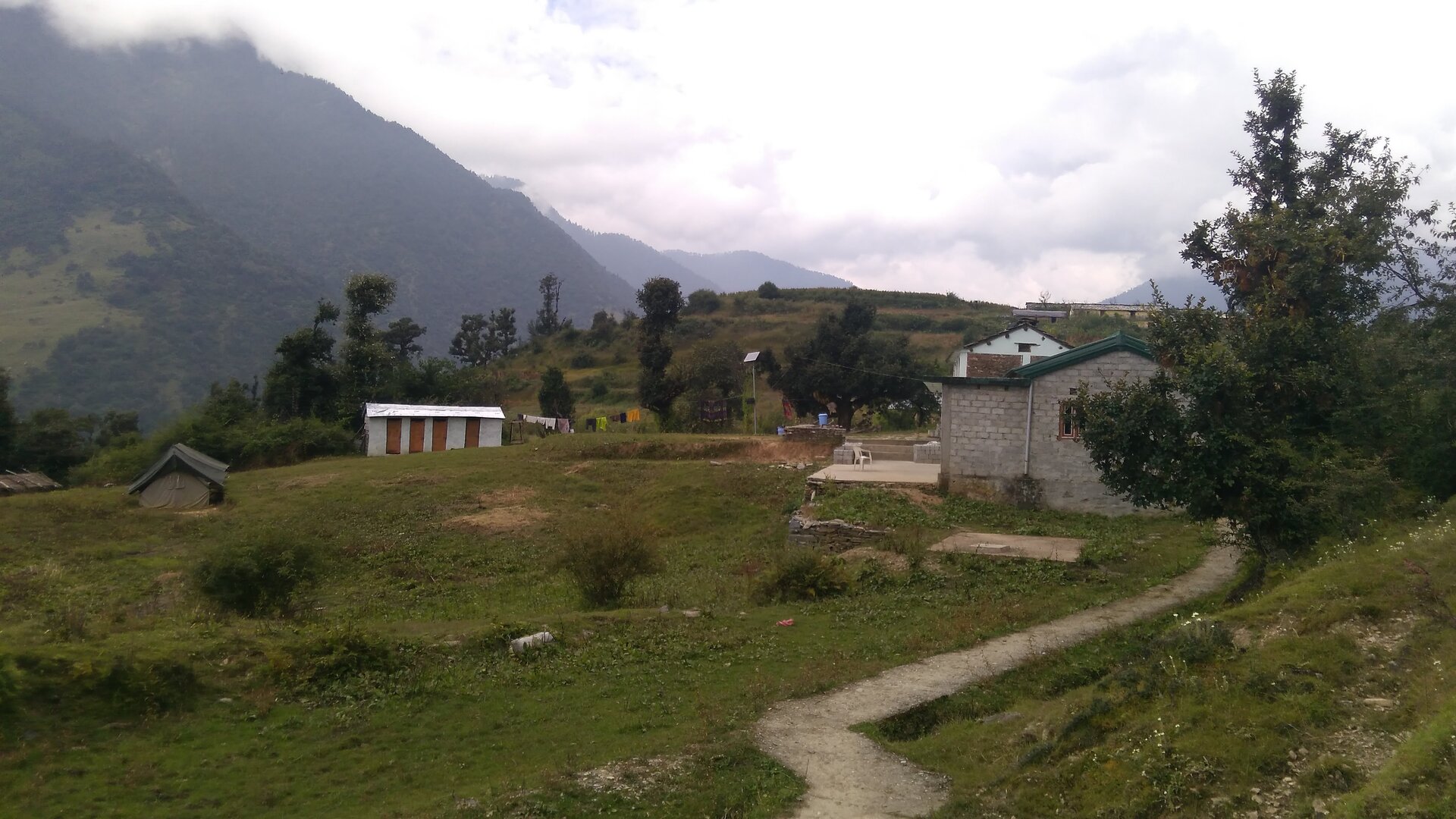
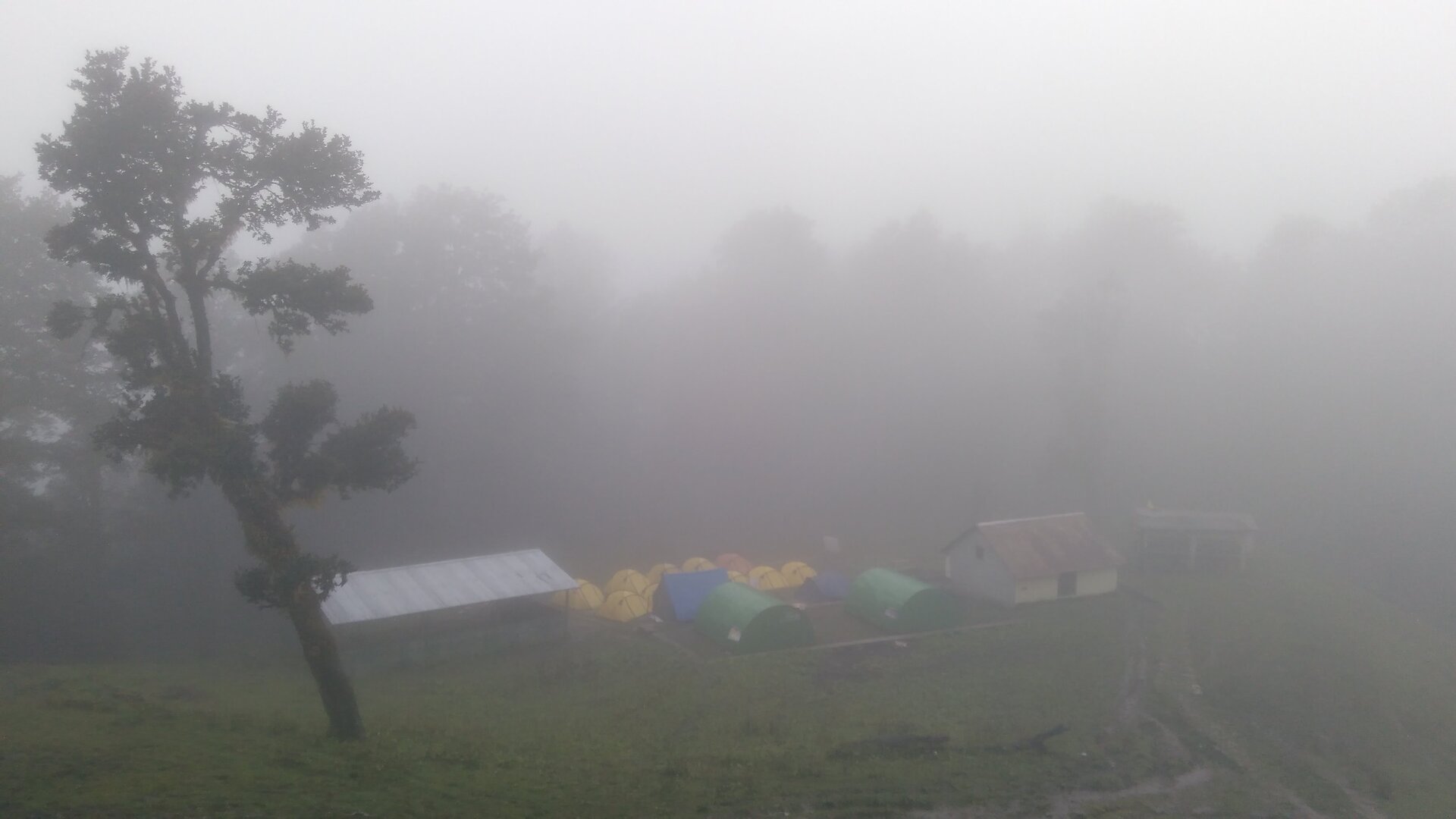
We’ll continue a little further ahead into the outskirts of Didna, where we’ll set up camp in a peaceful forest clearing. The site offers a quiet, natural ambience — surrounded by tall trees and the distant hum of the valley below.
Evening time is perfect for short acclimatization walks or simply relaxing near the campsite. You can watch the sun dip behind the hills, enjoy some photography, and later, a warm, freshly cooked dinner under a canopy of stars.
Sleep early tonight — tomorrow’s trek will take us above the tree line into open alpine meadows.
• Trek Distance: ~6 km | Duration: 5–6 hrs.
• Day 3 of the trek unfolds the heart of the trek — vast rolling meadows, crisp mountain air, and unforgettable views. Today, we trek from Didna to Khobal Tal, passing through the legendary Ali Bugyal, one of the most scenic alpine meadows in India.
We begin the morning with an early breakfast before setting out on the trail. The initial section climbs steadily through dense oak and rhododendron forests — a tranquil stretch filled with bird calls and soft mountain light filtering through the trees.
A few hours into the trek, we’ll reach Tolpani, a small clearing that serves as the only reliable water source on this route. It’s the perfect spot to rest, refill your bottles, and gather energy for the ascent ahead.
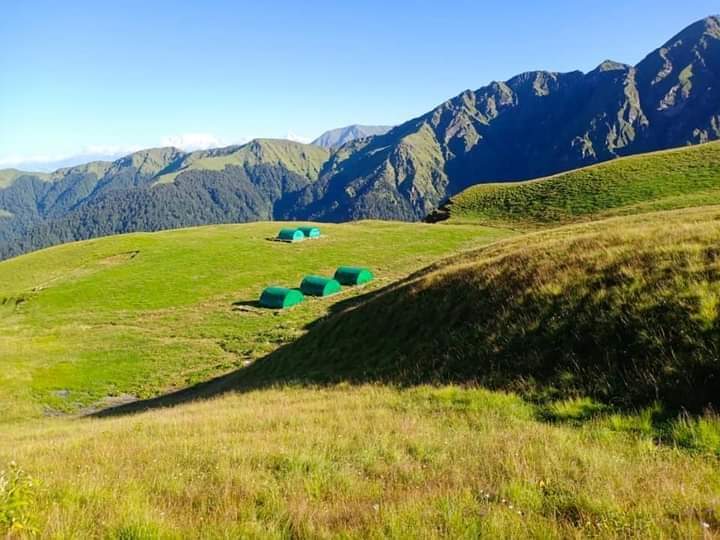
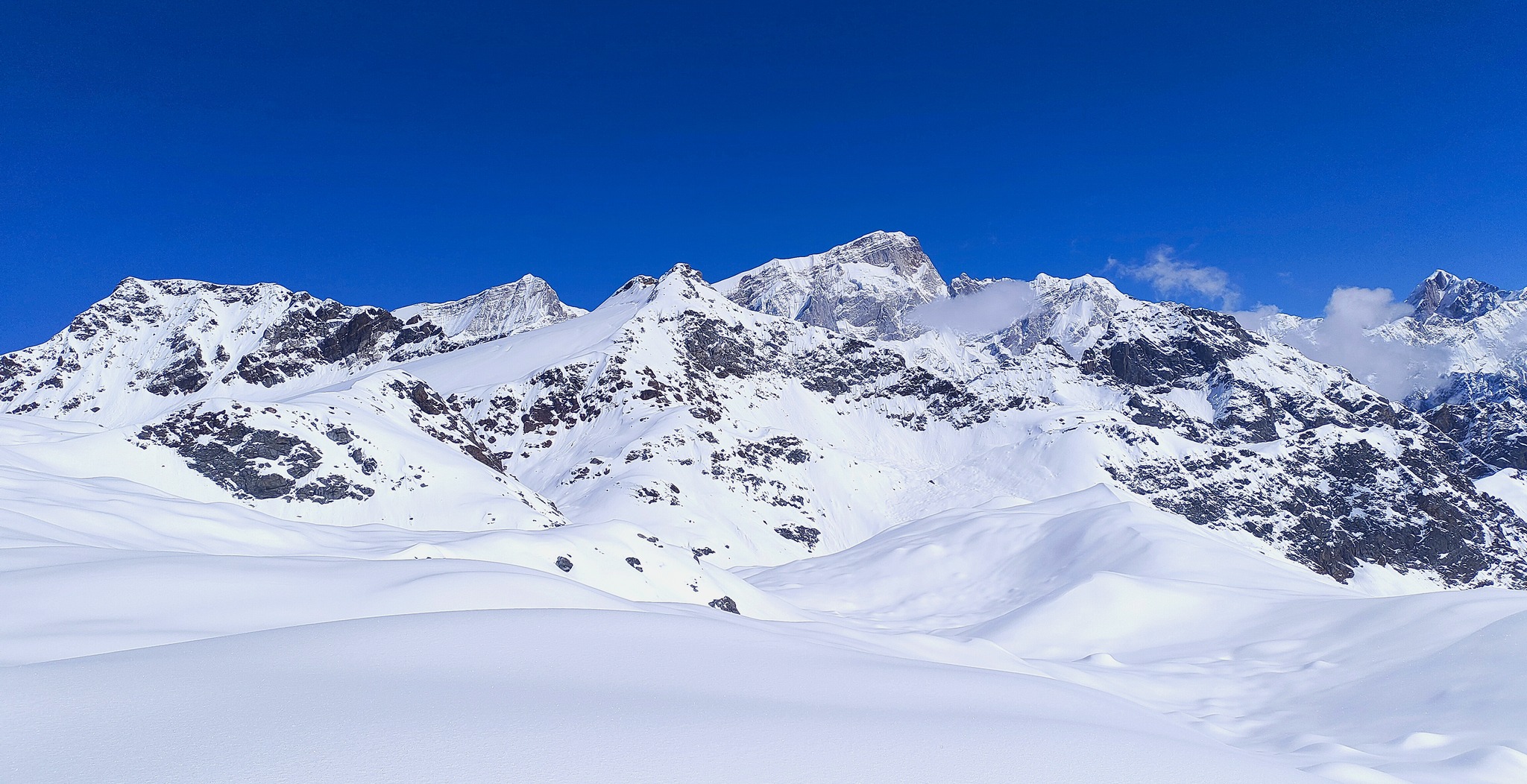
Soon after, the forest begins to thin, and the breathtaking Ali Bugyal opens up before you — a sweeping expanse of velvet-green slopes stretching endlessly into the horizon. This section of the trail is truly a photographer’s paradise, offering panoramic views of Mt. Trishul and Mt. Mrigthuni standing tall against the skyline. During winter, these meadows turn into a snow-laden wonderland, glowing under the Himalayan sun.
As you traverse the gentle undulations of Ali Bugyal, take your time to immerse yourself in the calmness and grandeur of this high-altitude landscape.
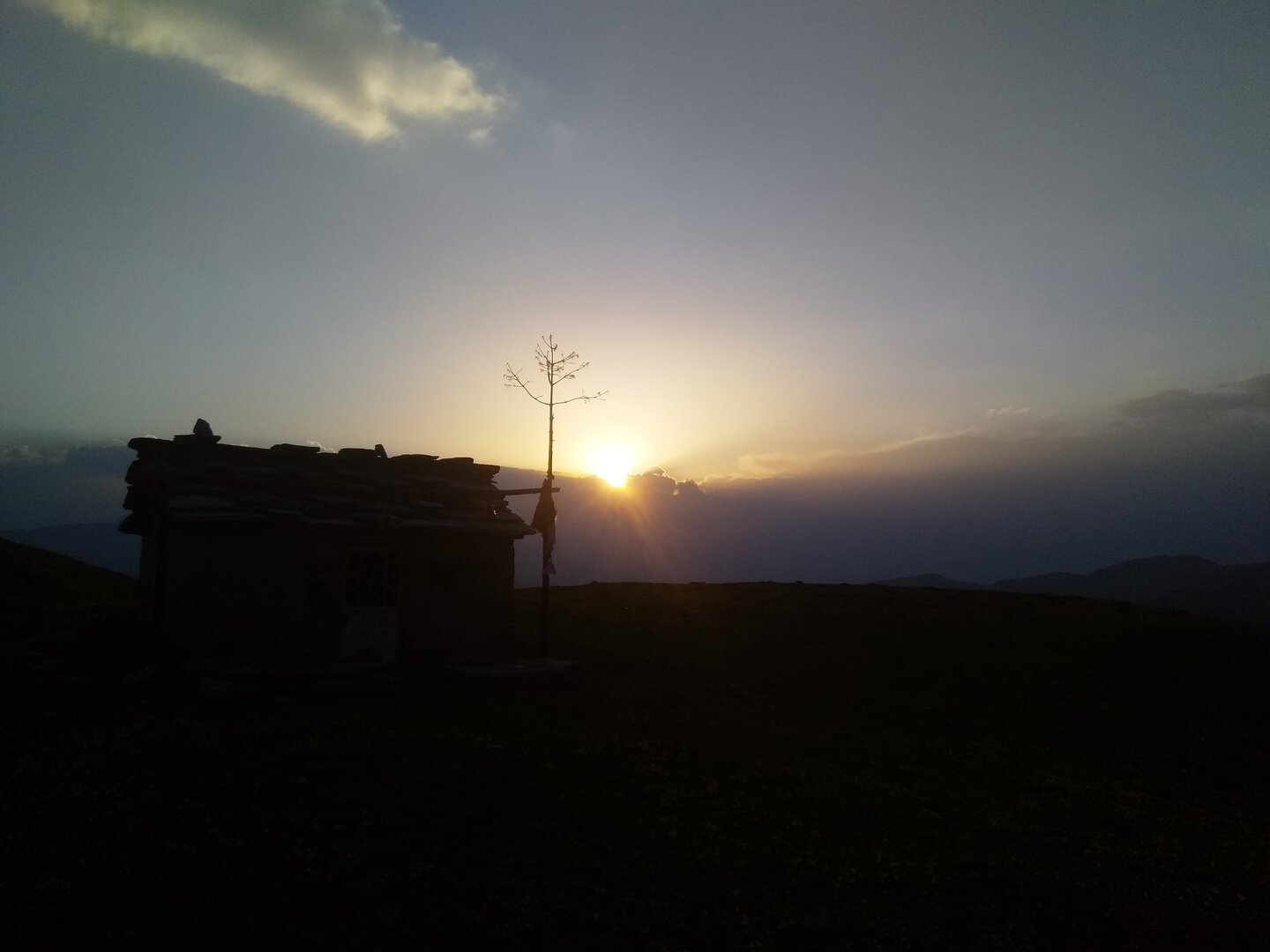
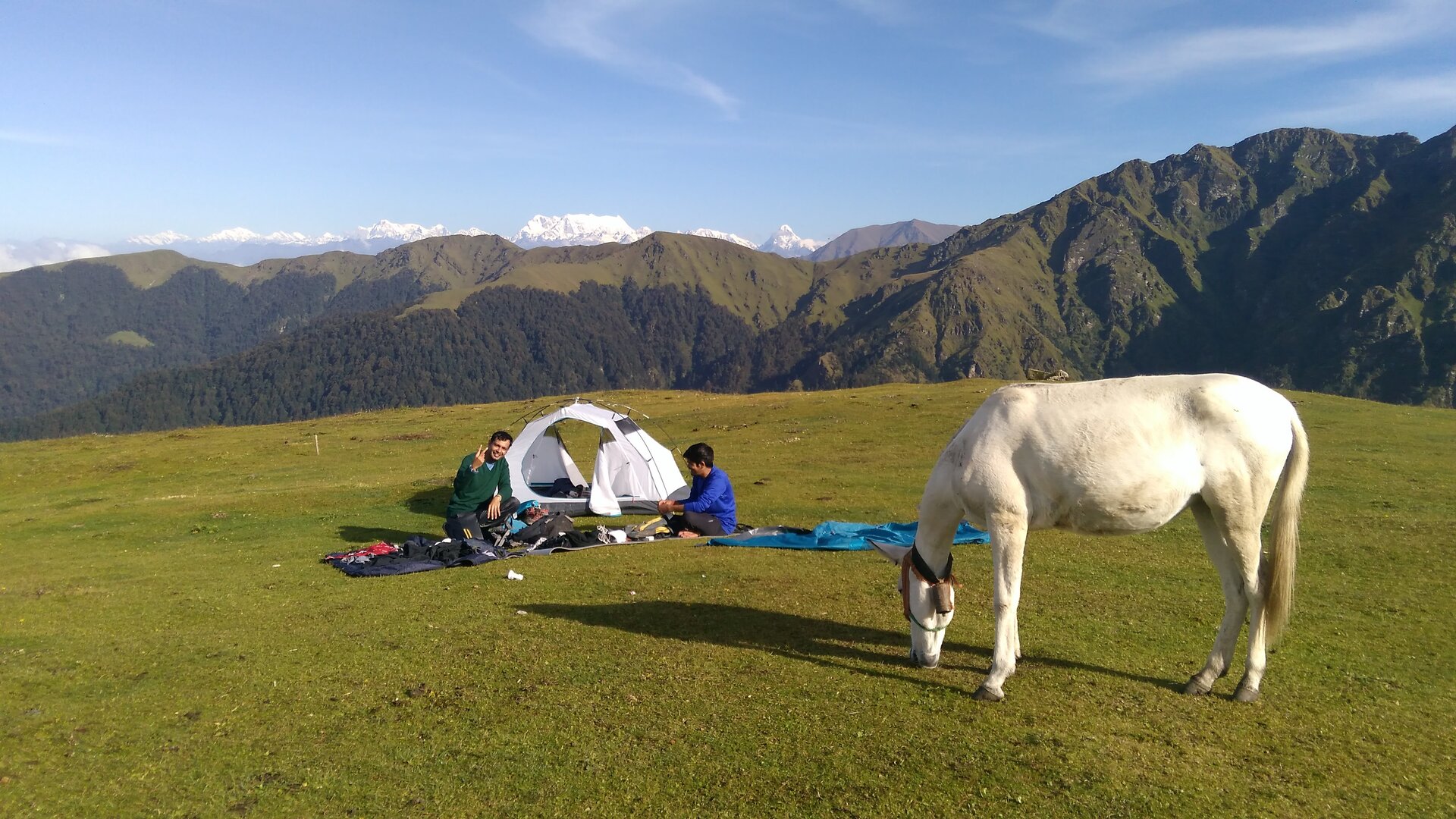
From here, the trail continues towards Khobal Tal, our campsite for the night. Located near a serene lake at the edge of the meadows, Khobal Tal is surrounded by pine forests and open views of the mountains. As dusk settles, you’ll find yourself sitting by your tent under a clear, starlit sky — the perfect setting to unwind after a long, rewarding day of trekking.
Tonight, we camp here in the wilderness, lulled to sleep by the whispers of the alpine breeze and the tranquility of the high meadows.
• Trek Distance: ~7 km round trip | Duration: 5–6 hrs.
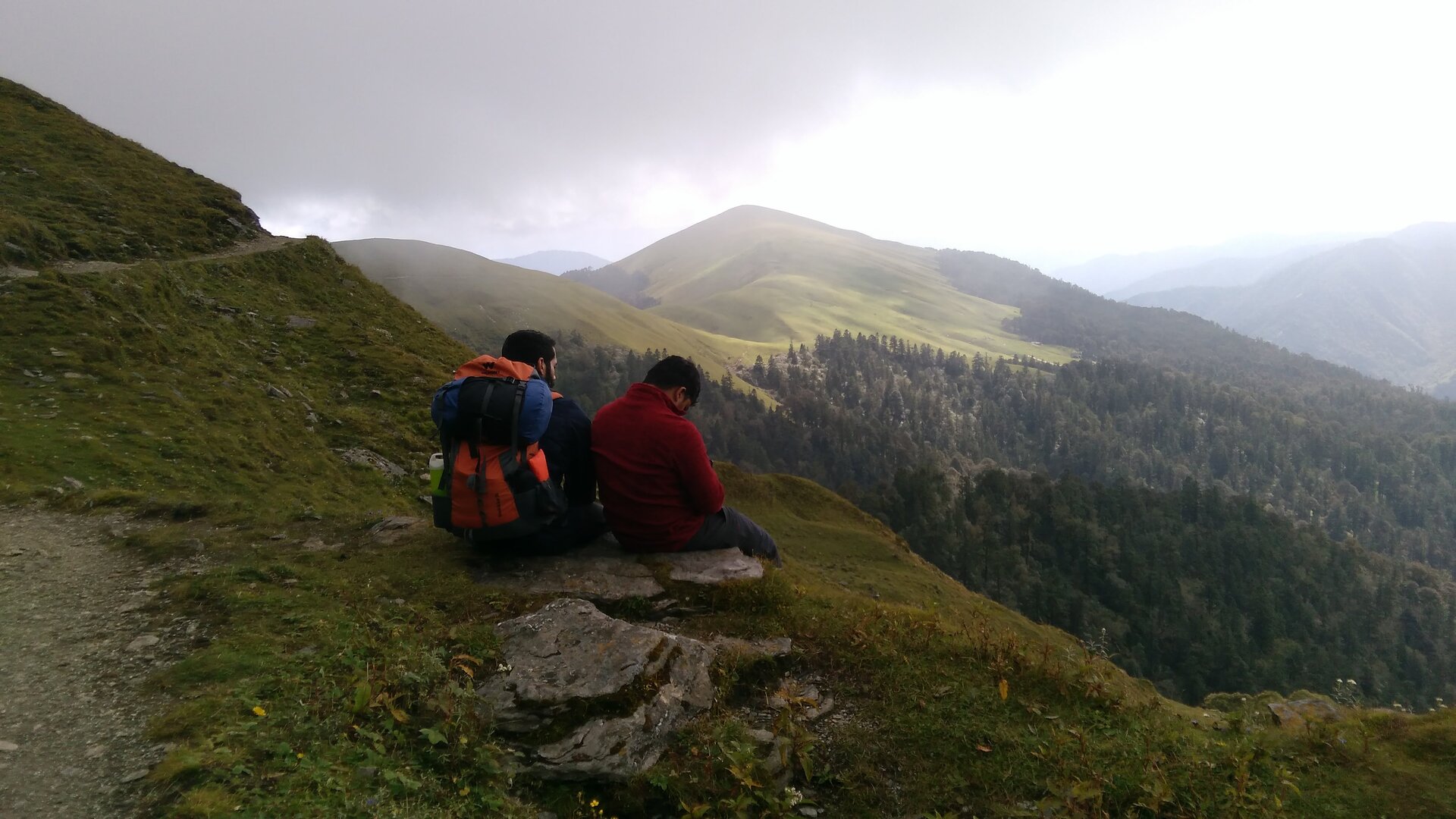
• Day 4 brings yet another magical chapter of this Himalayan journey as we move from Khobal Tal to Bedni Bugyal, one of the most enchanting alpine meadows in India. After a refreshing cup of morning tea and a wholesome breakfast, we’ll begin our gradual ascent along a narrow, scenic trail that winds through rolling ridges and open landscapes.
Soon, the trail opens up to the magnificent Bedni Bugyal, a vast green expanse set against the dramatic backdrop of towering Himalayan peaks. This is where the grandeur of the Garhwal Himalayas truly comes alive — with Mt. Trishul, Nanda Ghunti, Neelkanth, and Chaukhamba gleaming in the morning light. During early hours, the meadows shimmer with dew and golden sunlight, making it one of the most photogenic stretches of the entire trek.
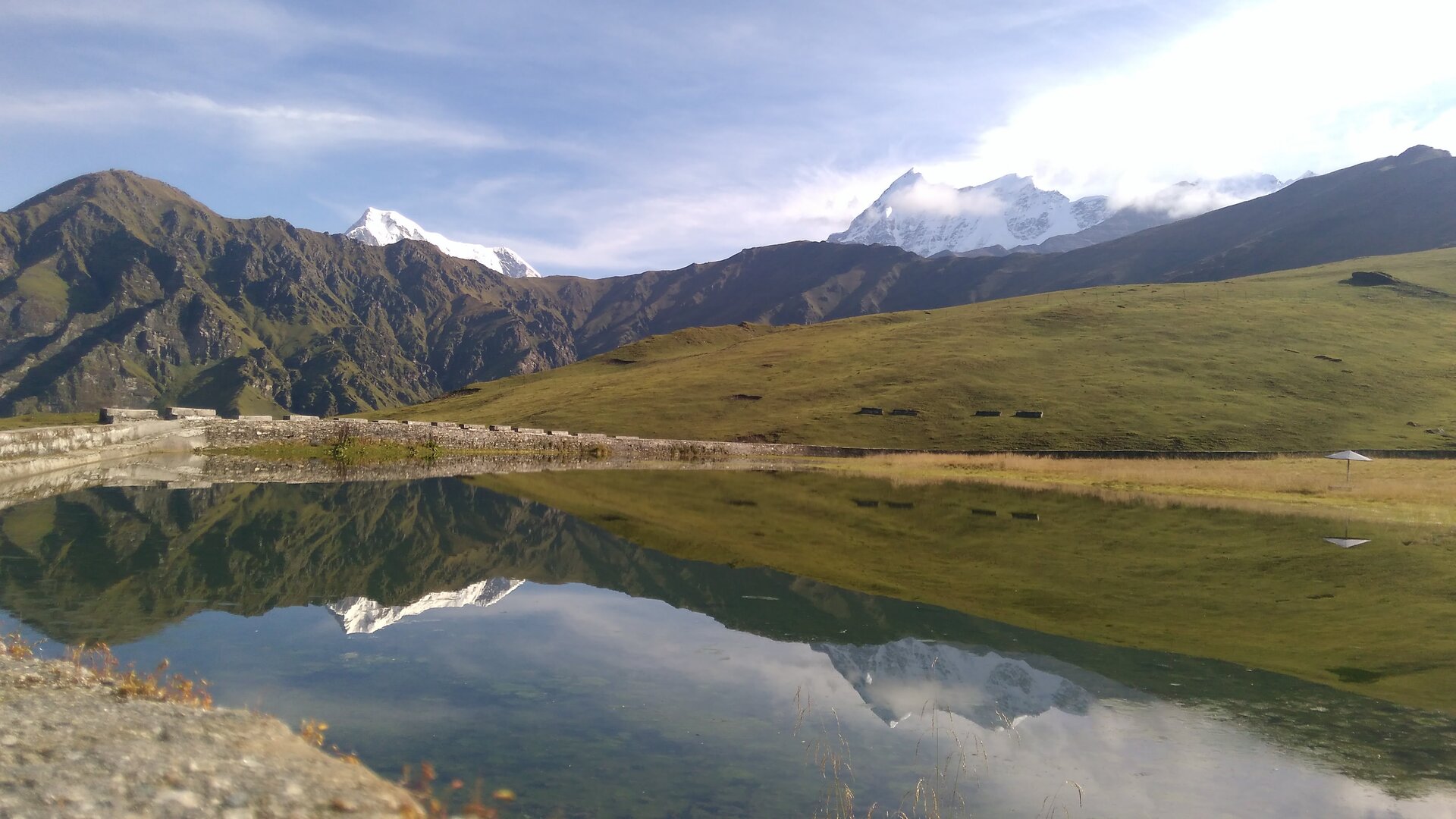
At the heart of the meadow lies the sacred Bedni Kund, a small glacial pond surrounded by legends. Deeply rooted in local mythology, this site plays a key role in the Nanda Devi Raj Jat Yatra, a grand pilgrimage held once every 12 years. On a clear day, the reflection of the mighty peaks in the calm waters of Bedni Kund creates a breathtaking sight you’ll never forget.
After spending time soaking in the spiritual and natural beauty of Bedni Bugyal, we’ll begin our descent toward Ghairoli Patal, our campsite for the night. The route drops sharply through enchanting meadows and dense oak forests, filled with birdsong and misty glades.
Ghairoli Patal is a tranquil clearing nestled deep in the woods — the perfect spot to rest after a rewarding day. As evening falls, enjoy a hot dinner, share stories with your trek mates, and gaze up at the starlit sky through the canopy of trees. The gentle silence of the forest will lull you into a peaceful night’s sleep in your tents.
• Trek Distance: ~10 km | Duration: 5–6 hrs.
• Your final day on the Ali Bedni Bugyal Trek begins with the soft glow of dawn and the crisp mountain air brushing past your tent. Enjoy a comforting cup of tea followed by a hearty breakfast while taking one last look at the serene Himalayan landscape that has been your home for the past few days. Today marks your descent from Ghairoli Patal to Wan Village, followed by a short drive back to Lohajung.
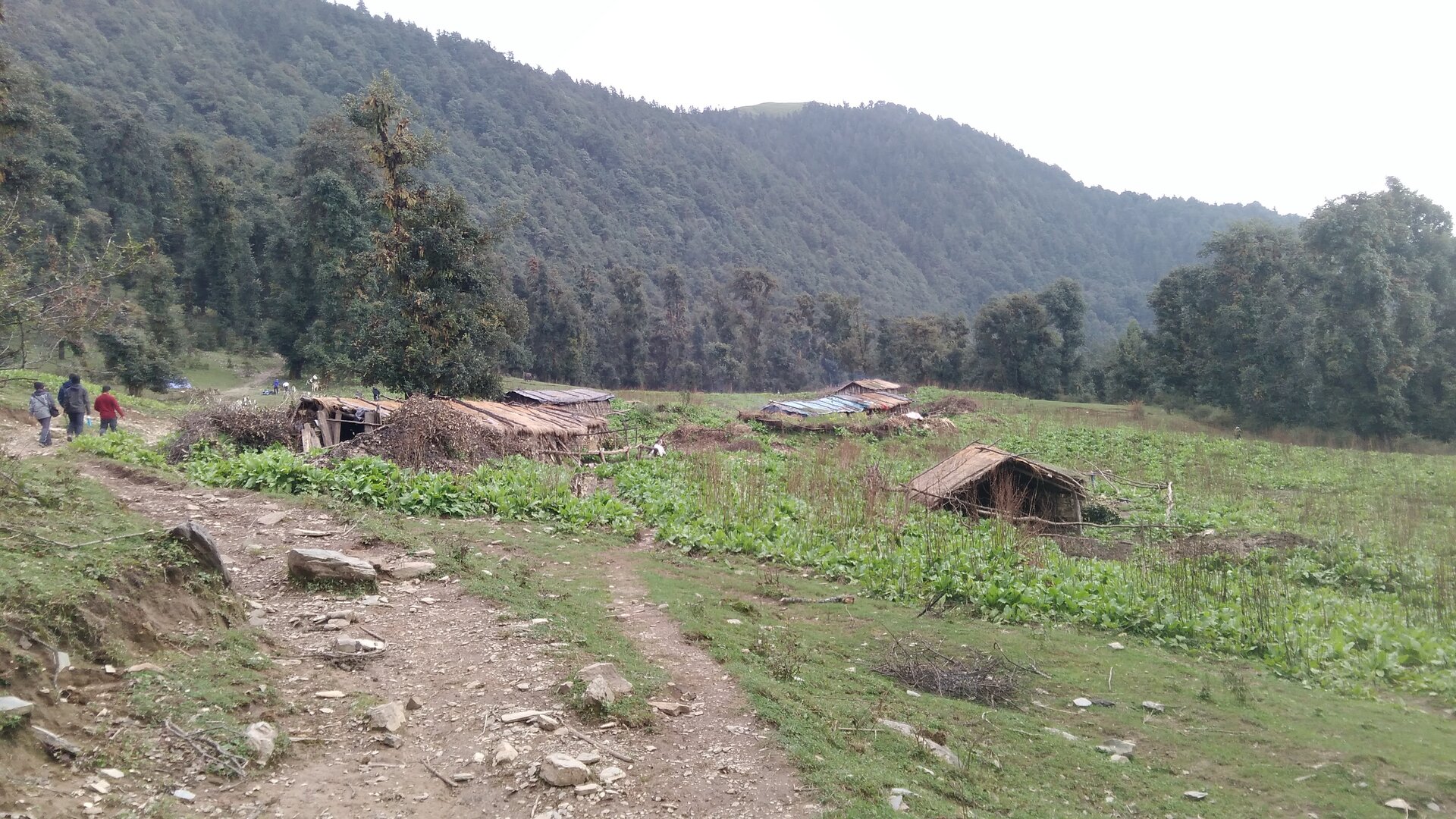
The trail begins with a long, zigzag descent through a peaceful forest filled with ancient oak groves and moss-laden trees. As you make your way down, you’ll pass a few rustic shepherd huts — still used by nomadic herders who graze their flocks in these highlands during summer. The route then leads you once again to the Neelganga River, its crystal-clear waters cutting through the valley. Pause for a moment here — this is your final river crossing of the trek, and it offers a perfect chance to rest and reflect on the journey so far.
After crossing the river, the trail climbs gradually toward Ran Ka Dhar, a charming spot to catch your breath and take in sweeping views of the lower valley. A short and pleasant hike from here will bring you to Wan, one of the highest motorable villages in this part of Uttarakhand. Wan is a picturesque hamlet, known for its wooden houses, terraced farms, and warm-hearted locals.
Before concluding your trek, make sure to stop by the centuries-old Latu Devta temple, a sacred shrine steeped in local legend. The deity here is considered so powerful that even the priest enters blindfolded during rituals — a fascinating glimpse into the region’s deep-rooted traditions.
From Wan, board your vehicle for a short 45-minute drive to Lohajung, marking the end of your incredible Himalayan journey. Once back, unwind at your guesthouse, explore the small local market, or simply relax and soak in the quiet satisfaction of completing one of the most scenic treks in India. In the evening, gather with your trek mates for a celebratory dinner, share stories from the trail, and rest well after a truly memorable adventure.

Packing list

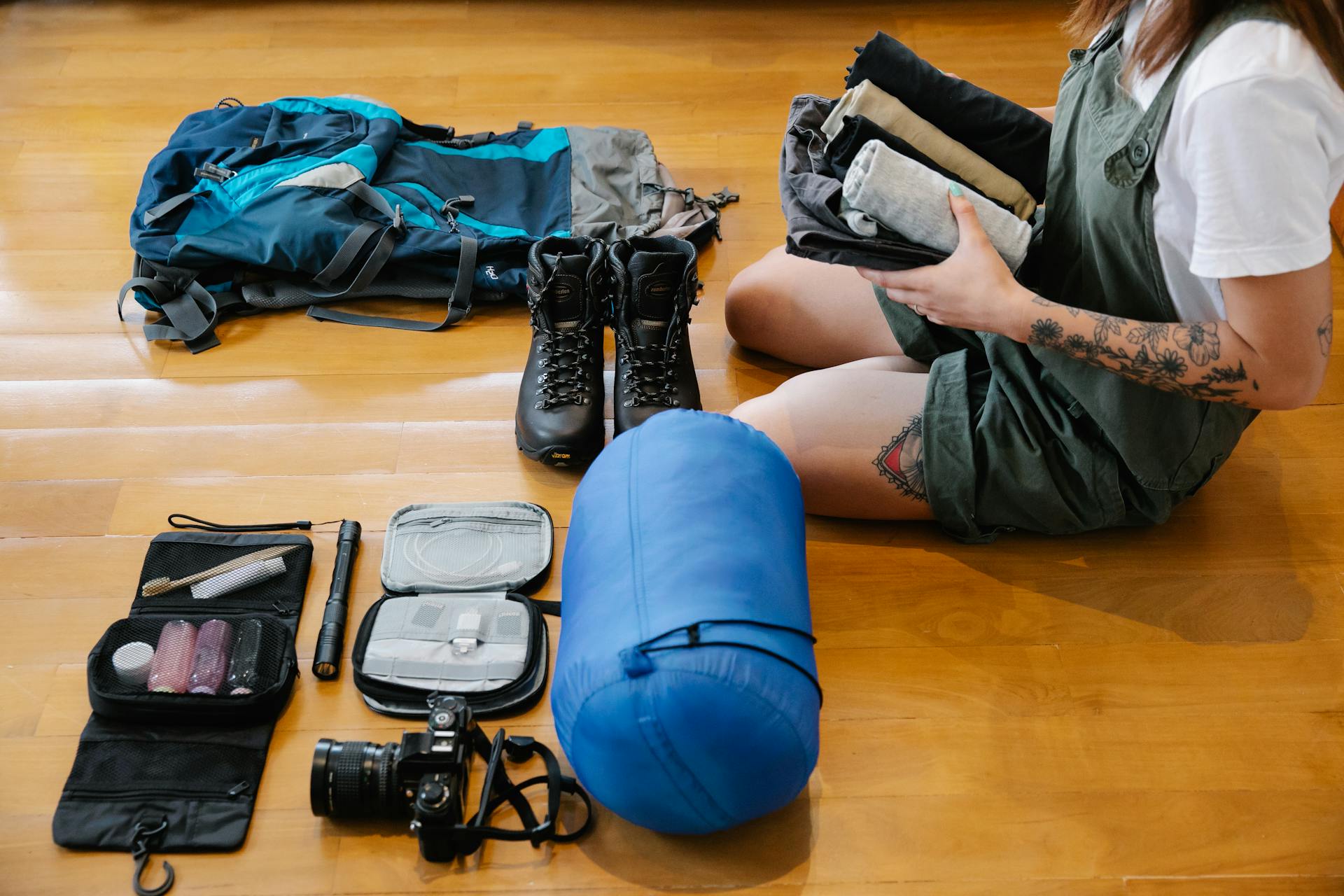
For a comprehensive packing list, download the PDF below: Download Packing List

Did you know?

Roopkund, the mysterious Skeleton Lake, lies further on this trail!
Beyond Bedni Bugyal, the route leads to Roopkund (16,499 ft), where hundreds of ancient human skeletons were discovered — still a mystery for historians and scientists. This is also the route for the sacred Nanda Devi Raj Jat Yatra.
Bedni Kund is steeped in Himalayan mythology.
Locals believe Goddess Nanda Devi rests here during the Raj Jat Yatra, a once-in-12-years pilgrimage. Shepherds and villagers still offer flowers and ghee lamps at the pond before moving their flocks into the meadows.
Ali & Bedni Bugyal are among the largest high-altitude meadows in Asia!
Stretching over several square kilometers, they burst into seasonal color with brahmakamal (the sacred Himalayan flower), blue poppies, primulas, and anemones, while attracting Himalayan monals and griffon vultures.
Wan — a village from another time.
Perched at 7,800 ft, Wan is dotted with slate-roofed wooden homes, step fields, and the mystical Latu Devta Temple. Its culture and architecture reflect centuries of Himalayan tradition, untouched by mass tourism.
The forests here are ancient biodiversity hotspots.
The oak, pine, and rhododendron forests around Ali & Bedni host langurs, mountain foxes, and dozens of bird species — from yellow-billed blue magpies to Himalayan barbets. Spring transforms these woods into a riot of blossoms, while autumn paints them golden.
Lohajung carries a legend of battle.
The name comes from 'Lohasur Jung,' meaning the battle with the demon Lohasur, whom Goddess Parvati is said to have slain here. Today, Lohajung is the starting point for several legendary treks including Ali Bedni Bugyal, Brahmatal, and Roopkund.

Map

How to reach

✈️ Air: Nearest airport is Jolly Grant Airport, Dehradun (approx. 250 km from Lohajung)

🚆 Train: Nearest railway stations: Rishikesh or Haridwar. Frequent trains from Delhi, Dehradun, and major cities

🛣️ Road: Overnight buses available from Delhi to Rishikesh/Haridwar

🗺️ Travel Tip: Shared cabs or private taxis are available from Rishikesh to Lohajung, usually departing early in the morning. Here's how you can make the journey smoother:

**Route A (Direct or via major hubs):**
Rishikesh → Devprayag → Srinagar → Rudraprayag → Karnaprayag → Tharali → Debal → Lohajung. This route spans approximately **260–270 km** and takes **10 to 12 hours** depending on road conditions.

**Option B (Break journey for comfort):**
Split the trek: Take public transport or a taxi to Karnaprayag (~6–7 h), then switch to shared cabs via Tharali and Debal to reach Lohajung in around 3–4 more hours.
**Key travel hubs:** Karnaprayag is approximately 172 km from Rishikesh; from there, it's about 60 km to Debal, then another 20 km to Lohajung.
**Pro tips:**
• Book shared cabs early—seats are limited and fill up fast.
• Carry enough cash—ATMs are rare beyond Karnaprayag.
• Travel breaks at Devprayag, Srinagar, or Karnaprayag offer scenic river confluences and local food stops.

TrekFAQs

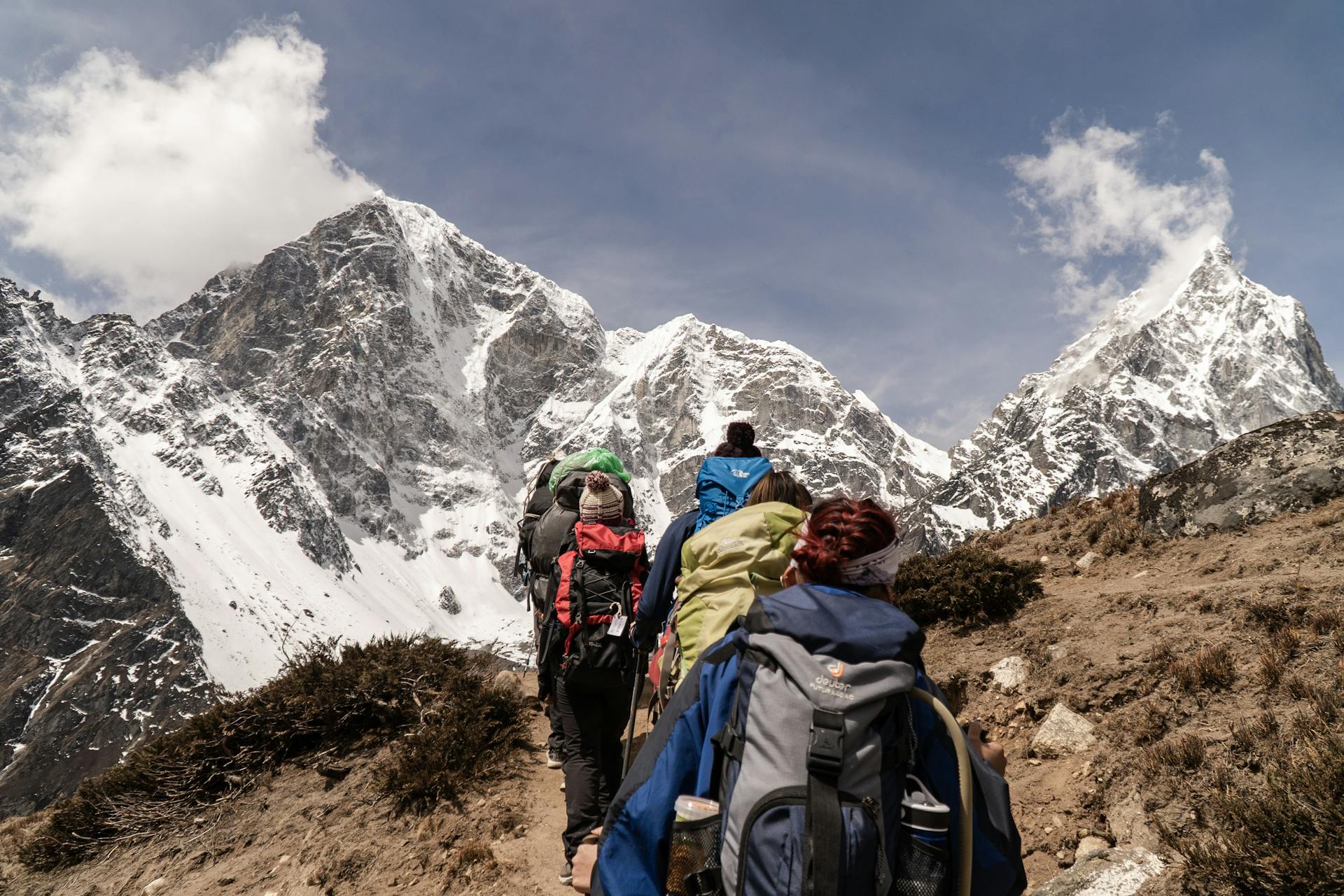
  • The Ali-Bedni Bugyal trek is meant for everyone — whether you're stepping into the Himalayas for the first time or are a seasoned trekker seeking a refreshing experience. With moderate slopes, easy accessibility, and a comfortable altitude profile, it’s ideal for first-timers while remaining equally rewarding for experienced trekkers who enjoy panoramic trails and classic Himalayan landscapes.
  • Ali Bedni Bugyal is one of Uttarakhand’s most scenic alpine meadows. Trekkers experience lush green grasslands, panoramic views of Himalayan peaks like Swargarohini and Bandarpoonch, and serene landscapes dotted with wildflowers. It is perfect for photographers, nature lovers, and those seeking a calm, less-crowded Himalayan trek.
  • In spring (April–June), daytime temperatures range between 10°C to 18°C, with chilly nights dropping to around 0°C. During autumn (September–November), expect pleasant days between 8°C to 15°C and cold nights around -2°C to 3°C. Winter (December–March) brings snow and sub-zero conditions — daytime temperatures hover around 0°C to 5°C, while nights can fall as low as -8°C to -10°C, offering a true Himalayan winter experience.
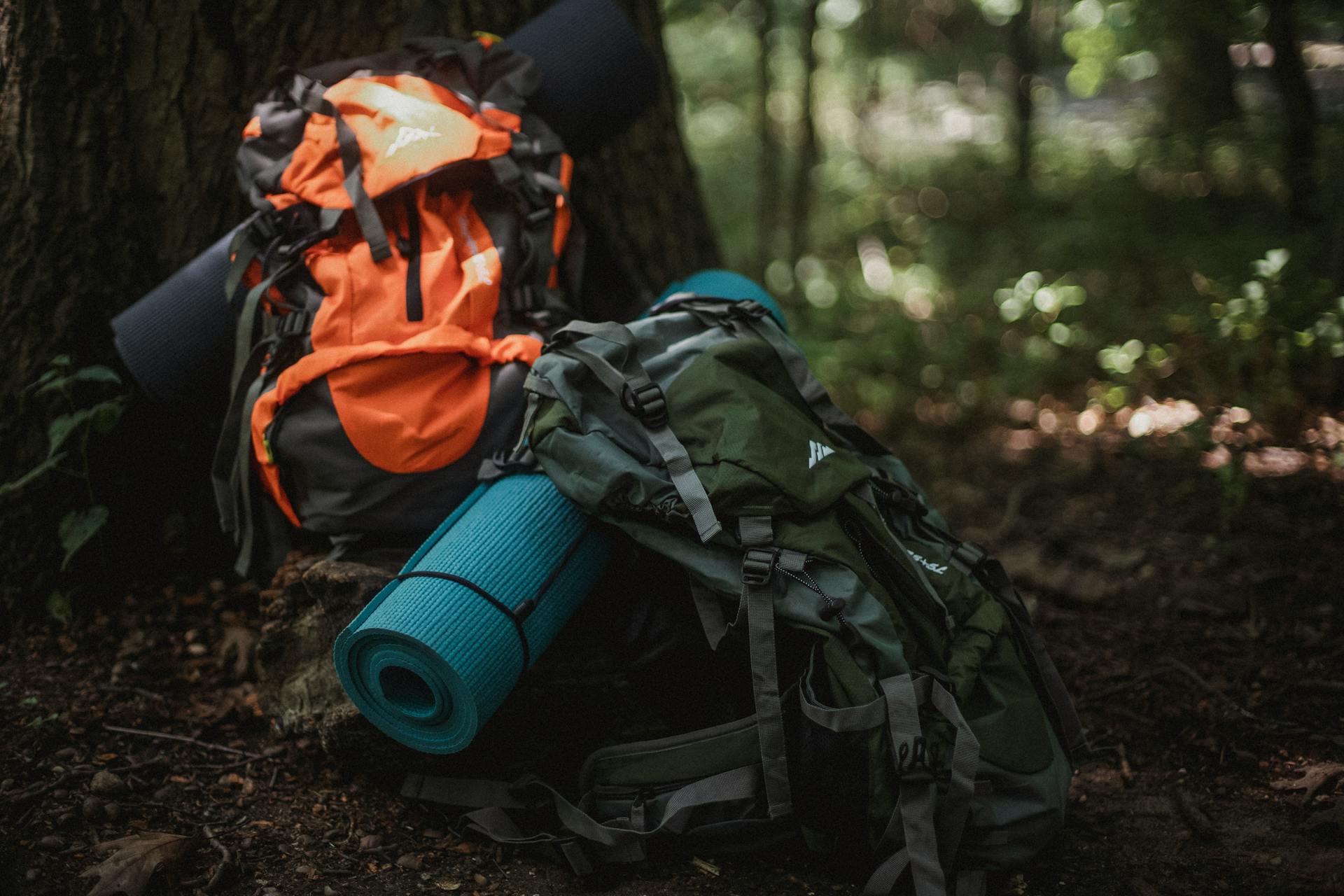
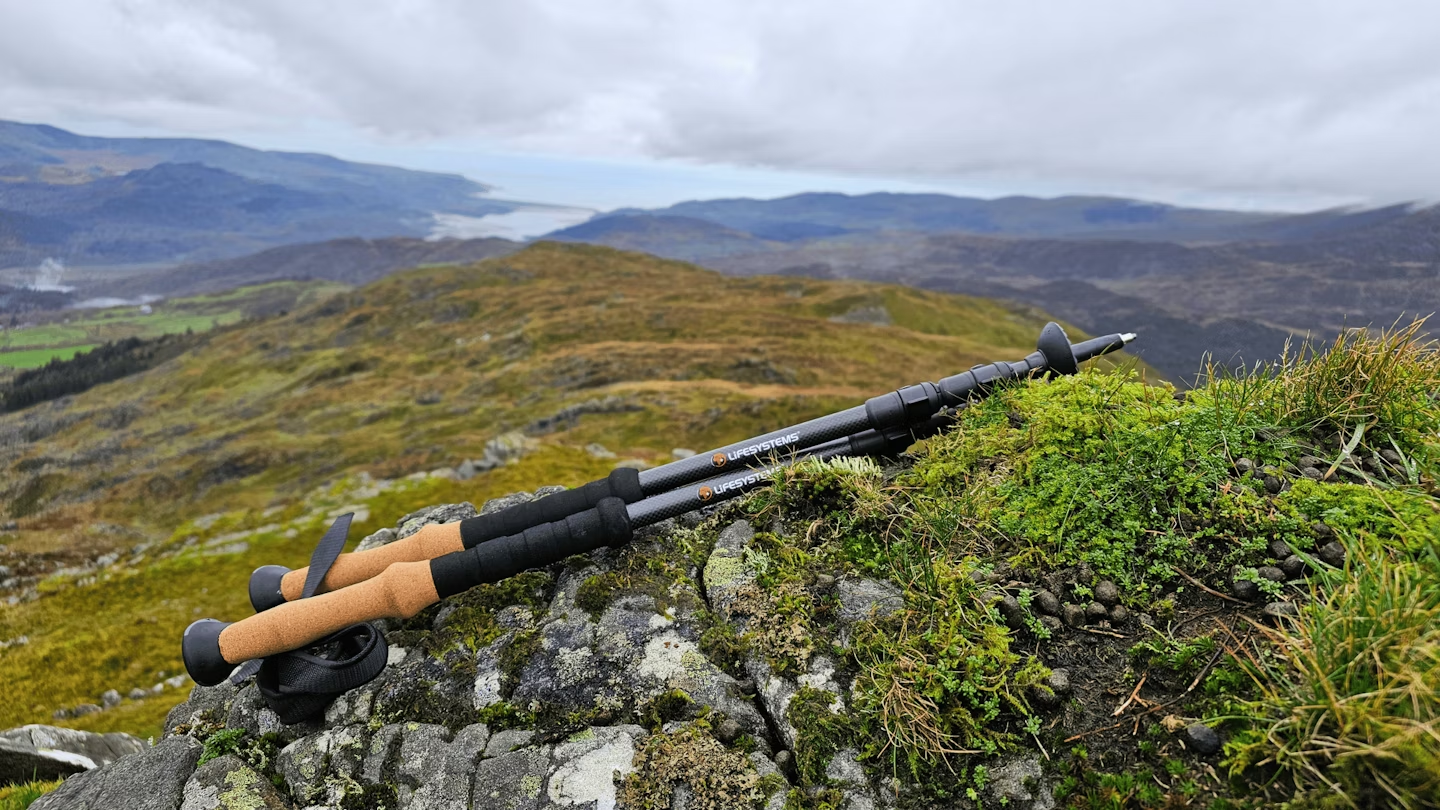
  • Essential items include comfortable trekking shoes, layered clothing for variable weather, a 40–50L backpack with rain cover, trekking poles, thermal wear, a hat, and sunscreen. Refer to the downloadable PDF above for a complete packing checklist.
  • Yes, offloading services are available for an additional fee. Trekkers can carry a light daypack while the main backpack is carried by porters, ensuring a more comfortable experience on the meadow trails.
  • The trek is best undertaken from March to June (spring–early summer) when wildflowers blanket the meadows and rhododendrons bloom in abundance in the forests, turning the entire trek a fairytale. Next best time is from September to October (autumn) when the skies are crystal clear and the landscape glows golden. Winter (December to February) is equally rewarding for those seeking solitude and snow — the meadows and forests turn pristine white, offering a completely different, magical experience. Monsoon (July–August) is less recommended due to slippery trails and heavy cloud cover.
  • Network coverage is limited. Airtel and Jio may have intermittent signals at base villages like Lohajung, but once on the higher meadows, expect little to no connectivity. It is advisable to inform family or friends beforehand.
  • Yes, the trek passes through quaint Uttarakhand villages, rhododendron forests, and alpine streams. Trekkers can enjoy the vibrant flora, spot Himalayan birds, and witness panoramic sunrise and sunset views over the Garhwal Himalayas from the meadow.
  • Yes, this trek is safe for solo travelers with basic trekking experience. Group treks are recommended for support, but the trail is well-marked and organized campsites make solo trekking manageable.

Similar Treks

View of Deoriatal Chandrashila Trek trek easy

Deoriatal Chandrashila Trek

5 Nights / 5 Days
uttarakhand-garhwal
View of Kuari Pass Trek trek easy, moderate

Kuari Pass Trek

5 Nights / 5 Days
uttarakhand-garhwal
View of Kedarkantha Trek trek easy, moderate

Kedarkantha Trek

4 Nights / 4 Days
uttarakhand-garhwal
View of Dayara Bugyal Trek trek easy

Dayara Bugyal Trek

4 Nights / 5 Days
uttarakhand-garhwal
View of Phulara Ridge Trek trek easy, moderate

Phulara Ridge Trek

5 Nights / 5 Days
uttarakhand-garhwal
View of Harkidun Trek trek easy

Harkidun Trek

6 Nights / 6 Days
uttarakhand-garhwal
View of Gulabi Kantha Trek trek easy

Gulabi Kantha Trek

4 Nights / 5 Days
uttarakhand-garhwal
View of Rani Sui Lake Trek trek easy

Rani Sui Lake Trek

3 Nights / 4 Days
himachal pradesh

How Our Treks Are More Than Just a Trek

Every journey with us is carefully crafted for a deeply personal mountain experience.

Not Just a Trek — A Journey That Stays With You

Every trail we walk is a carefully chosen path into the heart of the Himalayas — not just to witness their grandeur, but to feel them under your skin and soul. Our treks are designed not as bucket list checkmarks, but as life-affirming journeys. At Planethimalayas, we believe a mountain journey is deeply personal — and that belief runs through everything we do.

Individual Care, Every Step of the Way

We keep our groups small and intimate so we can focus on you — your pace, your concerns, your joy. From pre-trek guidance to trail-side support, our leaders walk with intention, offering safety and attention without intrusion. It’s this deep care that turns strangers into friends and walks into memories.

Built on Genuine Love for the Himalayas

We don’t just operate in the Himalayas — we live and breathe them. From respecting mountain communities to following Leave No Trace ethics, our treks are shaped by humility and care. With Planethimalayas, your trek becomes a way of giving back to the mountains that give us so much.

Why Choose Us

Experience the difference of trekking with genuine mountain experts who truly care.

Trek Leader & Guide

Led by certified mountaineers with wilderness first aid training, ensuring your safety and confidence at every step.

Cook & Support Staff

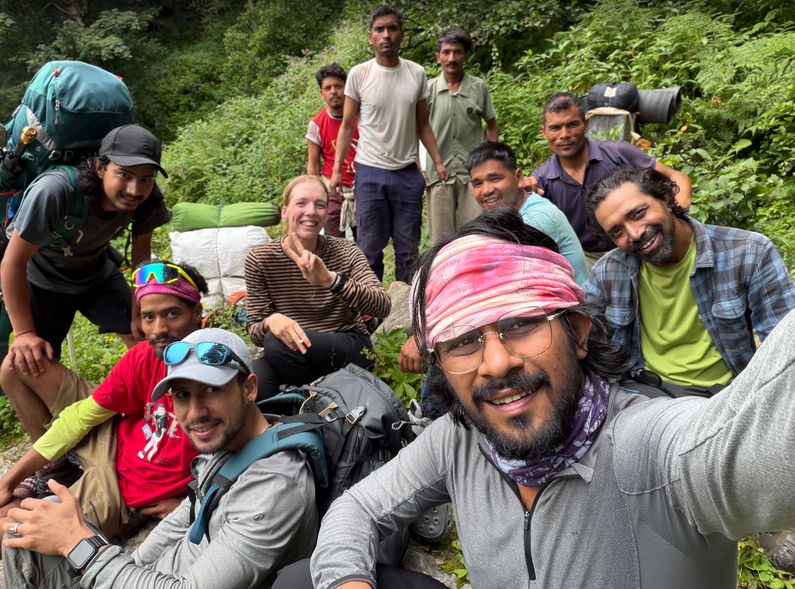
Our mountain crew comprises local experts who bring unmatched experience, warmth, and deep knowledge of the region.

Small Group Size

We cap our group departures at just 8 trekkers — ensuring individual attention, deeper connections, and better trail discipline.

Safety Standards

From personal well-being to technical preparedness, we maintain the highest safety standards — using certified high-altitude gear and comprehensive safety protocols to ensure a secure and reliable Himalayan experience.

24×7 Online Support

We're always available — before, during, or after your trek. Reach out anytime, and you'll always hear back from a real human.
We Care for the Mountains

We strictly follow Leave No Trace ethics. Limited group sizes and mindful practices help protect the fragile Himalayan ecosystem.