Some treks are beautiful. Some are difficult. Some are memorable.
Pin Parvati Pass is all of them—and then some.
After leading multiple Himalayan expeditions over the years, people often ask me one question.
"Which is your favourite trek?"
Without hesitation, my answer has always remained the same.
Pin Parvati Pass.
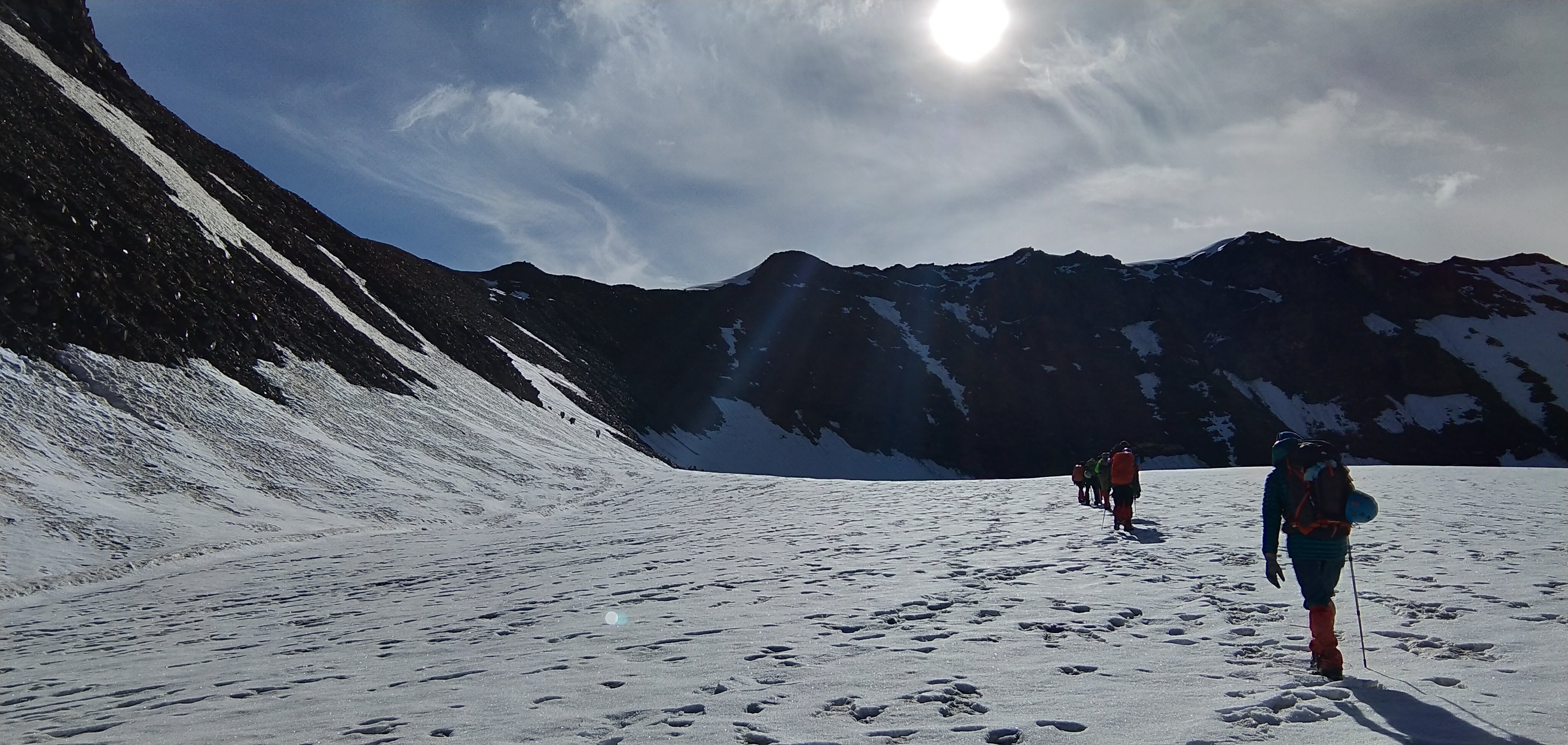

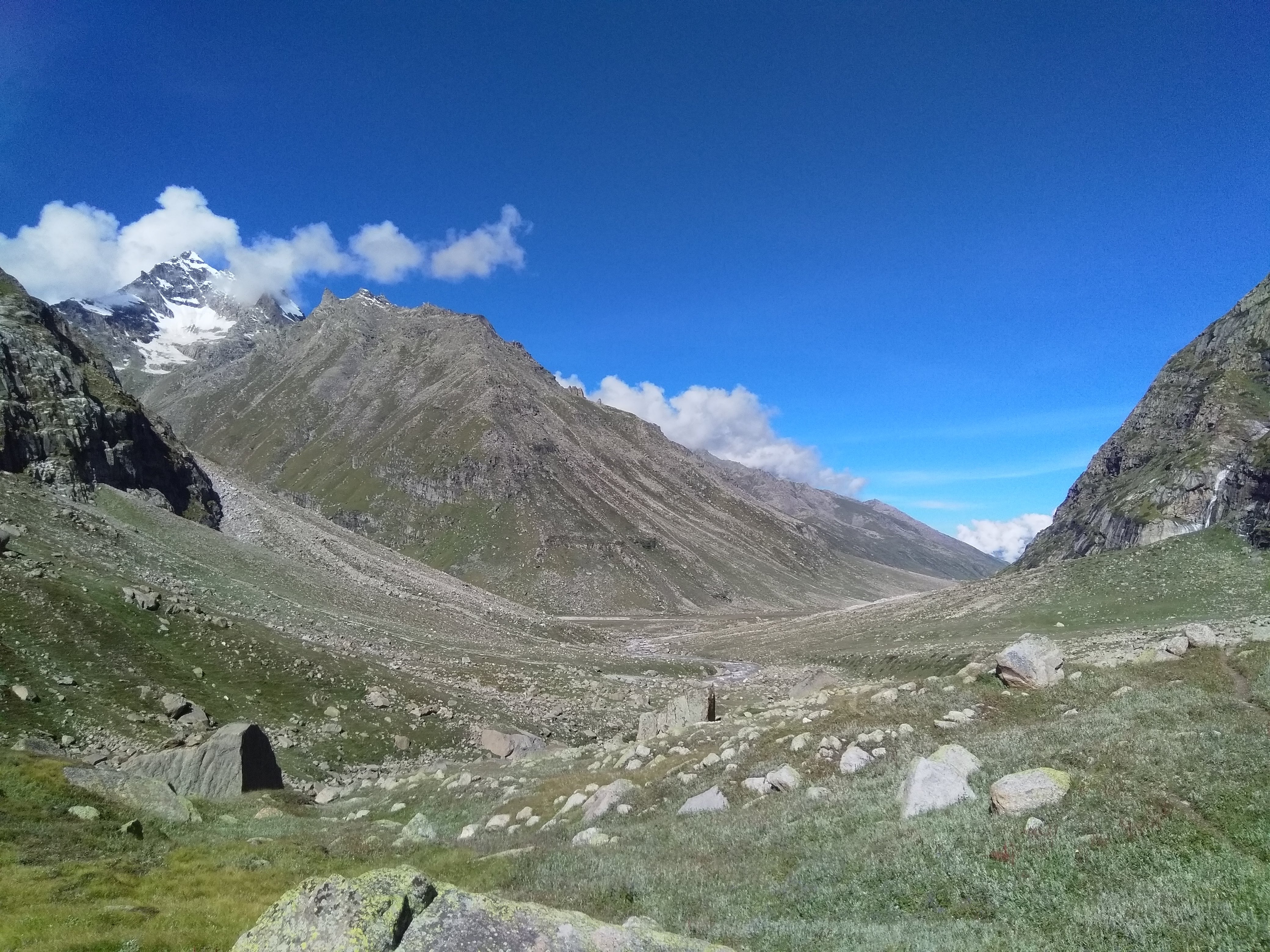
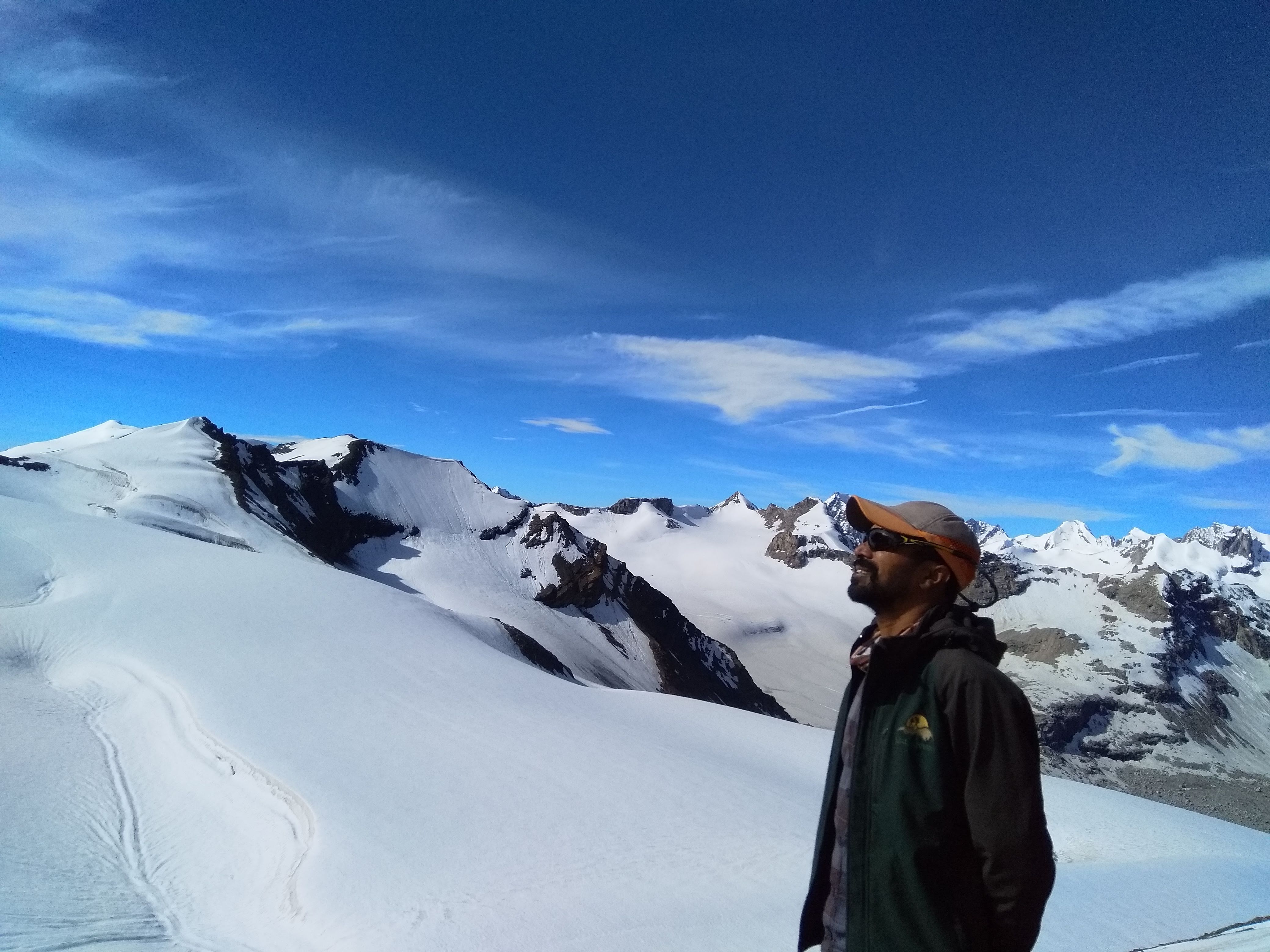
Not because it is the highest pass I have crossed. Not because it is the longest trek I have led. Not because it is the most difficult. It is my favourite because nowhere else in the Indian Himalayas have I witnessed landscapes change so dramatically, so frequently and so completely within a single expedition. Every morning feels like the beginning of an entirely different trek. You wake up expecting more of yesterday. You rarely get it. Dense forests become alpine meadows. Towering pine trees disappear into glacial moraines. Narrow river gorges suddenly open into enormous grasslands. The lush green mountains of Kullu slowly surrender to the cold desert of Spiti. Every day surprises you. Sometimes every hour does. That is why this trek stays with people long after they return home.
This is not simply a trail connecting two valleys. It feels like travelling through multiple worlds stitched together by one extraordinary river. Most articles about Pin Parvati Pass begin with statistics.
- Altitude.
- Distance.
- Difficulty.
- Number of days.
Those details are important, and we'll cover every one of them. But numbers alone cannot explain why someone returns from this trek fundamentally changed. You don't remember Pin Parvati because it is 100 kilometres long. You remember it because of how it makes you feel. You remember standing beside a river so loud that conversations simply stopped. You remember walking through forests where the smell of rain lingered for hours. You remember waterfalls appearing around almost every bend until eventually nobody in the group bothered pointing them out anymore. You remember crossing rivers barefoot, feeling icy water rush around your legs while everyone instinctively reached out to steady the next person. You remember the silence of Mantalai. You remember the first glimpse of Spiti after days of endless green. Most of all, you remember how impossible it became to describe the experience to someone who wasn't there. This guide isn't written to convince you to book the trek. It is written to help you understand what it actually feels like to walk across one of the finest Himalayan expeditions ever created by nature. Everything you read here comes from real experiences on the trail—not from satellite maps or copied itineraries. If you eventually decide to trek Pin Parvati Pass, I want you to arrive already understanding the mountains you're about to enter. Not every kilometre. But every feeling.
📖 Table of Contents
Jump directly to any section of this guide.
🌄 Introduction
🏔️ The Journey Through Pin Parvati
💪 Difficulty, Fitness & Preparation
🎒 Packing, Logistics & Planning
📝 Conclusion & Resources
Quick Facts
| Region |
Kullu & Spiti, Himachal Pradesh |
| Trail |
Kalga to Mudh (Recommended) |
| Duration |
10 Days Trek + Travel |
| Highest Altitude |
Approx. 5,300 metres (17,450 ft) |
| Difficulty |
Difficult |
| Total Trek Distance |
Approximately 100 km |
| Best Season |
July to September |
| Network |
Available till Kalga. No reliable network during the trek. Network resumes near Mudh and Kaza. |
| Suitable For |
Experienced trekkers with prior high-altitude trekking experience. |
| Book Your Slot Now |
Click 👉 Pin Parvati Pass Trek
to book your slot, explore the itinerary, route, inclusions, packing list, and everything you need to plan your adventure.
|
Who Should Read This Guide?
This guide is written for more than just people planning the trek.
It is for anyone curious about one of the most fascinating mountain expeditions in India.
If you are trying to decide whether Pin Parvati Pass should be your next Himalayan challenge, this guide will help you understand not only the logistics but also the experience.
If you are already registered for the trek, you'll gain a clearer picture of what lies ahead—from dense forests and roaring rivers to glaciers and the vast landscapes of Spiti.
If you simply enjoy reading about mountains, hidden valleys and long expeditions, I hope this guide allows you to experience the journey even before you lace up your boots.
By the time you finish reading, I want you to feel like you've already walked the trail once.
Why Pin Parvati Pass Is My Favourite Trek in India
I have often been asked why I rank Pin Parvati above famous treks like Rupin Pass, Goechala, Kashmir Great Lakes or Hampta Pass.
Every one of those treks is spectacular.
Each offers something unforgettable.
But Pin Parvati offers something none of them do in quite the same way.
Constant transformation.
Most Himalayan treks have a rhythm.
You enter a valley.
You climb gradually.
The scenery changes slowly as altitude increases.
Eventually you reach a pass, descend and complete the journey.
Pin Parvati doesn't follow that pattern.
Instead, it constantly reinvents itself.
The valley refuses to let you become familiar with it.
Just when you think you've understood the landscape, it changes again.
The forests become denser.
The river grows louder.
The valley opens unexpectedly.
Vegetation disappears.
Huge waterfalls appear from nowhere.
The trail becomes rocky.
Then grassy.
Then glacial.
Then suddenly you're standing in the cold desert of Spiti wondering how the lush green world behind you vanished so quickly.
I realised something halfway through my very first expedition.
I had completely stopped thinking about the pass itself.
Every single day had become its own destination.
I wasn't counting days anymore.
I was simply excited to discover what tomorrow would look like.
Very few Himalayan expeditions have ever made me feel that way.
Pin Parvati did.
And every time I return, it still does.
The Story Begins
Ironically, I never planned to lead my first Pin Parvati Pass expedition.
The opportunity arrived less than twenty-four hours before departure.
Another trek leader had originally been assigned to the group.
For reasons known to our operations team, a last-minute decision was made to change the leadership.
I happened to be available.
One phone call later, I found myself packing my rucksack for one of the biggest expeditions of my life.
I had heard stories about Pin Parvati for years.
The mysterious valley.
The roaring river.
The glacier.
The notorious river crossings.
The dramatic transition into Spiti.
Like many trekkers at the time, I had also read numerous articles portraying the trek as one of the toughest expeditions in the Himalayas.
There were stories of dangerous crossings, difficult glaciers and unpredictable conditions.
I would be lying if I said those stories never crossed my mind.
They did.
But once the journey actually began, something interesting happened.
I stopped thinking about everything I had read.
The mountains demanded complete attention.
Every evening after reaching camp, I would quietly read only the next day's itinerary before sleeping.
Nothing beyond that.
The next morning, we would wake up, shoulder our backpacks and deal only with whatever the mountains chose to offer us that day.
Looking back now, I think that mindset made all the difference.
We weren't chasing the pass.
We were living every single day of the journey.
Entering the Parvati Valley
Every great Himalayan trek has an introduction.
Pin Parvati Pass has an entire valley.
Long before you reach the first campsite or take your first serious climb, the Parvati Valley begins preparing you for what lies ahead. It doesn't reveal everything at once. Instead, it slowly draws you deeper until one day you realise you've left the familiar world behind.
The first time I entered the valley, I had absolutely no idea what to expect. I had heard stories about it for years. Stories of hidden villages, dense forests, backpackers, ancient myths, wandering sadhus, mysterious rivers and one of the toughest trekking routes in India.
Stories have a habit of exaggerating things.
Parvati Valley didn't.
If anything, reality was even more captivating.
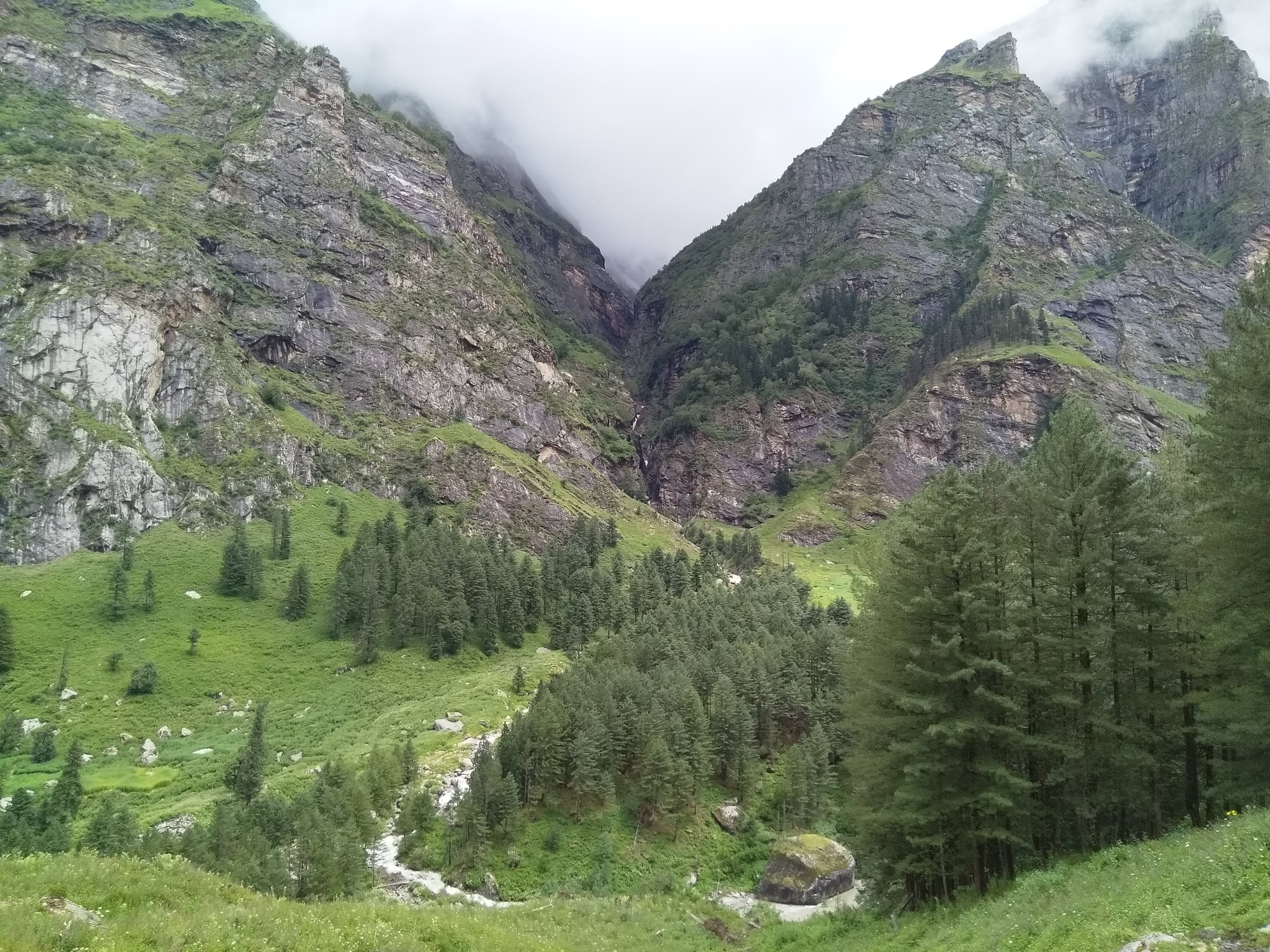
The drive itself felt like an introduction to another world. As the road left the Beas Valley behind and gradually climbed into the Parvati Valley, everything began changing. The mountains became steeper. The forests grew denser. The river became louder. Villages seemed fewer and farther apart. It felt as though civilisation was slowly stepping aside and allowing nature to take complete control.
Unlike many Himalayan valleys that feel open and welcoming from the very beginning, Parvati Valley feels enclosed.
It almost guards its secrets.
The mountains rise abruptly on both sides, creating long stretches where the sky appears only as a narrow ribbon overhead. Even during bright afternoons, parts of the valley remain shaded beneath towering cliffs and dense forests.
There is a constant feeling that something lies beyond the next bend.
And almost every time you round that bend, you're right.
The Hidden Villages
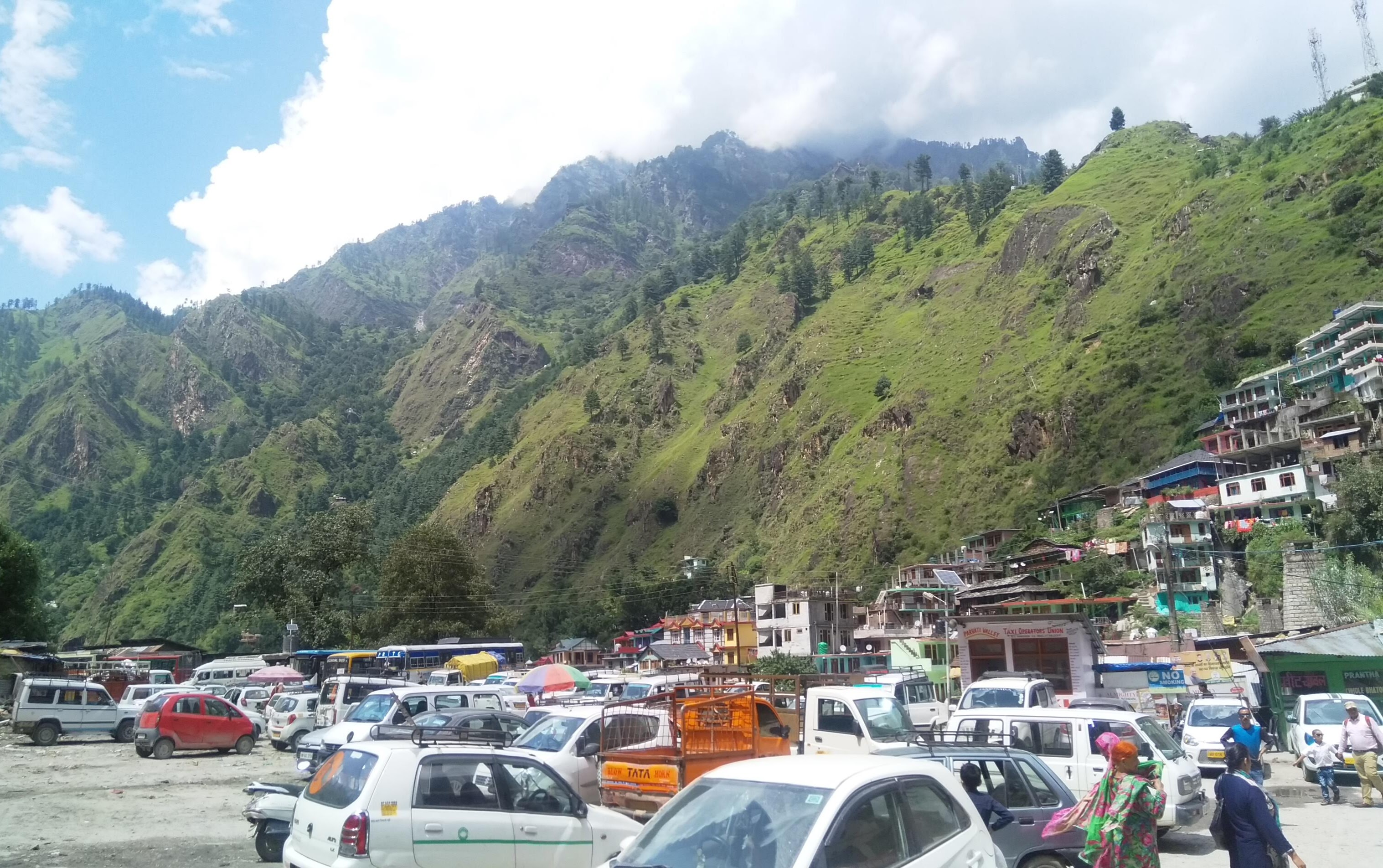
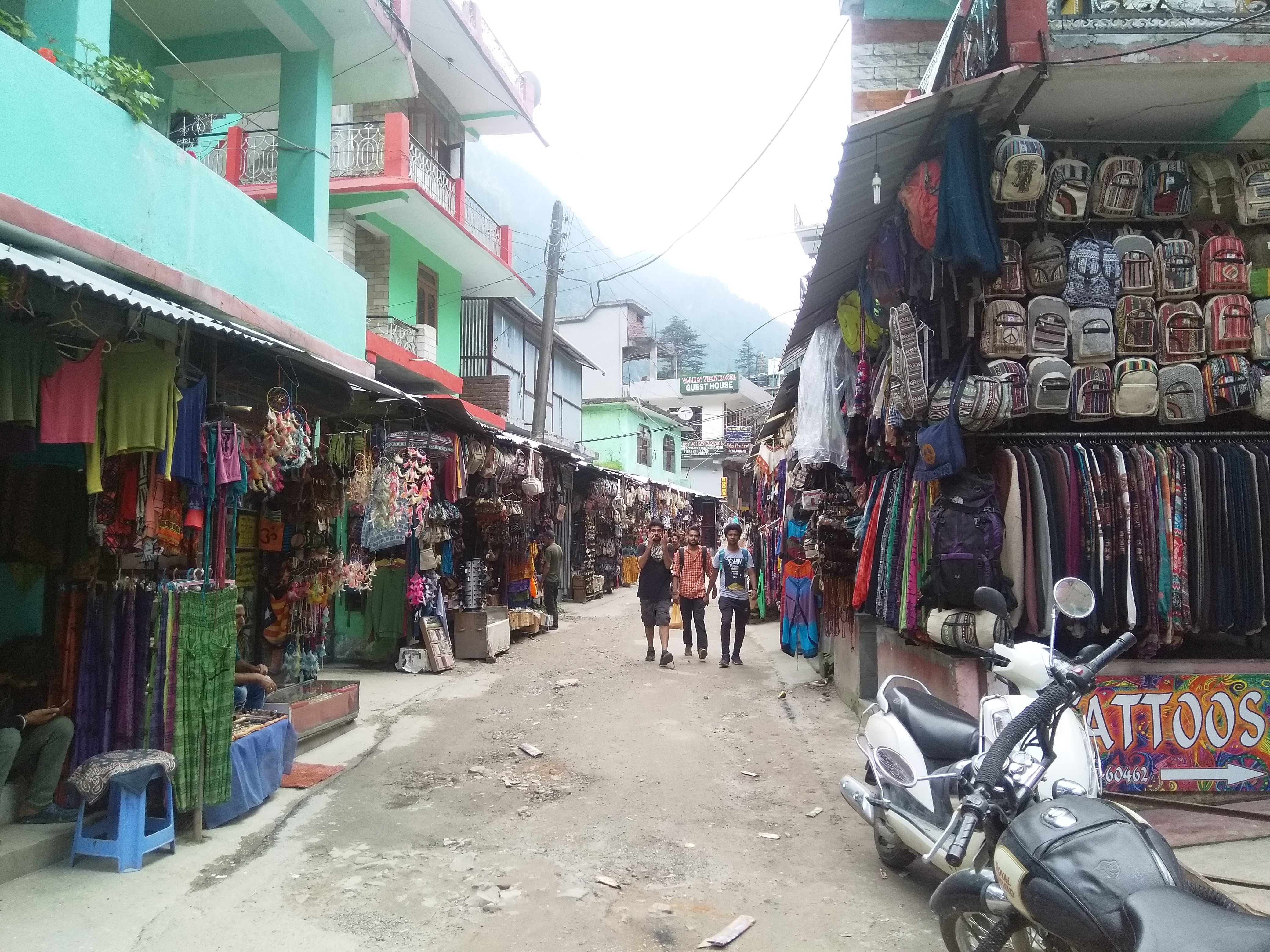
Before the trek officially begins, you pass through places that have become almost legendary among travellers—Kasol, Manikaran, Tosh, Pulga and finally Kalga.
Kasol and Manikaran are vibrant and energetic. They attract travellers from across the world and have become destinations in their own right. While they're undoubtedly worth visiting, they've also become considerably busier over the years.
For me, the real charm begins beyond the crowds.
Kalga, Tosh and Pulga feel completely different.
These villages aren't built to impress tourists.
They're simply places where people live, farm and continue traditions that have existed long before trekking became popular.
Wooden houses stand quietly among apple orchards.
Narrow footpaths weave between homes.
Children run effortlessly along steep trails that leave visitors slightly breathless.
Smoke rises gently from chimneys in the cool mountain air.
Everything feels slower.
Everything feels genuine.
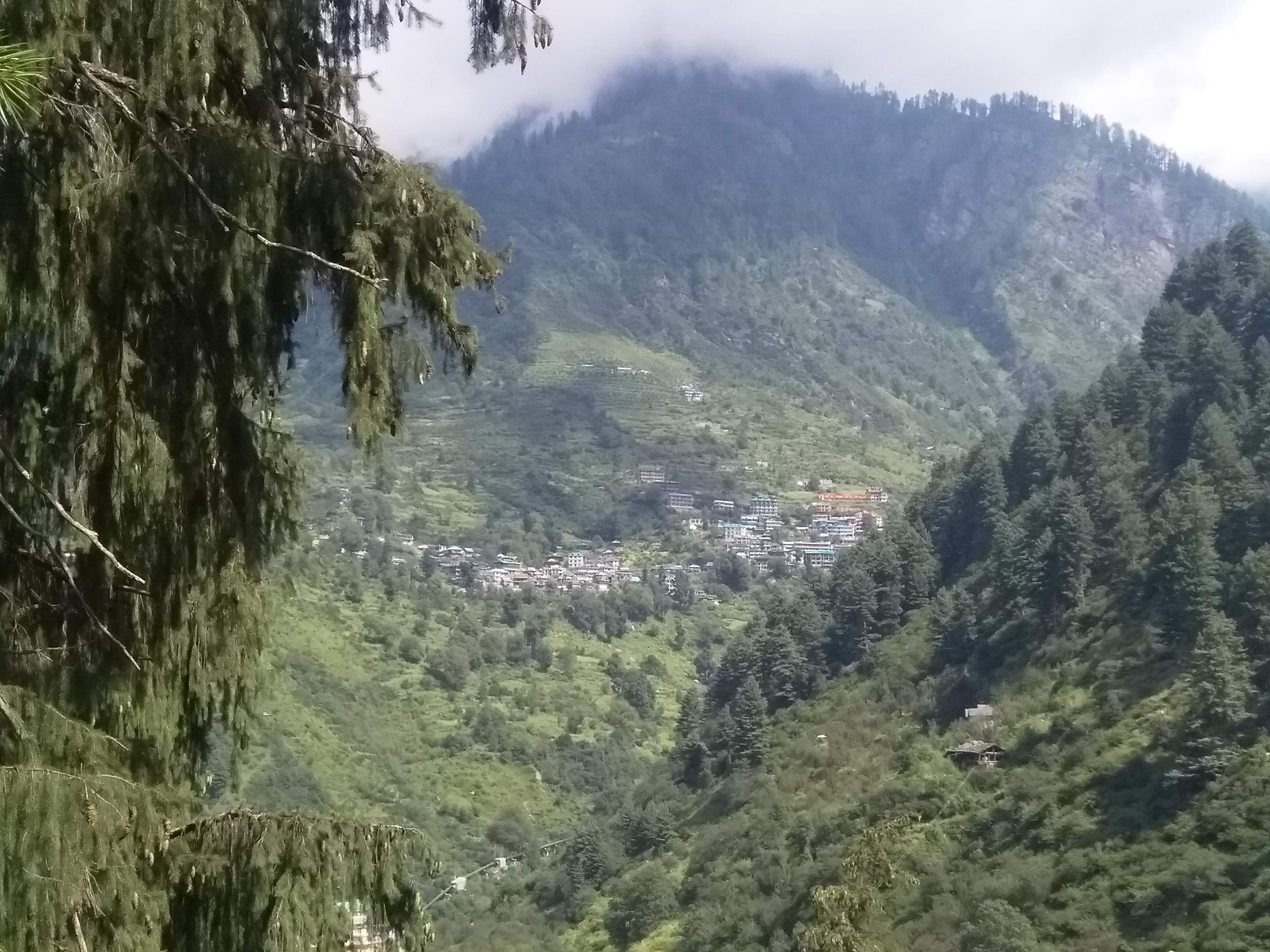
Looking across the valley towards Tosh or walking through the quiet paths of Kalga, I couldn't help but wonder how hidden these villages must have seemed before roads connected them to the outside world.
Even today, they retain that feeling.
As though the valley reluctantly allows outsiders to enter.
The Smell After Rain
If someone asked me to describe Parvati Valley without mentioning mountains, rivers or forests, I would probably talk about its smell.
It sounds strange.
But it's true.
After rainfall, the valley carries a freshness that I've rarely experienced anywhere else in the Himalayas.
It's not a single smell.
It's layers.
Wet earth.
Fresh pine needles.
Damp deodar bark.
Moist moss clinging to ancient rocks.
Leaves dripping quietly after the rain has stopped.
Cold mountain air carrying all of it together.
You don't consciously notice it while walking.
You simply find yourself taking deeper breaths.
A sunny day in Parvati Valley is incredibly beautiful. The forests glow in shades of green that photographs never quite capture.
But a rainy day gives the valley another personality altogether.
Mist wraps itself around entire mountainsides.
Clouds drift silently through the trees.
Water trickles from every rock.
The forests darken.
The colours become richer.
The valley somehow feels even more mysterious than before.
The River That Never Stops Speaking
Most Himalayan valleys are defined by a river.
Parvati Valley is dominated by one.
Long before you see the Parvati River, you hear it.
Its sound follows you almost throughout the expedition.
Not gently.
Not occasionally.
Constantly.
It isn't the soothing sound of a quiet mountain stream.
It roars.
There are stretches where conversation simply becomes impossible because every sentence is swallowed by the river before it reaches the person beside you.
Even when the river disappears behind forests or cliffs, its presence never really leaves.
You always know where it is.
Sometimes far below.
Sometimes only a few metres away.
Sometimes hidden inside deep gorges where you can hear its force but barely catch a glimpse of the water itself.
That constant sound becomes strangely comforting.
After a couple of days, silence almost feels unusual.
Many rivers in the Himalayas look beautiful.
The Parvati River feels alive.
It doesn't simply flow through the valley.
It shapes it.
It decides where trails can exist.
It decides where campsites are possible.
It decides where bridges survive—and where they don't.
By the end of the expedition, you stop thinking of it as a river.
It becomes your companion.
Always nearby.
Always reminding you whose valley you're walking through.
Where the Real Trek Begins
During the initial days, the valley feels enclosed.
The river squeezes through rocky gorges.
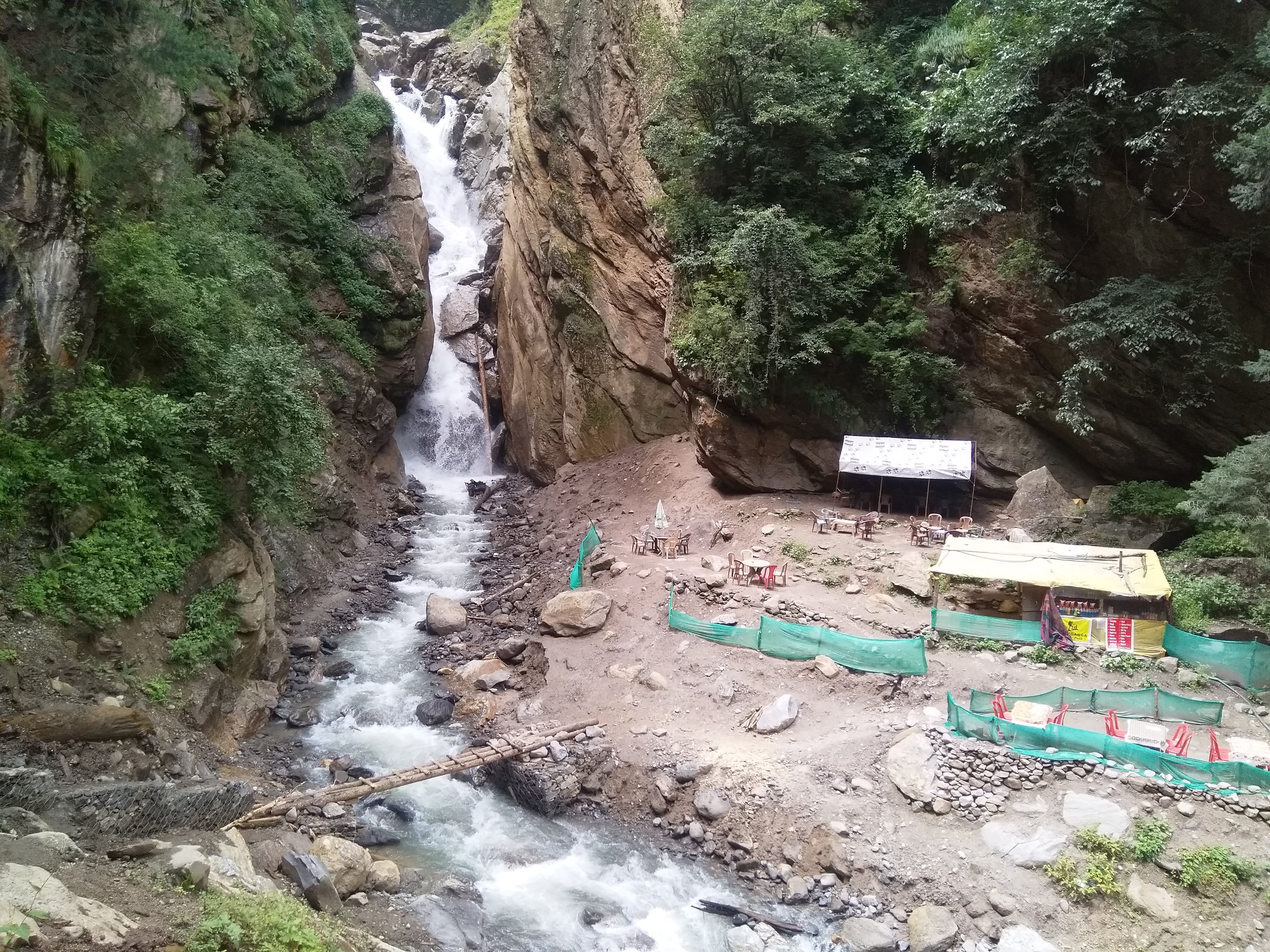
Waterfalls crash down steep cliffs.
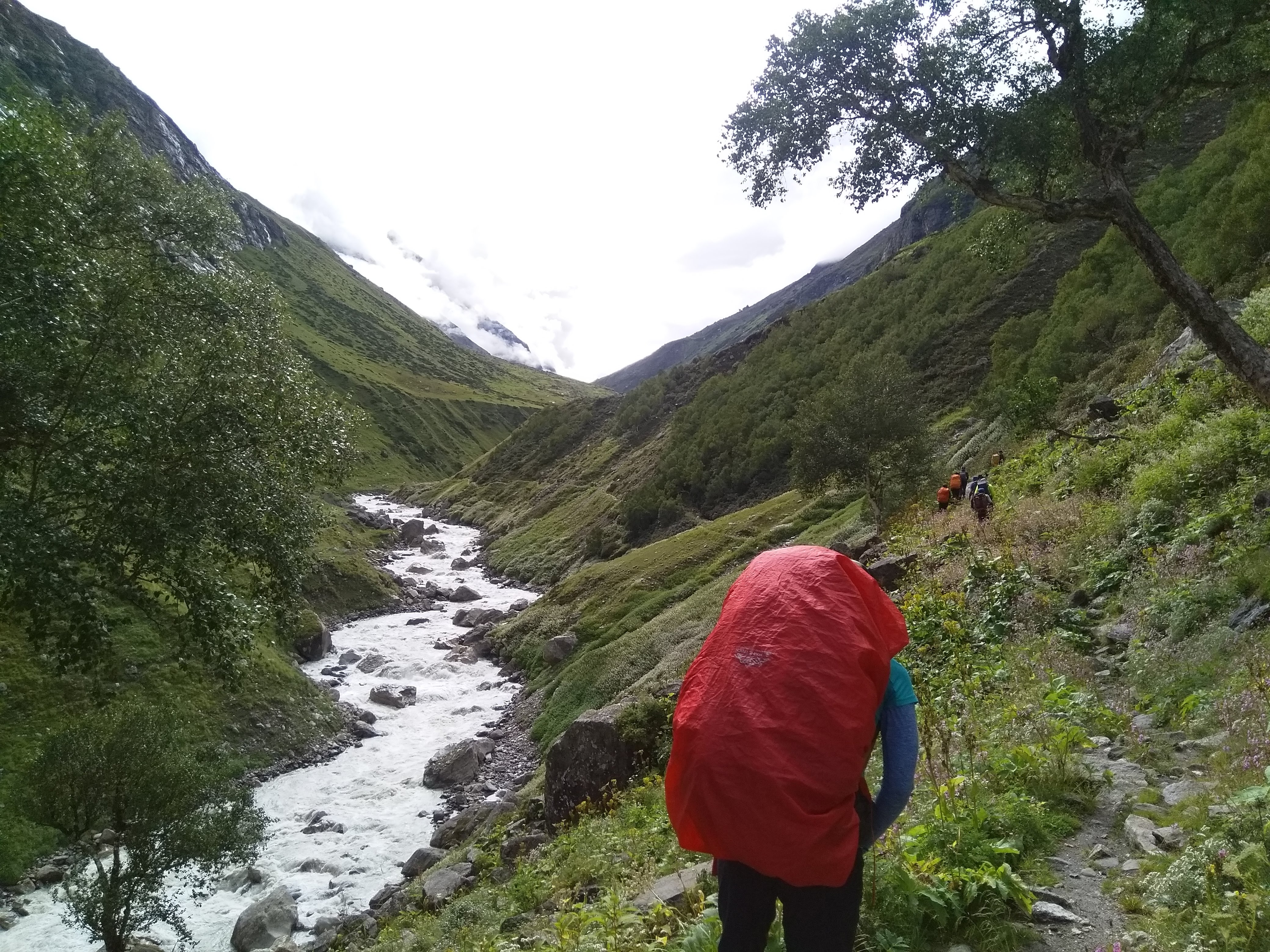
Dense forests hide much of the surrounding landscape.
You never quite see the full valley.
Instead, you experience it in fragments.
A glimpse of the river here.
A waterfall there.
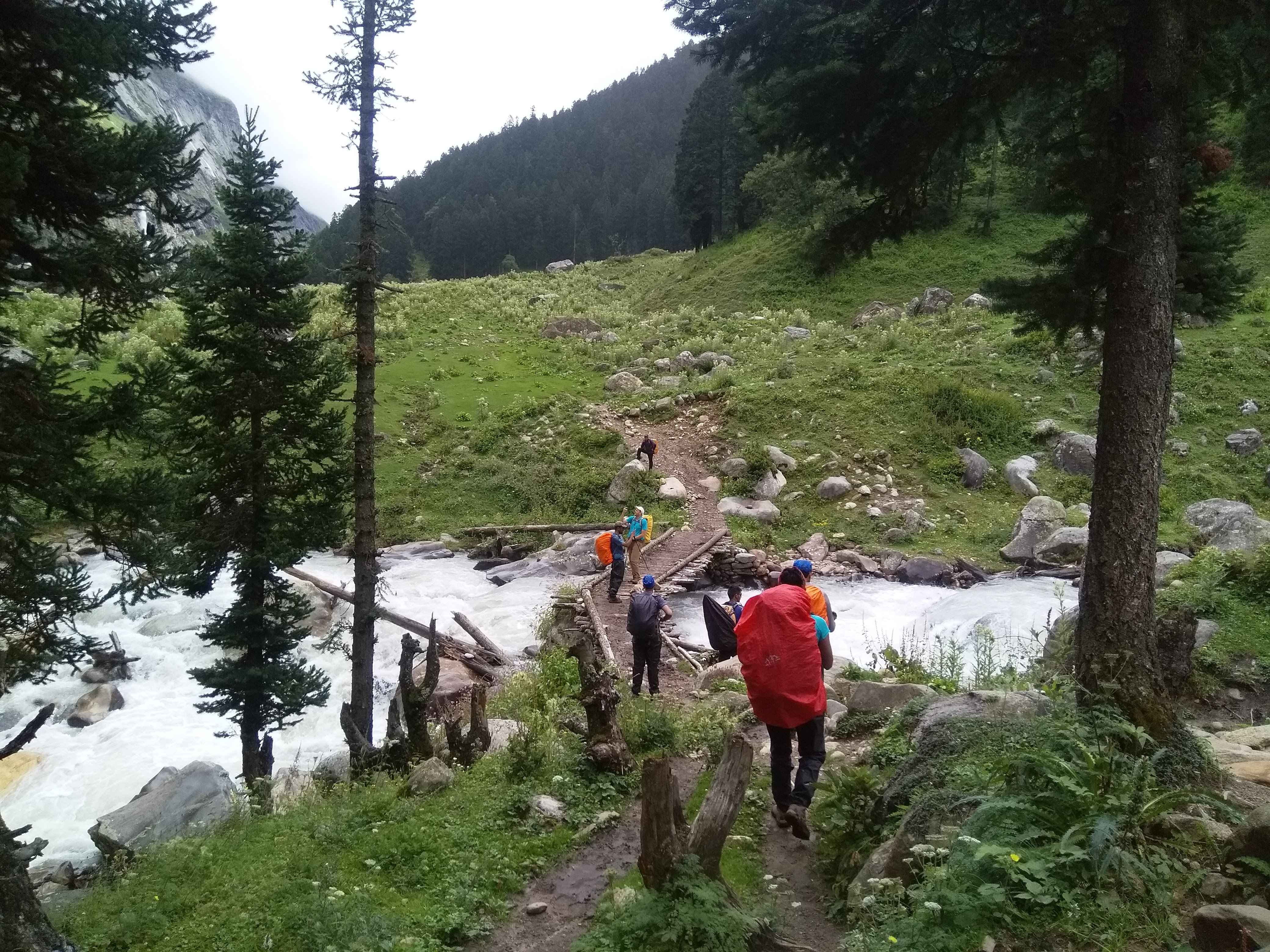
A suspension bridge disappearing into the trees.
A clearing that lasts only a few hundred metres before the forest closes around you once again.
It creates a constant sense of anticipation.
You begin wondering what lies just beyond the next ridge.
That feeling never really goes away.
And perhaps that's what makes Parvati Valley so unforgettable.
It never gives you everything at once.
It asks you to keep walking.
Only then does it reveal its next secret.
Beyond Kheerganga – Where the Valley Changes Forever
If someone asked me where the real Pin Parvati expedition begins, I wouldn't say Kalga.
I wouldn't even say Barshaini.
For me, it begins beyond Kheerganga.
Kheerganga is where most tourists stop.
For trekkers heading to Pin Parvati Pass, it's merely the last familiar place before the mountains slowly erase every sign of civilisation.
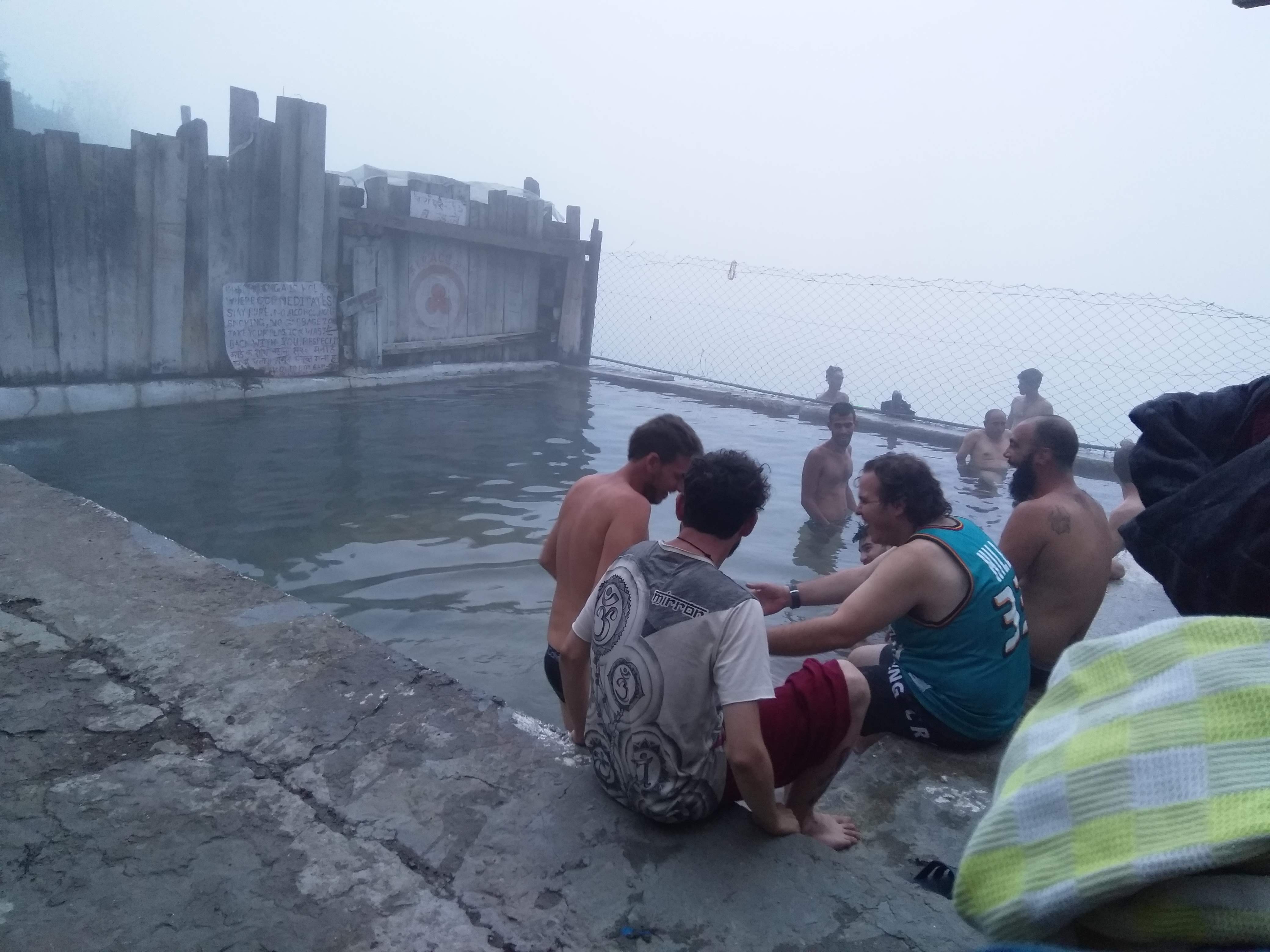
Up until this point, the Parvati Valley feels alive with movement. Pilgrims visit the hot springs. Backpackers relax in cafés. Day hikers arrive with excitement and leave before sunset.
Beyond Kheerganga, almost all of that disappears.
The crowds vanish.
The cafés disappear.
The sounds of people are gradually replaced by the sounds of water, wind and forests.
It honestly feels like walking through an invisible doorway into another world.
I still remember that feeling from my very first expedition.
There wasn't one dramatic moment when everything changed.
Instead, it happened so gradually that I only realised it much later.
The trail became quieter.
The forests became denser.
The valley became wilder.
And every kilometre made it harder to imagine that towns and roads even existed somewhere behind us.
A Forest That Never Seems to End
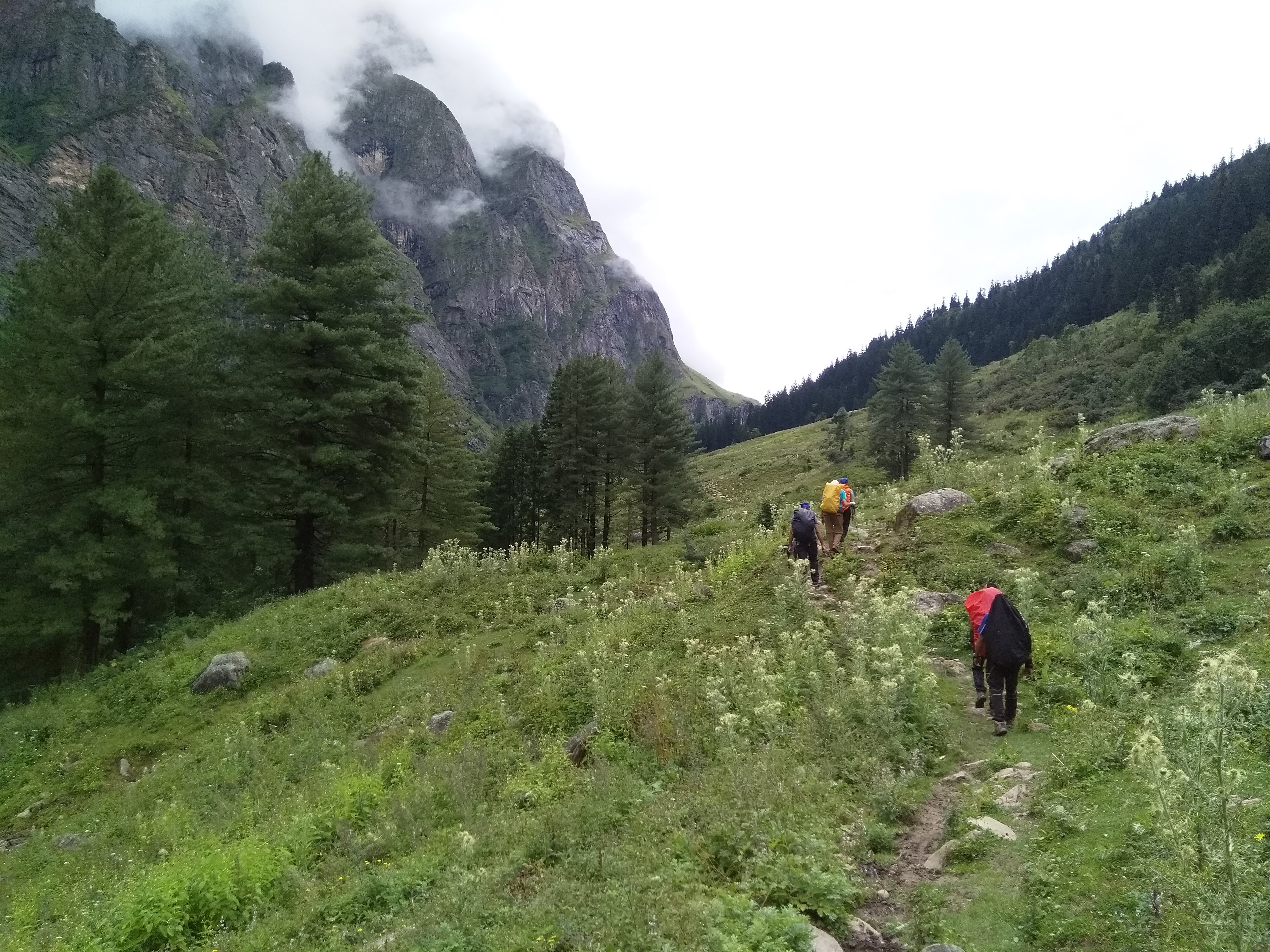
The forests beyond Kheerganga are unlike anything I had experienced before.
The deodar and pine trees are enormous.
Some stand so tall that even craning your neck isn't enough to see their tops.
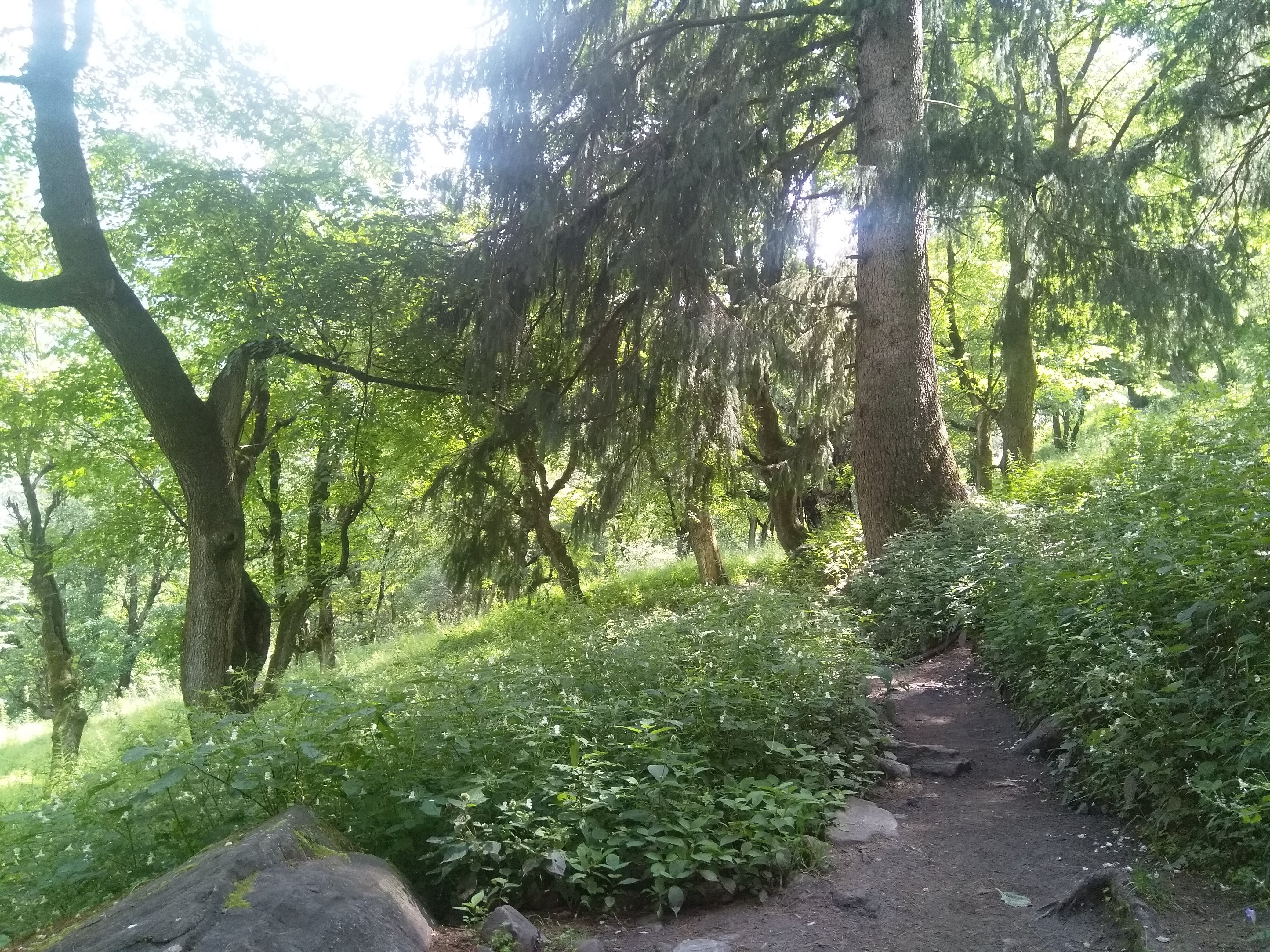
Their trunks rise almost perfectly straight into the sky while thick canopies filter the sunlight into soft green patches that dance across the trail.
Walking through these forests almost feels like walking through a cathedral built by nature.
Everything becomes quieter.
The light softens.
The air cools noticeably.
Even the smell changes.
Every now and then, the trees open just enough to reveal a small temporary settlement.
A shepherd's shelter.
A wooden hut.
A few stone walls standing alone in the middle of nowhere.
They remind you that people have lived and travelled through these mountains for generations, long before trekking routes were marked on maps.
One thing that fascinated me was how untouched everything felt.
The forest didn't seem arranged for visitors.
It simply existed.
Wild.
Ancient.
Completely indifferent to our presence.
The Hidden Slopes
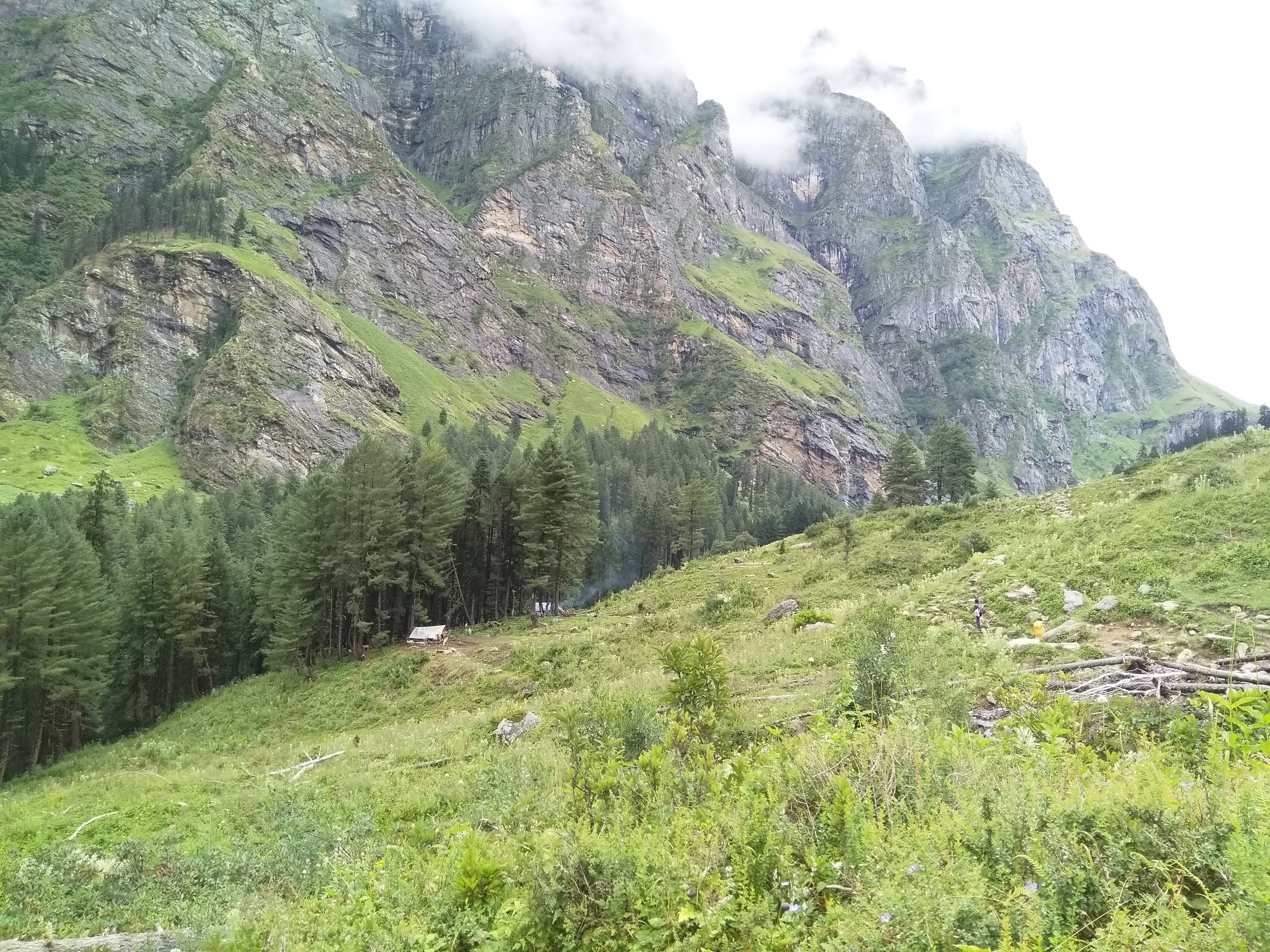
One of the most unexpected sights in the valley appears on hillsides that many trekkers initially fail to notice.
Hidden among the forests are vast patches of wild cannabis growing naturally across entire slopes.
Sometimes they're tucked away behind trees.
Sometimes they spread across open clearings, glowing bright green beneath the mountain sun.
From a distance, they almost blend into the landscape.
Up close, they're impossible to ignore.
It is one of those details that immediately reminds you that this is indeed the Parvati Valley—famous not only for its natural beauty but also for the stories that have surrounded it for decades.
There is something strangely captivating about those hidden slopes.
Not because of what grows there, but because they somehow add another layer to the valley's mysterious character.
Everything here seems to have a story.
Flowers, Waterfalls and Endless Surprises
If there is one thing Pin Parvati never allows you to do, it is become bored.
Every few minutes the scenery changes.
The forests suddenly open into alpine clearings.
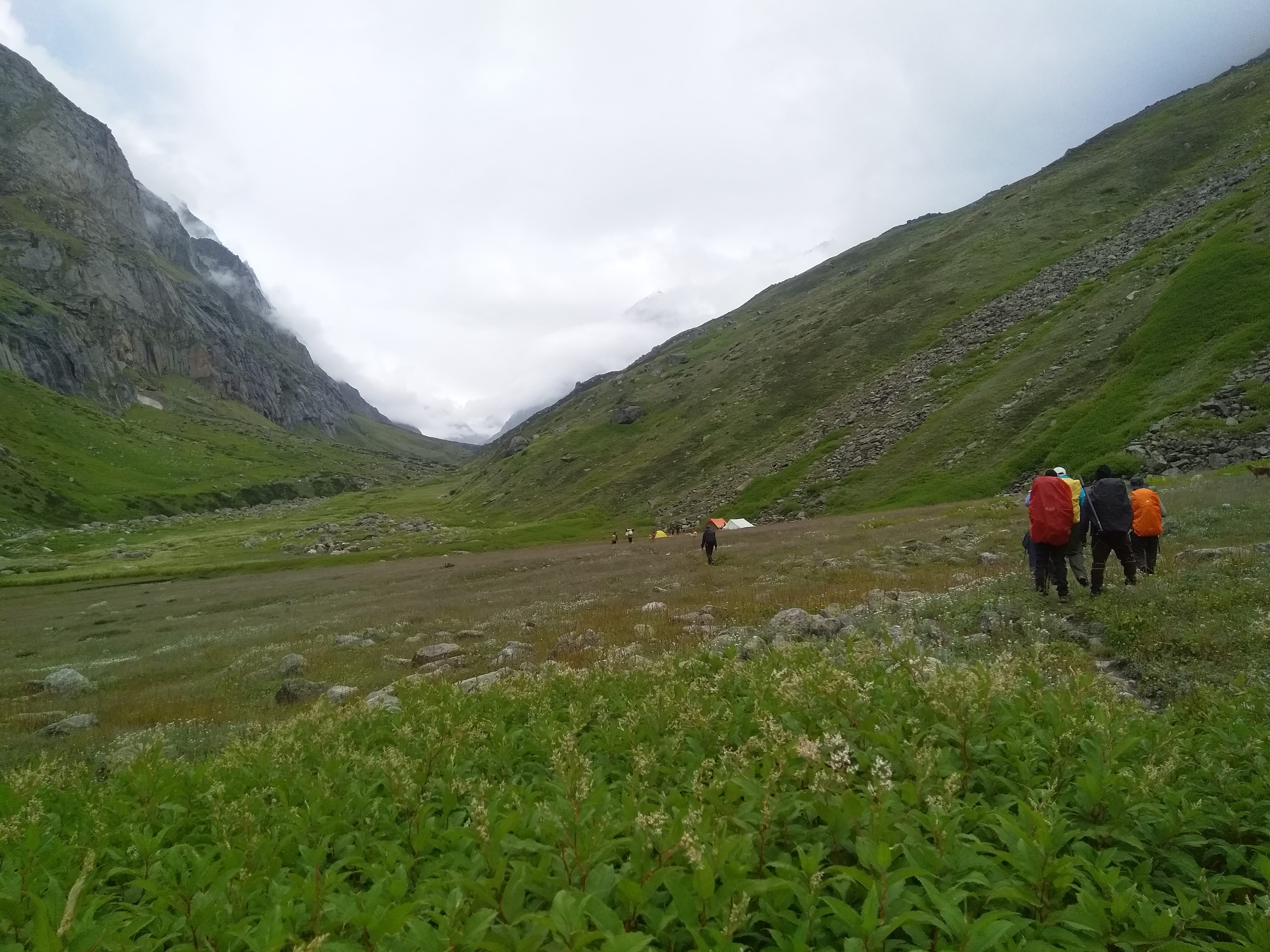
The clearings disappear into dense bushes taller than your shoulders.
The bushes part to reveal another waterfall.
Then another valley.
Then another mountain that wasn't visible just moments ago.
I remember being amazed by the sheer number of waterfalls.
Not because there was one particularly famous waterfall.
But because there were simply too many.
During the first day everyone in the group would stop to photograph each one.
By the second or third day, nobody even commented anymore.
Waterfalls had become part of everyday life.
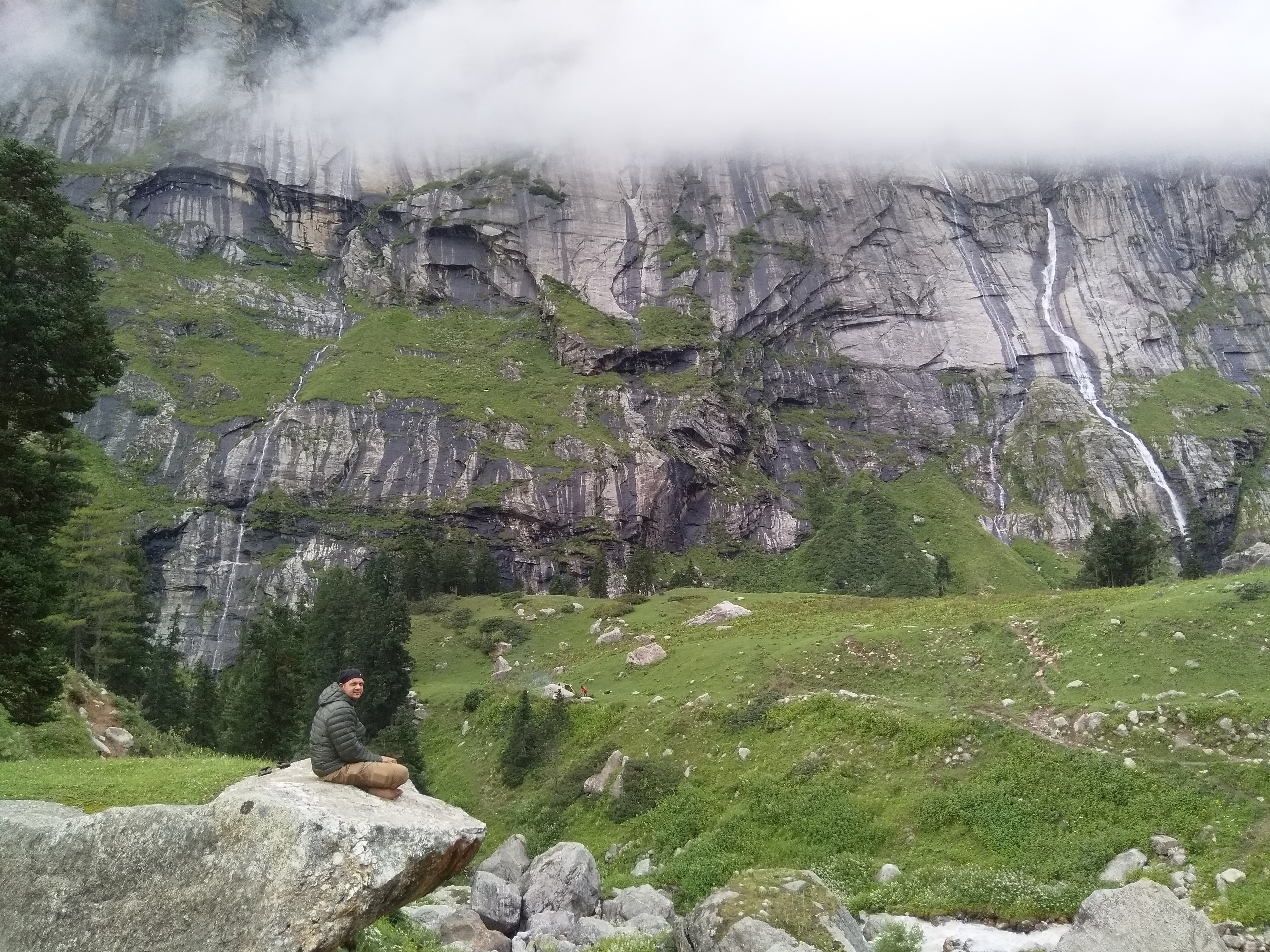
They poured down cliffs hundreds of feet high.
Some fell as thin silver ribbons.
Others crashed down with enough force to drown every conversation nearby.
They appeared around blind corners, behind forests, beside campsites and across distant mountainsides.
The valley almost seemed to create new waterfalls every time clouds gathered overhead.
The wildflowers were equally unforgettable.
Some species I recognised.
Many I didn't.
Purple.
Yellow.
Blue.
White.
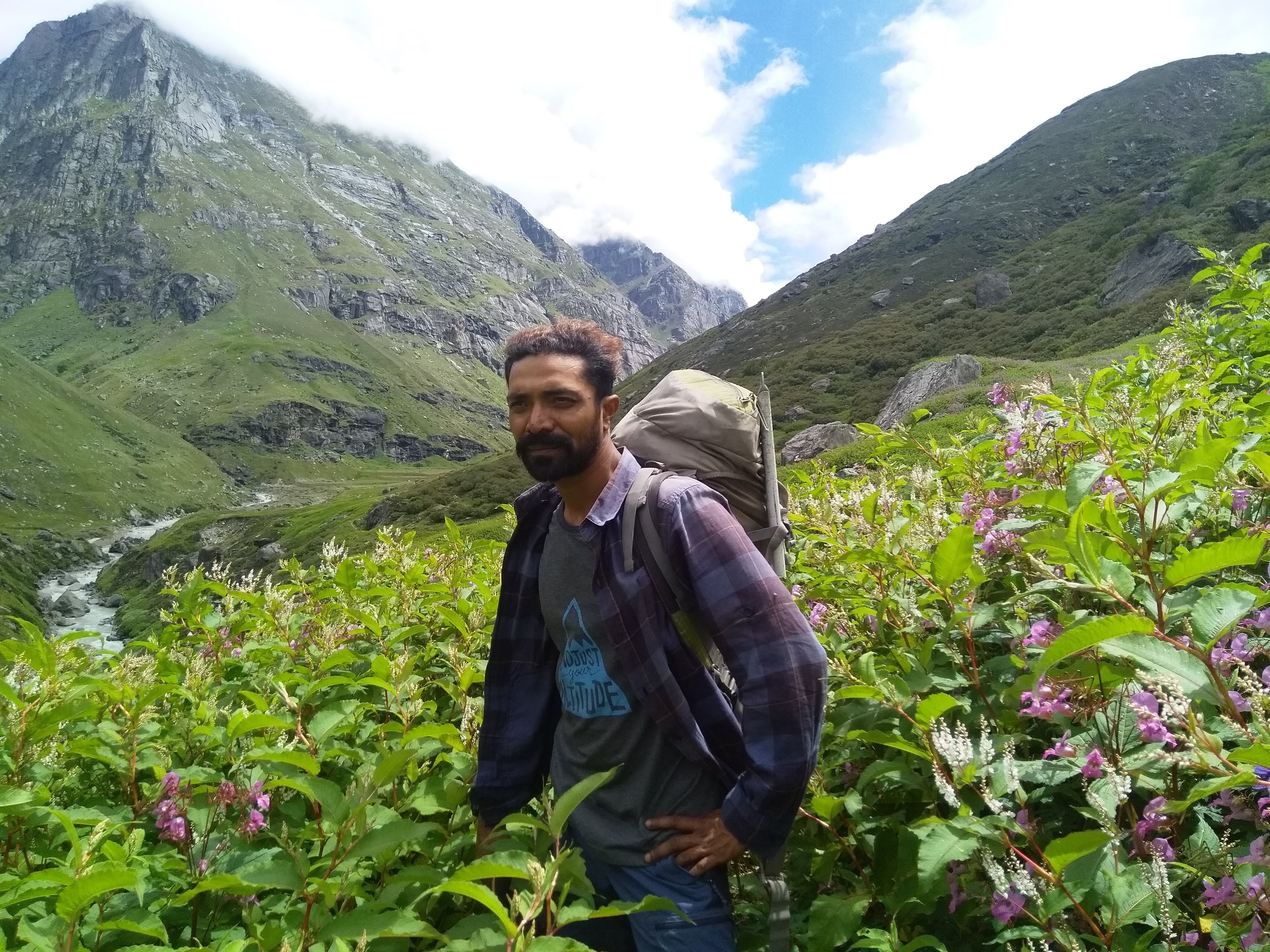
Entire slopes were covered with flowers swaying gently in the mountain breeze.
Between them grew dense bushes that often rose taller than the trekkers themselves.
Walking through them felt almost surreal.
They hid the trail.
They hid the people walking ahead.
Sometimes they even hid the valley itself until suddenly everything opened again and another breathtaking view appeared without warning.
That became the rhythm of the expedition.
Hide.
Reveal.
Hide again.
Reveal something even bigger.
The Valley Keeps Growing
One of the most remarkable things about Parvati Valley is that it never stays the same for long.
At first, it feels enclosed.
The river remains trapped between steep walls.
The forests dominate everything.
The mountains feel impossibly close.
Then, almost without warning, the valley begins to breathe.
The forests thin out.
The river becomes fully visible.
The surrounding mountains step farther apart.
The sky suddenly feels much larger.
You begin seeing long stretches of the valley extending far into the distance.
The Parvati River now occupies the centre of this landscape, flowing with extraordinary force through wide gravel beds and glacial plains.
It is no longer merely something you hear.
It becomes the defining feature of everything around you.
At that moment I remember thinking something very simple.
This valley is unlike anything I've ever walked through.
And although the pass was still days away, somewhere around this point I quietly realised something else.
I had completely stopped looking forward to the destination.
I was looking forward to tomorrow.
Because by now, Pin Parvati had taught me one unforgettable lesson.
No matter how beautiful today had been...
Tomorrow would almost certainly look nothing like it.
When the River Takes Over
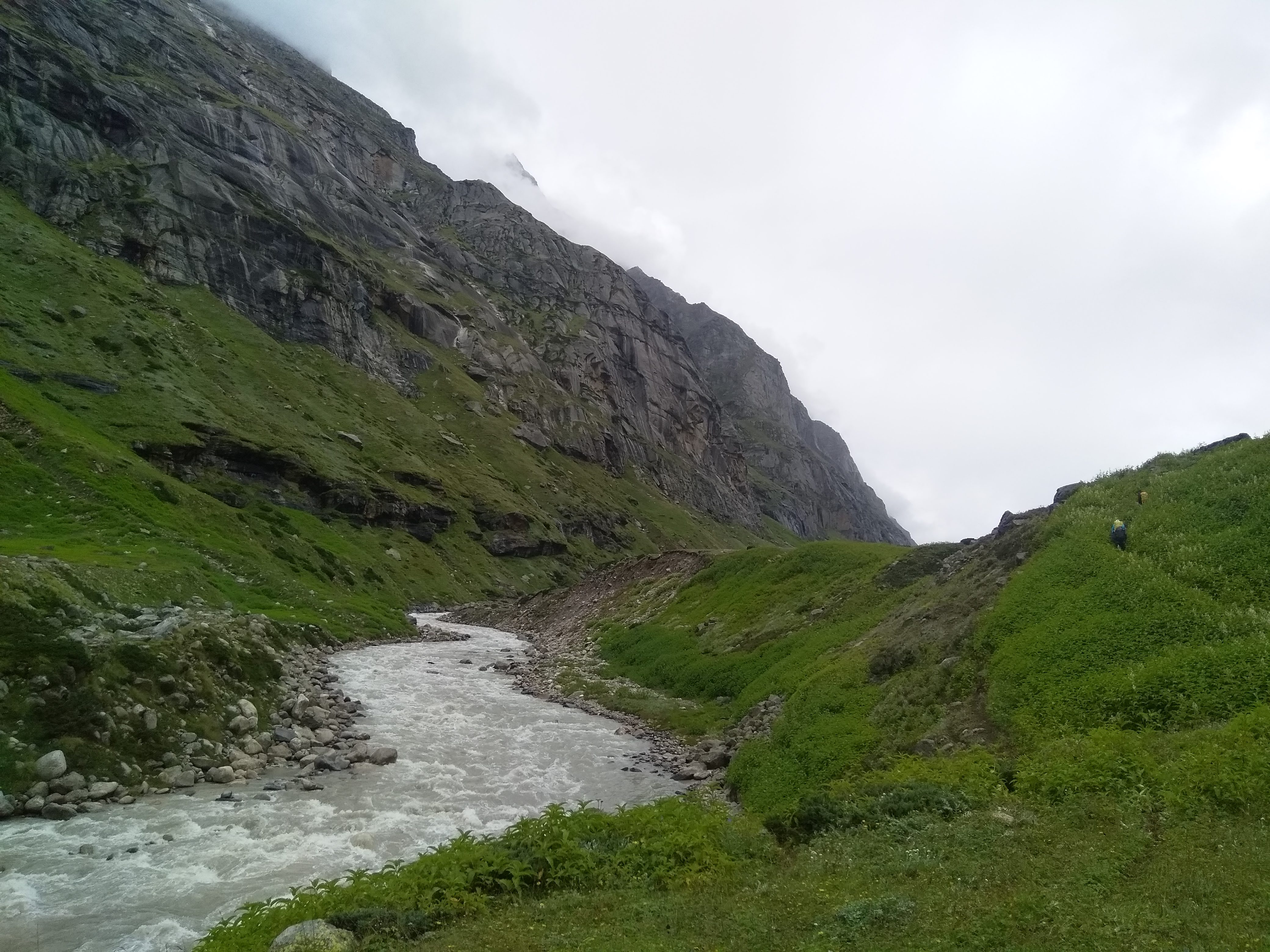
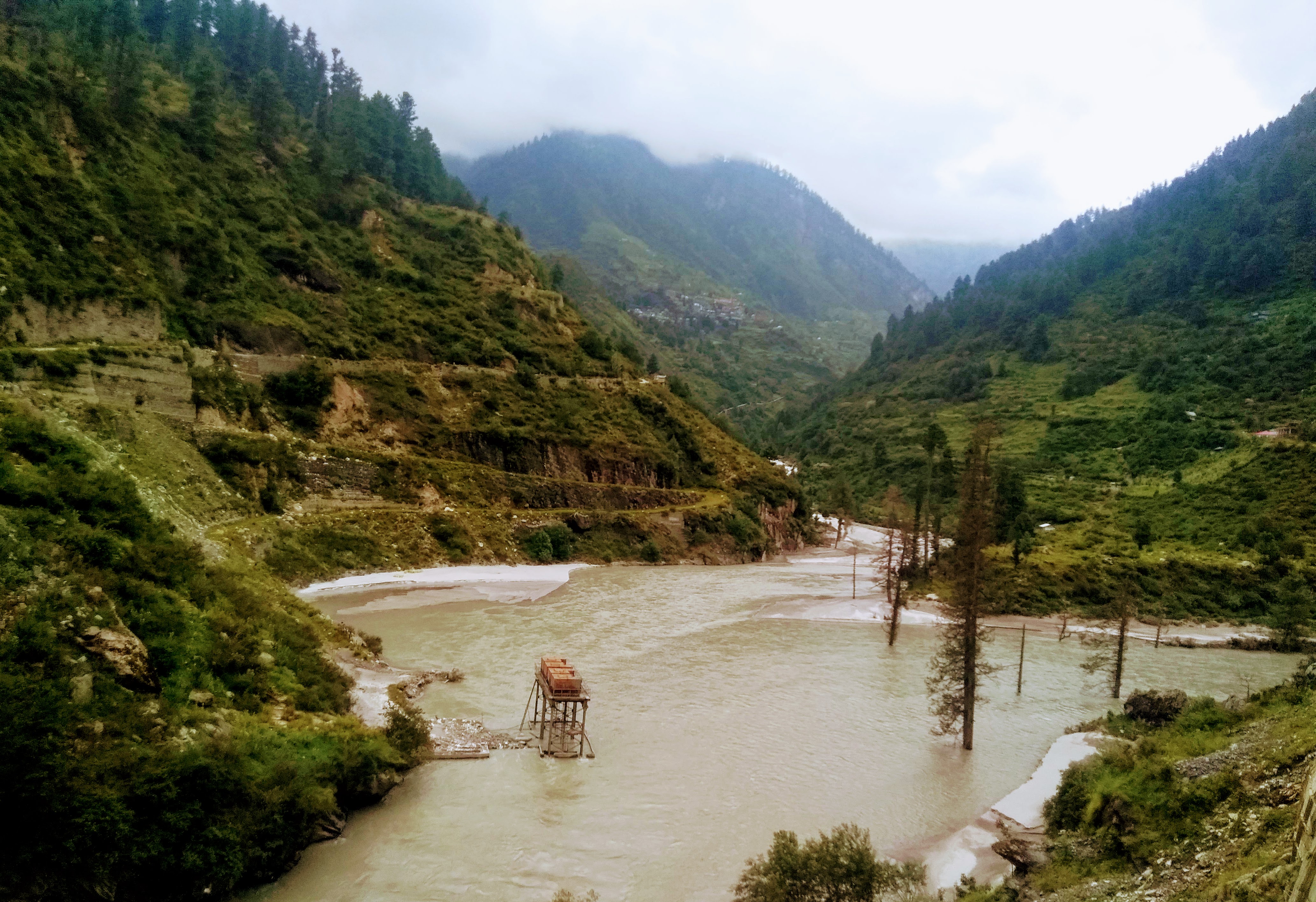
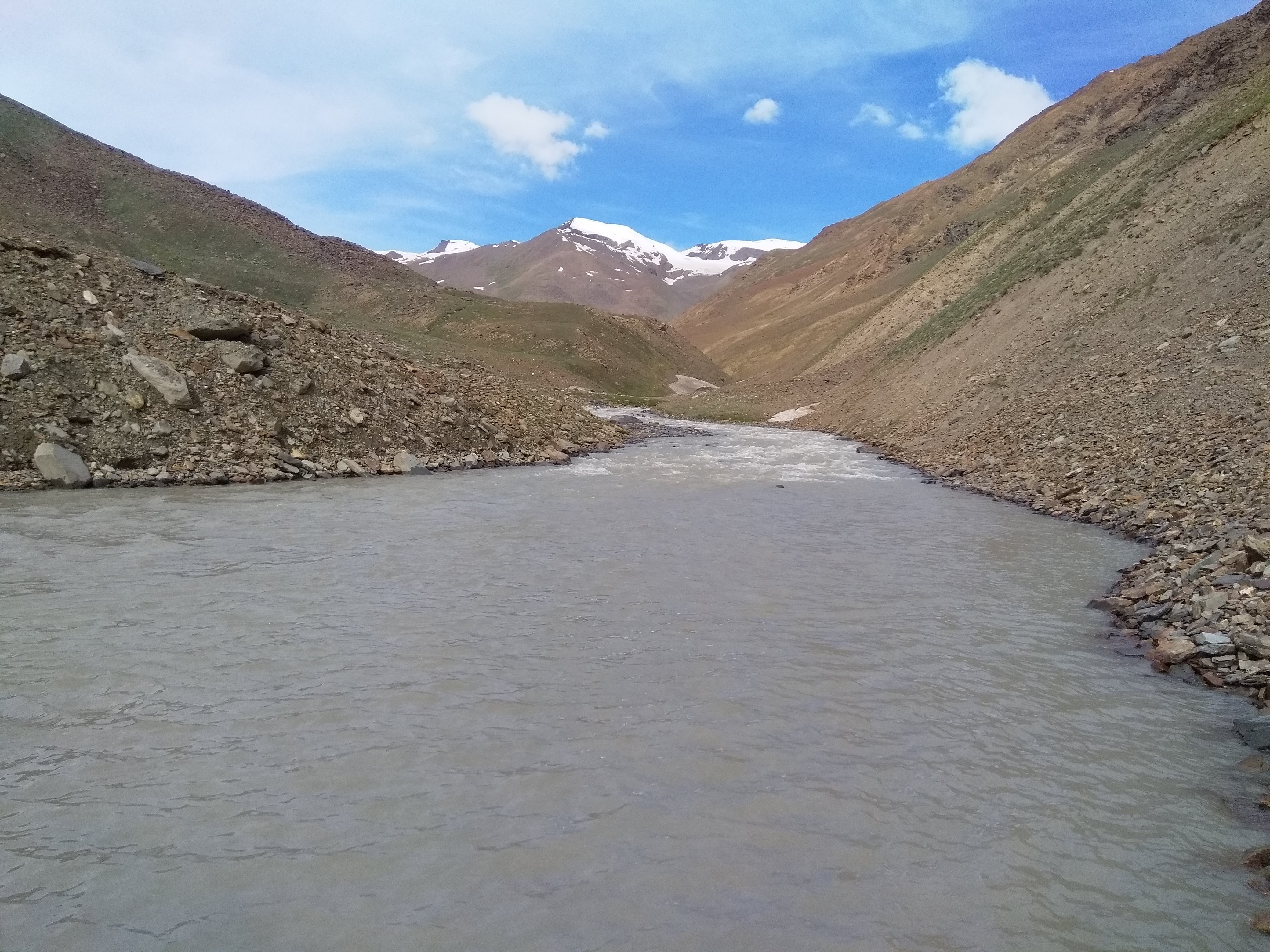
Somewhere after the forests begin thinning, I realised that the Parvati River was no longer just accompanying us—it was commanding the entire valley. Earlier in the trek, it often disappeared into deep gorges, hidden beneath dense deodar forests or behind massive cliffs. You could hear it constantly, but you rarely saw its full strength. Now the valley opened just enough for the river to reveal itself. Wide, untamed and relentlessly powerful, it occupied the centre of everything. Every campsite, every crossing and every day's progress somehow revolved around it.
There is something intimidating about the Parvati River. It isn't the widest river I've seen in the Himalayas, nor the deepest in every section, but it possesses an energy that's difficult to explain. The water never appears calm. Even on relatively gentle stretches, it moves with purpose, carrying glacial silt that gives it a pale grey colour. Stand beside it for a few minutes and you instinctively begin speaking louder because the roar never stops. At times it becomes so loud that conversations simply fade away. People stop talking, not intentionally, but because the river has already taken over.
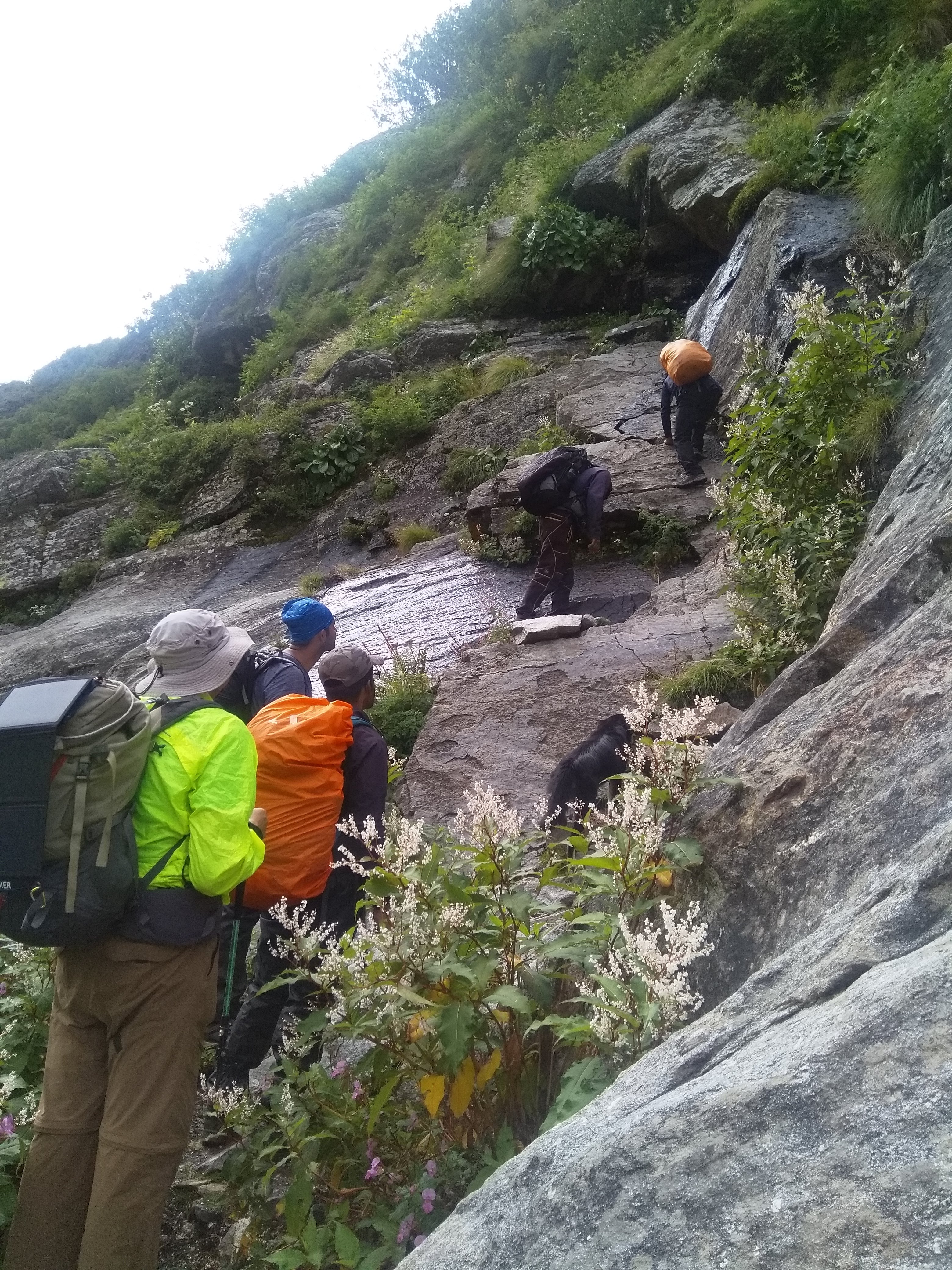
As a trek leader, I often noticed first-time trekkers reacting to it in exactly the same way. Initially they admired its beauty. By the second or third day, admiration slowly turned into respect. They began understanding why every river crossing demanded patience, teamwork and complete attention. In these mountains, rivers aren't obstacles placed on a trail. They're living forces that decide whether you move forward or wait.
Every Day Feels Like a New Trek
People often ask me what makes Pin Parvati different from other Himalayan expeditions. My answer has remained the same ever since I first completed it.
Every day feels like an entirely different trek.
That isn't an exaggeration. It is the one characteristic that defines this expedition more than anything else.
I've trekked through valleys where the scenery changes gradually with altitude. Forests slowly become meadows. Meadows slowly become rocky terrain. The transition feels natural, almost predictable. Pin Parvati refuses to follow that pattern.
You wake up expecting another day through dense forests, only to spend the afternoon walking across open alpine grasslands. The following morning you're surrounded by towering bushes covered in wildflowers, and by evening you're negotiating massive boulders beside a raging glacial river. Another day later, vegetation begins disappearing almost entirely, replaced by moraine, loose rock and endless mountain walls.
There were moments during my first expedition when I genuinely felt as though someone had picked us up overnight and dropped us into a completely different mountain range. The change wasn't subtle—it was dramatic. Every single day introduced something I hadn't seen the day before.
Some treks build towards one grand finale. Pin Parvati delivers a new finale every day.
A Valley of Endless Waterfalls
If I had tried to photograph every waterfall on this trek, I probably wouldn't have reached the next campsite before sunset.
They're everywhere.
Some fall hundreds of feet from cliffs you can barely see through the clouds. Others appear quietly beside the trail, crossing it before disappearing into the Parvati River. Many don't even have names. They're simply part of the valley's everyday landscape.
I remember something amusing that happened with our group. On the first day everyone wanted photographs beside every waterfall. Cameras came out every few minutes. Phones were raised. People posed. There was excitement around each new cascade.
By the third day nobody stopped anymore.
Not because the waterfalls became less beautiful, but because there were simply too many of them. The extraordinary had quietly become ordinary.
That, perhaps, is one of the greatest luxuries of spending several days in the Parvati Valley. Your standards for beauty change without you even noticing. Things that would become the highlight of another trek simply become part of your morning walk here.
The Valley Hides More Than It Reveals
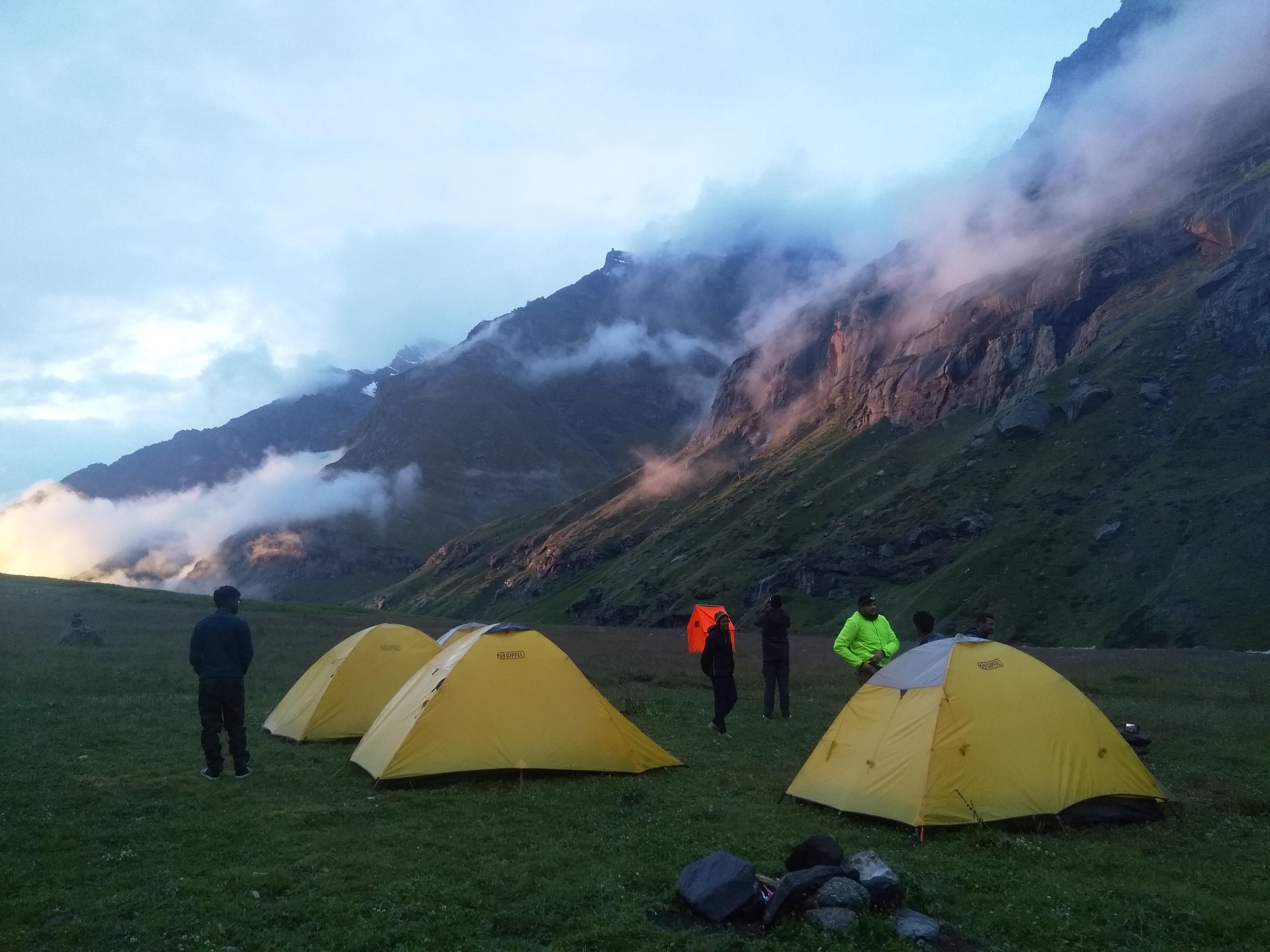
One feeling stayed with me throughout the entire journey—the constant sense that the valley was hiding something beyond every bend.
Sometimes enormous bushes, taller than a person, lined both sides of the trail. You couldn't see fifty metres ahead. You simply walked through a corridor of green, hearing the river somewhere below and wondering what waited on the other side.
Then, without warning, everything opened.
An enormous waterfall crashed down a cliff nearly a hundred feet high. Beyond it stretched another valley disappearing into distant mountains. The Parvati River thundered through the centre while another mountain range stood silently across from us, catching patches of sunlight breaking through moving clouds.
Moments like these happened again and again throughout the expedition.
The valley never showed all its beauty at once.
It rewarded curiosity.
It rewarded patience.
And every time you thought you had finally seen its finest view, another corner proved you wrong.
Where the Forest Finally Lets Go
Somewhere beyond Odi Thach, you begin noticing a subtle change. At first, it isn't dramatic enough for everyone to realise. The towering deodars slowly become fewer. The pine forests that had accompanied you for days begin breaking apart into smaller patches. The bushes remain, but they too gradually shrink in height. The valley, which had felt enclosed and protective until now, suddenly starts opening its arms.
I remember stopping for a few moments just to look back.
It was almost difficult to believe that the dense green world we had been walking through for days was now slowly disappearing behind us. Ahead lay an entirely different landscape. The mountains looked larger. The sky seemed wider. Distances suddenly became deceptive. Peaks that appeared only a few minutes away were actually hours apart.
This is perhaps my favourite transition of the entire expedition. Not because it is the most beautiful, but because it happens so naturally that you don't realise you've crossed an invisible boundary. One ecosystem quietly gives way to another. There is no signboard announcing it. The mountains simply decide that the forests have come far enough.
The River Decides the Route
If the forests define the early days of the trek, the river crossings define everything that follows.
Before my first Pin Parvati expedition, I had read countless articles describing these crossings as terrifying obstacles. Some accounts made them sound almost impossible. Naturally, those stories stayed somewhere in the back of my mind.
Reality was different.
The crossings demanded respect, not fear.
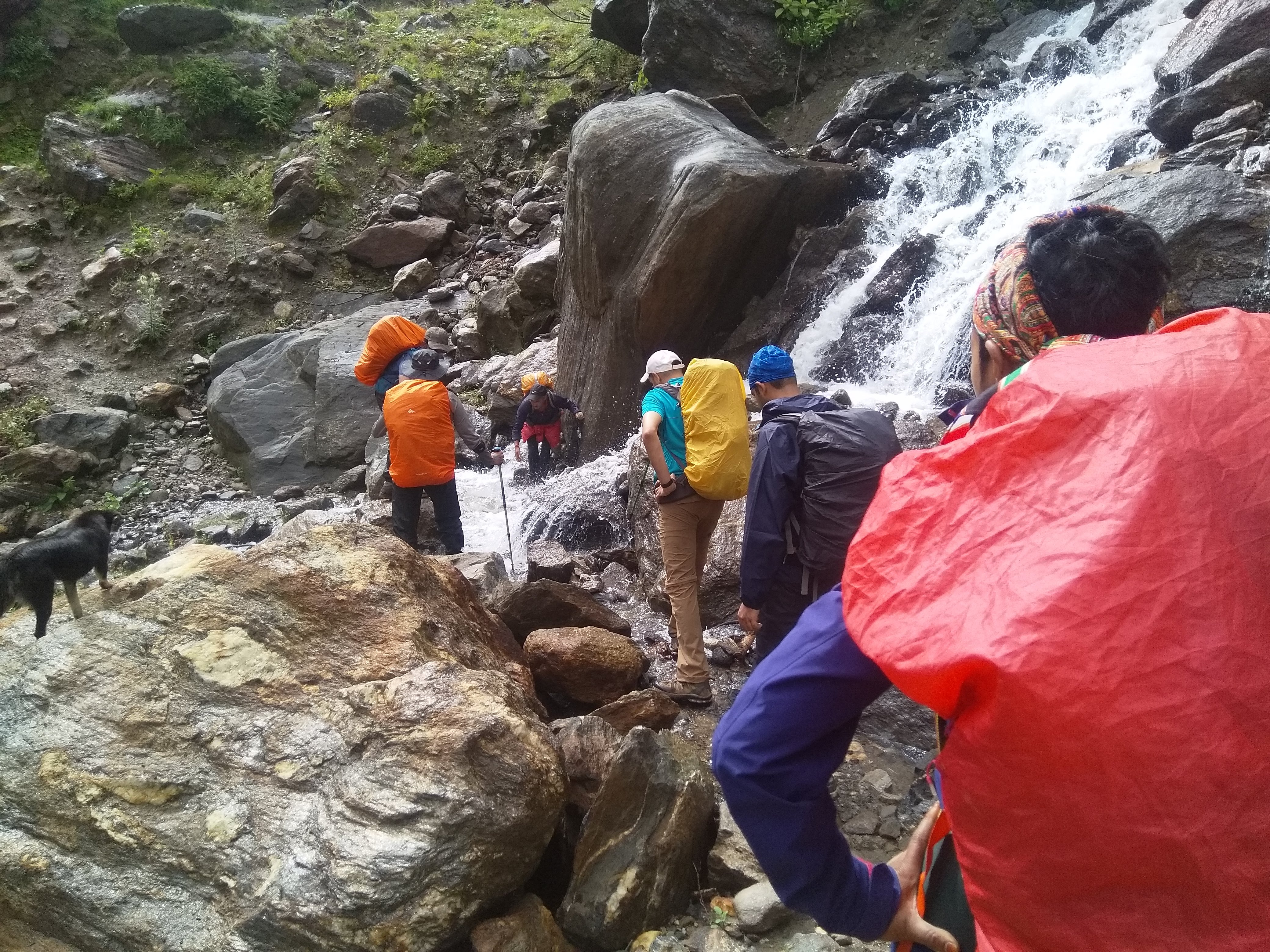
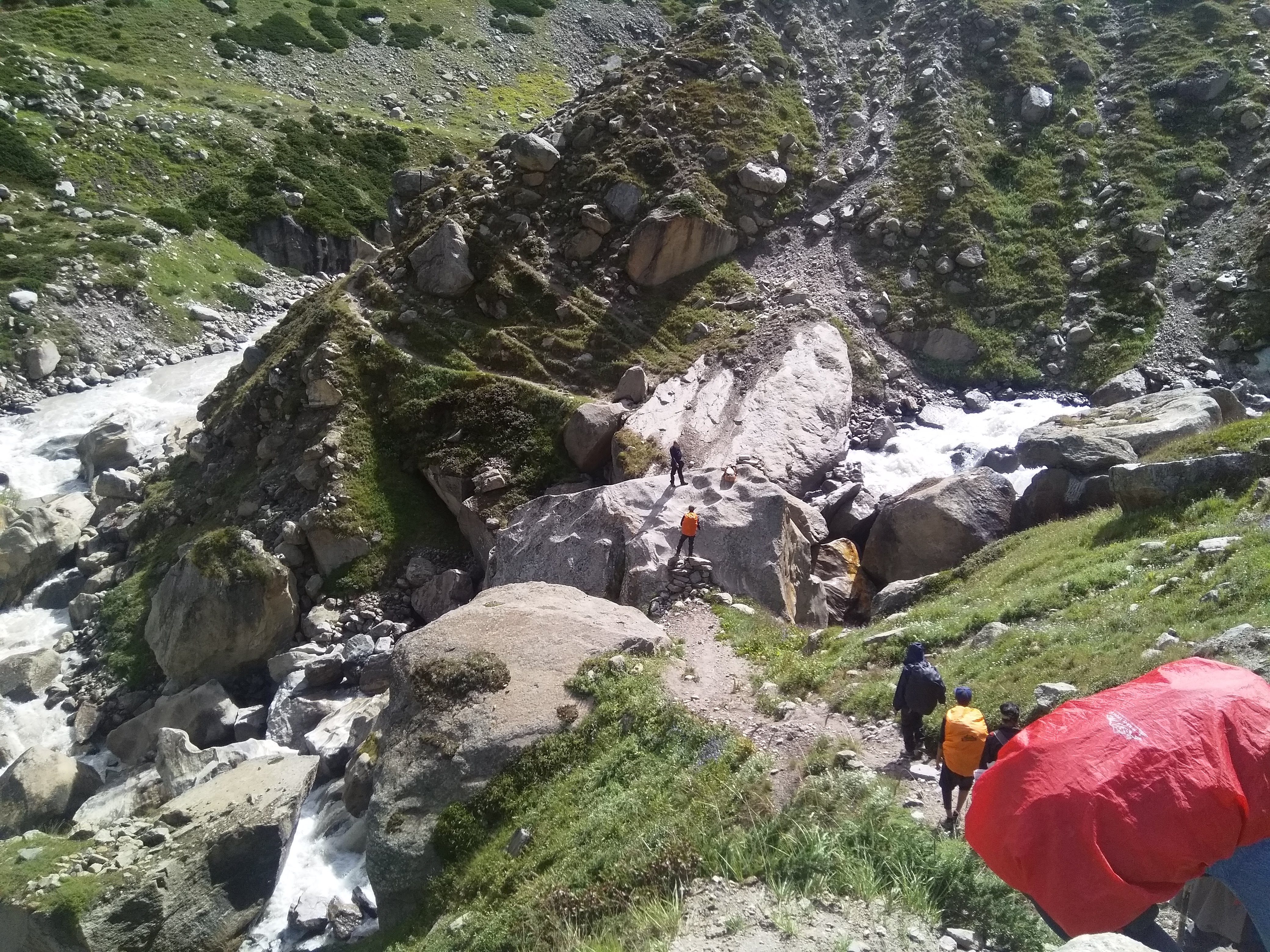
Every crossing depended on the conditions of that particular day. Snowmelt, rainfall, temperature and even the time of morning could completely change the river. That is why experienced local guides always prefer crossing early, before the afternoon sun increases glacial melt and the water rises further.
As a trek leader, these were the moments that required complete focus. Everyone naturally looked towards the leader before stepping into the water. Calmness becomes contagious. If you appear confident, your team draws confidence from you. If you hesitate unnecessarily, that hesitation spreads through the group almost instantly.
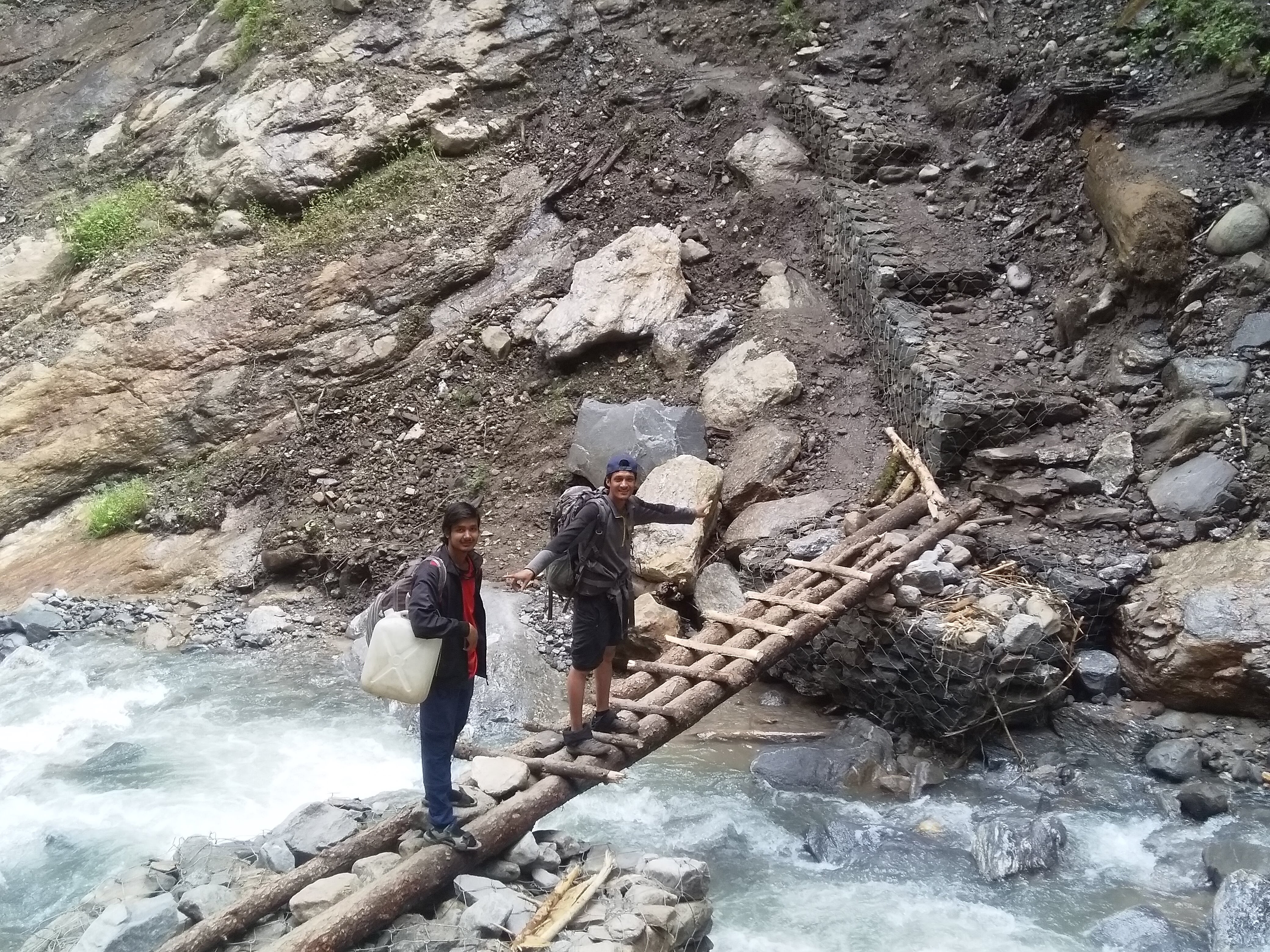
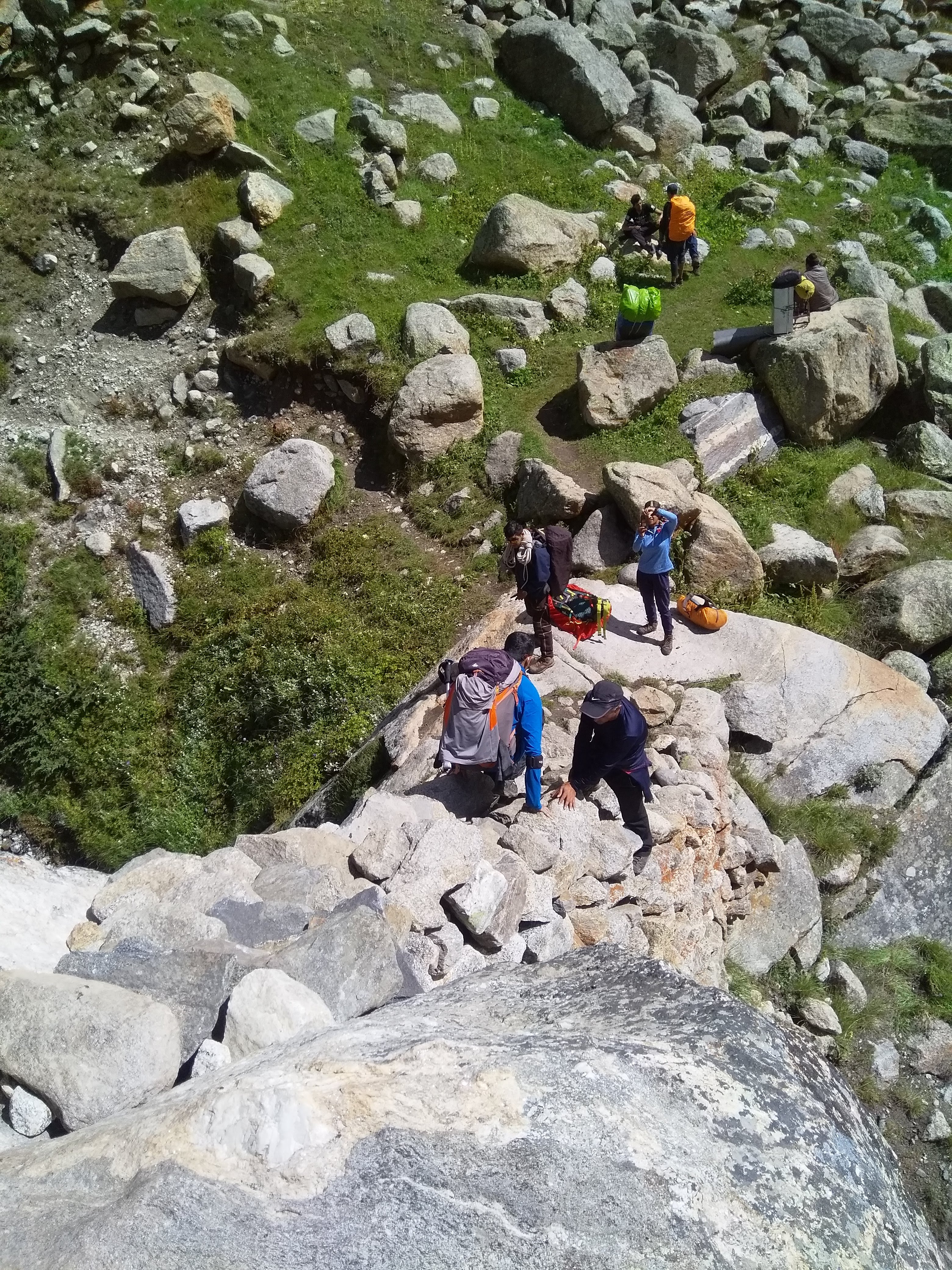
Fortunately, our team trusted one another. We crossed patiently, helped each other, laughed after reaching the opposite bank and continued walking. Looking back now, those crossings remain some of my strongest memories—not because they were frightening, but because they brought everyone together. Nobody crossed alone. Every successful crossing felt like a shared achievement.
The Abandoned Trolley
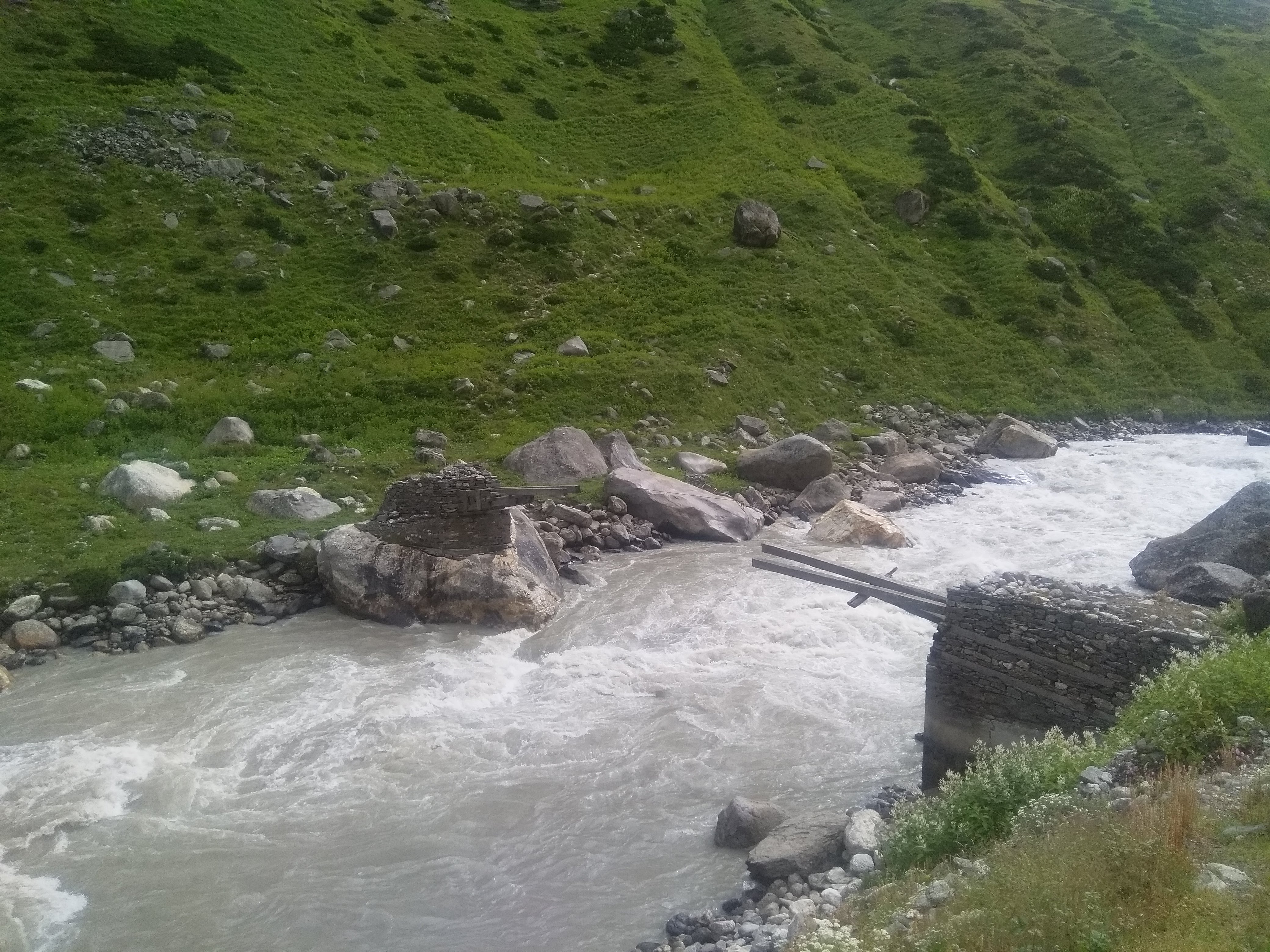
There is one place along the trail that quietly tells the story of how powerful the Parvati River really is.
Most trekkers notice it immediately.
An abandoned trolley hangs silently above the river. Nearby lie the remains of an old bridge that once connected both sides of the valley.
It isn't marked as a viewpoint.
No sign explains its history.
Yet everyone stops to look.
The collapsed bridge is a reminder that the mountains are never permanent. Trails change. Rivers carve new channels. Floods reshape valleys. Crossings that once seemed routine slowly become impossible as years pass.
Standing there, I found myself imagining what this place must have looked like when people regularly crossed to the opposite bank. Today, the broken structure remains as a quiet reminder that nature always has the final word.
It also gives trekkers a glimpse into the challenges faced by local communities long before organised trekking became common. These valleys were never empty landscapes. They have always been routes of movement, trade, grazing and survival.
The Valley Opens Like Never Before
Crossing safely to the other side almost feels symbolic.
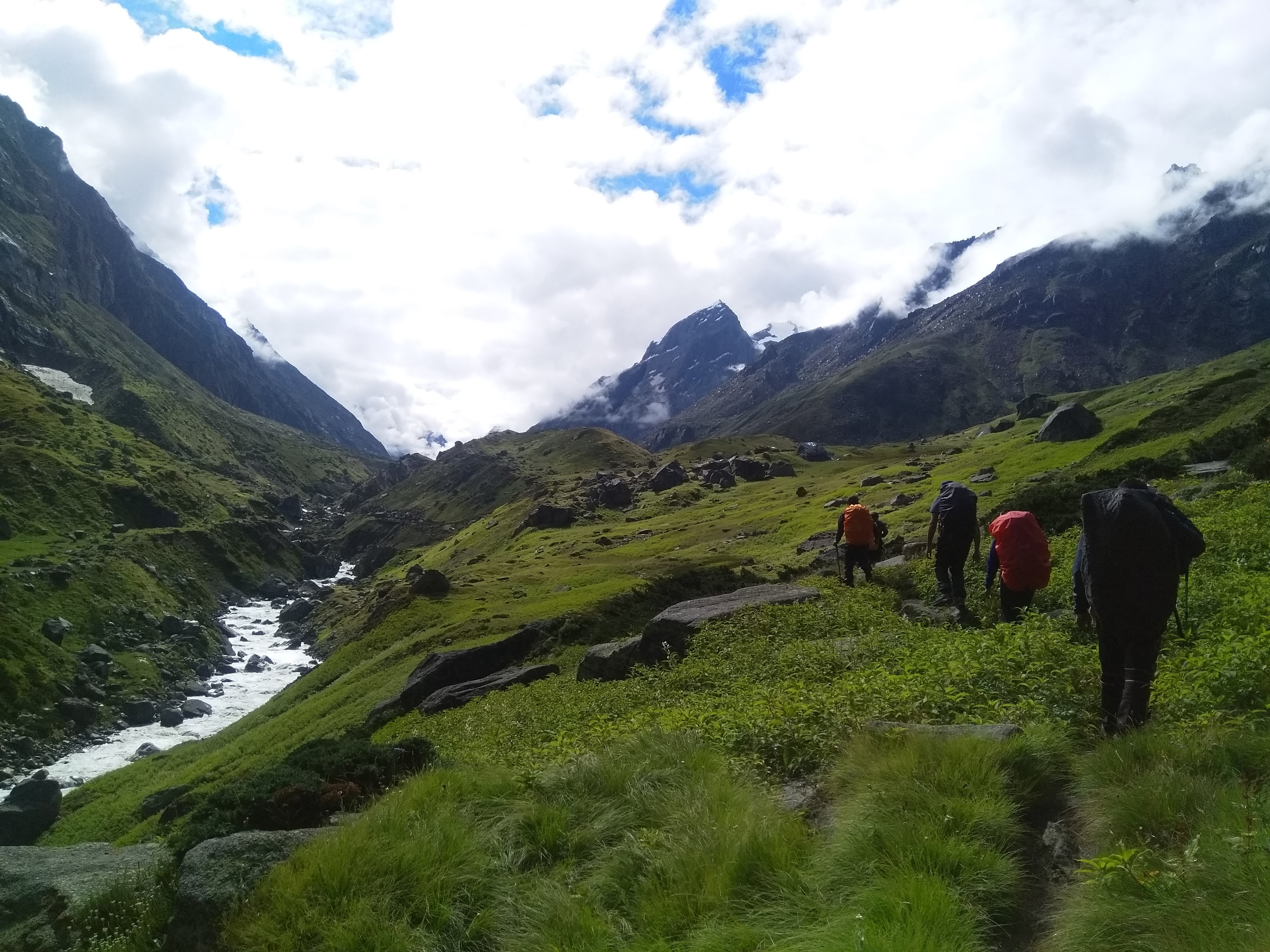
The enclosed Parvati Valley you've known for days suddenly transforms into an enormous alpine world.
The forests are now largely behind you.
The horizon stretches much farther.
Towering cliffs rise almost vertically on both sides, while the Parvati River races through the middle, free from the narrow gorges that once confined it.
The first thing that struck me wasn't the size of the mountains. It was the amount of space.
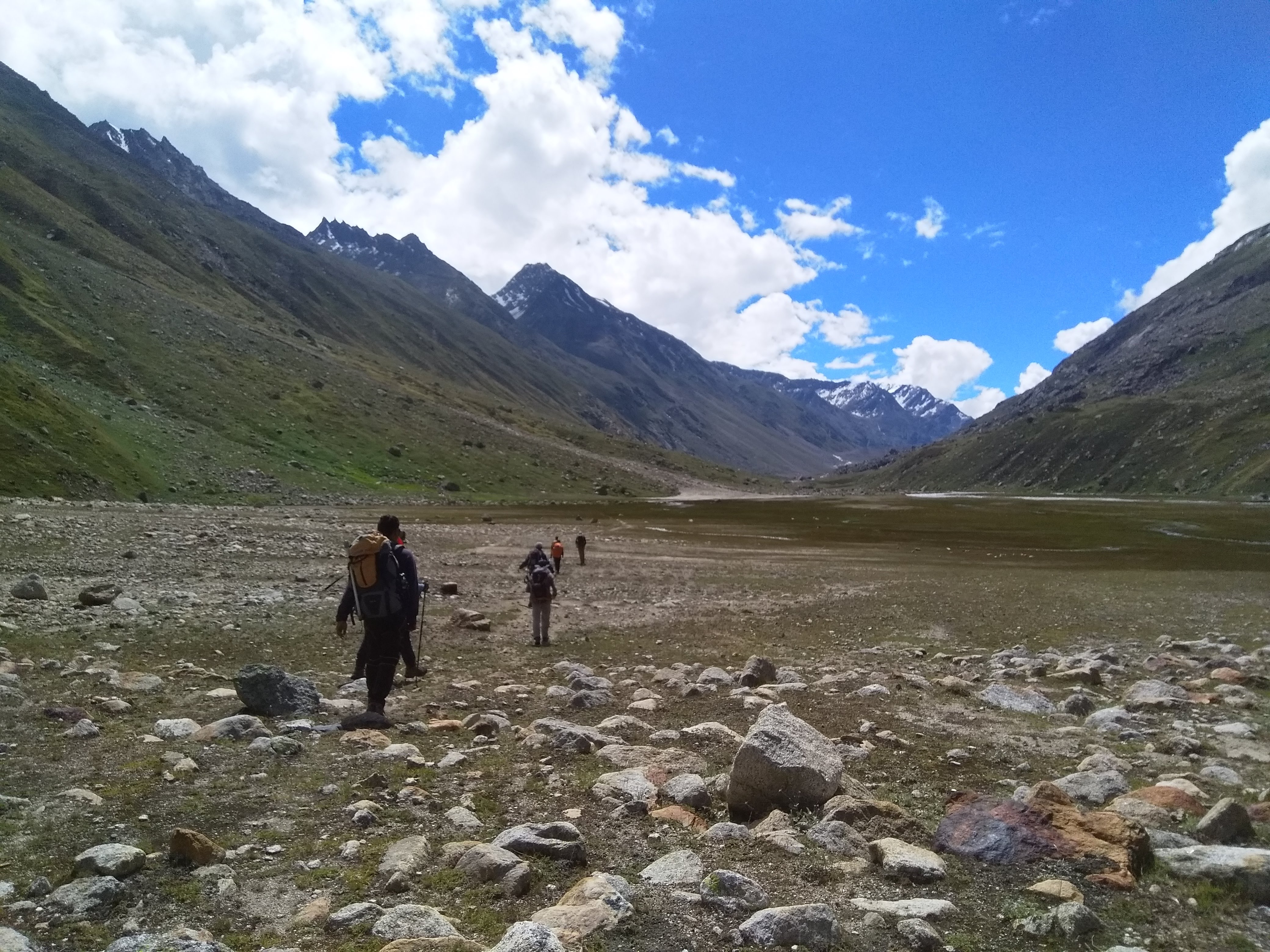
After spending days walking through forests where your view rarely extended beyond the next bend, suddenly being able to see kilometres ahead felt almost overwhelming. You could watch clouds casting shadows across distant slopes. You could trace the river as it wound through the valley floor. You could finally appreciate just how massive this landscape really was.
It is also here that another set of inhabitants begins appearing more frequently.
The shepherds.
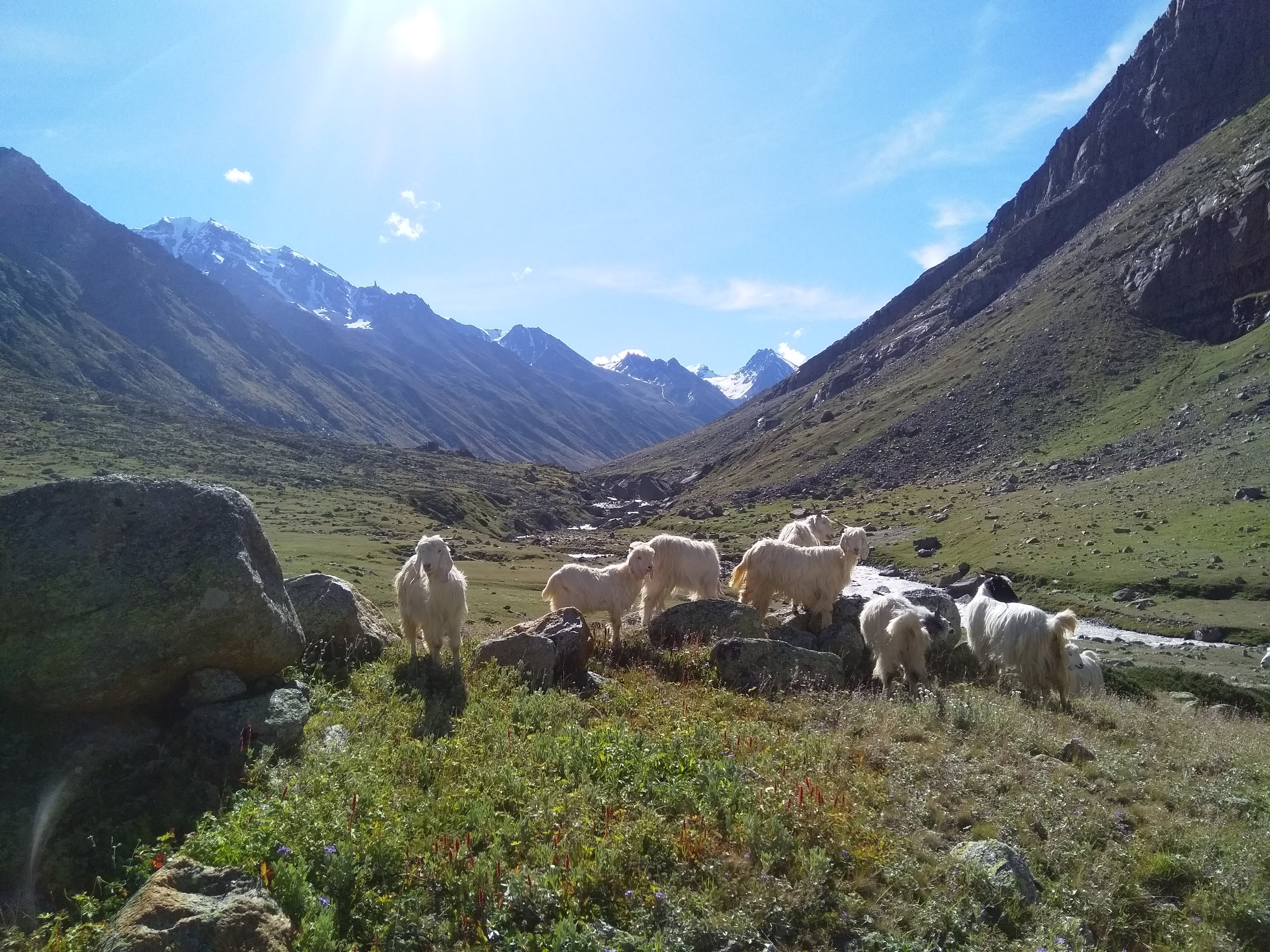
Every summer they bring thousands of sheep and goats into these high-altitude meadows. From a distance the flocks resemble scattered patches of white moving slowly across the mountainside. As you get closer, the bells around the animals' necks become audible, blending with the sound of the river in a rhythm that somehow feels perfectly natural.
Meeting shepherds in these remote valleys always reminds me that while this landscape feels extraordinary to trekkers, it is also a workplace, a seasonal home and a way of life for people who have understood these mountains for generations.
Whenever we stopped to exchange greetings, I couldn't help but admire the simplicity with which they lived in terrain that most people would consider impossibly remote. Their knowledge of weather, rivers and mountain conditions often surpassed anything a map or GPS could ever provide.
The Great River Basin Before Mantalai
As we continued gaining altitude, the valley widened once again, but this time in a way I had never expected.
The roaring Parvati River, which had spent days forcing its way through narrow valleys, suddenly seemed to relax.
It was almost as if the mountains had finally given it room to breathe.
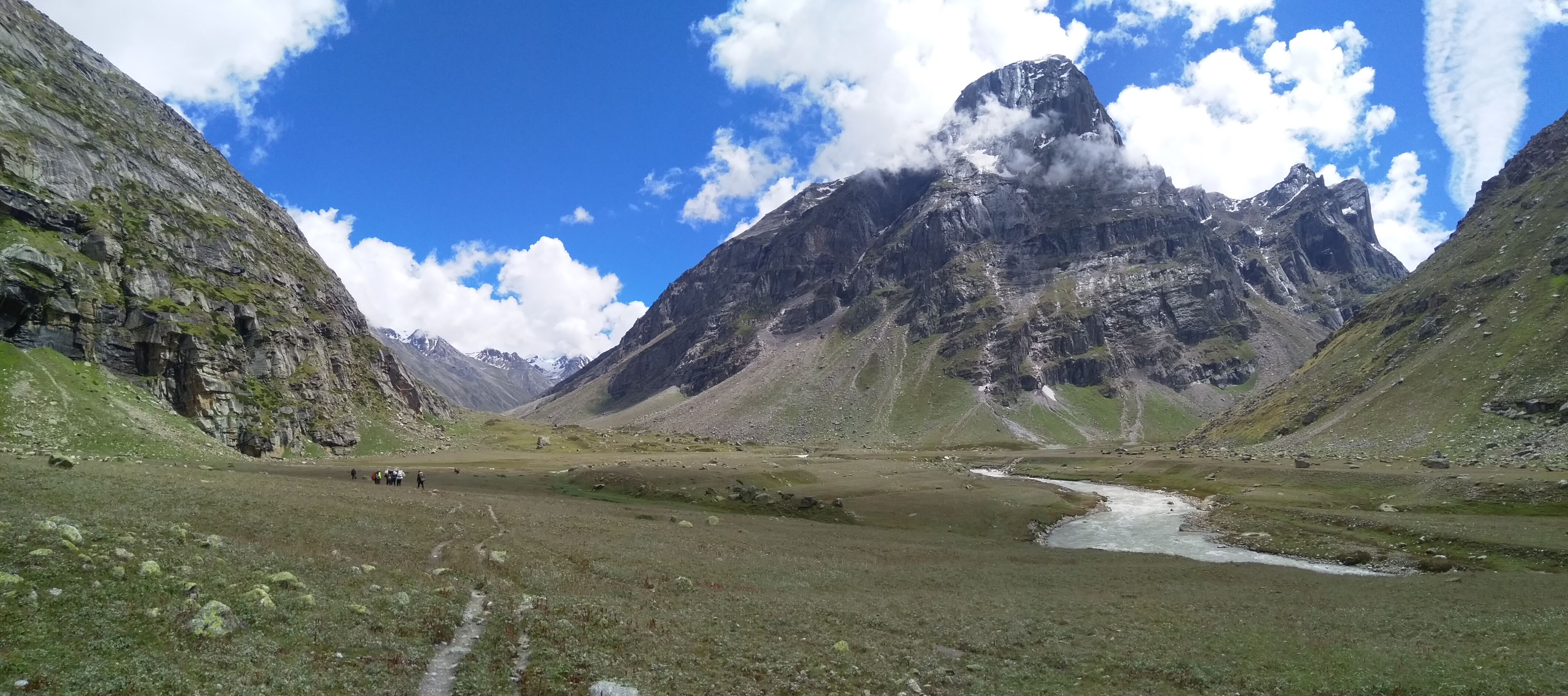
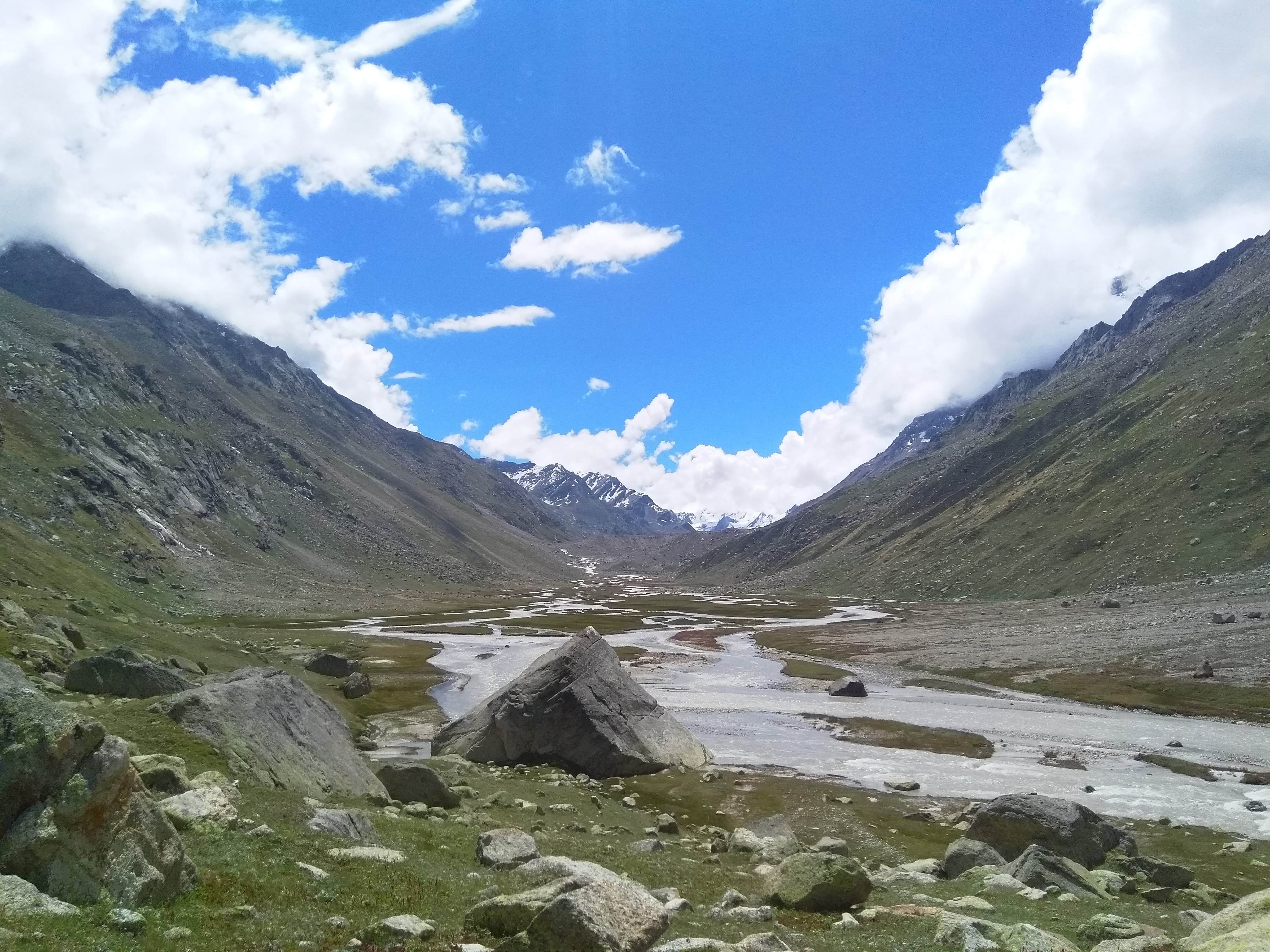
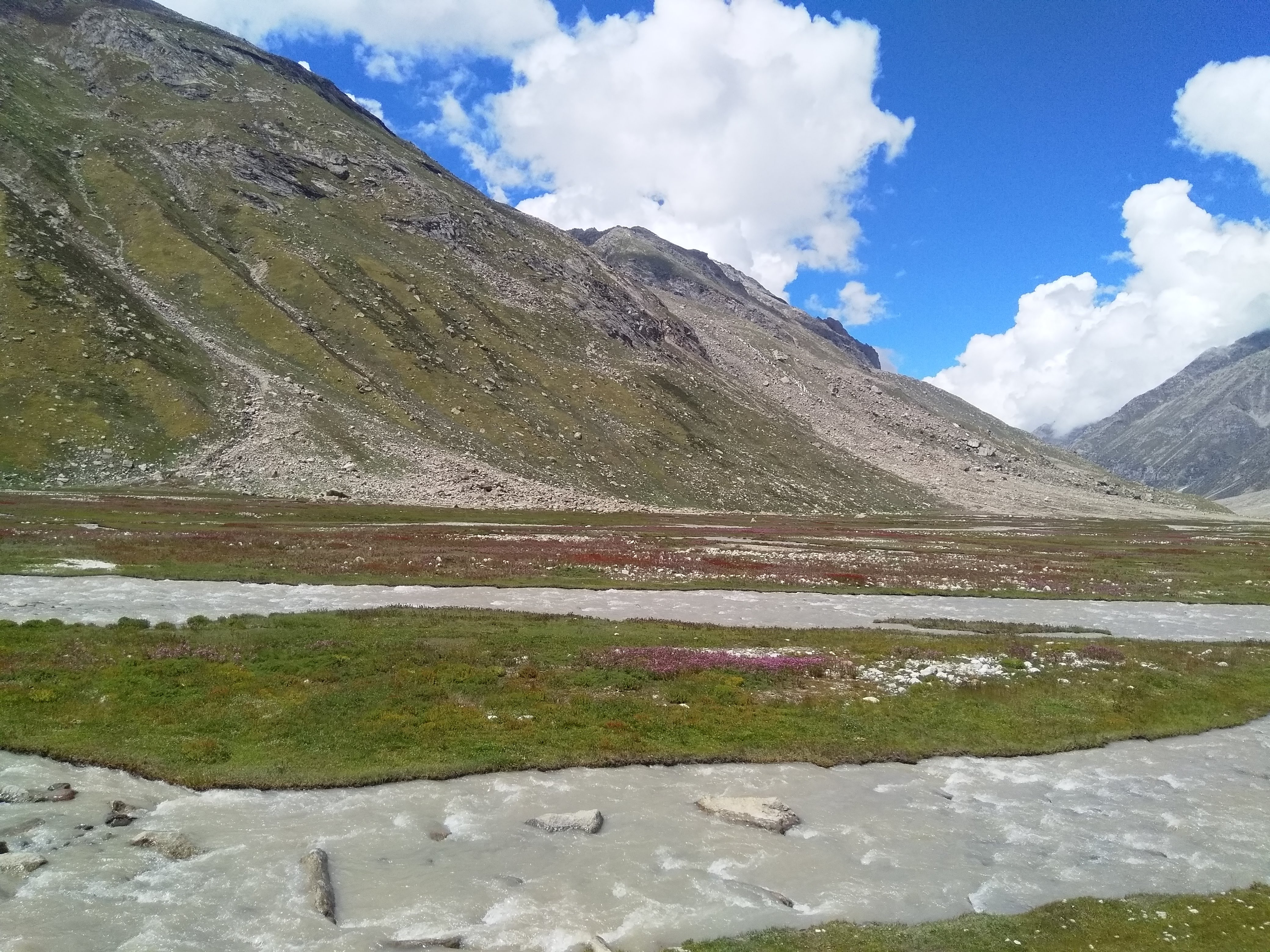
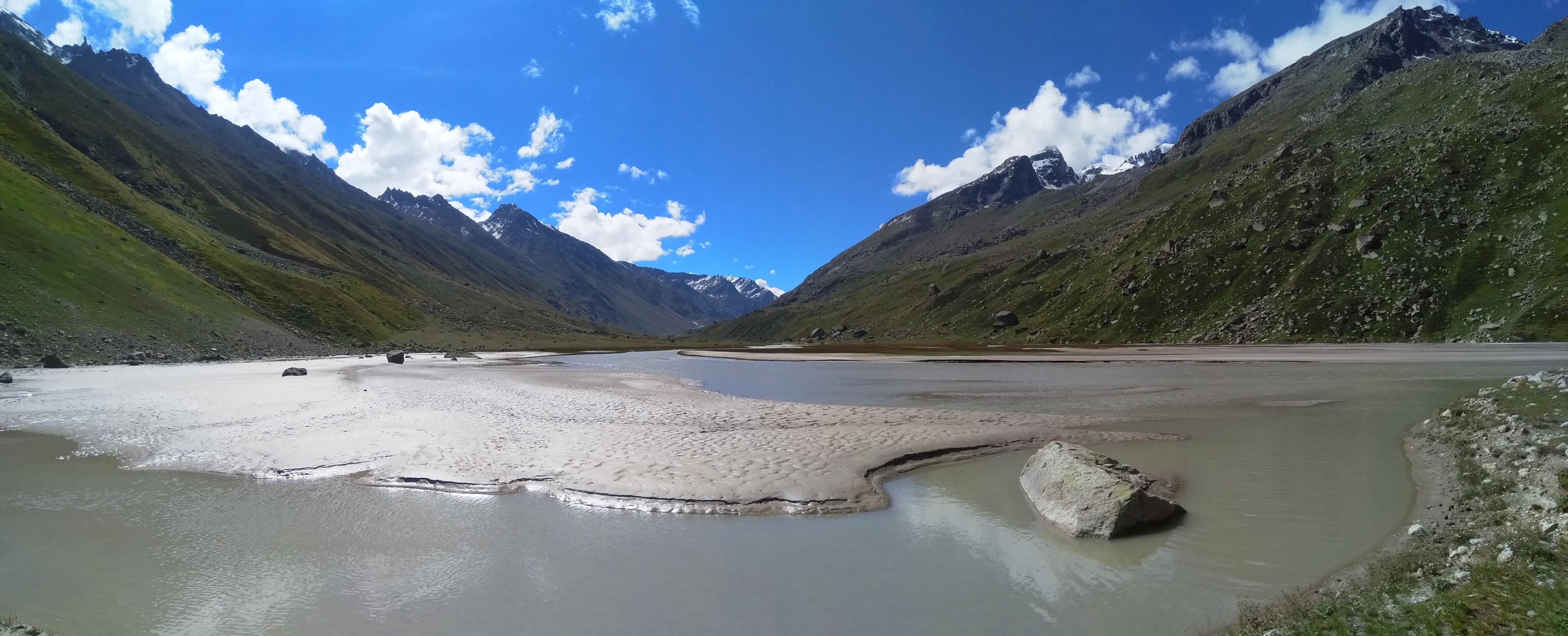
Instead of one fast-flowing channel, the river split into countless smaller streams that wandered lazily across a vast open basin. The current, which had looked wild and impatient throughout the lower valley, suddenly became calm and almost playful. Water spread across the landscape in every direction, weaving around small islands of grass and polished stones before joining together again.
I remember standing there for several minutes without saying a word.
The place reminded me of a giant river delta, except we were standing at nearly four thousand metres in the middle of the Himalayas. The entire basin stretched so wide that it could easily fit four or five football grounds, perhaps even more. Every direction looked impossibly open. Snow-clad peaks surrounded us, while dozens of crystal-clear streams reflected the afternoon sun like scattered pieces of glass.
There was something strangely peaceful about this place.
After days of watching the Parvati River rage through cliffs and boulders, seeing it flow so gently felt almost emotional. It was as though the river had decided to pause for a while before beginning its final climb towards its birthplace.
To this day, I think this is one of the most underrated landscapes on the entire trek. People remember the pass. They remember the glacier. They remember Spiti.
But this basin quietly remains one of my favourite places in the entire valley.
Walking Into Mantalai
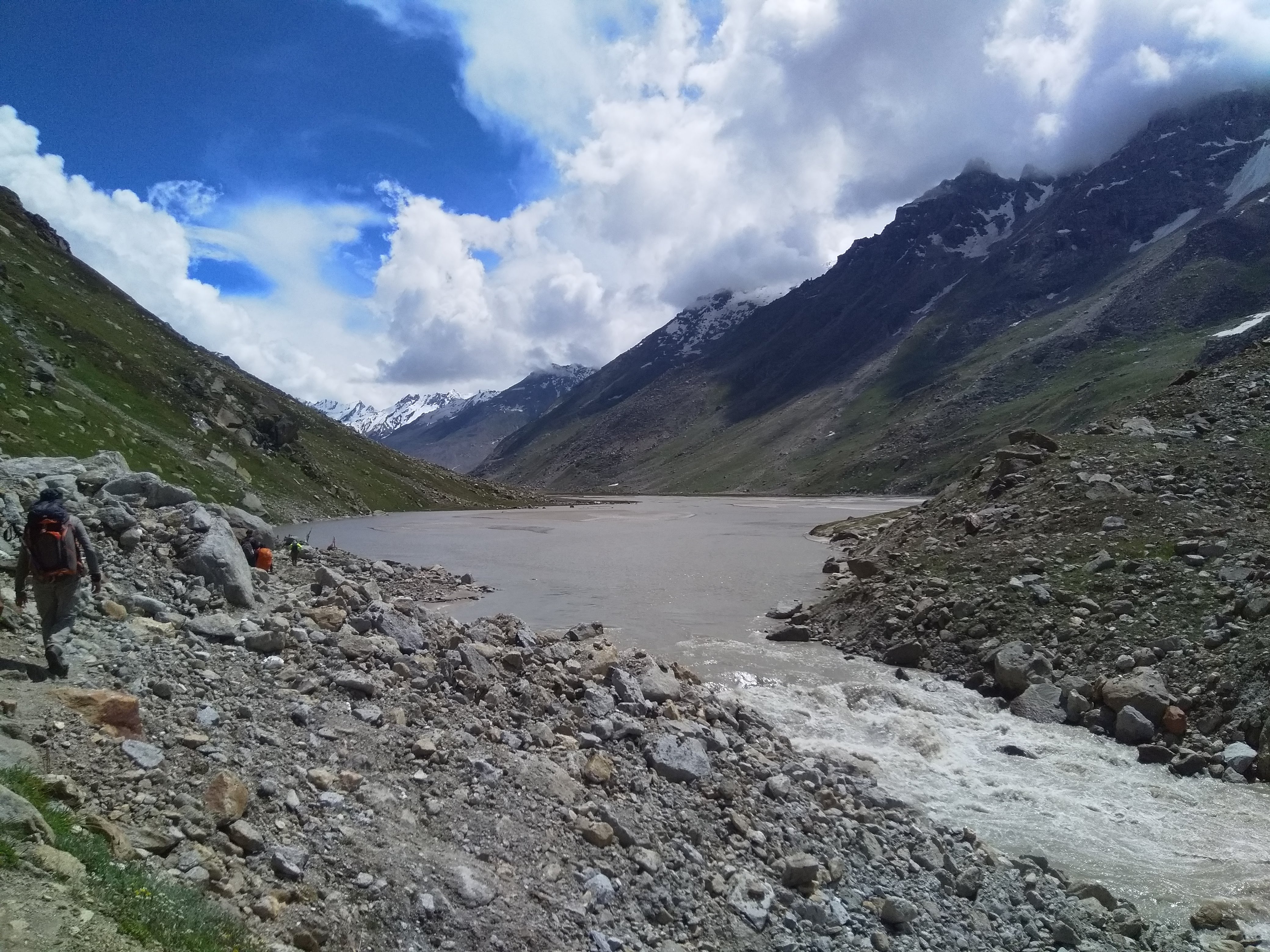
Beyond the basin, the trail climbs gently before revealing another surprise.
Mantalai.
I had seen photographs before coming here.
None of them prepared me for what I actually saw.
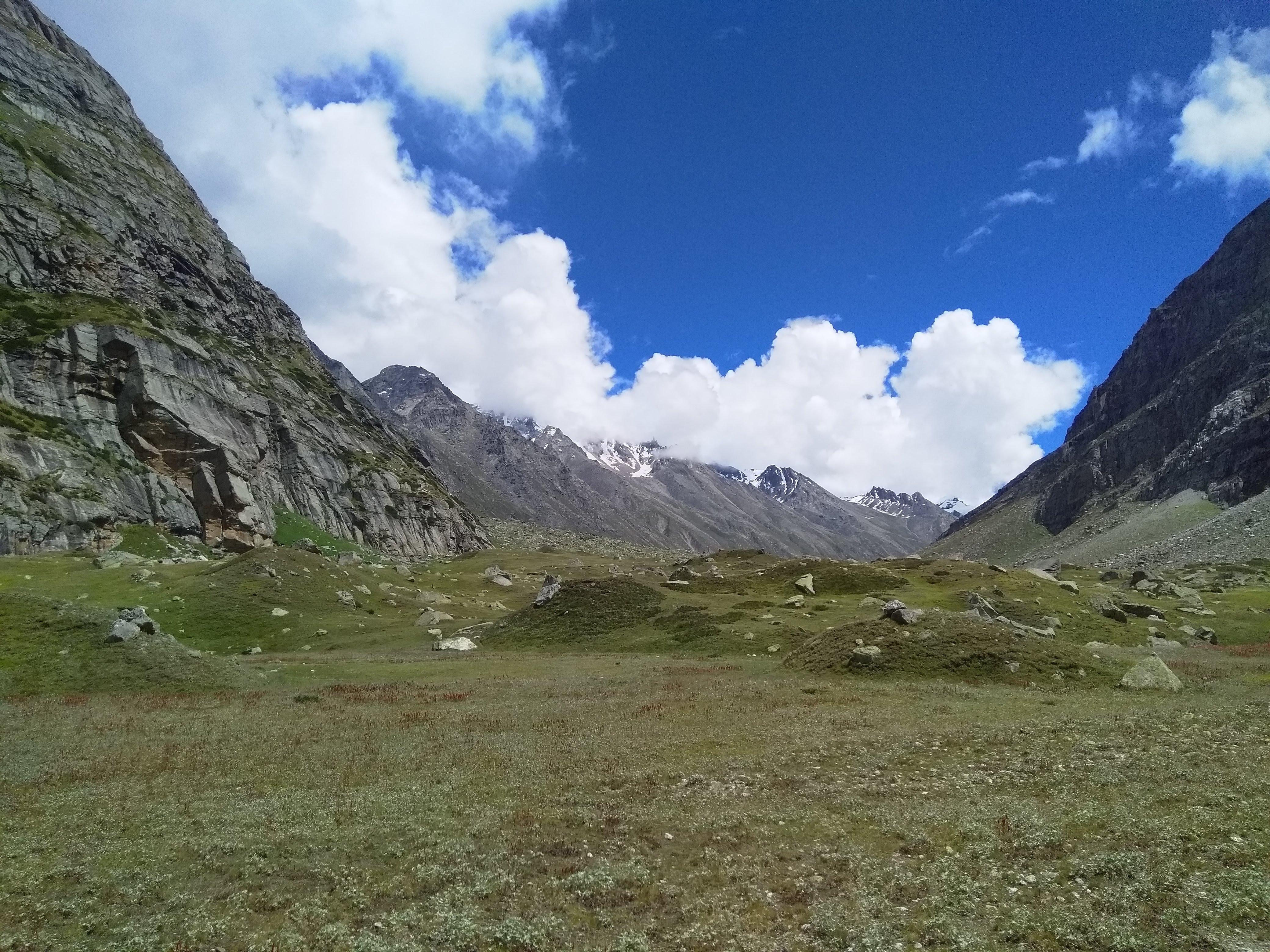
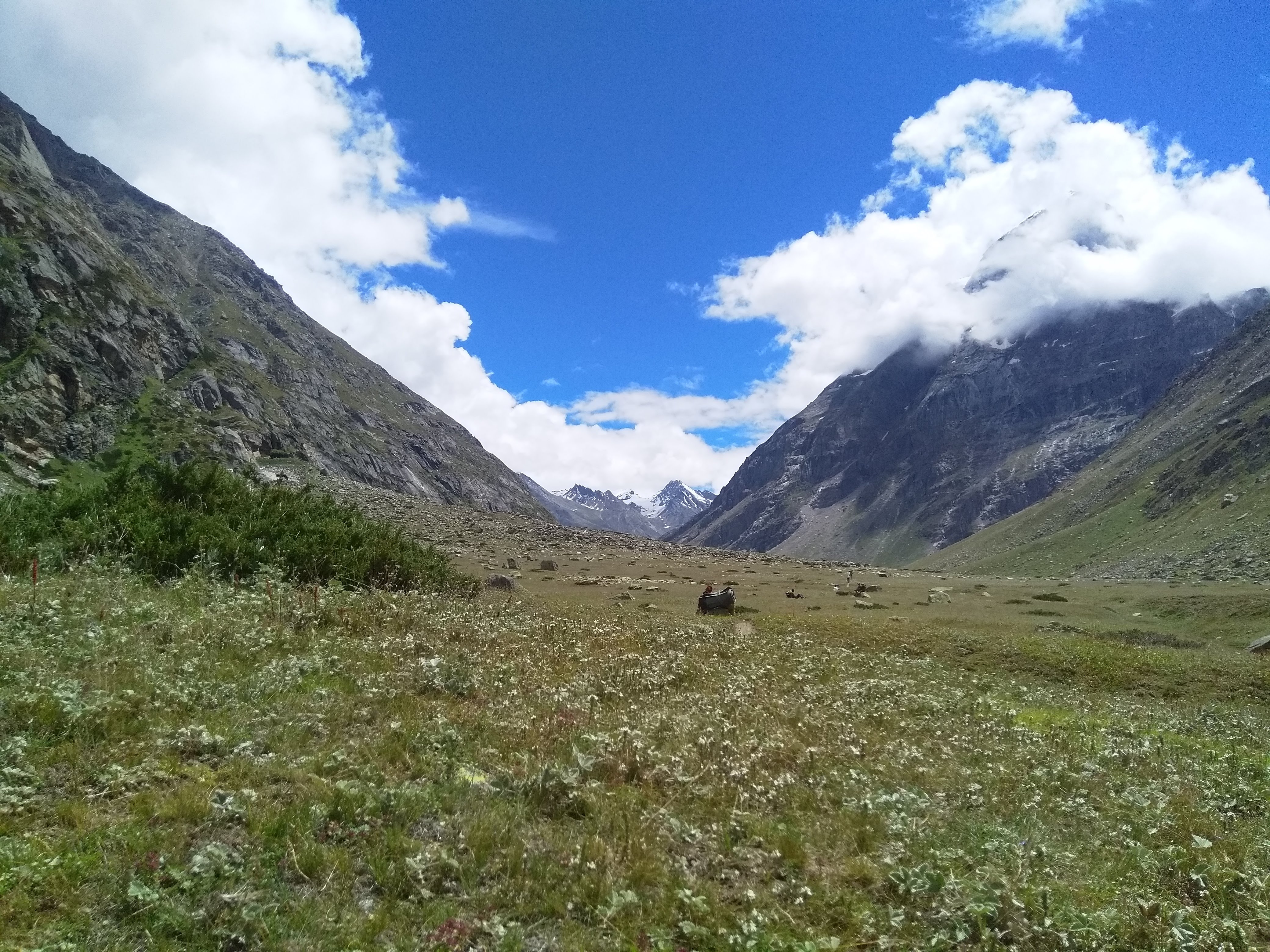
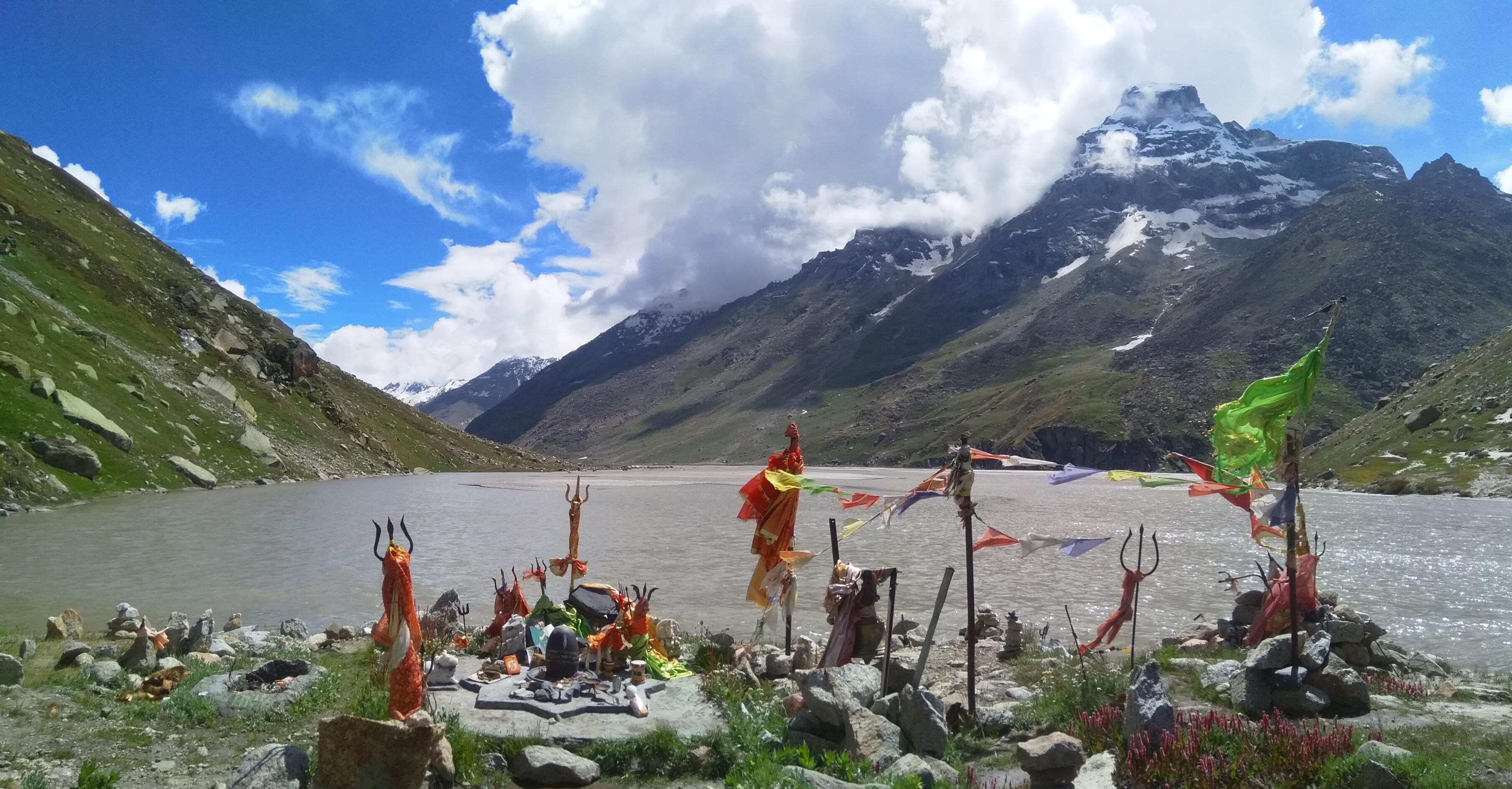
Mantalai isn't simply a campsite or a landmark. It is an entire landscape. In fact, what many trekkers casually refer to as "Mantalai" is really a series of broad glacial basins lying one after another. The first opens into the second, and together they create an immense high-altitude plain that almost resembles a giant lakebed.
The Parvati River enters this basin with remarkable grace. After rushing violently through the lower valley, it suddenly spreads across the flat terrain, meandering quietly through the grasslands before gathering itself again further downstream.
The first thing that caught my attention wasn't the water.
It was the silence.
For the first time in many days, the roar of the river softened enough for the mountains themselves to become audible. The wind sweeping across the basin. Prayer flags fluttering in the distance. The occasional whistle of a marmot. The tinkling bells of grazing animals far away.
Everything felt slower.
Almost sacred.
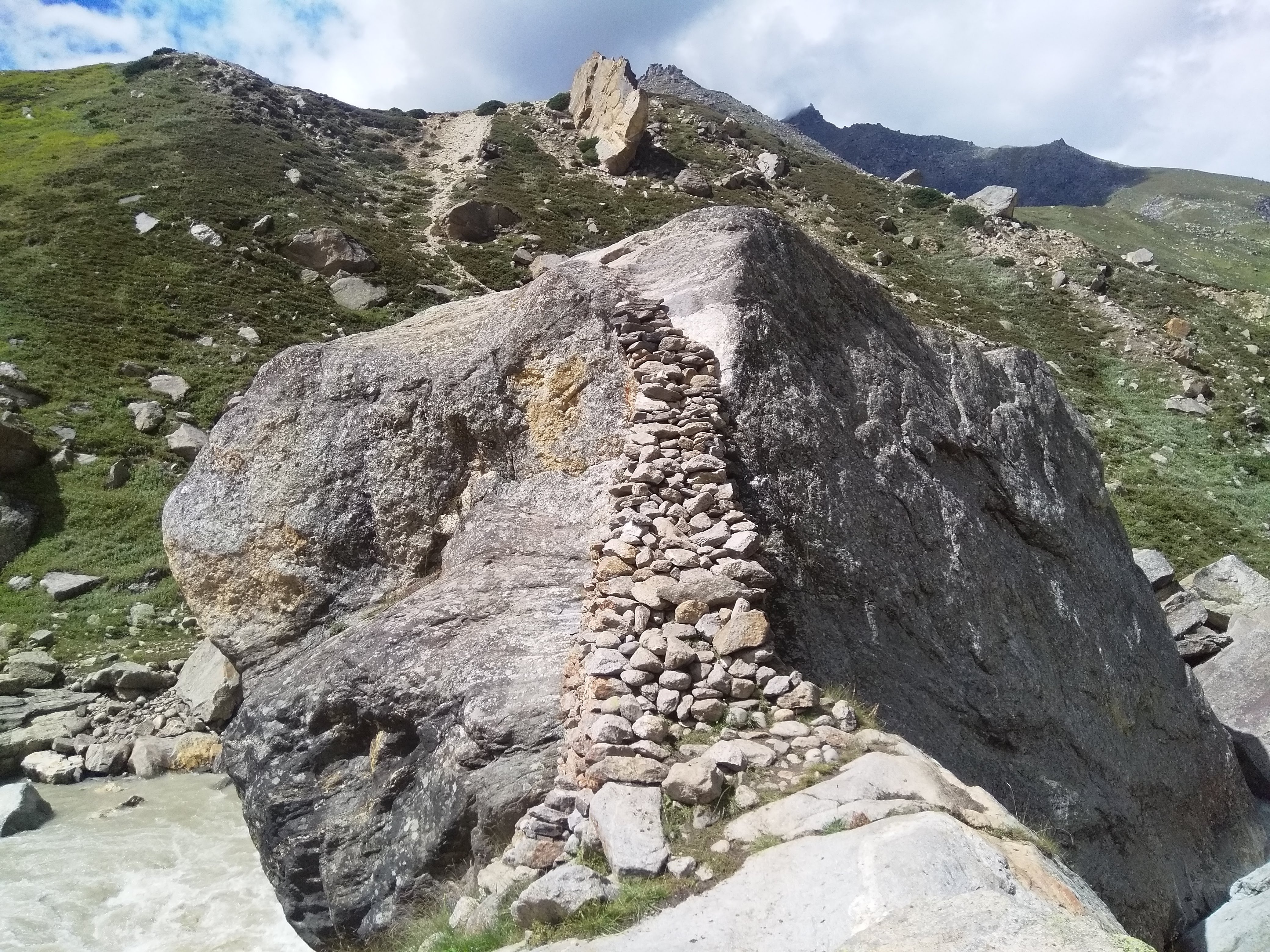
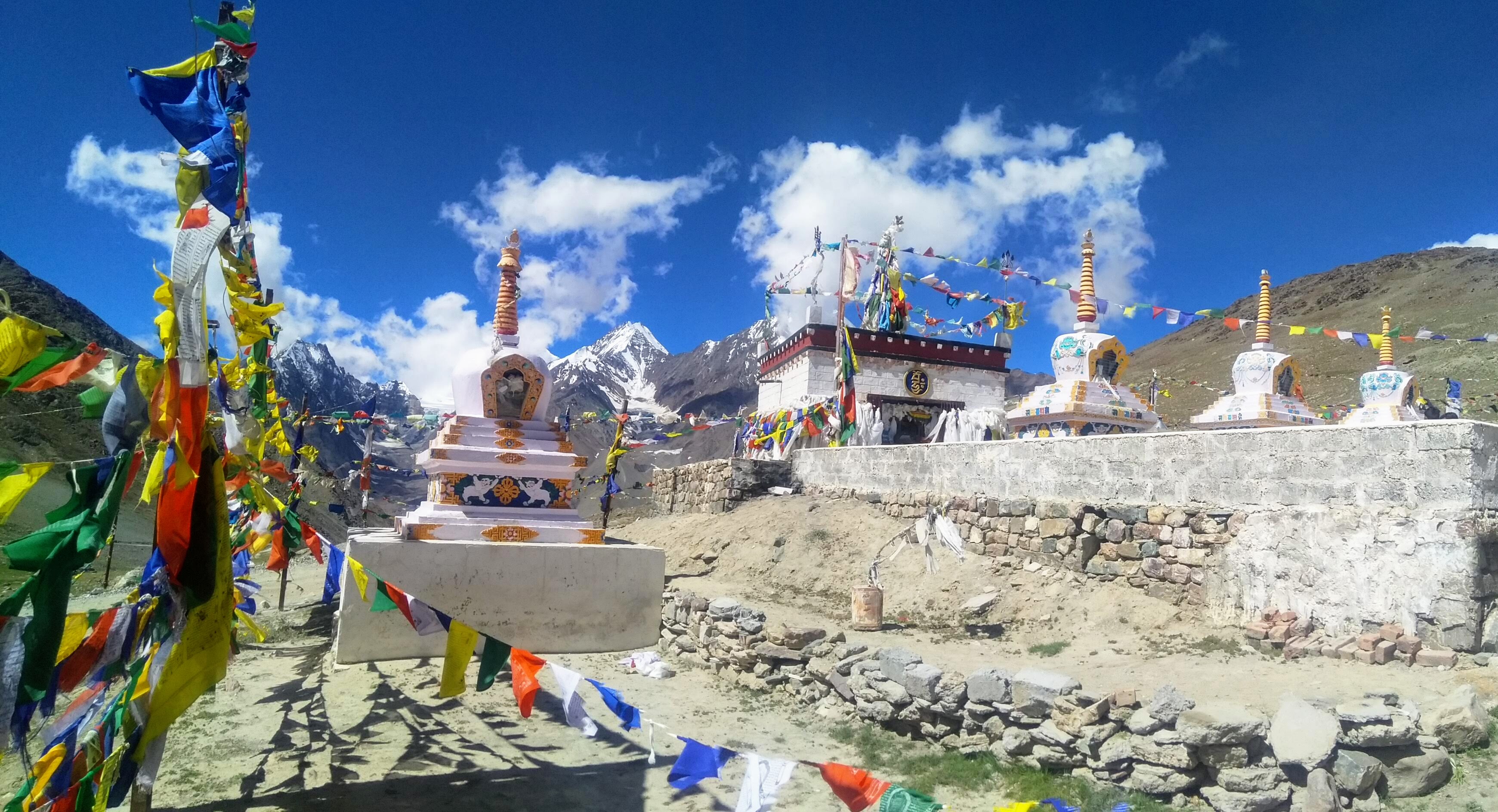
At the entrance to Mantalai stands a Shivling surrounded by colourful prayer flags that dance endlessly in the wind. Nobody rushes past this place. Almost every trekker pauses instinctively. Some offer a silent prayer. Others simply stand there absorbing the scale of what lies before them.
It's one of those places where conversations naturally become quieter.
Not because anyone asks for silence.
Because the landscape somehow demands it.
A Night Beside One of the Most Beautiful Campsites in the Himalayas
That evening we pitched our tents beside the Mantalai basin.
Even after leading several expeditions since then, I still consider it one of the finest campsites I have ever slept at.
There are campsites that are beautiful because of a mountain view. Others because of a lake. Some because of a forest.
Mantalai is different.
It is beautiful because of space.
There is an overwhelming sense of openness that is difficult to describe until you've experienced it yourself. After spending days inside a narrow valley, suddenly camping beside an enormous glacial basin with towering mountains surrounding you in every direction creates a feeling of complete freedom.
As evening approached, the light changed every few minutes. Grey mountains turned golden. Snowfields reflected soft shades of pink. The streams flowing across the basin mirrored the colours of the sky so perfectly that it became difficult to distinguish where the land ended and the reflections began.
Nobody spoke much that evening.
Not because we were exhausted.
Because every one of us was quietly taking in the place.
I often say that some campsites become memories long before you leave them.
Mantalai was one of those places.
As darkness settled over the basin and the temperature dropped sharply, I stepped outside the tent one last time before sleeping.
The stars had appeared.
The mountains had disappeared into darkness.
The only sound left was the distant murmur of the Parvati River beginning another night's journey towards the valley we had walked through over the past week.
Standing there, I realised something that had never crossed my mind before.
Tomorrow we would leave the Parvati Valley.
After spending so many days walking beside its river, sleeping beneath its forests and watching it transform every single day, it almost felt strange to think that another world waited on the other side of the mountains.
But first, there was still one final challenge.
The glacier.
Leaving the Parvati Valley Behind
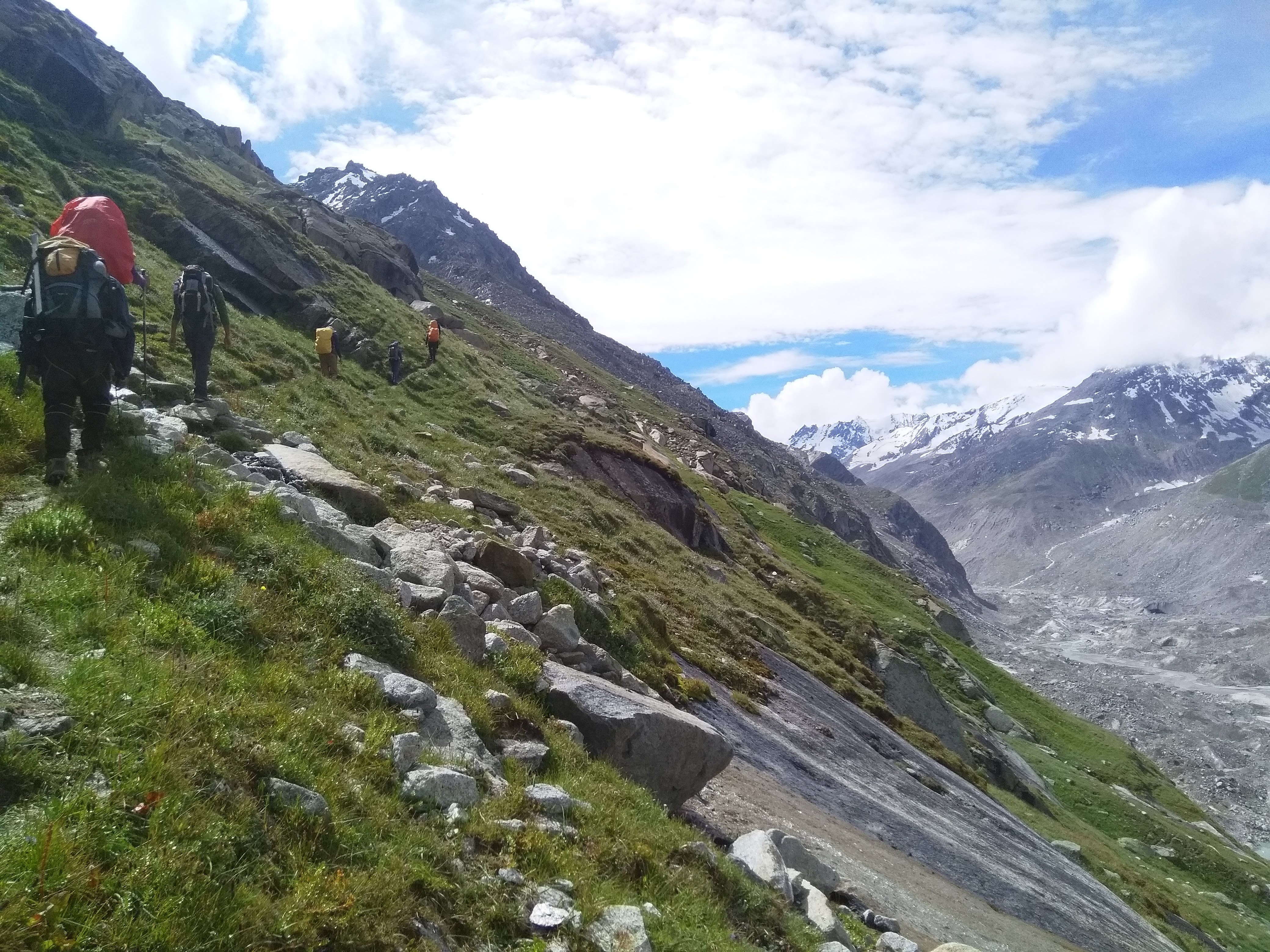
The next morning felt different.
Not because the terrain suddenly became difficult, but because somewhere inside me I knew we were about to say goodbye to the valley that had been our home for the past week.
Every day until now had unfolded inside the embrace of the Parvati Valley. We had watched its forests become meadows, its narrow gorges become wide plains and its restless river slowly guide us towards its own birthplace.
Now the trail asked us to leave it.
For the first time since the trek had begun, we would climb away from the river instead of following it.
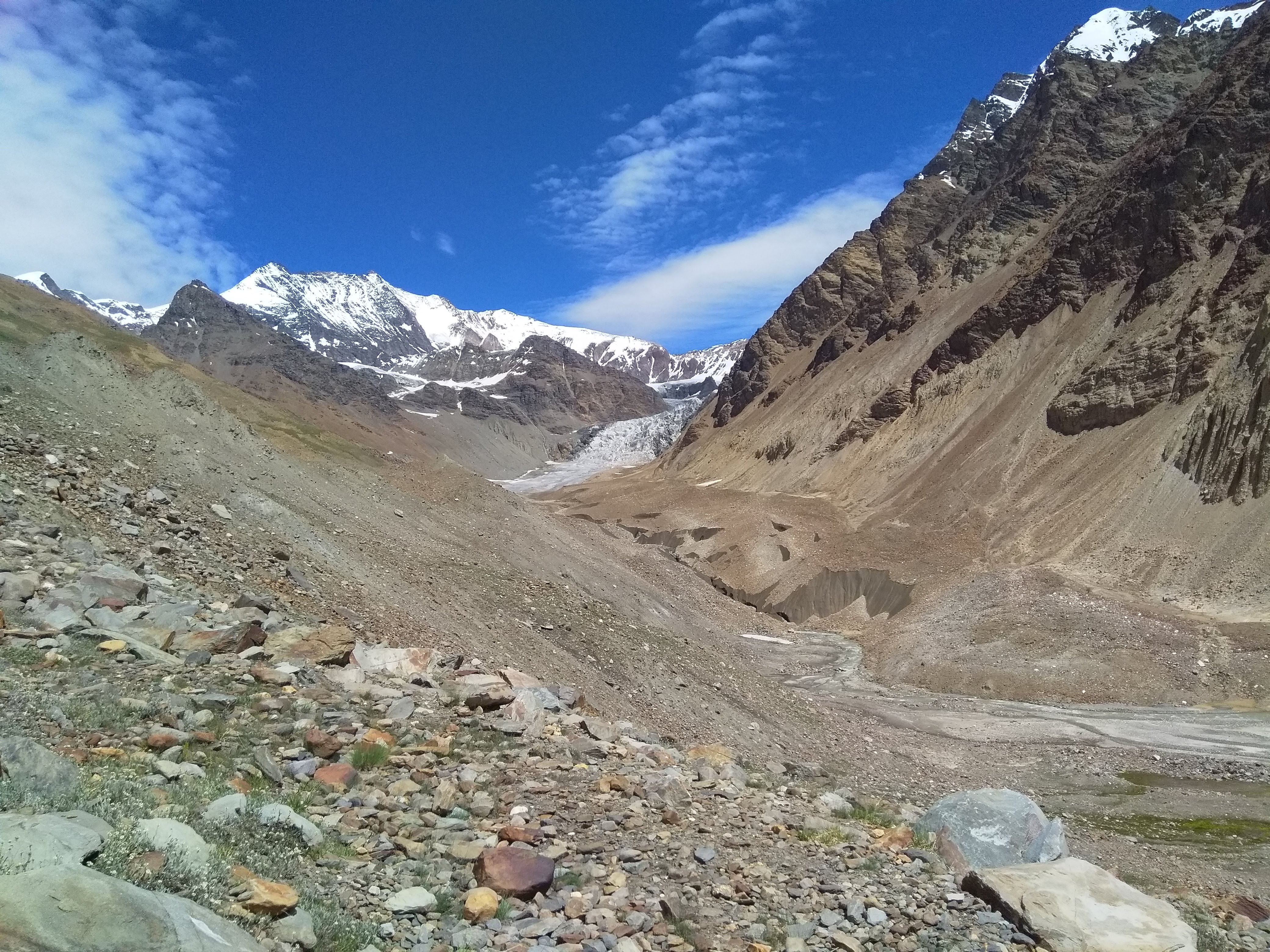
The route leaves the broad Mantalai basin and starts ascending along the valley's lateral moraine. The climb is steady and noticeably steeper than anything we had walked the previous day. Loose rocks replace grassy ground, and the landscape begins looking younger, harsher and more glacial with every step.
Above us stood an enormous cliff, weathered by thousands of winters. Below, Mantalai slowly shrank into a silver patch against the endless valley floor. The higher we climbed, the more unreal the view became.
I remember turning around repeatedly.
Not because I was tired.
Because I knew this would be my last full view of the Parvati Valley.
Then came one final bend.
The trail curved left around the moraine.
And just like that...
The valley disappeared.
It wasn't gradual.
One moment the entire valley stretched behind us.
The next moment it had vanished completely, hidden behind rock and ice.
It felt almost symbolic, as though the mountains had quietly closed the door behind us.
The Glacier Comes Into View
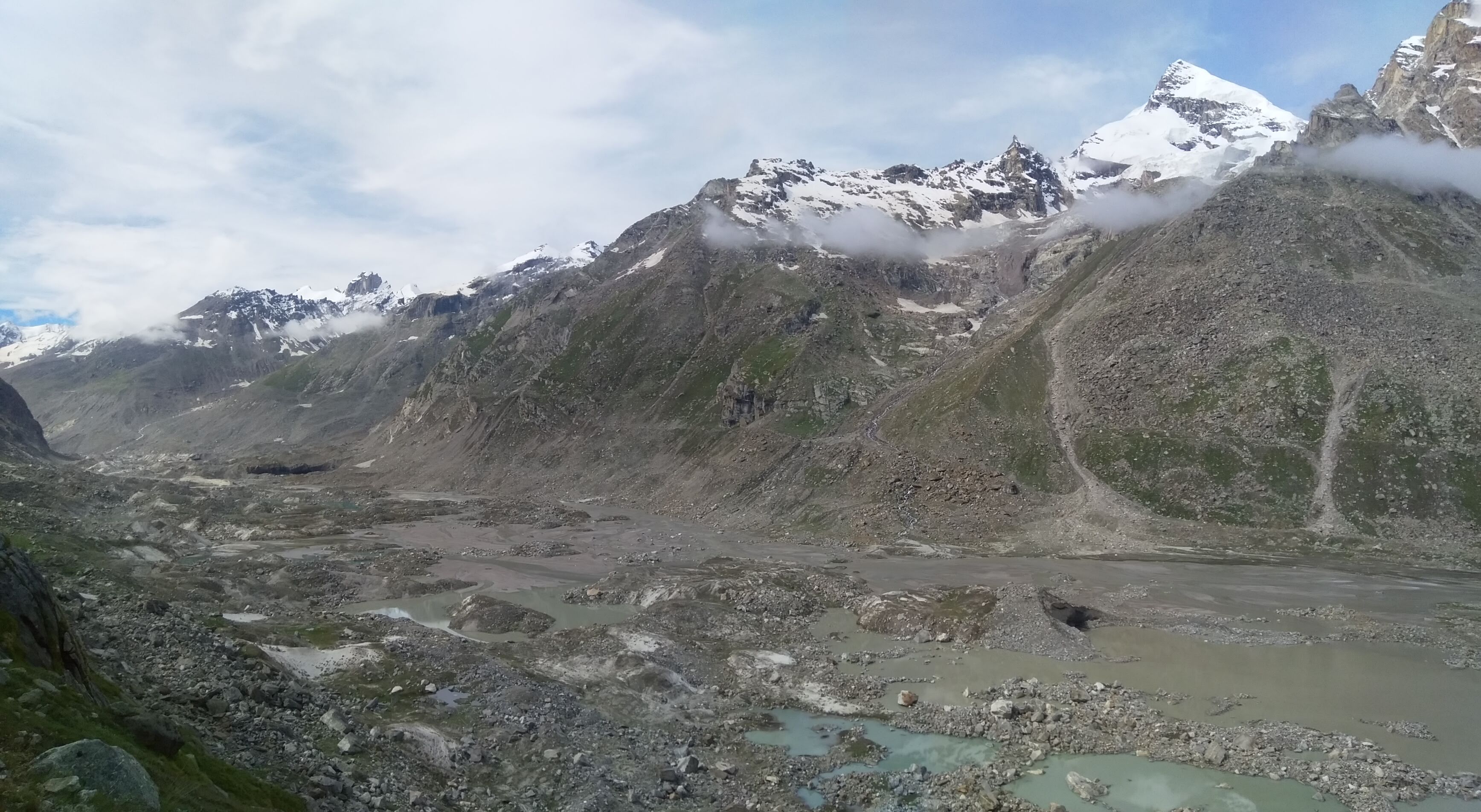
Beyond the moraine, the world changed once again.
The greens of the Parvati Valley were gone.
The waterfalls were gone.
The forests were gone.
Ahead lay nothing but rock, snow, ice and sky.
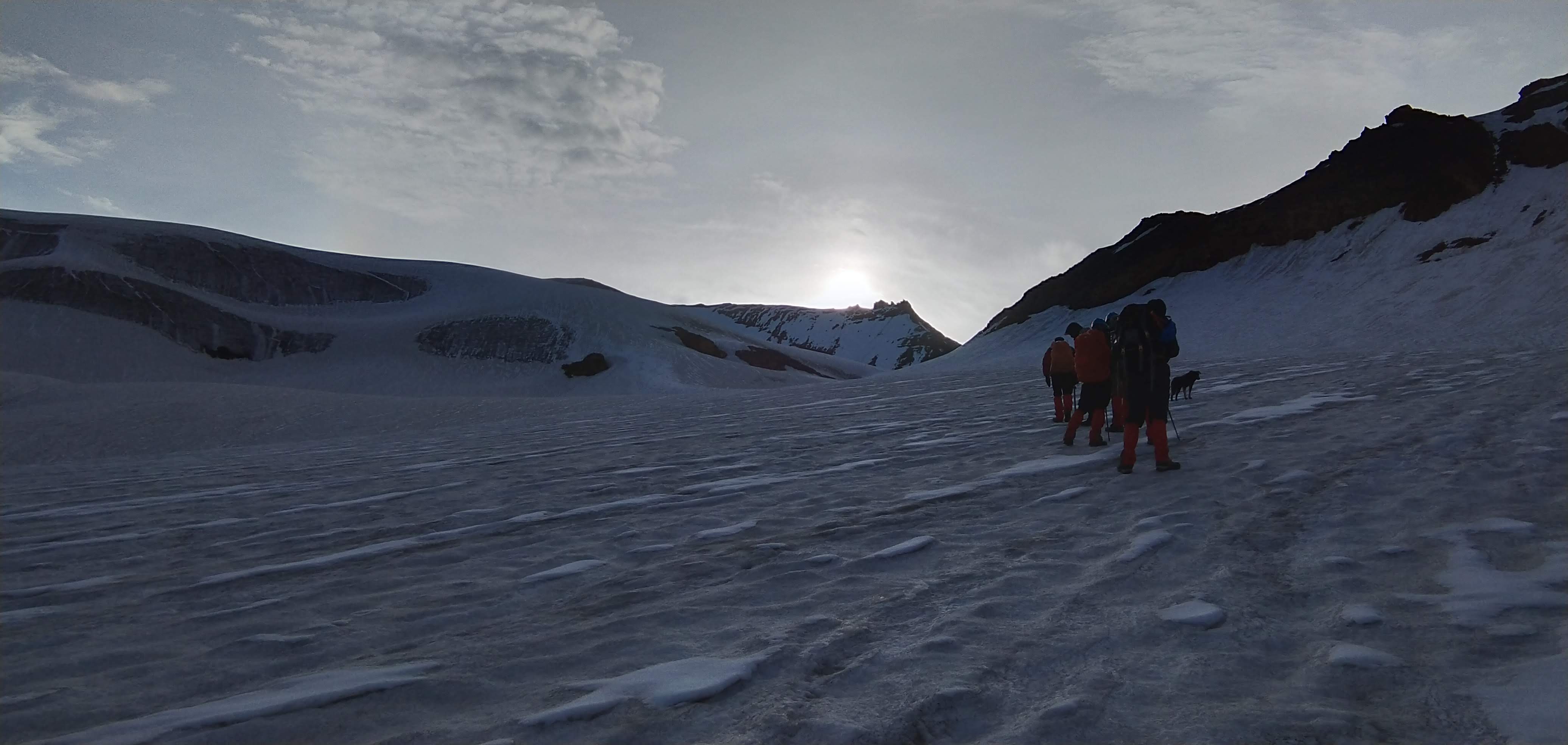
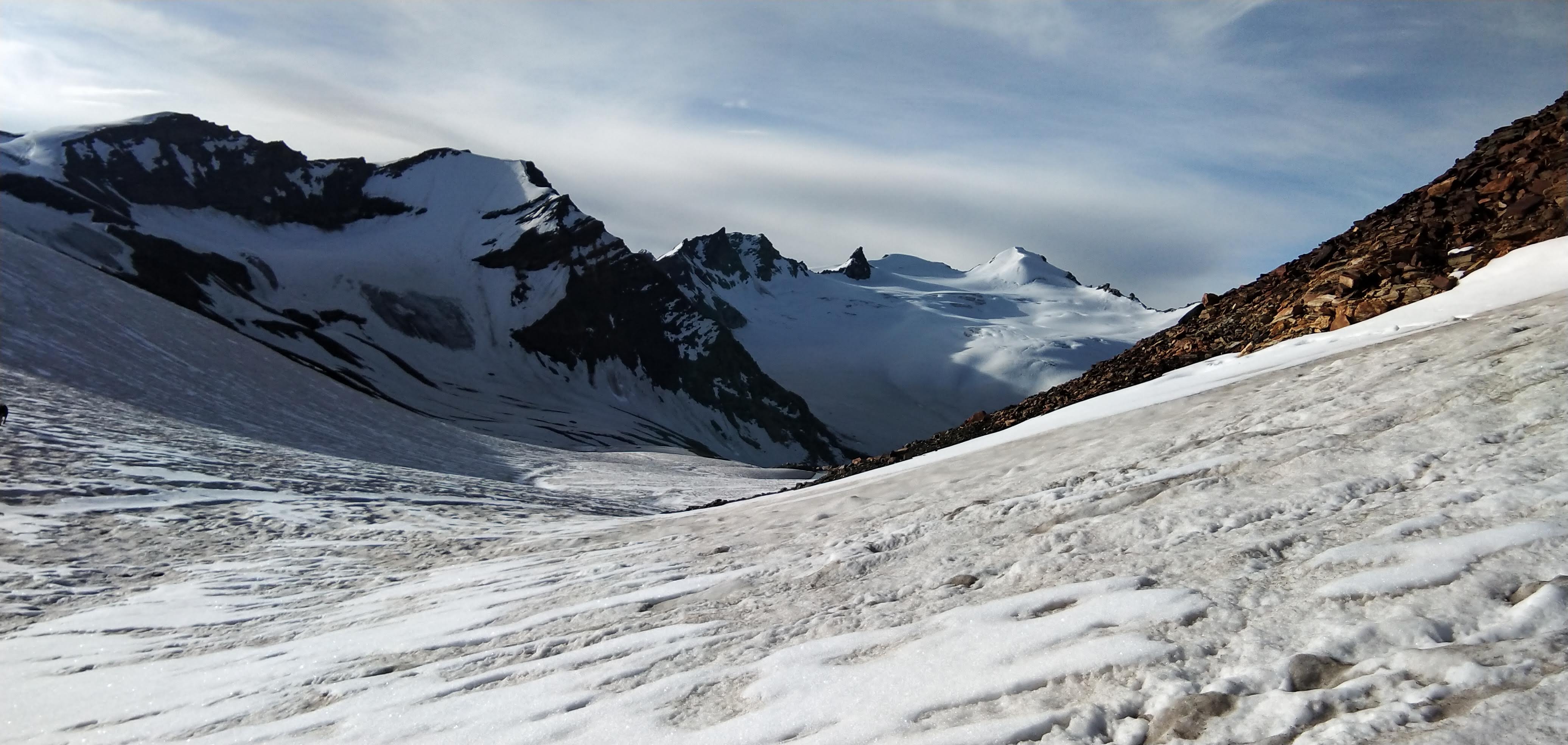
The glacier appeared gradually, not as a dramatic wall of ice but as an immense frozen landscape stretching across the head of the valley. Standing beneath it for the first time, I finally understood why this trek carries so much respect among experienced trekkers.
Everything around us now had a raw, unfinished appearance.
The mountains looked sharper.
The air felt thinner.
The silence became deeper.
Even our footsteps sounded different as they echoed across loose moraine.
Our final campsite before the pass sits at the foot of this glacial world. It isn't particularly scenic in the conventional sense. There are no forests or lakes to admire. Instead, there is a quiet sense of anticipation shared by everyone in camp.
Nobody needs to ask what tomorrow brings.
Everyone knows.
Tomorrow is the day of the pass.
The Pass You Almost Forget About
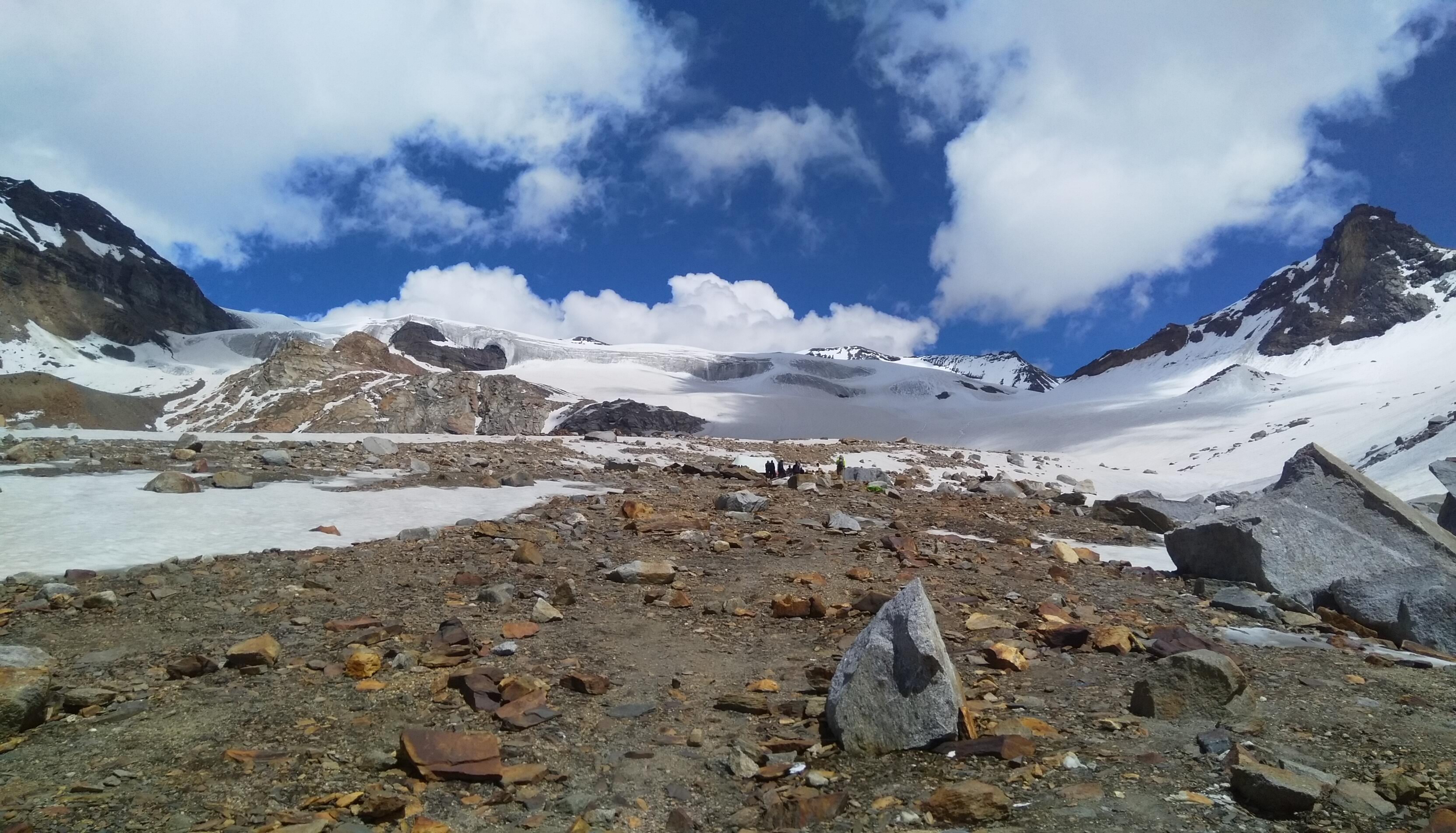
This might sound strange, but one of the things I love most about Pin Parvati is that by the time you reach the final campsite, you've almost forgotten about the pass itself.
Think about that for a moment.
On most expeditions, the pass is the goal from the very first day. Every conversation revolves around reaching it. Every climb is measured against how much closer it brings you to the summit.
Pin Parvati doesn't work that way.
The journey is so rich, so constantly changing and so full of unforgettable experiences that the pass quietly slips into the background. You're too busy admiring forests, crossing rivers, exploring hidden valleys and absorbing one spectacular campsite after another.
Then suddenly, one evening, someone casually says, "Tomorrow we cross the pass."
And it almost catches you by surprise.
Only then do you realise that the highest point of the entire expedition is now just a few hours away.
Crossing Pin Parvati Pass
Summit morning begins early.
Long before sunrise, tents begin stirring. Headlamps appear one by one in the darkness as everyone quietly prepares for the biggest day of the expedition. There is very little unnecessary conversation. After spending nearly a week together, every member of the team understands the routine.
The air is cold enough to numb your fingers within minutes.
Backpacks are checked one final time.
Boots are tightened.
The first light slowly touches the surrounding peaks.
And then we begin walking.
The climb itself isn't technically the most difficult section of the trek. The terrain is surprisingly straightforward compared to what many people imagine. It is mostly a steady ascent over moraine, snow and glacial terrain without prolonged exposure or complex scrambling.
The real challenge is the altitude.
Every step reminds you that you're now well above five thousand metres.
You breathe more often.
You slow down naturally.
Nobody races.
Nobody needs to.
These mountains reward patience, not speed.
Roughly two to three hours after leaving camp, the slope eases.
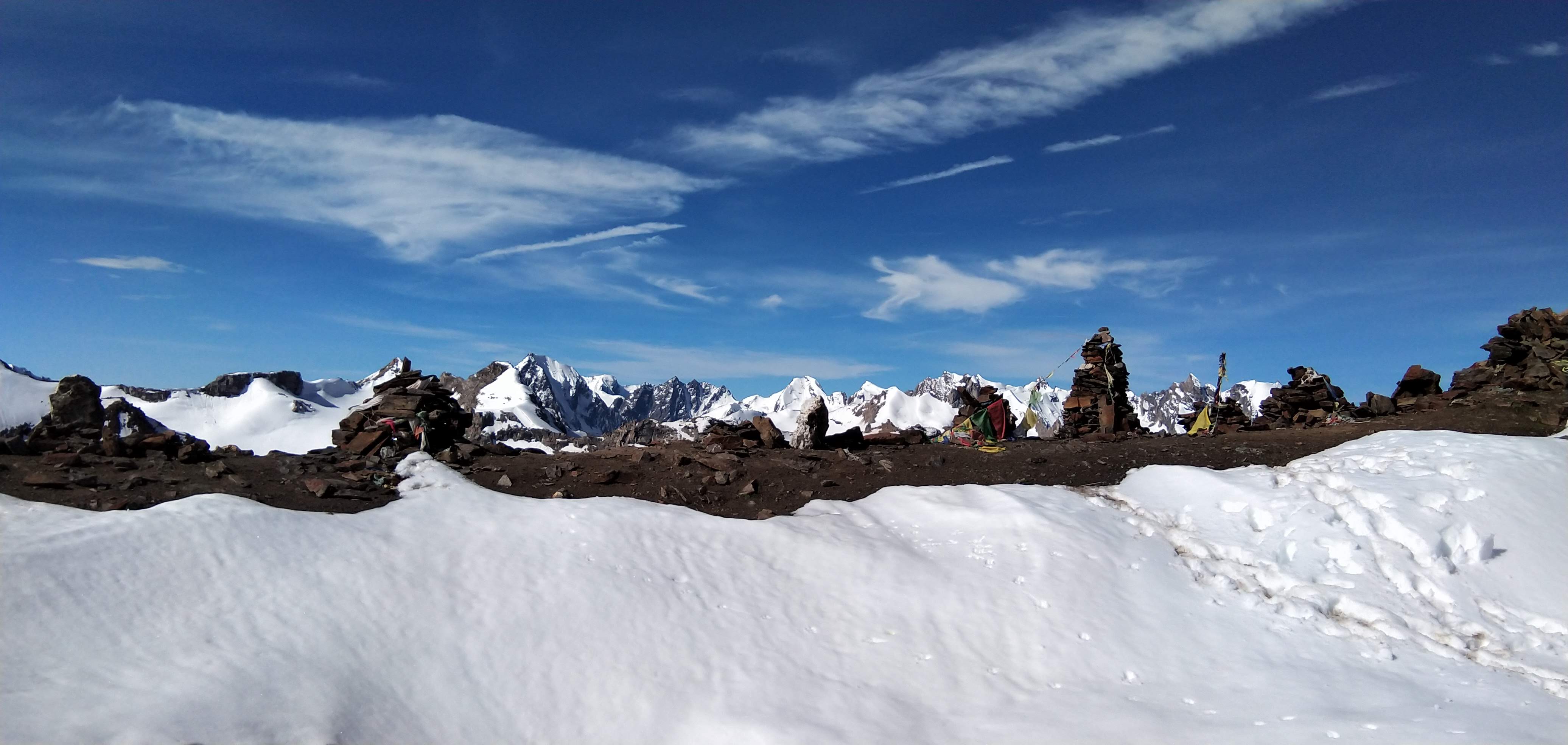
The prayer flags appear.
And almost without fanfare...
You're standing on Pin Parvati Pass.
There is no dramatic finish line.
No applause.
No celebration organised by the mountains.
Just a quiet understanding among everyone present that they have earned the right to stand there.
I remember looking back towards the direction we had come from.
Somewhere beyond those glaciers lay the forests of Parvati Valley.
Ahead stretched an entirely different world.
Spiti.
In that moment, I wasn't thinking about completing a difficult trek.
I was thinking about everything the previous week had given us.
The pass wasn't the highlight.
It was simply the perfect conclusion to an unforgettable journey.
The First Glimpse of Spiti
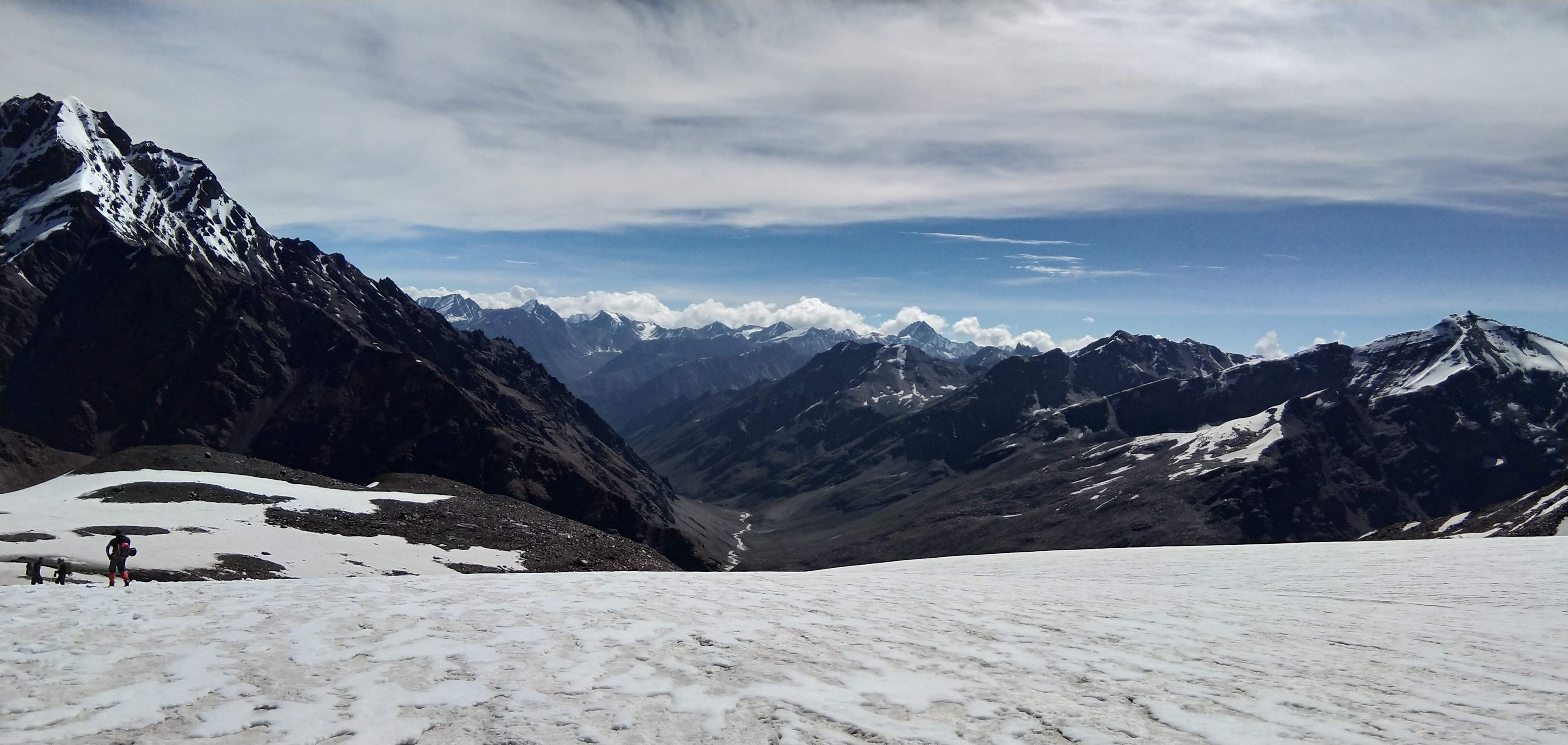
People often ask me what it feels like to stand on Pin Parvati Pass.
My answer usually surprises them.
It isn't the altitude that stays with me.
It isn't even the sense of achievement.
It's the first view of Spiti.
You spend nearly a week walking through one of the greenest valleys in the Himalayas. Every day you're surrounded by forests, meadows, waterfalls and a river that seems to breathe life into everything around it. Green becomes your normal.
Then you turn around.
And everything changes.
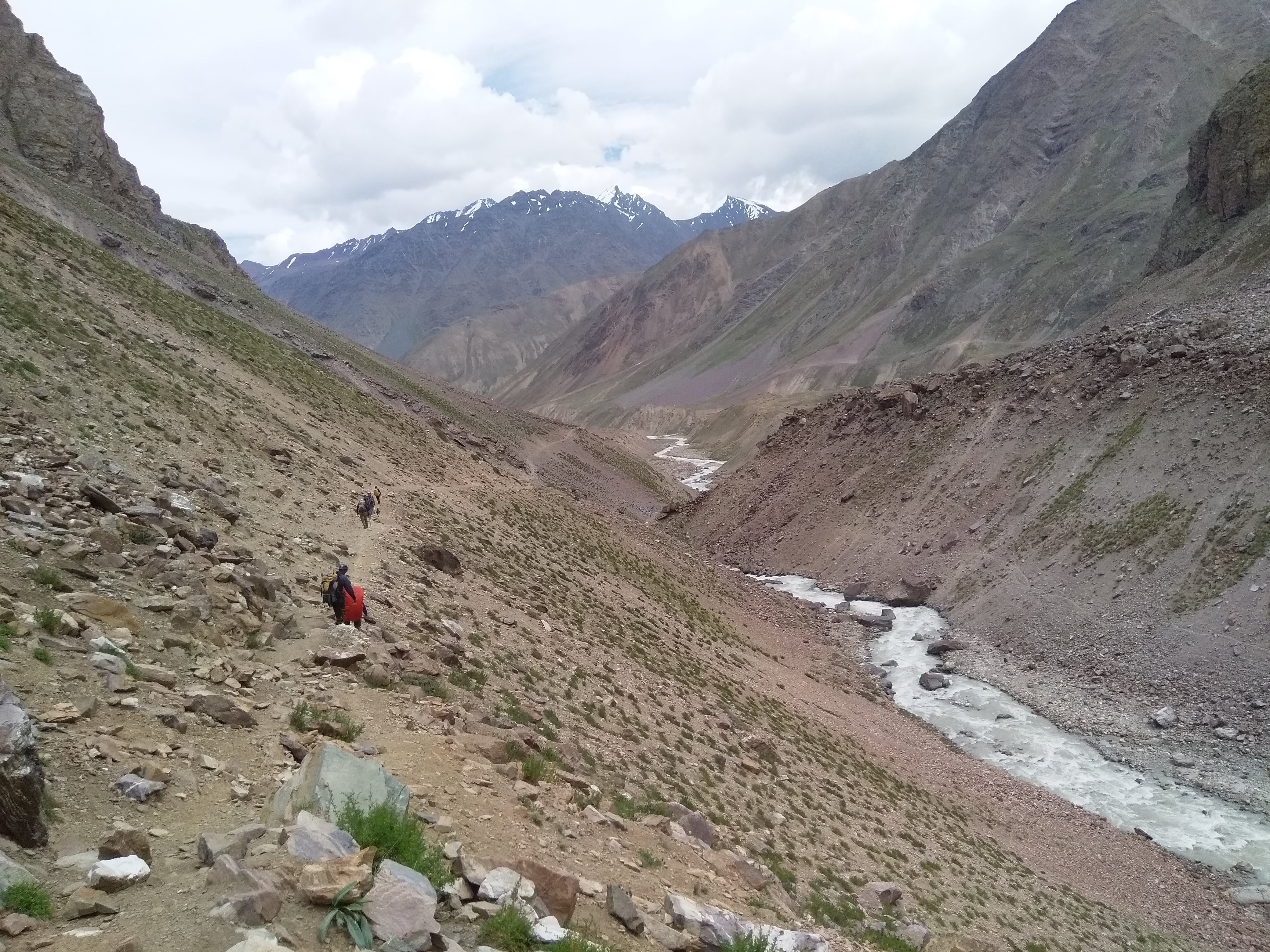
The mountains on the Spiti side look as though they belong to another planet. Gone are the forests and towering deodars. Gone are the lush slopes covered in grass. Before you stretches an endless landscape of rock, scree, snow and mountains painted in shades of brown, ochre, purple and grey.
The transition is so sudden that it almost feels impossible.
It's difficult to believe that two valleys separated by a single mountain pass can be so completely different from one another.
Standing there, I finally understood why people often describe this trek as a journey between two worlds rather than a simple mountain crossing.
The Descent Begins
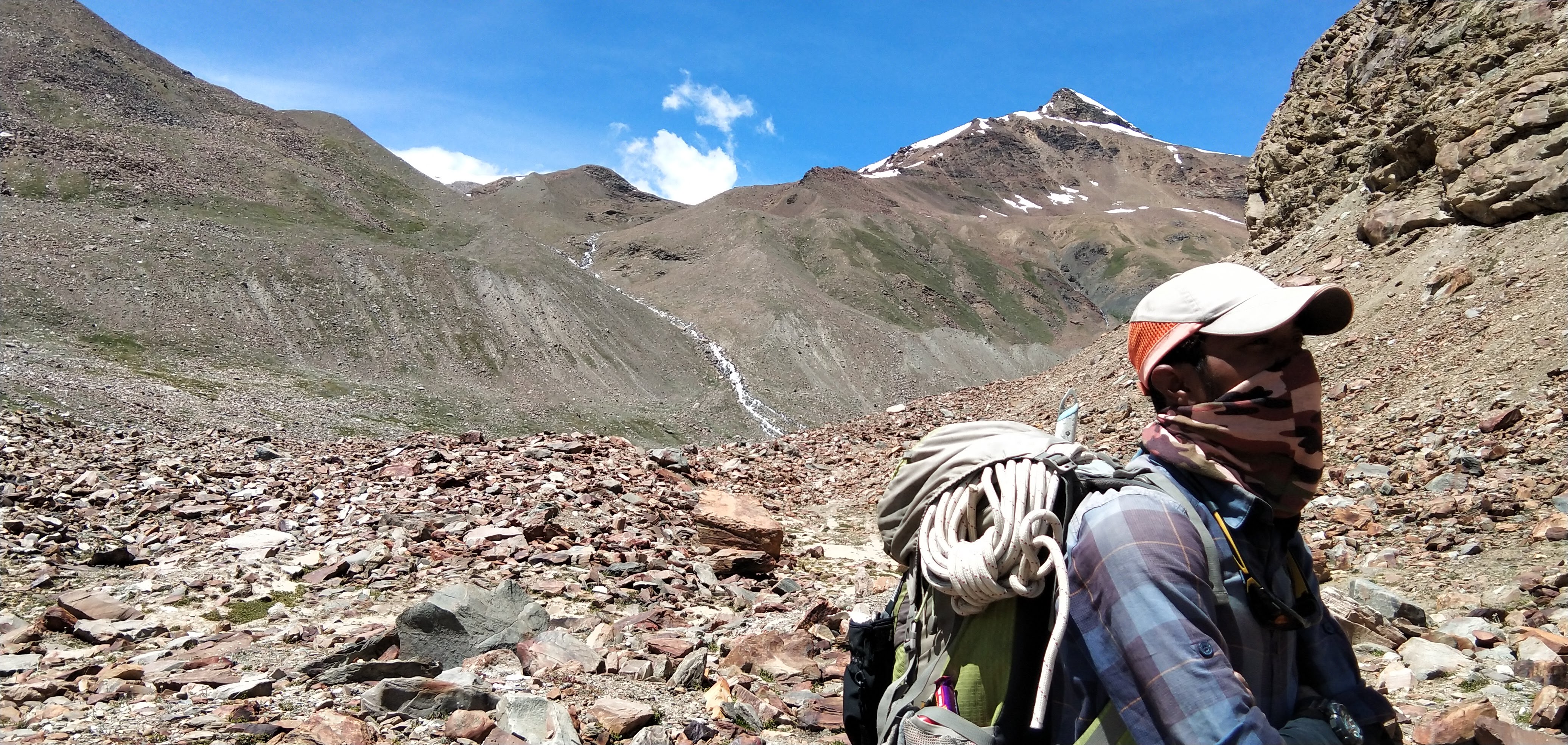
Like every high mountain pass, reaching the top is only half the journey.
The descent towards Pin Valley begins immediately and, for the first hour or so, it demands complete concentration. The slope is noticeably steeper than the approach from the Parvati side. Loose rocks shift beneath your boots, patches of snow linger well into the trekking season and the trail constantly reminds you that carelessness has no place in high mountains.
Yet I never found this section frightening.
It simply demanded respect.
As always, we maintained our rhythm. Slow, steady and together.
Gradually the gradient eased, the rocks became less chaotic and the valley began revealing itself. Every few hundred metres another layer of the Pin Valley unfolded beneath us, each one looking drier, wider and more dramatic than the last.
It felt as though the mountains were introducing us to an entirely new expedition.
Meeting the Pin River
Eventually we reached the Pin River.
After spending days beside the mighty Parvati, it almost felt like meeting the quieter sibling of an old friend.
Depending on the season, this crossing changes completely. Early in the trekking window, a snow bridge may still span the river, allowing trekkers to cross over frozen snow that has somehow survived the summer. Later in the season, the bridge disappears and everyone steps directly into the icy glacial water.
Neither experience is something you'll forget.
If the snow bridge exists, every footstep carries a mixture of curiosity and caution.
If it doesn't, the water immediately reminds you where it comes from.
It is unbelievably cold.
The kind of cold that shoots through your legs within seconds and makes you instinctively quicken your pace.
Nobody lingers in the middle.
Once across, boots go back on quickly, people laugh at each other's expressions and the journey continues.
These little moments rarely appear in itineraries, but they're often the memories that stay with you the longest.
Another Night, Another World
Our second base camp felt nothing like the one we had left behind that morning.
Less than a day earlier we'd been camped beside the lush Mantalai basin with streams flowing through green meadows. Now we stood surrounded by the vast openness of the Pin Valley, where vegetation had almost disappeared and colourful mountains stretched endlessly in every direction.
It honestly felt unreal.
As I sat outside my tent that evening, I found myself replaying the previous week in my mind.
The forests.
The waterfalls.
The river crossings.
The hidden valleys.
The shepherds.
The Mantalai basin.
The glacier.
And now this.
It was difficult to believe that all of it belonged to a single trek.
I've completed expeditions where every day looked similar.
Pin Parvati wasn't one of them.
Even after crossing the pass, the mountains still had new landscapes waiting.
Walking Towards Wichkurung Thach
The following day is one that doesn't receive nearly enough appreciation.
Most trekkers are still mentally celebrating the successful crossing of the pass, but the walk towards Wichkurung Thach quietly becomes another highlight of the expedition.
This is where the famous Pin Bhaba Pass trail joins the route from Kinnaur. For trekkers who know Himalayan routes, it's an interesting intersection of two remarkable expeditions.
The walking itself is relatively gentle compared to what you've already accomplished. There are no intimidating climbs left. The trail follows the broad valley, allowing you to finally relax and absorb the scenery without constantly thinking about altitude or difficult terrain.
Some groups choose to camp here for the night.
Others continue further towards Mudh if time, weather and the team's condition permit.
Either option works.
There is no wrong decision here.
The mountains continue rewarding you either way.
A Landscape Painted in Colour
If Parvati Valley is remembered for its shades of green, Pin Valley is remembered for its colours.
Brown isn't just brown here.
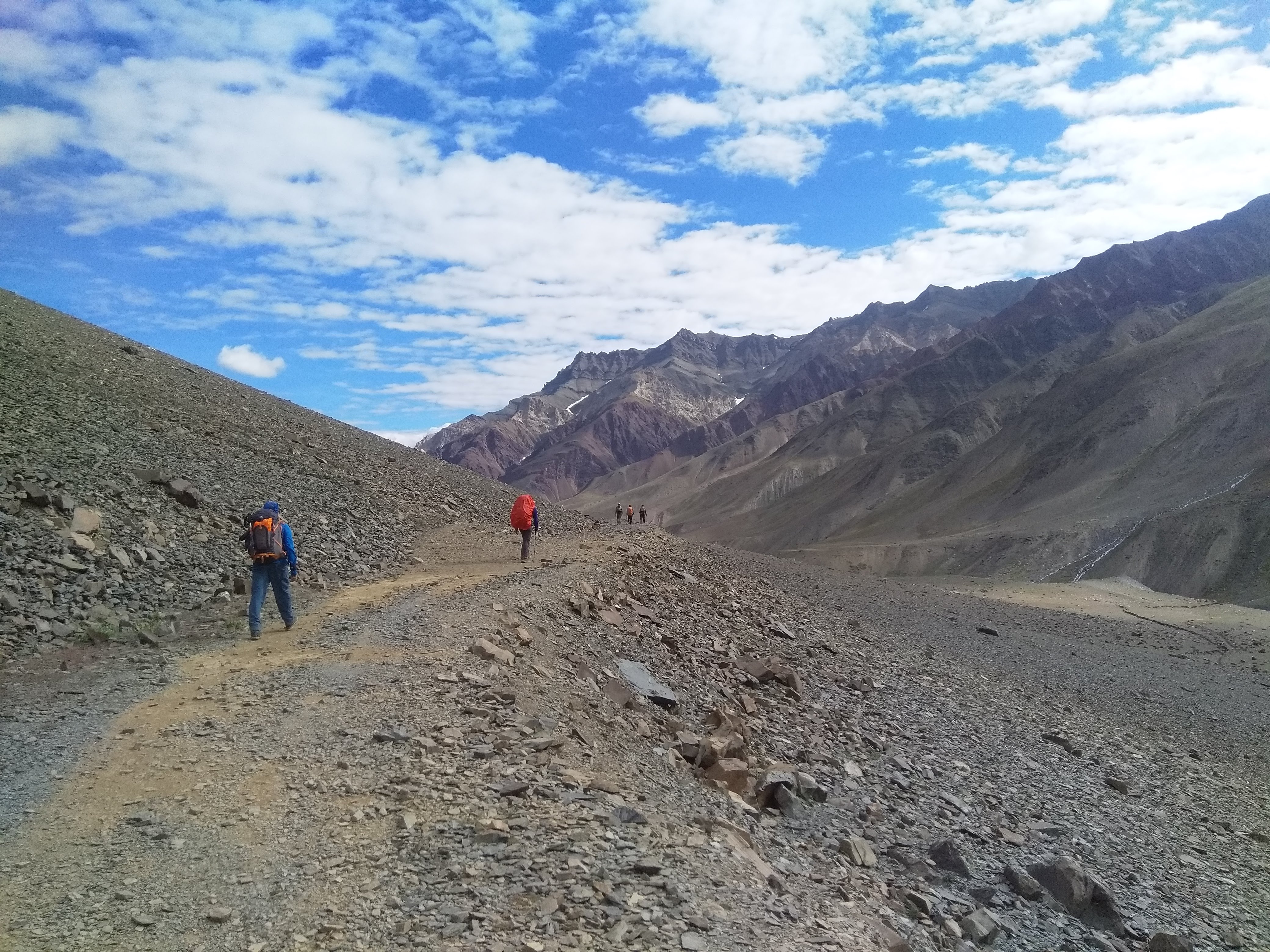
The mountains carry layers of ochre, rust, crimson, ash grey, lavender and deep chocolate, changing constantly with the movement of sunlight.
Every hour feels like someone quietly repainting the valley.
The Pin River winds confidently through the middle, fed by countless tributaries rushing down impossibly steep mountain slopes. Many of these streams still need to be crossed, reminding you that although the expedition is nearing its end, the mountains aren't quite finished testing your attention.
I often found myself stopping for no particular reason.
Not to rest.
Simply to look.
There are landscapes that impress you immediately.
And there are landscapes like Pin Valley that slowly grow on you until you suddenly realise you've been staring at the mountains for several minutes without saying a word.
Even today, I'm not sure which stretch I prefer more—the lush mystery of the Parvati Valley or the vast silence of the Pin Valley.
Perhaps that's exactly why this expedition remains my favourite.
It never asks you to choose.
The Walk to Mudh – When the Trek Refuses to End Quietly
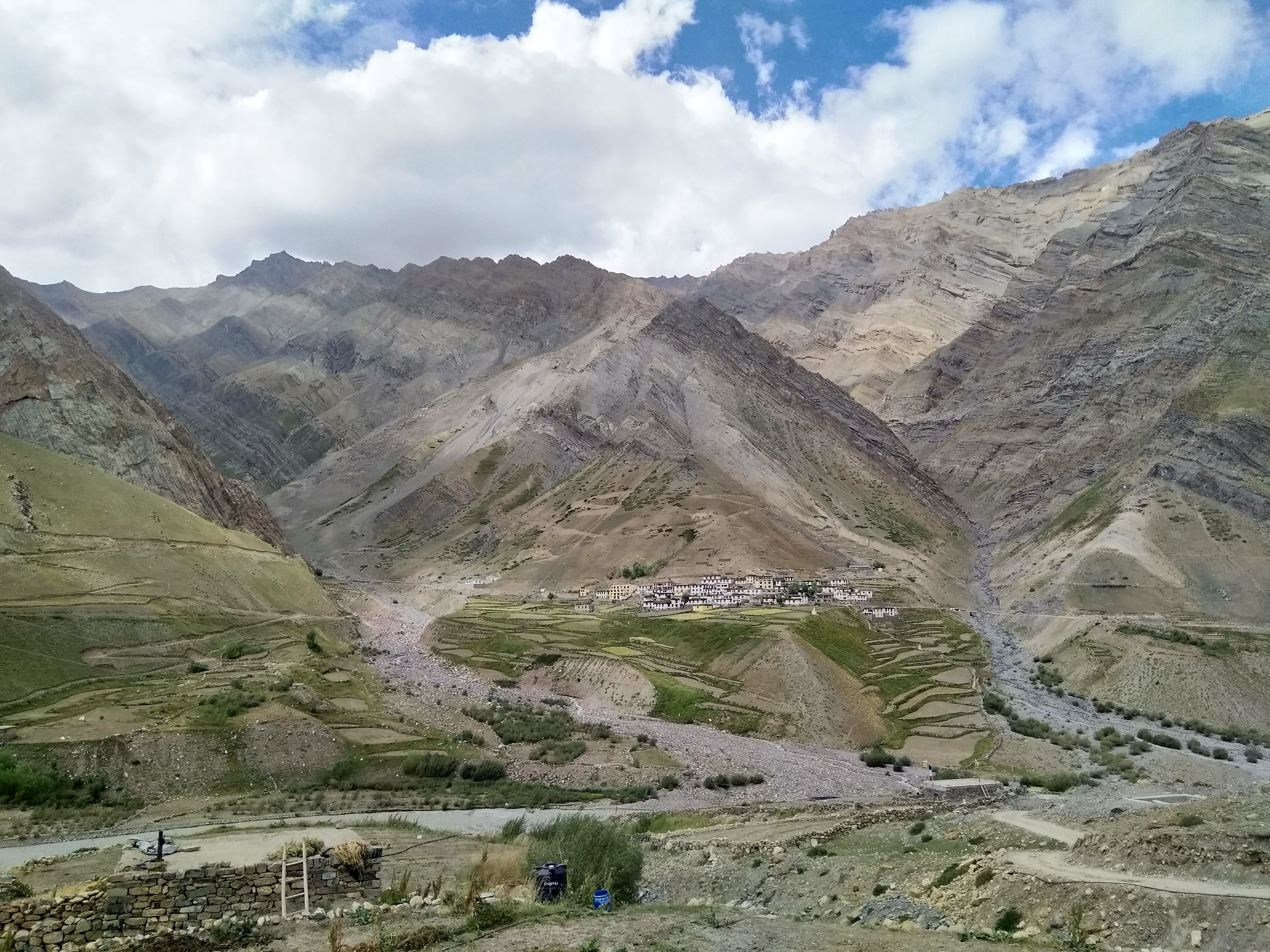
By this point, you might think the expedition has shown you everything it possibly can.
You would be wrong.
One of the reasons I consider Pin Parvati Pass to be India's finest trekking expedition is because it never seems to run out of surprises. Even after crossing the pass, even after entering Spiti, even after believing you've witnessed every possible landscape, the valley quietly unfolds another masterpiece.
The walk towards Mudh is technically easy. Compared to everything you've already crossed, it almost feels like a leisurely stroll. There is very little climbing left. The trail gradually merges with a rough motorable road that eventually connects the remote villages of the Pin Valley.
But don't let the simplicity of the trail fool you.
This is one of the most beautiful walks of the entire expedition.
The valley becomes incredibly broad. Colourful mountains rise on both sides like giant walls sculpted over millions of years. The Pin River continues flowing confidently through the middle, constantly fed by icy tributaries crashing down from hidden glaciers high above.
Every few kilometres another stream crosses your path. Some require stepping carefully over rocks. Others demand removing your boots one final time before letting the freezing water remind you that these mountains are still very much alive.
At one point, you begin wondering whether this stretch is actually more beautiful than everything you've already walked through.
Then you remember thinking exactly the same thing yesterday.
And the day before that.
That, perhaps, is the greatest compliment I can give this trek.
There is never a dull day.
There is never a section that feels like you're simply walking to reach the next campsite.
Every day earns its place in your memory.
The Pagal Nala
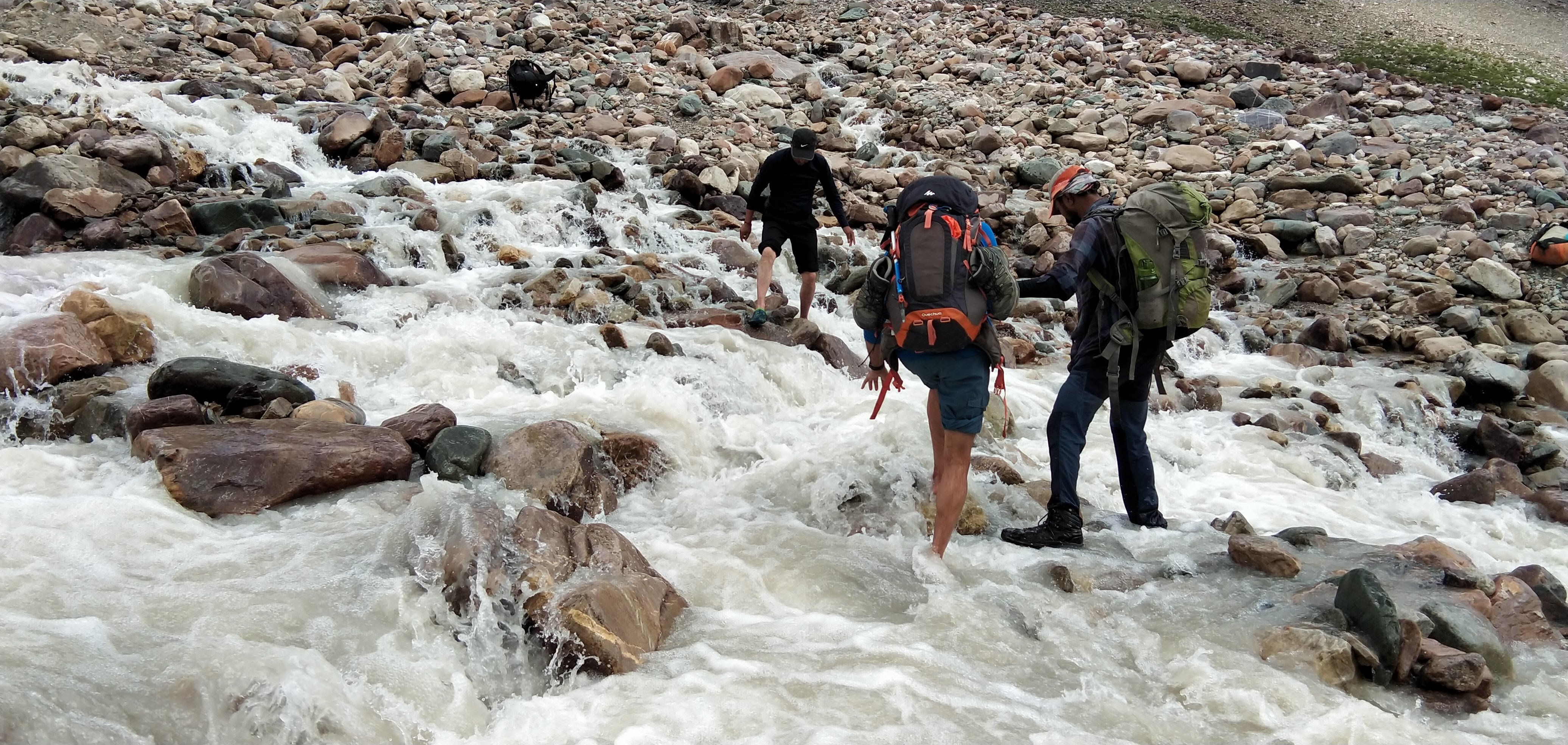
One name you'll often hear in this section is Pagal Nala.
The name itself tells you something.
Pagal means mad.
And like many mountain streams, this one has earned that reputation.
Vehicles from Mudh often attempt to drive further up the valley to shorten the walk for trekkers. Whether they succeed depends entirely on the mood of the stream. During periods of heavy snowmelt or after rainfall, Pagal Nala becomes completely impassable, forcing vehicles to stop well before the usual pickup point.
It's another reminder that in these mountains, nature always dictates the schedule.
You can plan everything else.
You cannot plan the rivers.
Mudh – A Village Worth Staying For
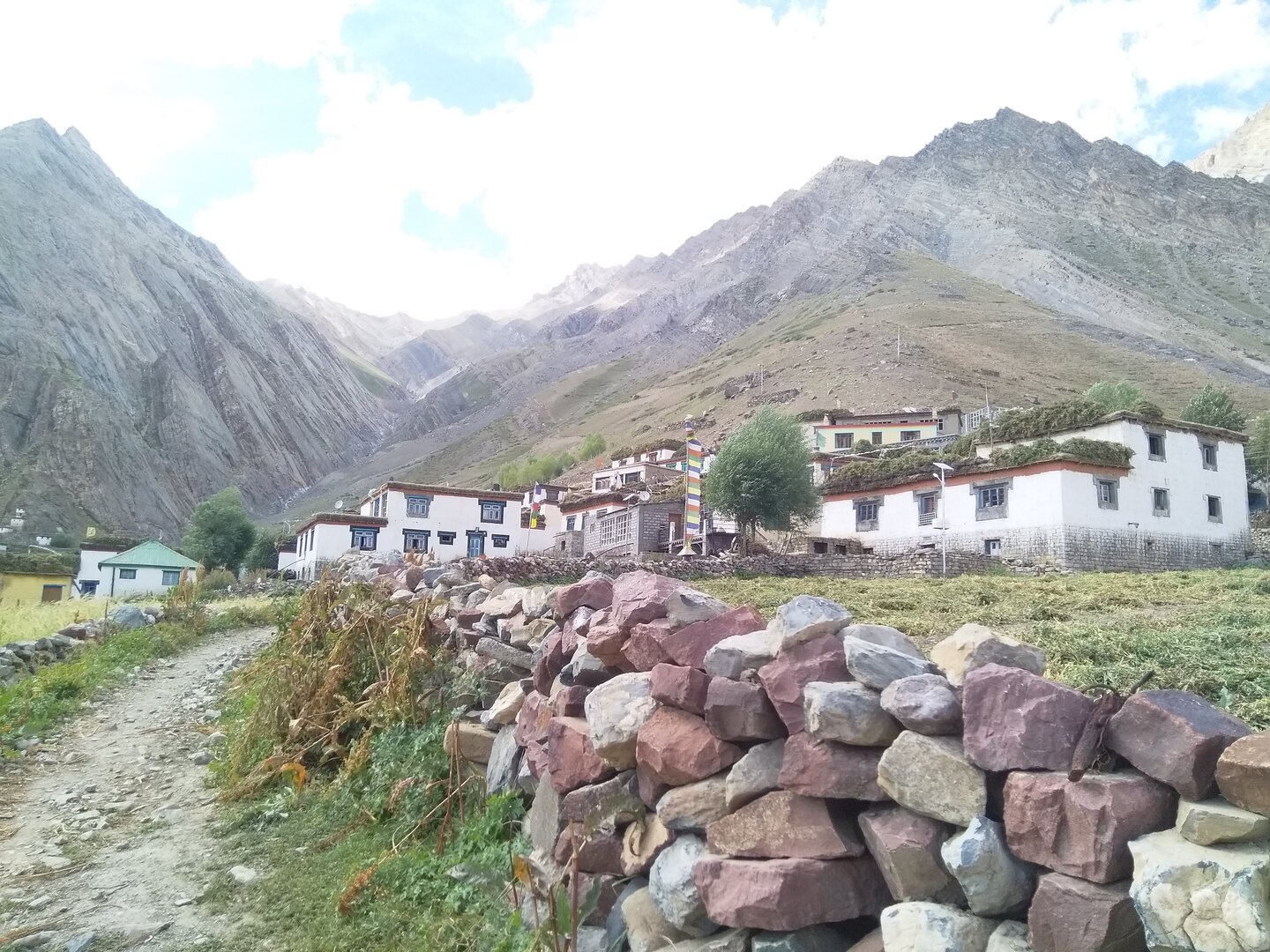
Eventually, after days of wilderness, the first signs of Mudh begin appearing in the distance.
At first you notice cultivated fields.
Then whitewashed houses.
Then colourful prayer flags fluttering between rooftops.
And suddenly, civilisation returns.
Mudh is one of those Himalayan villages that instantly makes you slow down. It isn't large. It isn't busy. It doesn't try to impress anyone.
It simply exists in perfect harmony with its surroundings.
Stone houses stand against a backdrop of barren mountains that glow differently every hour as the sun moves across the valley. Narrow lanes wind between homes. Small cafés welcome tired trekkers with warm food and endless cups of tea. Children wave curiously while locals continue with their daily routines, almost unfazed by the occasional trekking group arriving after days in the wilderness.
After spending nearly ten days surrounded almost entirely by mountains, rivers and campsites, Mudh feels less like reaching a destination and more like returning gently to the human world.
I always encourage people not to rush through it.
Walk around.
Sit quietly.
Talk to the locals if you get the opportunity.
These villages are as much a part of the Himalayan experience as the passes themselves.
If You Have Time, Don't Stop Here
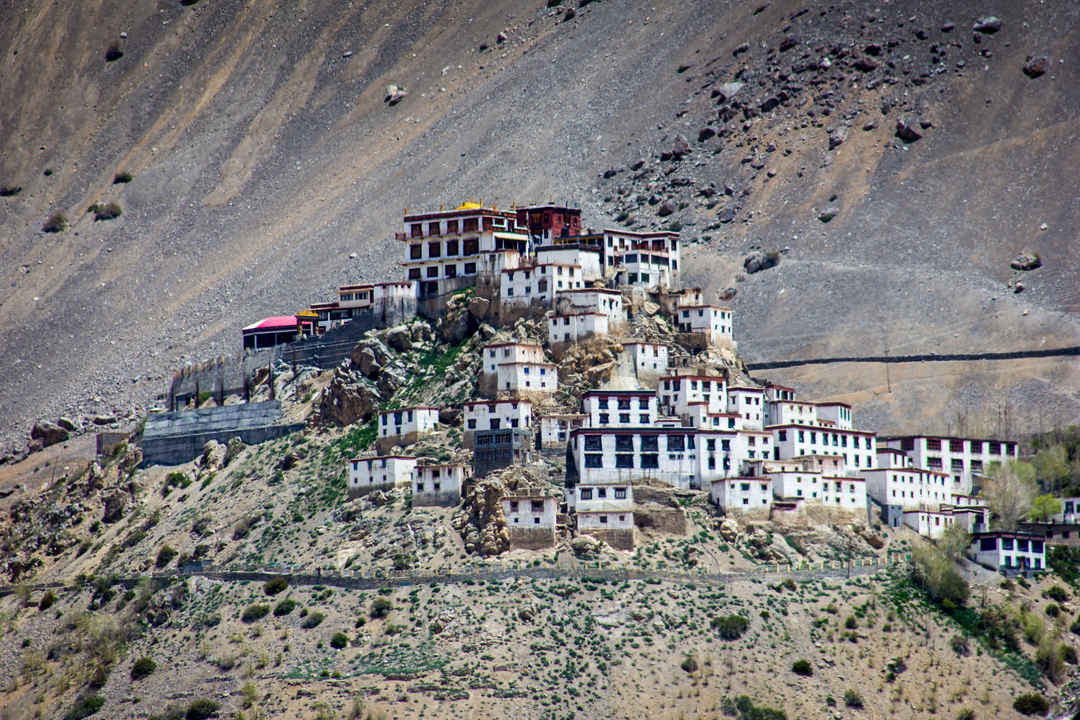
For many trekkers, Mudh marks the official end of the expedition.
Personally, I think it should be the beginning of another short adventure.
If your schedule allows, spend a little more time exploring Spiti.
Drive towards Kaza.
Visit Kibber.
Watch the landscape continue changing yet again.
After spending days crossing one of the most diverse trekking routes in the Himalayas, rushing straight back home almost feels unfair to yourself.
Spiti deserves a few extra days.
So do you.
The Journey Back to Manali
The drive back to Manali isn't simply transportation.
It's the final chapter of the expedition.
The road climbs towards Kunzum Pass before descending through some of the most iconic landscapes in Himachal Pradesh. Even though the trek has officially ended, the scenery refuses to let your attention drift.
Then comes a place every mountain traveller knows.
Batal.
And more specifically...
Chacha-Chachi Dhaba.
After days of eating on the trail, a simple plate of hot food or a bowl of Maggi somehow tastes extraordinary. Perhaps it's the cold mountain air. Perhaps it's the exhaustion. Or perhaps some places simply become legendary because of the warmth with which travellers are welcomed.
Further ahead lies Chhatru, where another famous Himalayan journey—Hampta Pass—comes to an end. It's always interesting to pass through places that connect different trekking stories. One expedition finishes where another begins.
Finally comes the Atal Tunnel.
Within minutes, the barren landscapes of Lahaul disappear behind you and the familiar green valleys around Manali return.
The transition happens so quickly that it almost mirrors the trek itself.
One world quietly gives way to another.
Ten Days That Never Really Ended
People sometimes ask me whether I remember every expedition I've led.
The honest answer is no.
After enough years in the mountains, some camps blend together. Some trails become familiar. Certain memories naturally fade with time.
Pin Parvati never did.
I still remember the smell of rain in the forests.
I still remember hearing the Parvati River long before seeing it.
I still remember turning that final corner above Mantalai and watching the entire valley disappear behind the moraine.
I still remember the first glimpse of Spiti.
I still remember reaching Mudh and wondering whether everything we'd experienced over the previous ten days had actually happened.
Sometimes a trek gives you beautiful photographs.
Sometimes it gives you stories.
Very rarely, it changes the way you look at mountains altogether.
Pin Parvati did that for me.
And even today, whenever someone asks me which trek they should dream about completing one day, my answer remains exactly the same.
Pin Parvati Pass.
Forget it if you can.
I never could.
| Book Your Slot Now |
Click 👉 Pin Parvati Pass Trek
to book your slot, explore the itinerary, route, inclusions, packing list, and everything you need to plan your adventure.
|
Who Should Attempt Pin Parvati Pass?
If you've reached this point in the article thinking, "This looks incredible. I want to do it."—that's exactly the reaction I hoped for.
But before you start planning, there's one important question you need to answer honestly.
Are you ready for Pin Parvati Pass?
This isn't a trek that rewards enthusiasm alone. The mountains don't care how badly you want to reach the pass. They care whether your body can adapt to the altitude, whether your mind can stay calm during long days, and whether you're willing to accept that things don't always go according to plan.
That doesn't mean the trek is only for elite mountaineers.
Far from it.
I've seen ordinary people complete this expedition successfully.
Teachers.
Software engineers.
Doctors.
Students.
Photographers.
People who had never imagined themselves capable of walking for ten consecutive days in the Himalayas.
The common factor wasn't extraordinary fitness.
It was preparation, patience and the willingness to keep moving one step at a time.
Can Beginners Do Pin Parvati Pass?
My answer is simple.
Not as your first Himalayan trek.
Could an exceptionally fit beginner complete it?
Possibly.
Should they attempt it without prior high-altitude experience?
I wouldn't recommend it.
Pin Parvati isn't technically difficult in the way mountaineering expeditions are. You don't need ropes for most of the journey or advanced climbing skills. What makes it demanding is the combination of factors that continue day after day.
- Long walking hours.
- Consecutive days on the trail without real recovery.
- High altitude.
- River crossings.
- Changing weather.
- Remote campsites far from roads or medical facilities.
If you've already completed a few moderate Himalayan treks such as Hampta Pass, Goechala, Rupin Pass, Buran Ghati or comparable multi-day expeditions, you'll arrive with far more confidence and a much better understanding of how your body behaves in the mountains.
Experience matters.
Not because the mountains demand perfection.
Because experience teaches you how to stay calm when things don't go exactly as planned.
How Fit Do You Need to Be?
One of the biggest misconceptions about Himalayan trekking is that you need to be an athlete.
You don't.
What you need is endurance.
There's a significant difference.
Pin Parvati doesn't ask you to sprint uphill. It asks you to keep walking steadily for six to ten hours a day, sometimes over rough terrain, for more than a week while carrying your personal backpack at high altitude.
If your body can recover overnight and repeat the effort the next morning, you're already moving in the right direction.
Before attempting this trek, I generally recommend being comfortable with the following:
- Running or brisk walking 8–10 kilometres without excessive fatigue.
- Climbing several flights of stairs continuously without needing frequent breaks.
- Building good leg strength through squats, lunges and step-ups.
- Strengthening your core and improving overall balance.
- Maintaining regular physical activity for at least six to eight weeks before the trek.
You don't need to be the fastest person in the group.
You simply need to remain consistent.
Mountains reward consistency far more than speed.
The Mental Challenge is Bigger Than Most People Expect
If physical fitness gets you to the mountains, mental fitness gets you across them.
Pin Parvati tests your patience as much as your stamina.
Weather changes.
Plans change.
A river crossing may take longer than expected.
You might spend an extra day at camp because conditions aren't safe to proceed.
Your clothes may remain damp after continuous rain.
You may wake up to bright sunshine and end the afternoon walking through sleet.
None of these situations are unusual.
They're simply part of trekking in the Himalayas.
The people who enjoy this expedition the most aren't necessarily the strongest walkers.
They're usually the ones who adapt without complaining.
They understand that mountains operate on mountain time—not ours.
Respect the Altitude
The highest point of Pin Parvati Pass stands at approximately 5,319 metres (17,450 feet).
At this altitude, every single person is affected in some way.
Some notice it only as slower breathing.
Others develop headaches or lose their appetite.
A few may experience symptoms of Acute Mountain Sickness (AMS).
The important thing to understand is that altitude doesn't discriminate.
It doesn't care how old you are.
It doesn't care how fit you are.
It doesn't even care how many marathons you've completed.
Your body either acclimatises well, or it asks for more time.
That's why every responsible trekking organisation follows gradual altitude gain, proper acclimatisation and continuous health monitoring throughout the expedition.
The mountains always decide the pace.
Our job is simply to listen.
The Difference Between Completing the Trek and Enjoying It
Could someone push themselves through Pin Parvati with minimal preparation?
Maybe.
But that's not the experience I'd want anyone to have.
I want people to notice the waterfalls.
I want them to pause beside Mantalai.
I want them to hear the Parvati River instead of worrying about every next step.
I want them to stand on the pass with enough energy left to appreciate where they are.
Good preparation doesn't just increase your chances of completing the trek.
It transforms the entire experience.
Instead of merely surviving the journey, you begin living it.
And for a trek like Pin Parvati Pass, that makes all the difference.
How Difficult is Pin Parvati Pass Really?
If you search online, you'll find people calling Pin Parvati Pass everything from a "moderate trek" to "one of the toughest treks in India."
Neither description tells the full story.
After leading the expedition and speaking to trekkers with very different levels of experience, I've realised that the difficulty of Pin Parvati doesn't come from one single obstacle.
It's the accumulation of everything.
There isn't one climb that defines the trek.
There isn't one river crossing that makes it famous.
There isn't one dangerous section where the challenge suddenly begins.
Instead, the trek quietly keeps asking questions every single day.
Can you walk another eight kilometres?
Can you stay positive after continuous rain?
Can you cross another icy stream?
Can you wake up tomorrow and do it all again?
By the time you reach the pass, your legs aren't tired because of one difficult day.
They're tired because you've earned every kilometre leading up to it.
What Actually Makes Pin Parvati Pass Difficult?
When people think about difficult Himalayan treks, they often imagine vertical climbs or technical mountaineering. Pin Parvati is different.
Its challenges are spread across the entire expedition.
- Long Duration: Around 9–10 trekking days means your body gets very little time to recover before the next stage.
- Remote Wilderness: Once you're beyond Kheerganga, evacuation becomes increasingly difficult. Help isn't just a phone call away.
- High Altitude: Spending several days above 4,000 metres naturally increases fatigue and requires proper acclimatisation.
- River Crossings: Depending on the season, multiple glacial streams need to be crossed safely.
- Changing Terrain: Forest trails, meadows, moraine, boulder fields, snow patches and glacial sections all appear within the same expedition.
- Unpredictable Weather: Bright sunshine can become rain, hail or snowfall within a few hours.
None of these factors are extraordinary on their own.
Together, they create one of India's most complete trekking expeditions.
My Difficulty Rating
If I had to classify Pin Parvati Pass using a single word, I would call it:
Difficult
Not because the trail is dangerous throughout.
Not because every day is exhausting.
But because the expedition demands consistency over a long period of time.
You cannot rely on motivation alone.
You cannot rely on fitness alone.
You need both.
Along with good judgement, patience and a willingness to adapt.
How I Would Prepare for Pin Parvati Pass
If I were preparing for this trek again today, this is exactly how I'd approach it.
8–10 Weeks Before the Trek
- Build a habit of regular walking, jogging or cycling.
- Aim for at least four sessions every week.
- Focus on consistency rather than intensity.
6 Weeks Before the Trek
- Add strength training twice or three times each week.
- Prioritise squats, lunges, step-ups, calf raises and core exercises.
- Strengthen your knees and ankles—they'll thank you later.
4 Weeks Before the Trek
- Start carrying a loaded backpack during practice walks.
- Gradually increase the weight instead of loading everything at once.
- If possible, train on stairs or hilly terrain.
Final Two Weeks
- Reduce overall intensity slightly.
- Focus on recovery, sleep and proper nutrition.
- Avoid trying to become fitter at the last minute.
Your goal isn't arriving exhausted from training.
Your goal is arriving healthy, confident and ready for ten unforgettable days in the mountains.
Acclimatisation is Not Optional
If there's one mistake I never want trekkers to make, it's underestimating altitude.
Acclimatisation isn't something trekking companies include just to make the itinerary longer.
It's one of the most important safety measures on any high-altitude expedition.
Your body needs time to produce additional red blood cells, adjust its breathing and learn to function efficiently in thinner air.
You cannot rush this process.
No medicine can replace proper acclimatisation.
On Pin Parvati Pass, the itinerary is carefully designed to allow gradual altitude gain. Trust that process.
Drink enough water.
Eat even if your appetite decreases.
Inform your trek leader immediately if you develop symptoms like persistent headache, nausea, dizziness or unusual fatigue.
Ignoring symptoms never makes them disappear.
Speaking up early often prevents small problems from becoming serious ones.
The Biggest Mistake People Make
If I had to identify the single biggest mistake first-time trekkers make before attempting Pin Parvati Pass, it wouldn't be buying the wrong jacket.
It wouldn't be carrying a heavy backpack.
It wouldn't even be underestimating the weather.
It's trying to prove something.
The mountains are not a competition.
They don't care who walks fastest.
They don't reward ego.
Some of the strongest trekkers I've met were also the most patient.
They stopped to drink water.
They rested before they became exhausted.
They asked for help when they needed it.
And because of that, they usually finished the expedition looking far fresher than people who spent the first few days trying to race ahead.
Pin Parvati Pass is not a trek you conquer.
It's a trek you earn.
One careful, consistent step at a time.
What to Pack for Pin Parvati Pass
One of the questions I receive most often is surprisingly simple.
"What should I pack?"
The answer isn't "everything you might need."
It's "everything you will actually use."
Every extra kilogram on your back feels manageable on the first day. By the sixth or seventh day, that same kilogram begins feeling unnecessary. Packing for Pin Parvati is about finding the balance between comfort, safety and practicality.
The weather changes constantly during the expedition. You'll walk through humid forests, chilly campsites, high-altitude meadows, glacial terrain and freezing mornings near the pass. Your clothing needs to adapt just as quickly.
Clothing
- 2–3 quick-dry trekking T-shirts.
- 2 trekking pants.
- Thermal base layers for colder nights.
- A warm fleece jacket.
- An insulated down or synthetic jacket.
- A waterproof rain jacket and rain trousers.
- Woollen cap and sun cap.
- Buff or neck gaiter.
- Two pairs of gloves—one fleece, one waterproof if possible.
- Enough trekking socks and a separate pair reserved only for sleeping.
Layering is far more effective than carrying one extremely heavy jacket. Conditions can change several times during the same day, and layers allow you to adjust without becoming too hot or too cold.
Footwear
Your trekking shoes are probably the single most important piece of equipment you'll carry.
Choose high-ankle trekking shoes with good grip that you've already worn during practice hikes. Never arrive with brand-new boots expecting to "break them in" during the expedition.
Carry lightweight sandals or floaters as well. After walking all day, giving your feet a chance to breathe at camp makes a remarkable difference. They are also useful during certain stream crossings where conditions permit.
Backpack Essentials
- 50–60 litre backpack with a proper rain cover.
- 20–30 litre daypack if you're using offloading services.
- Water bottles or hydration bladder carrying at least two litres.
- Headlamp with spare batteries.
- Sunglasses with UV protection.
- Sunscreen (SPF 50+).
- Lip balm.
- Quick-dry towel.
- Personal toiletries.
- Wet wipes and biodegradable tissue.
- Power bank.
Keep frequently used items near the top of your backpack. Nobody enjoys unpacking an entire bag every time they need a rain jacket.
Personal Medical Kit
Your trek leader and support staff carry comprehensive first-aid equipment, but every trekker should also carry basic personal medication.
- Regular prescription medicines.
- Basic pain relief medication.
- Medicine for stomach upset.
- Personal bandages and blister care.
- Any medication prescribed specifically by your doctor.
Never start taking altitude medication without proper medical advice.
Best Time to Do Pin Parvati Pass
Unlike many Himalayan treks that can be completed during multiple seasons, Pin Parvati has a relatively short trekking window.
Heavy winter snowfall blocks the pass for much of the year, while the monsoon affects the lower Parvati Valley significantly.
The usual trekking season begins once the pass becomes accessible and continues until fresh autumn snowfall gradually closes it again.
| Month |
Conditions |
| Late June |
Snow remains at higher altitudes. River crossings can be more challenging. |
| July |
Lush forests, abundant waterfalls and generally stable high-altitude conditions, though lower sections receive monsoon rainfall. |
| August |
Peak season. Beautiful landscapes with occasional rain in Parvati Valley. |
| September |
One of the finest months. Clearer skies, better mountain views and comparatively stable weather. |
| Early October |
Cold conditions with increasing chances of fresh snowfall near the pass. |
Every season has its own personality. Personally, I love late August and September because the landscapes remain spectacular while the weather often becomes more predictable.
Understanding the Weather
If there's one guarantee on Pin Parvati Pass, it's that the weather will surprise you.
A bright morning can become cloudy by lunchtime.
A gentle drizzle may suddenly develop into heavy mountain rain.
The sun at high altitude feels warm enough for a T-shirt, while the moment clouds arrive you'll instinctively reach for another layer.
Near the pass, temperatures can fall below freezing during the night even when lower camps remain comparatively comfortable.
This is exactly why experienced trekkers never rely on a single heavy jacket.
They rely on layers.
Mountain weather isn't something you fight.
It's something you prepare for.
Food, Water and Staying Energised
One of the biggest surprises for many first-time trekkers is just how much they end up eating.
Your body burns an enormous amount of energy every day. Long walking hours combined with cold temperatures and high altitude mean your calorie requirements increase significantly.
A good trekking organisation provides freshly prepared, nutritious meals throughout the expedition. Hot breakfasts, packed or cooked lunches depending on the day's route, evening snacks and wholesome dinners become part of the daily rhythm.
Even if your appetite decreases because of altitude, try not to skip meals.
Your body needs that energy.
The same applies to hydration.
Drink water consistently throughout the day instead of waiting until you feel thirsty. At altitude, dehydration happens more quickly than most people realise, and it can worsen fatigue as well as increase the likelihood of altitude-related problems.
One simple habit has helped me on every expedition I've ever led.
Take a few sips whenever you stop.
Small amounts throughout the day work far better than trying to drink an entire bottle at once.
Mobile Network, Internet & Electricity
If you're planning to work remotely from Pin Parvati Pass, this is probably the wrong expedition.
One of the greatest gifts this trek offers is complete disconnection.
For most of the journey, there is no reliable mobile network. Once you leave Barshaini and begin trekking towards Kalga and beyond, signal becomes extremely limited and eventually disappears altogether. Depending on your service provider and current conditions, you may occasionally receive a weak signal in a few places, but you should never plan your trek assuming you'll remain connected.
Electricity is equally limited. During the trek there are no charging points at campsites. Your phone, camera, GPS watch and other electronics will depend entirely on the power you carry with you.
I always recommend carrying at least one high-capacity power bank, preferably two if you plan to use cameras extensively.
Inform your family beforehand that you may remain unreachable for several days.
Ironically, this lack of connectivity often becomes one of the most memorable parts of the expedition. After the first day or two, nobody checks notifications anymore. Conversations become longer. Evenings become quieter. People begin paying attention to the mountains instead of their screens.
A Photographer's Paradise
If photography is one of the reasons you're considering Pin Parvati Pass, prepare to run out of memory long before you run out of subjects.
Very few Himalayan treks offer such extraordinary diversity within a single expedition.
One day you're photographing dense deodar forests after fresh rain. The next morning you're capturing waterfalls cascading hundreds of feet down sheer cliffs. A few days later you're standing beside the vast Mantalai basin reflecting snow-covered peaks. Shortly afterwards you're walking through one of the cold deserts of Spiti, where every mountain changes colour with shifting sunlight.
Sunrise and sunset are especially rewarding. The soft light transforms both Parvati Valley and Pin Valley into completely different landscapes. Even campsites you've admired all afternoon often become breathtaking during the golden hour.
Don't spend the entire trek looking through a camera, though.
Some views deserve to remain memories before they become photographs.
Flora & Fauna Along the Trail
One of the reasons Pin Parvati feels like several different treks combined into one is the incredible ecological diversity along the route.
The lower sections are dominated by magnificent deodar, pine and oak forests. During the monsoon months these forests almost glow with shades of green, while mosses and ferns cover rocks that remain permanently damp.
Higher up, forests gradually give way to alpine meadows bursting with seasonal wildflowers. Depending on the month, you'll find entire slopes painted in yellow, purple, blue and white blossoms. Many species bloom for only a few weeks each year, making every expedition slightly different.
As altitude increases further, vegetation becomes sparse before finally yielding to moraine, glaciers and barren high-altitude terrain.
Wildlife sightings are never guaranteed, but attentive trekkers may spot Himalayan marmots, blue sheep in suitable habitat, numerous mountain birds and occasionally birds of prey soaring high above the valleys.
The mountains reveal far more to people who slow down.
Leave the Mountains Better Than You Found Them
If there's one message I hope every reader carries home from this guide, it has nothing to do with fitness or equipment.
It is this.
The Himalayas are not an adventure park.
They are living ecosystems, home to fragile wildlife, remote communities and rivers that sustain millions of people downstream.
As trekkers, we are visitors.
That means every decision we make leaves an impact.
- Carry all non-biodegradable waste back with you.
- Avoid single-use plastics wherever possible.
- Never leave tissues, wrappers or bottles on the trail.
- Respect local customs and religious sites.
- Keep noise levels low, especially around camps and villages.
- Never disturb wildlife for photographs.
- Stay on established trails instead of creating new shortcuts.
The goal isn't simply to complete the trek.
The goal is ensuring that the next person experiences the same untouched beauty that inspired you.
Why I Keep Returning to the Himalayas
People sometimes assume that after leading enough expeditions, the excitement begins to fade.
For me, the opposite has happened.
The more time I spend in the mountains, the more I realise how little I actually know about them.
Every valley has its own rhythm.
Every expedition teaches something new.
Every group experiences the same trail differently.
Pin Parvati taught me that a trek isn't measured by the height of its pass or the number of kilometres you walk.
It's measured by how long it continues living inside you after you've returned home.
Years have passed since my first expedition across this remarkable route.
I still remember the smell of wet forests.
I still remember the first glimpse of Mantalai.
I still remember turning around one last time before the Parvati Valley disappeared behind the moraine.
Those memories never really left.
I hope, one day, you get the chance to create your own.
Final Thoughts
Pin Parvati Pass isn't the easiest trek in India.
It isn't the highest.
It isn't the most technical.
But if someone asked me to recommend just one expedition that truly showcases the astonishing diversity of the Indian Himalayas, this would be my answer without hesitation.
In ten unforgettable days, you'll walk through ancient forests, hidden villages, alpine meadows, roaring rivers, giant waterfalls, glacial basins, high mountain passes and the surreal landscapes of Spiti.
Very few journeys offer so much variety within a single expedition.
If you arrive prepared, remain patient and allow the mountains to dictate the pace, Pin Parvati Pass will reward you with something far greater than beautiful photographs.
It will change the way you think about trekking.
And perhaps, just as it did for me, it will quietly become the journey against which every future trek is measured.
Frequently Asked Questions
How difficult is the Pin Parvati Pass Trek?
Pin Parvati Pass is considered a difficult Himalayan trek. The challenge doesn't come from one technical obstacle but from the combination of long trekking days, high altitude, river crossings, changing terrain and unpredictable mountain weather. It is best suited for trekkers who already have experience on multi-day Himalayan expeditions.
Can beginners do Pin Parvati Pass?
Complete beginners should avoid making Pin Parvati their first Himalayan trek. It is far more enjoyable and significantly safer after completing a few moderate high-altitude treks. Previous trekking experience helps you understand pacing, acclimatisation and life at high altitude.
How many days does the trek take?
The complete expedition generally takes around 9 to 10 trekking days, excluding travel to and from the trailhead. It is always advisable to keep at least one buffer day in your itinerary in case weather or trail conditions delay movement.
What is the altitude of Pin Parvati Pass?
Pin Parvati Pass stands at an altitude of approximately 5,319 metres (17,450 feet) above sea level, making it one of the highest trekking passes in the Indian Himalayas.
What is the best season for Pin Parvati Pass?
The usual trekking season runs from late June to early October. July and August offer lush green landscapes in the Parvati Valley, while September is often preferred for clearer skies and better mountain views.
Is altitude sickness common on this trek?
Yes. Since the trek crosses well above 5,000 metres, every participant should understand the symptoms of Acute Mountain Sickness (AMS). Proper acclimatisation, hydration, gradual ascent and experienced trek leaders significantly reduce the risks.
Are river crossings dangerous?
River crossings are one of the defining features of Pin Parvati Pass. Their difficulty depends on snowmelt, rainfall and the time of day. Under the guidance of experienced trek leaders and local staff, crossings are carefully assessed and managed before anyone proceeds.
Is there mobile network on the trek?
Reliable mobile connectivity is available only around the road heads. Once the trek progresses beyond the lower villages, network coverage becomes extremely limited and eventually disappears. Inform your family beforehand that you may remain out of contact for several days.
Do I need technical mountaineering experience?
No technical climbing experience is normally required during the standard trekking season. However, this remains a demanding high-altitude expedition that requires good fitness, prior trekking experience and the guidance of an experienced trekking team.
Why is Pin Parvati considered one of India's best treks?
Very few Himalayan expeditions offer such dramatic changes in scenery. Within a single journey, trekkers experience dense forests, hidden villages, roaring rivers, alpine meadows, massive waterfalls, glacial basins, high-altitude passes and finally the stark, colourful mountains of Spiti. It feels less like one trek and more like several extraordinary Himalayan journeys combined into one.
If you're planning Pin Parvati Pass, these detailed guides will help you prepare even better before your expedition.
A Personal Note
When I first walked across Pin Parvati Pass, I thought I was leading a trekking group.
Years later, I realise the mountains were leading me.
They taught me patience when rivers delayed our plans.
They taught me humility when the weather reminded us who truly decides the schedule.
They taught me that every valley has its own character, every expedition its own rhythm and every successful crossing is something to be grateful for rather than proud of.
Today, whenever someone asks me which trek they should dream about, my answer is still the same.
Pin Parvati Pass.
Not because it's the toughest.
Not because it's the longest.
But because no other trek has ever surprised me every single day the way this one did.
If this guide has helped you picture the forests, hear the river, stand beside Mantalai and look across into Spiti before you've even packed your backpack, then it has achieved exactly what I hoped it would.
Because that's how I believe trekking guides should be written.
Not to sell a trek.
But to help you begin walking it long before your first step on the trail.