
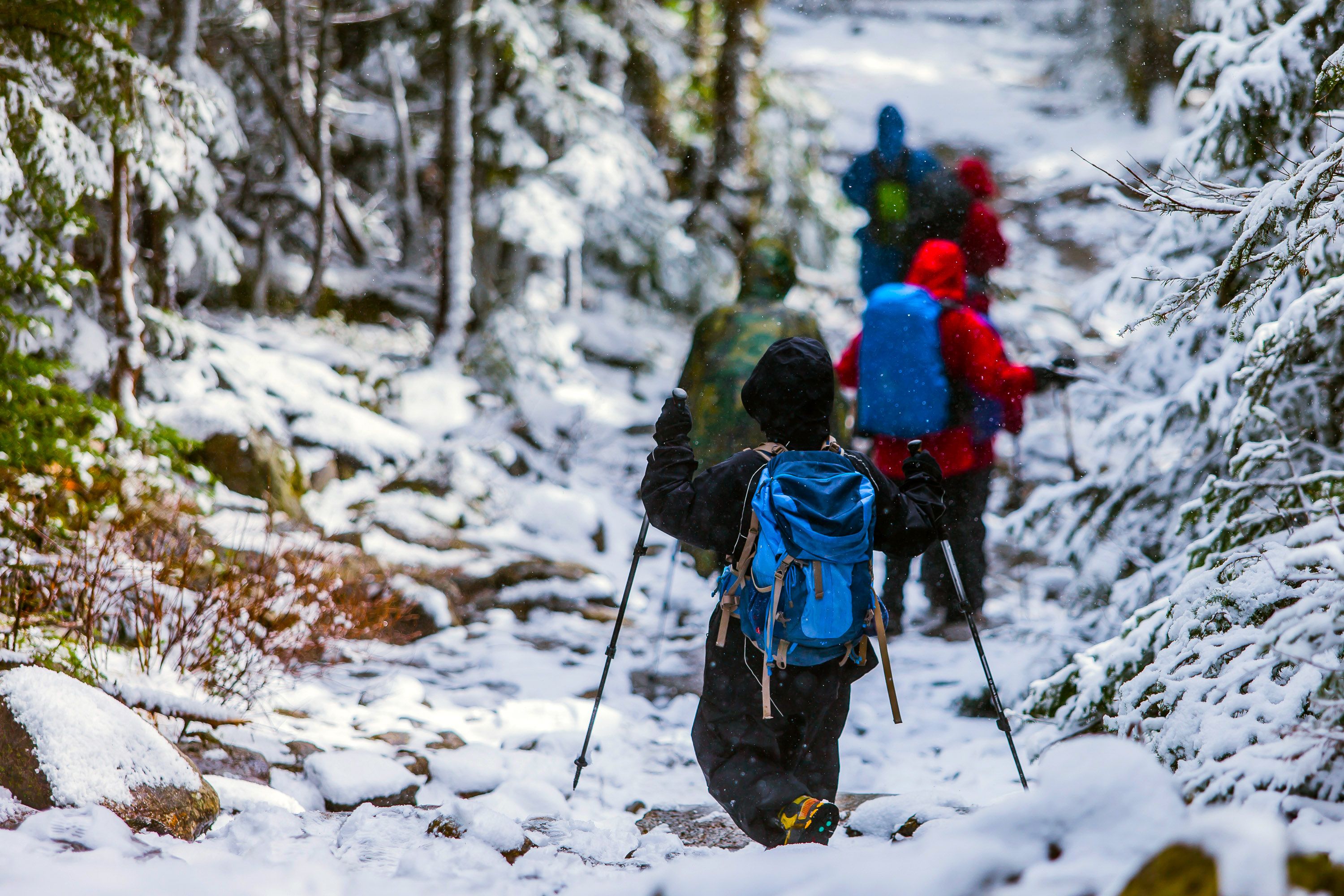
A child does not have to climb a difficult mountain to learn from the Himalayas.
Sometimes, a forest trail, a village path, a mountain stream or a quiet meadow can teach something that a classroom simply cannot.
Children naturally ask questions about the world around them. Why does the river flow downhill? Why do some trees grow here but not higher up? Why do people build houses differently in the mountains? Where does the water come from? Why does the weather change so quickly? Why do we have to walk slowly here?
A hiking or trekking journey can turn those questions into real experiences.
That is one of the reasons we believe children can benefit enormously from experiencing the Himalayas—not by being pushed into difficult adventures, but by being introduced to the mountains gradually, thoughtfully and at an age and difficulty level appropriate for them.
The first Himalayan trek for a child does not need to be an achievement. It needs to be an experience.
The World Becomes Bigger Outside the Classroom
Children spend a significant part of their lives inside structured environments.
There are classrooms, timetables, textbooks, homework, examinations and carefully planned activities.
These things have their place.
But the real world does not always operate according to a timetable.
On a mountain trail, a child may suddenly notice that the weather has changed. A path may become steeper. A stream may need to be crossed carefully. A planned lunch stop may take longer to reach. The group may need to slow down because somebody is tired.
None of these situations needs to become a dramatic challenge.
They simply introduce children to something important:
The world around us requires observation, adaptation and patience.
That is a lesson that becomes much easier to understand when it is experienced rather than merely explained.
The Himalayas Can Become a Living Classroom
A natural ecosystem is not just a collection of trees, animals and streams existing beside one another.
Everything is connected.
A child walking through a Himalayan forest can begin to see those connections in simple ways.
They may notice moss growing on damp rocks. They may see insects around flowers. They may hear birds moving through the trees. They may encounter a stream flowing through the forest. They may see grazing animals in an alpine meadow.
Suddenly, ideas that once existed only in a textbook become visible.
Water supports vegetation.
Vegetation supports insects and animals.
Animals interact with plants and one another.
Forests influence soil, water and climate.
Human communities depend on the landscape around them.
A mountain trail can therefore become a place where children begin to understand that the Earth is not made up of isolated pieces.
It is a system in which countless small relationships keep the larger world functioning.
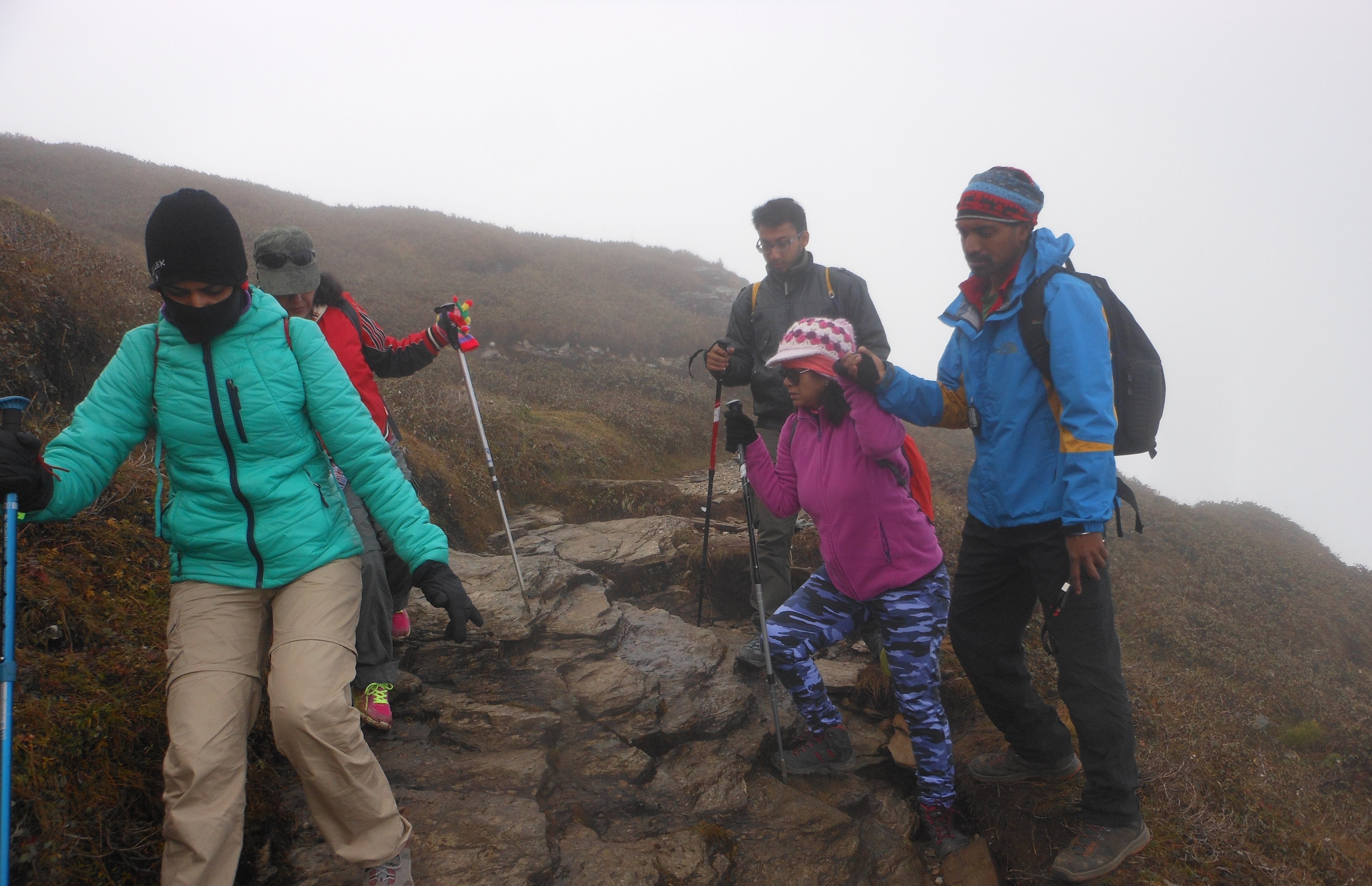

They Learn to Observe Instead of Simply Looking
There is a difference between seeing something and actually observing it.
On an ordinary holiday, a child may look at a mountain, take a photograph and move on.
During a trek, there is more time to notice things.
Why is one side of the mountain greener than another?
Why are there fewer trees as the trail becomes higher?
Why do the rocks look different here?
Why does the same landscape look completely different in morning light?
These questions encourage curiosity.
And curiosity is one of the most valuable things a child can carry into adulthood.
A trek does not have to become a formal lesson. Parents do not need to explain every plant or geological feature.
Sometimes it is enough to let children look carefully and ask questions.
The Mountain Teaches Patience
One of the most useful things trekking teaches is that progress cannot always be rushed.
When a child walks uphill, there is no shortcut created by impatience.
The mountain does not care how quickly someone wants to reach the campsite.
Step by step is the only way forward.
This can be a surprisingly valuable experience for children growing up in a world where many things happen instantly.
Food arrives at the press of a button. Videos can be skipped. Messages are delivered immediately. Entertainment is available whenever we want it.
A mountain trail works differently.
You walk.
You rest.
You walk again.
Eventually, you arrive.
There is something deeply useful in experiencing progress that cannot be accelerated.
Small Difficulties Can Build a Problem-Solving Mindset
A good children's trek should never be about deliberately making a child suffer.
There is an important difference between challenge and unnecessary hardship.
But removing every small difficulty from a child's experience can also remove opportunities to learn.
A child who encounters a muddy section of trail may have to decide where to place their feet.
A child who becomes tired may have to learn when to rest.
A child walking through a changing landscape may have to adjust clothing as the temperature changes.
A child who discovers that the trail is longer than expected may learn that plans sometimes need to change.
These are very small examples, but they encourage a valuable habit:
When something does not go exactly as expected, stop, think and work out what to do next.
That mentality is useful far beyond trekking.
Learning the Difference Between Discomfort and Danger
Trekking can also teach children an important distinction that adults sometimes overlook.
Not every uncomfortable situation is dangerous.
Being tired is uncomfortable.
Being cold can be uncomfortable.
Walking uphill can be difficult.
Getting wet in light rain may be unpleasant.
But genuine danger is different.
Children should learn to recognise that distinction under responsible adult supervision.
The goal is not to tell children to ignore discomfort.
The goal is to help them understand their own bodies, communicate when something feels wrong and gradually become more confident in dealing with ordinary challenges.
At the same time, adults must remain responsible for recognising risks that children may not yet understand.
Adventure should expand a child's confidence, not test the limits of their safety.
Humility Comes Naturally in the Mountains
Mountains have a remarkable way of putting things into perspective.
A child who is accustomed to being among buildings, roads and familiar surroundings suddenly finds themselves standing beneath a mountain that appears enormous.
A river that looked small on a map becomes powerful in front of them.
A forest that looked like a green patch from a distance becomes an entire world of trees, insects, birds, sounds and smells.
Even a simple village can feel different when it is surrounded by steep mountain slopes.
The experience can quietly teach humility.
Not humiliation.
Not fear.
Just the understanding that human beings are one small part of a much larger natural world.
The mountain does not need to tell a child that the world is bigger than them. Standing there is often enough.
Children Discover That There Are Many Ways to Live
One of the most valuable parts of Himalayan travel is not necessarily the trail itself.
It is what happens before and after the trail.
A journey into the mountains may take children through villages where people live very differently from the way they do at home.
They may see terraced fields carved into steep slopes.
They may see houses designed for mountain weather.
They may meet shepherds moving livestock between seasonal grazing grounds.
They may see how people use locally available materials, how food is prepared and how communities organise daily life around geography and seasons.
These experiences quietly introduce an important idea:
There is no single way in which human beings are supposed to live.
People adapt.
They build according to their surroundings. They grow what the land allows. They develop traditions around climate, geography, religion and history.
For a child, seeing these differences firsthand can be much more meaningful than reading about them in a textbook.
The Mountains Are Not Empty Wilderness
Children sometimes imagine the Himalayas as nothing more than forests, snow peaks and wild animals.
But much of the Himalayan landscape is also a human landscape.
Villages, farms, grazing grounds, temples, trails and seasonal settlements are all part of the region.
When children meet people living in these environments, they begin to understand that the mountains are not simply a backdrop for adventure.
For millions of people, the Himalayas are home.
That understanding naturally encourages respect.
A trek becomes an opportunity to teach children how to enter another person's environment as a guest.
Say hello.
Ask before taking photographs.
Respect local customs.
Do not treat people's homes or traditions as tourist attractions.
These are simple lessons, but they can shape the way children approach unfamiliar places throughout their lives.
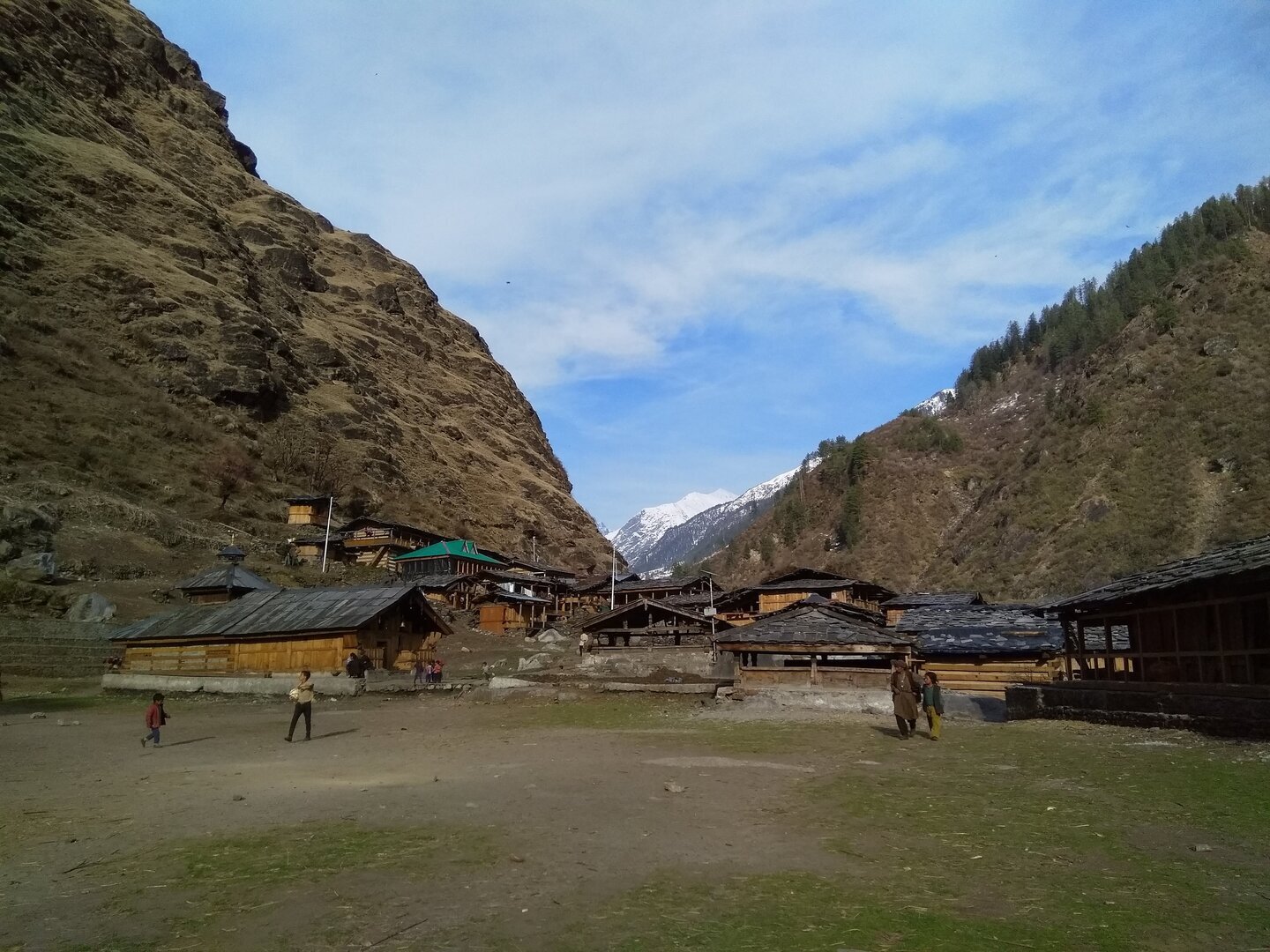
The Journey to the Mountains Is Part of the Experience
For children, the trek does not begin when they start walking.
It begins when they leave home.
A long road journey through the foothills can itself become an education.
Rivers appear beside the road. The landscape gradually changes. Buildings become fewer. Roads become narrower. Villages appear on slopes. Terraced fields replace flat agricultural land.
A child can watch an entire geographical transition happen through a vehicle window.
Then comes the village where the road ends.
The backpack goes on.
The walking begins.
This gradual transition from familiar surroundings into a completely different environment is part of what makes a Himalayan journey so memorable.
The destination is only one part of the story. The journey teaches too.
When Can Children Start Trekking?
There is no single age at which every child suddenly becomes ready for Himalayan trekking.
Children develop differently.
Physical ability, confidence, previous outdoor experience, attention span, health, altitude profile, weather, trail conditions and the duration of the trek all matter.
For that reason, choosing a trek based only on the word "Easy" is not enough.
An easy trek for an experienced adult can still be tiring for a child who has never spent several hours walking outdoors.
For a first Himalayan experience, families should generally look for:
- shorter walking days;
- moderate and manageable gradients;
- well-established trails;
- reasonable altitude gain;
- good opportunities for rest;
- reliable adult supervision;
- and a route suited to the child's actual experience rather than simply their age.
As children gain experience, families can gradually consider longer and more demanding routes.
The objective should be to build a relationship with trekking—not to complete the hardest trek possible at the youngest possible age.
Start With the Right Trail
For a child beginning their Himalayan trekking journey, the choice of route can make a significant difference.
At Planethimalayas, two of our Easy-grade Himalayan treks that can be considered by families with appropriately prepared children are Deoriatal–Chandrashila and Dayara Bugyal.
Deoriatal–Chandrashila Trek
The Deoriatal–Chandrashila Trek is currently listed by Planethimalayas as an Easy-grade trek, reaching around 12,000 ft at Chandrashila. The journey combines forest trails, the serene Deoriatal Lake, alpine meadows and expansive Himalayan views.
For children who already have some walking experience, it can offer a fascinating variety of environments within one journey.
They can walk through forests, experience a mountain lake, cross open meadows and eventually stand above the tree line with a much wider view of the Himalayas.
It is also an excellent example of how a trek can combine nature, geography, mythology and physical activity in one experience.
Dayara Bugyal Trek
The Dayara Bugyal Trek is another Easy-grade trek listed by Planethimalayas. The trail passes through forests before opening into the enormous alpine meadows of Dayara Bugyal, with wide Himalayan views and seasonal changes that make the landscape look completely different throughout the year.
For a child, the open meadows can be especially engaging because there is a clear visual sense of space and landscape.
The route also offers an opportunity to see how mountain communities have traditionally used high-altitude meadows for grazing.
That turns the landscape itself into a lesson about the relationship between people, animals, seasons and mountain geography.
Neither trek should be treated as automatically suitable for every child. Parents should consider the child's previous trekking experience, physical condition, the planned season, current trail conditions, altitude profile and the guidance of the trekking team before making a decision.
Do Not Treat Children as Small Adults
One mistake families can make is assuming that if an adult can comfortably complete a trek, a child should simply be able to do the same.
Children have different physical and emotional needs.
They may tire more quickly. They may need more frequent breaks. They may become bored on long stretches of trail. They may respond differently to cold, rain or altitude.
That does not make them unsuitable for trekking.
It simply means the experience needs to be designed around them.
A child should have properly fitting clothing and footwear, adequate food and water, sufficient rest and close adult supervision.
And perhaps most importantly, adults should pay attention when a child says something does not feel right.
Good family trekking is not about making children keep up with adults. It is about creating a pace at which children can actually enjoy the journey.
Let Children Participate in the Journey
Children learn more when they are participants rather than passengers.
Give them small responsibilities.
Let them help organise part of their backpack.
Ask them to check whether they have their water bottle.
Let them observe the route.
Ask what they notice about the forest.
Let them help decide when the group should take a short rest, within the adults' overall plan.
Teach them how to keep their own waste with them.
Ask them what they think a mountain village needs to grow food.
These simple tasks turn a trek into participation.
And participation creates ownership.
Do Not Remove Every Difficulty for Them
Parents naturally want to make things easier for their children.
That instinct is understandable.
But there is a difference between protecting a child from danger and protecting them from every difficulty.
If a child is safely walking a manageable section of trail and becomes tired, the immediate solution does not always have to be carrying them.
Sometimes they need a rest.
Sometimes they need water or food.
Sometimes they simply need encouragement.
When the situation is safe and appropriate, allowing children to solve small problems themselves can be far more valuable than solving everything for them.
That is how confidence develops.
Teach Them to Leave the Mountain Better Than They Found It
Children are often surprisingly receptive to environmental responsibility when the lesson is practical.
Instead of simply telling them not to litter, explain where their wrapper would go if it were left behind.
Instead of saying "do not touch that plant", explain that the plant is part of the environment and may take a long time to recover.
Instead of shouting at them for wasting water, explain where mountain communities get their water from.
Instead of treating wildlife as something to chase for photographs, teach them that animals deserve to remain undisturbed.
A child who understands the reason behind a rule is more likely to carry that lesson beyond the trek.
Environmental responsibility becomes stronger when children understand the connection behind the rule.
A Trek Can Change the Meaning of a Mountain
There is a difference between seeing a mountain in a photograph and standing beside it.
There is a difference between reading about a river and watching it move through a valley.
There is a difference between learning that people live in remote mountain villages and actually meeting them.
Once a child experiences these things personally, the information becomes connected to memory.
A lesson about forests may remind them of a particular trail.
A lesson about water may remind them of a mountain stream.
A lesson about geography may remind them of the long road climbing through the Himalayas.
Learning becomes attached to experience.
The Mountains Can Teach Resilience Without Teaching Recklessness
Resilience is often discussed as though it means simply enduring difficult situations.
Trekking offers a more balanced lesson.
Sometimes resilience means continuing.
Sometimes it means resting.
Sometimes it means changing the plan.
Sometimes it means accepting that the weather has made the original objective impossible.
A child can learn that turning around is not necessarily failure.
In the mountains, responsible decisions are often more important than reaching a predetermined destination.
That is a powerful lesson for life.
Knowing when to continue is useful. Knowing when to stop is equally important.
The Return Journey Is Part of the Education
Eventually, every trek ends.
The trail becomes a road again.
The mountains slowly recede behind the vehicle.
Mobile networks return. Traffic becomes heavier. Buildings become more frequent.
For children, this transition can be surprisingly meaningful.
After several days of walking, sleeping in a different environment and observing mountain life, ordinary things at home can suddenly look different.
A tap running for several minutes may make them think about the mountain stream.
Food being left unfinished may make them think about the effort involved in carrying supplies into remote places.
A forest on the roadside may no longer look like just trees.
This is where an outdoor experience can continue teaching even after the trek is over.
What Children Can Bring Home From a Himalayan Trek
A successful children's trek does not need to produce a medal, summit photograph or impressive distance.
It can leave behind something much more useful.
- A stronger curiosity about nature.
- A better understanding of how ecosystems work.
- More confidence in handling small challenges.
- A greater willingness to observe before reacting.
- Respect for people living differently from themselves.
- A better understanding of how humans adapt to different environments.
- Greater appreciation for water, food and other resources.
- More patience with slow progress.
- A deeper appreciation for the natural world.
- And memories connected to learning rather than simply entertainment.
A Child Does Not Need to Become a Trekker
There is no need to turn every child who visits the Himalayas into a future mountaineer.
That is not the purpose.
The value of trekking for children lies in exposure.
Exposure to nature.
Exposure to unfamiliar environments.
Exposure to different people and cultures.
Exposure to physical challenges.
Exposure to the idea that the world is larger, more complicated and more interconnected than their everyday surroundings may suggest.
Perhaps one child will eventually become a serious trekker.
Another may become a scientist.
Another may become a teacher, engineer, doctor, artist or something nobody can predict yet.
The mountain does not need to determine their future.
It simply gives them another way to understand the world.
Why We Believe Children Belong in the Mountains—At the Right Time and on the Right Trail
At Planethimalayas, we do not believe children should be introduced to trekking through increasingly difficult objectives simply to prove what they can do.
We believe the opposite.
Start appropriately.
Let them experience the joy of walking.
Let them discover forests, streams and meadows.
Let them meet mountain communities.
Let them become tired and learn to rest.
Let them ask questions.
Let them notice things adults often walk past.
And as they gain experience, allow the journey to become gradually more ambitious.
The Himalayas are vast enough to grow with them.
Frequently Asked Questions About Children Trekking in the Himalayas
What age can children start trekking in the Himalayas?
There is no universal age that applies to every child or every trek. Readiness depends on the child's physical ability, previous outdoor experience, confidence, health, the duration and altitude of the trek, weather and trail conditions. Families should choose a route according to the individual child rather than age alone.
Which Himalayan treks are suitable for children?
Easy-grade routes with manageable walking days can be considered for appropriately prepared children. At Planethimalayas, Deoriatal–Chandrashila and Dayara Bugyal are currently listed as Easy-grade treks. Their suitability for a particular child should still be assessed based on experience, fitness, season, altitude and current trail conditions.
Is trekking good for children?
Trekking can provide children with opportunities for physical activity, outdoor exploration, observation, problem-solving and direct exposure to nature and different environments. The experience should be age-appropriate, properly supervised and matched to the child's abilities.
Should children be allowed to struggle during a trek?
Children should not be exposed to unnecessary hardship or danger. However, small and manageable challenges can be valuable learning opportunities when the situation is safe. Parents can allow children to solve simple problems, take appropriate breaks and develop confidence while remaining responsible for safety.
What can children learn from Himalayan villages?
They can observe how communities adapt homes, agriculture, food, transportation and daily routines to mountainous terrain, climate and available resources. Meeting people who live differently can also encourage curiosity and respect for different ways of life.
Does a child's first trek need to reach a summit?
No. A first trek can be valuable without a summit objective. Forests, villages, lakes, meadows, rivers and the journey itself can provide just as much learning and enjoyment. For a child, the quality of the experience matters more than the height of the destination.
How can parents prepare children for a Himalayan trek?
Begin with regular walking and simple outdoor activities before the trek. Make sure the child has comfortable, properly fitting footwear and clothing, stays hydrated and has adequate food and rest. Explain the journey beforehand without making it intimidating, and choose a route appropriate to the child's actual experience.
Explore Easy Himalayan Treks With Planethimalayas
If you are considering introducing your child to Himalayan trekking, explore our Deoriatal–Chandrashila Trek and Dayara Bugyal Trek pages for detailed itineraries, trek grades, altitude profiles and seasonal information.
Before choosing a route, consider the child's experience, fitness, the season of travel, the expected weather and the current condition of the trail. A trek that is appropriate for one child may not be appropriate for another.
More Than Just A Trek
At Planethimalayas, our tagline is More Than Just A Trek.
For children, perhaps that idea matters even more.
A Himalayan trek can be a walk through a forest, but it can also become a lesson in ecosystems.
It can be a journey through a village, but also an introduction to different ways of living.
It can be a climb up a mountain, but also a lesson in patience.
It can be a tiring day, but also an opportunity to discover resilience.
It can be a holiday, but also a chance to understand the world outside home.
And years later, a child may not remember every fact they learned during the journey.
They may remember the sound of the stream.
The forest they walked through.
The village they passed.
The mountain that looked impossibly large.
The moment they realised they could keep walking.
Those memories matter.
Because sometimes the best classroom is the one that has no walls.
And sometimes, the best lesson begins with simply taking the first step.
