

The monsoon arrives differently in the Himalayas.
Unlike summer, where the mountains gradually reopen after winter, monsoon transforms the entire range into two completely different worlds at the same time.
On one side, regions like Uttarakhand and Sikkim begin receiving intense rainfall carried by the southwest monsoon. Valleys become saturated, rivers swell rapidly, and mountain roads grow increasingly unstable. Forest trails turn slippery, exposed slopes become vulnerable to landslides, and constant moisture weakens already fragile terrain.
By July, many trekking routes in these regions become unpredictable — not because the mountains are inaccessible, but because the environment becomes dynamically unstable.
Streams that are small in the morning can become impossible to cross by evening. Rockfall zones become active after continuous rain. Cloudbursts can trigger sudden flash floods in narrow valleys. In several routes across Uttarakhand and Sikkim, the challenge during monsoon is not altitude — it is terrain instability caused by water.
And this is where Himalayan geography changes everything.
Beyond the Greater Himalayan range lies the rain-shadow region — areas where the monsoon clouds fail to penetrate effectively because massive mountain walls block moisture from moving further north.
This single geographical phenomenon completely changes the trekking season.
While heavy rain impacts lower Himalayan regions, areas like Himachal’s Spiti Valley, Ladakh, Lahaul, Zanskar, and parts of Kashmir remain comparatively dry. Instead of dense forests and wet trails, these landscapes become raw, open, high-altitude mountain deserts shaped by glaciers, rivers, and exposed rock formations.
This is why monsoon becomes the season of crossover treks, trans-Himalayan routes, and long valley expeditions.
Routes that remain buried under snow during early summer finally stabilize. High passes begin opening consistently, glacier sections become more manageable, and long expedition-style trails become accessible for extended durations.
At the same time, the visual contrast across the Himalayas becomes extraordinary.
In lower valleys, forests become deep green under fresh rainfall. Waterfalls appear across steep mountain walls. Alpine flowers bloom aggressively across meadows and grazing grounds. Meanwhile, just beyond the rain-shadow boundary, the terrain suddenly changes into barren valleys, cold deserts, layered mountains, and glacial rivers flowing through vast open landscapes.
The shift feels unreal — almost like crossing between completely different mountain systems.
Monsoon trekking is not about avoiding weather. It is about understanding where to go, when to move, and how geography controls the mountains.
And once you experience the Himalayas during monsoon, you stop seeing the season as an “off-season.”
You begin understanding why some of the greatest Himalayan journeys happen exactly during this time.
However, one thing remains constant:
💡 The Himalayas reward awareness more than confidence. During monsoon, understanding terrain and geography becomes more important than simply choosing a famous trek.
👉 If you're unsure how to choose the right trek, read our complete guide on trek selection.
📊 How This Guide is Structured
To help you choose wisely, we’ve categorized monsoon treks based on regions and overall difficulty:
- 🟢 Himachal Pradesh – Crossover valleys, glacier terrain & high passes
- 🟡 Ladakh – High-altitude desert expeditions & long valley traverses
- 🔴 Kashmir – Alpine lake systems & large mountain landscapes
Let’s begin with Himachal Pradesh — the heart of monsoon crossover trekking.
🟢 Himachal Pradesh Monsoon Treks
During monsoon, Himachal transforms into one of the most dynamic trekking regions in the Himalayas.
The outer valleys receive rainfall and turn intensely green, while routes crossing into Lahaul, Spiti, and Pin Valley gradually enter drier rain-shadow landscapes. This creates dramatic transitions — forests to glaciers, rivers to cold deserts, and monsoon clouds to open blue skies within the same journey.
These treks are ideal for trekkers looking for diversity, movement, and high mountain terrain during July–September.
Beas Kund Trek
⏳ 2N/3D | ⚡ Easy | 🏔️ 12,200 ft | 📍 Manali
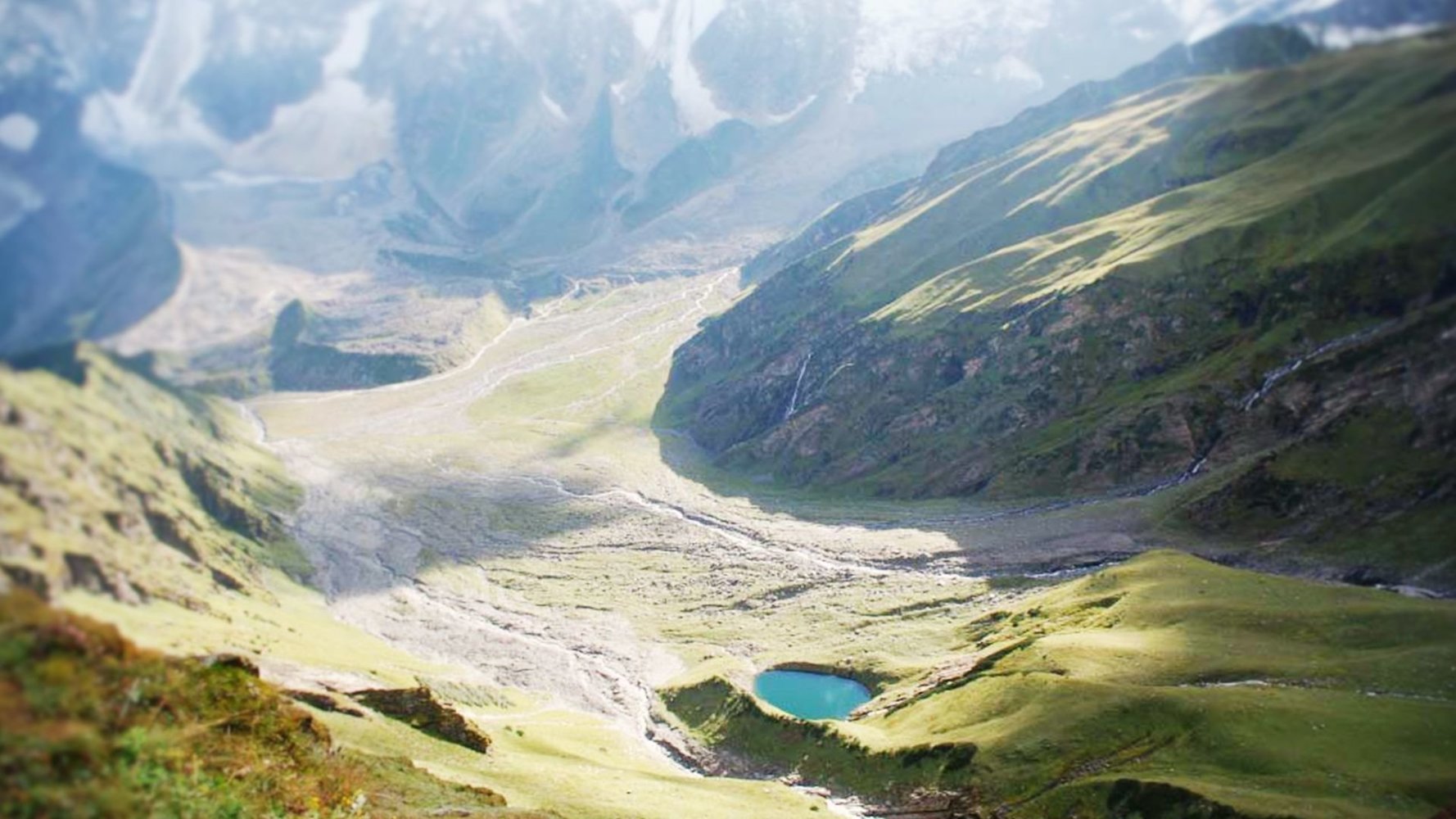
Beas Kund becomes especially beautiful during monsoon, when the upper Solang Valley turns intensely green under fresh rainfall and cloud movement constantly reshapes the landscape.
Short glacier sections, flowing streams, and close-up views of peaks like Hanuman Tibba and Friendship Peak make this one of the most accessible Himalayan monsoon experiences for beginners.
Bhrigu Lake Trek
⏳ 3N/4D | ⚡ Easy–Moderate | 🏔️ 13,850 ft | 📍 Manali
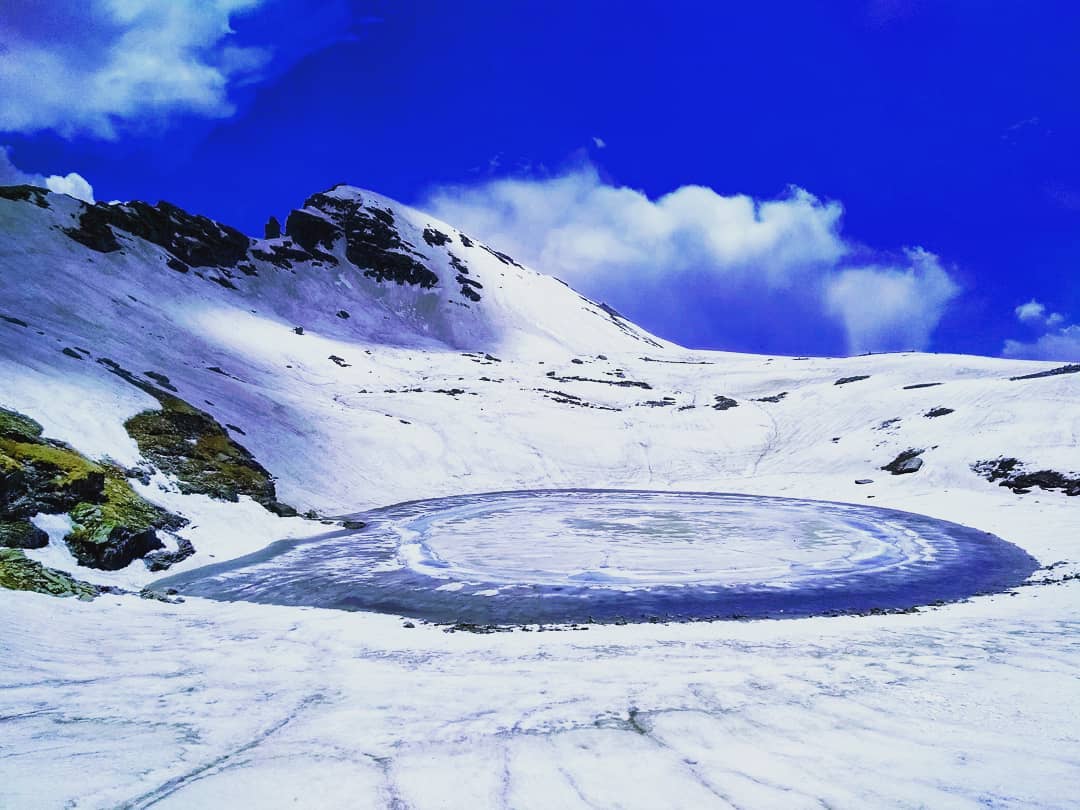
Bhrigu Lake during monsoon feels alive with movement — rolling grasslands turn vibrant green, clouds drift rapidly across open ridgelines, and the entire upper valley feels constantly changing.
The trek gains altitude quickly, offering wide Himalayan views without a long expedition approach, making it one of the most rewarding short monsoon treks in Himachal.
Pin Bhaba Pass Trek
⏳ 7N/8D | ⚡ Moderate–Difficult | 🏔️ 16,100 ft | 📍 Kinnaur to Spiti
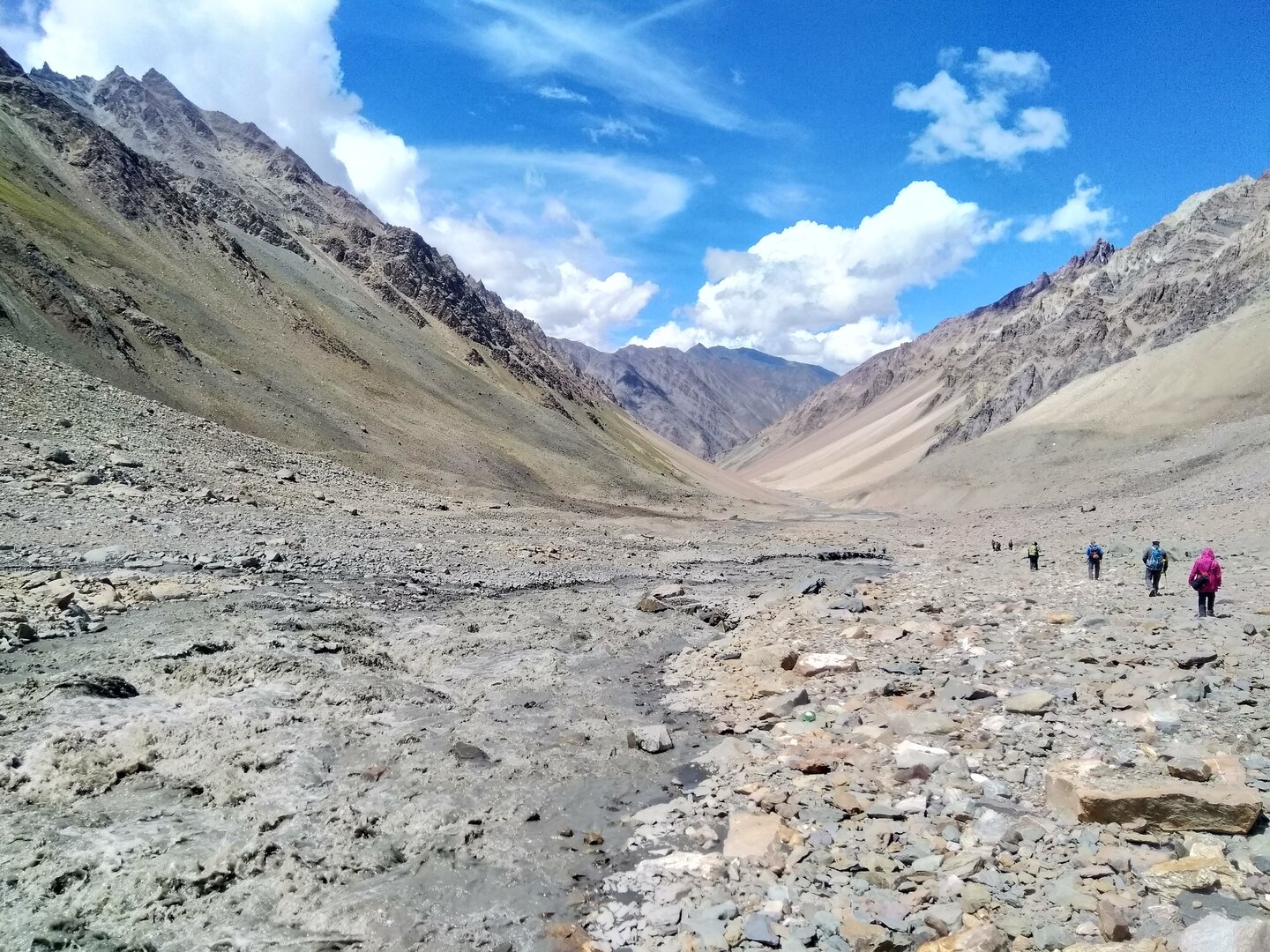
Pin Bhaba is one of the most visually dramatic crossover treks in the Himalayas. The route begins in the lush green forests and river valleys of Kinnaur before crossing abruptly into the barren cold desert landscapes of Spiti.
During monsoon, this contrast becomes even sharper. The Bhaba side remains vibrant and moisture-rich, while the Pin Valley side opens into dry, rugged trans-Himalayan terrain beyond the rain-shadow boundary.
Pin Parvati Pass Trek
⏳ 10N/11D | ⚡ Difficult | 🏔️ 17,450 ft | 📍 Parvati Valley to Spiti
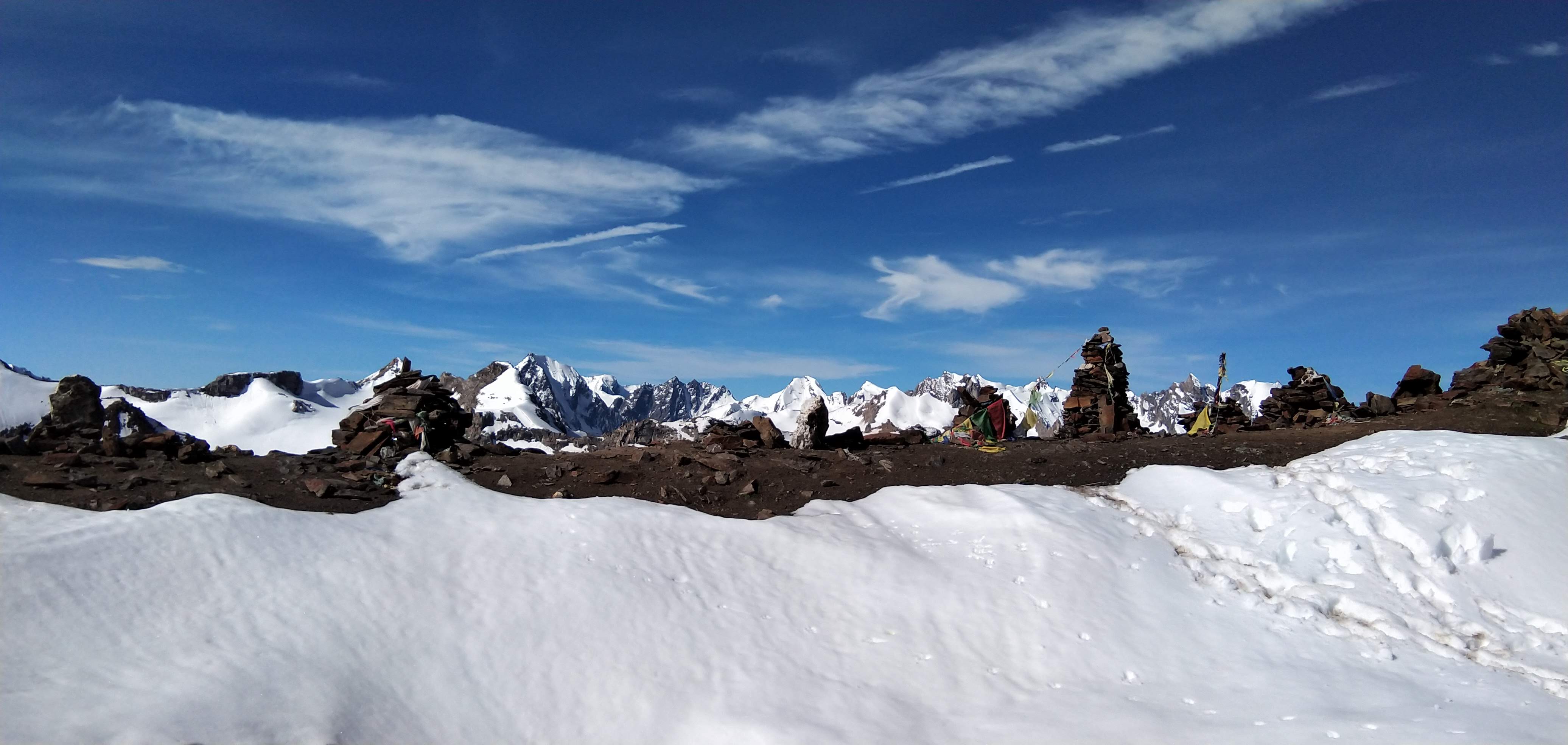
Few monsoon treks feel as complete and demanding as Pin Parvati. Dense forests, hot springs, glacial valleys, moraine sections, and a massive high-altitude pass all combine into one continuous expedition.
The transition from the wet Parvati Valley into the dry Spiti side feels almost geographical in real time — one of the clearest examples of how the Himalayan rain-shadow works.
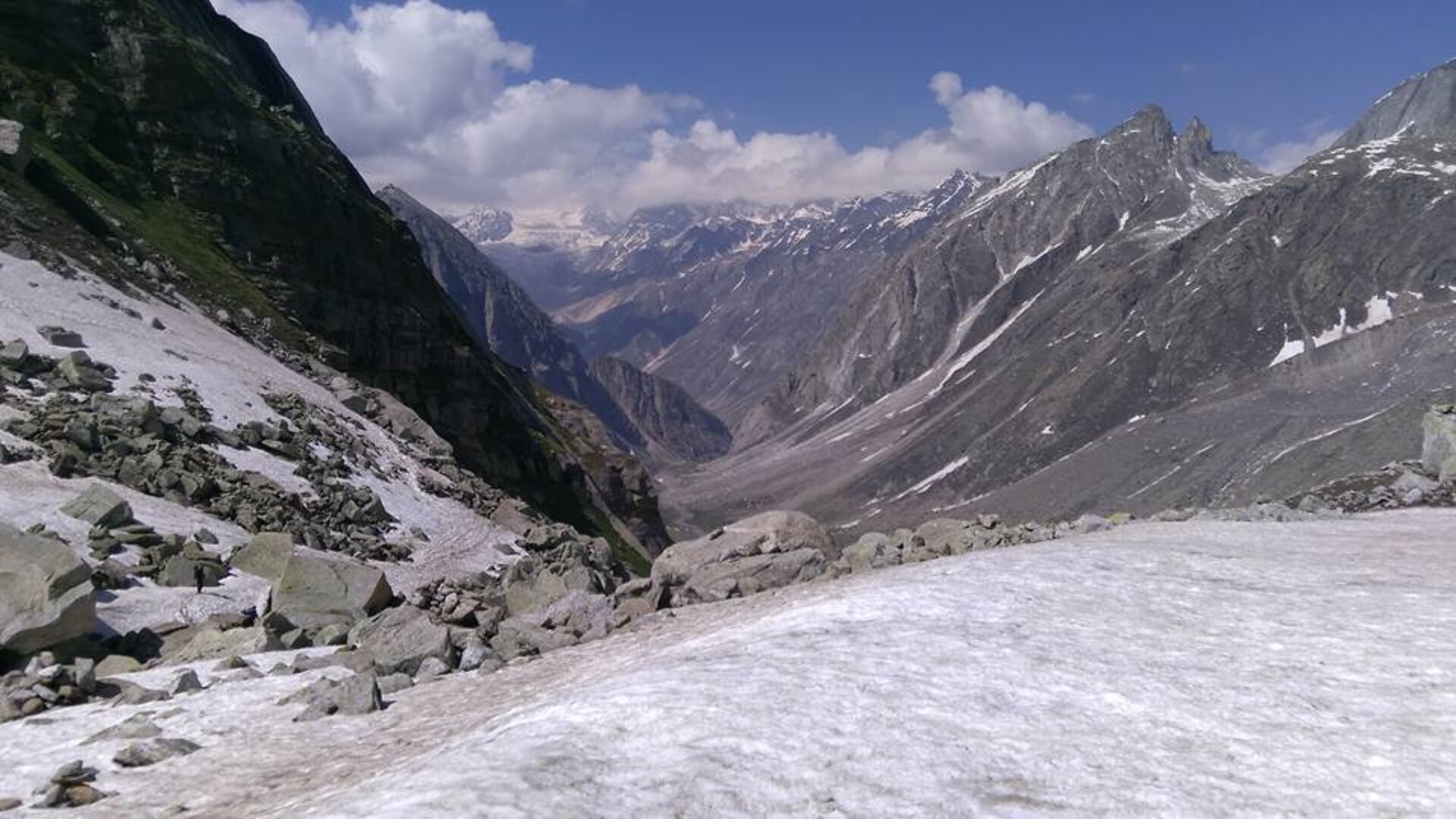
Hampta Pass Trek
⏳ 4N/5D | ⚡ Easy–Moderate | 🏔️ 14,100 ft | 📍 Manali to Lahaul
Hampta Pass is one of the best introductions to monsoon trekking in Himachal. Starting from the green valleys near Manali, the trail steadily climbs toward high-altitude barren terrain on the Lahaul side.
During July and August, waterfalls, cloud movement, river crossings, and fresh alpine growth make the approach incredibly scenic — while the crossover into the dry landscape beyond the pass feels dramatic and sudden.
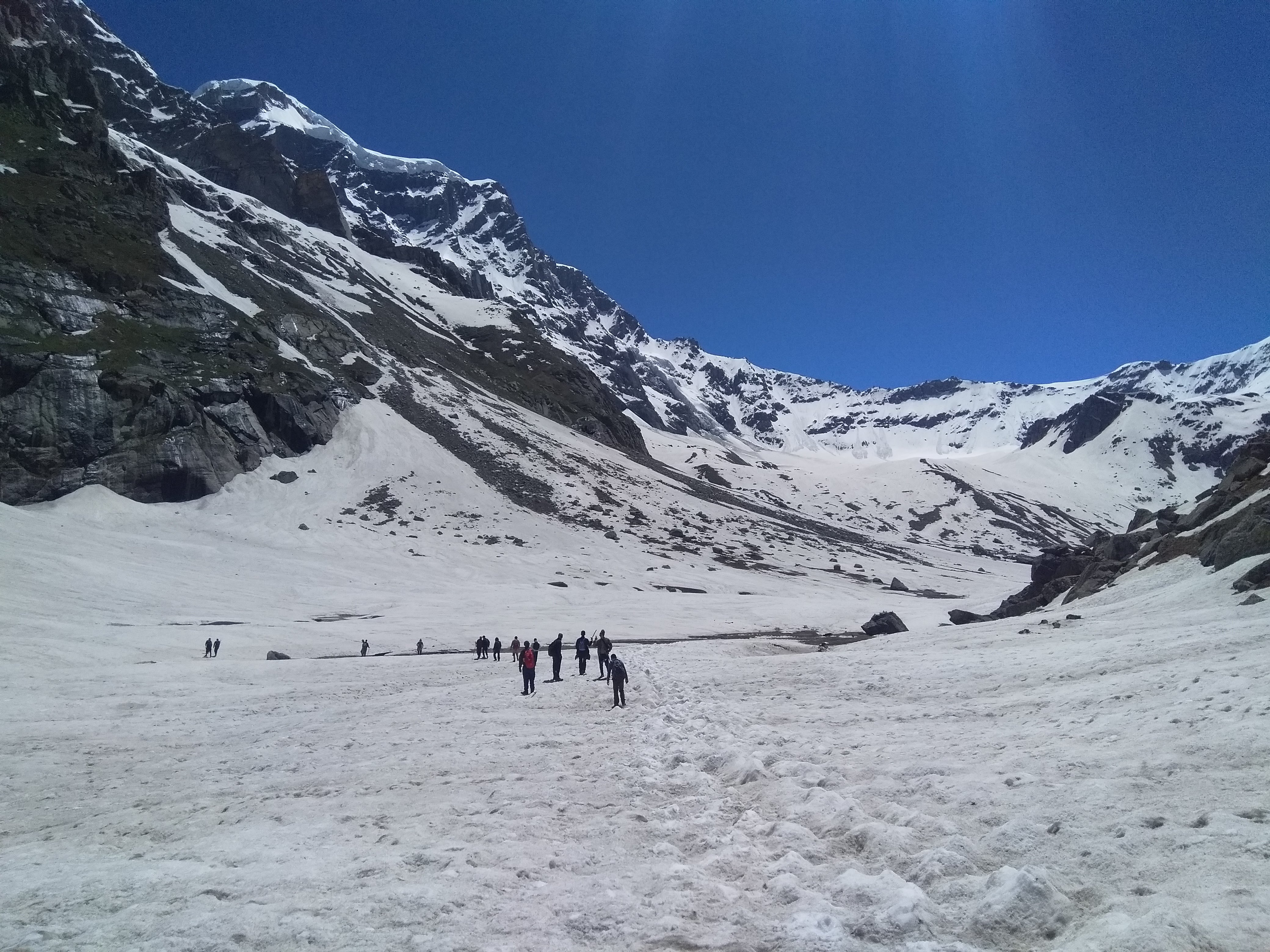
Deotibba Base Camp Trek
⏳ 5N/6D | ⚡ Moderate | 🏔️ 14,700 ft | 📍 Manali
Deotibba Base Camp offers a quieter monsoon experience compared to crossover passes. The route moves through forests, alpine meadows, and glacial terrain below the massive Deotibba massif.
In monsoon, the landscape becomes intensely green while upper camps continue holding patches of snow and cold alpine conditions — creating a balanced high-altitude experience without extreme technical difficulty.
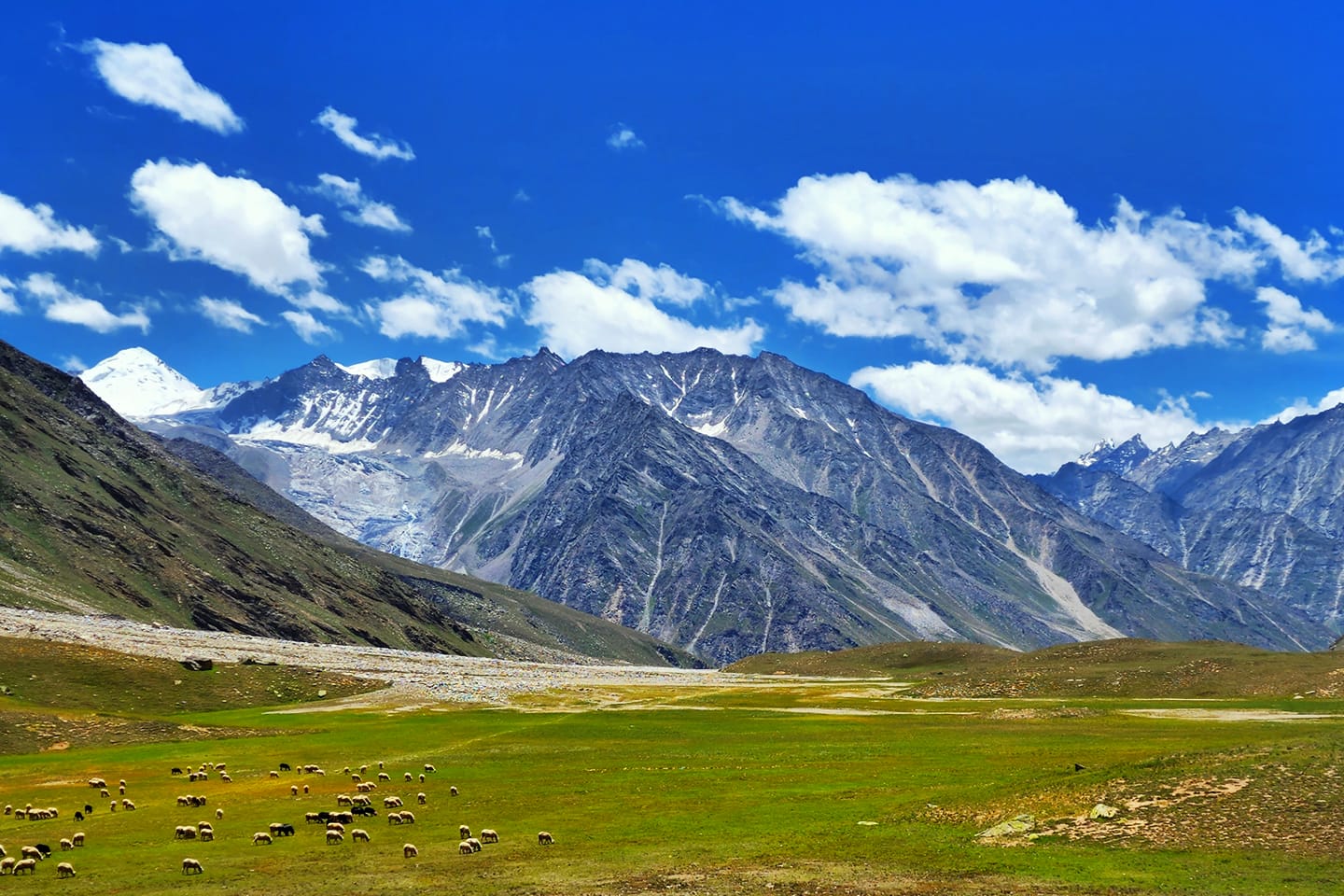
Miyar Valley Trek
⏳ 7N/8D | ⚡ Moderate | 🏔️ ~13,500 ft | 📍 Lahaul
Often called the “Valley of Flowers of Himachal,” Miyar Valley opens fully during monsoon. Vast meadows, wildflowers, glacial streams, and massive granite walls define the entire route.
Because the valley lies deep inside the Lahaul region, rainfall remains comparatively limited despite the monsoon season — making it one of the most stable and visually rewarding long valley treks in Himachal.
🟡 Ladakh Monsoon Treks
While much of the Indian Himalayas deals with active monsoon systems, Ladakh remains almost completely different.
Protected by the Greater Himalayas, this region receives extremely low rainfall even during peak monsoon months. The result is a landscape defined not by forests and rainfall — but by altitude, exposure, and scale.
Monsoon becomes the primary trekking season here because routes remain dry, stable, and fully accessible.
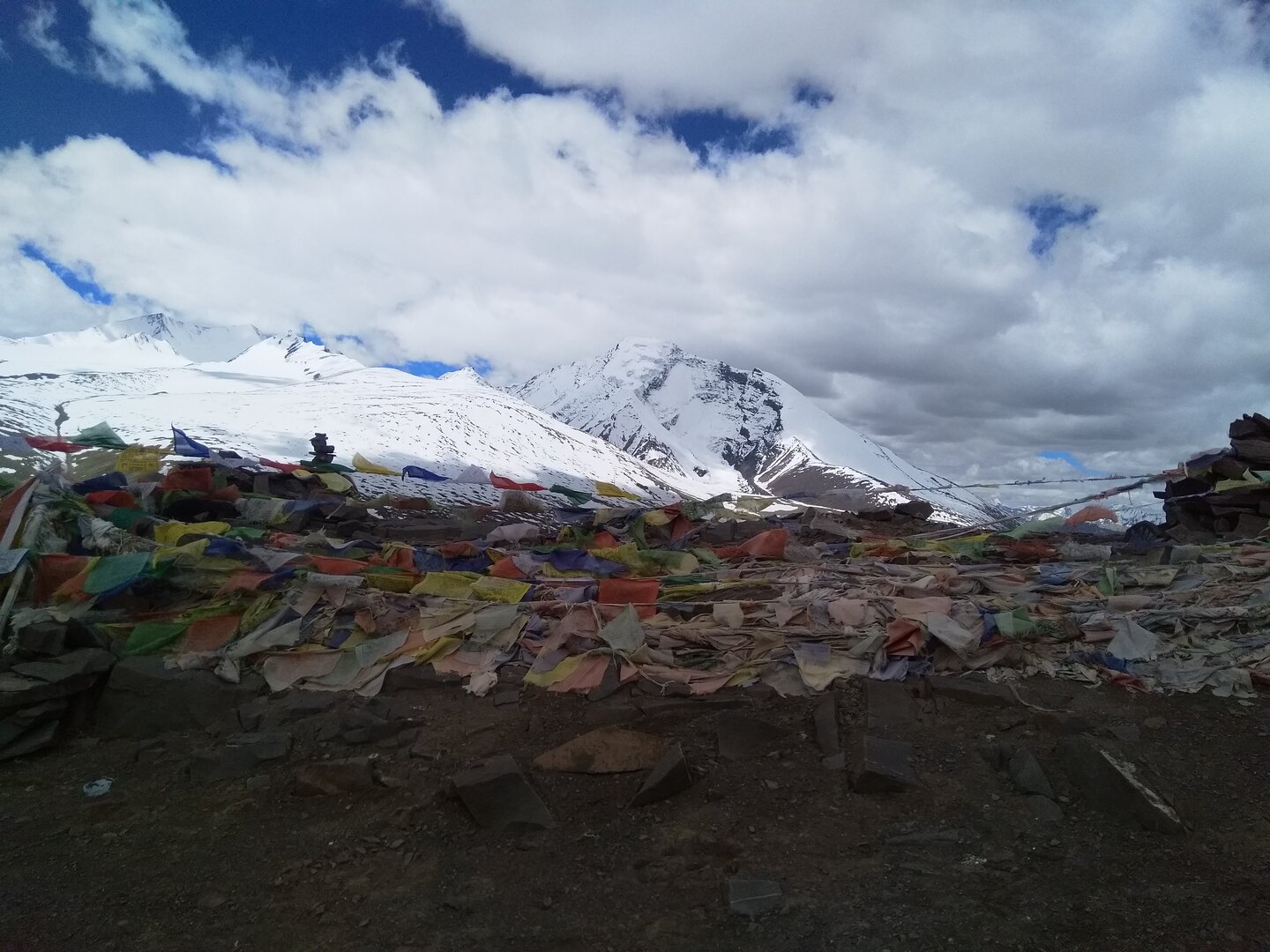
Markha Valley Trek
⏳ 6N/7D | ⚡ Moderate | 🏔️ 17,100 ft | 📍 Ladakh
Markha Valley is one of the most iconic trekking routes in Ladakh — a long journey through remote villages, canyon systems, Buddhist settlements, and vast open valleys.
Unlike forested Himalayan treks, the challenge here comes from altitude, dry terrain, and exposure. During monsoon, stable weather and clear skies make this one of the finest long-distance treks in India.
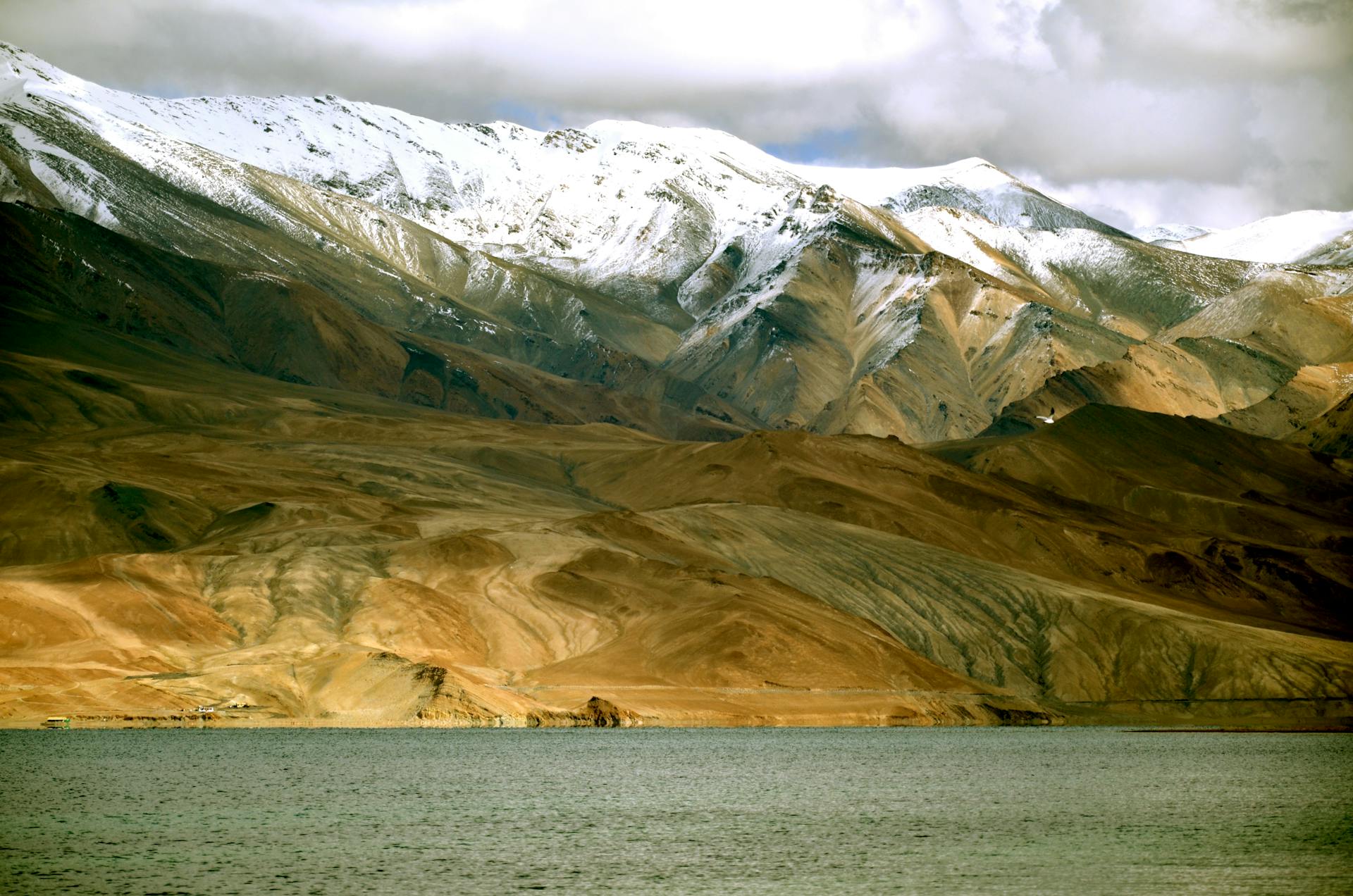
Rumtse to Tso Moriri Trek
⏳ 7N/8D | ⚡ Difficult | 🏔️ 18,000+ ft | 📍 Ladakh
This is less a defined trail and more a full high-altitude trans-Himalayan traverse. Multiple passes above 5,000 meters, isolated camps, and vast barren landscapes define the journey.
Monsoon months provide the most stable access to these remote plateaus, where weather is controlled more by altitude and wind than rainfall.
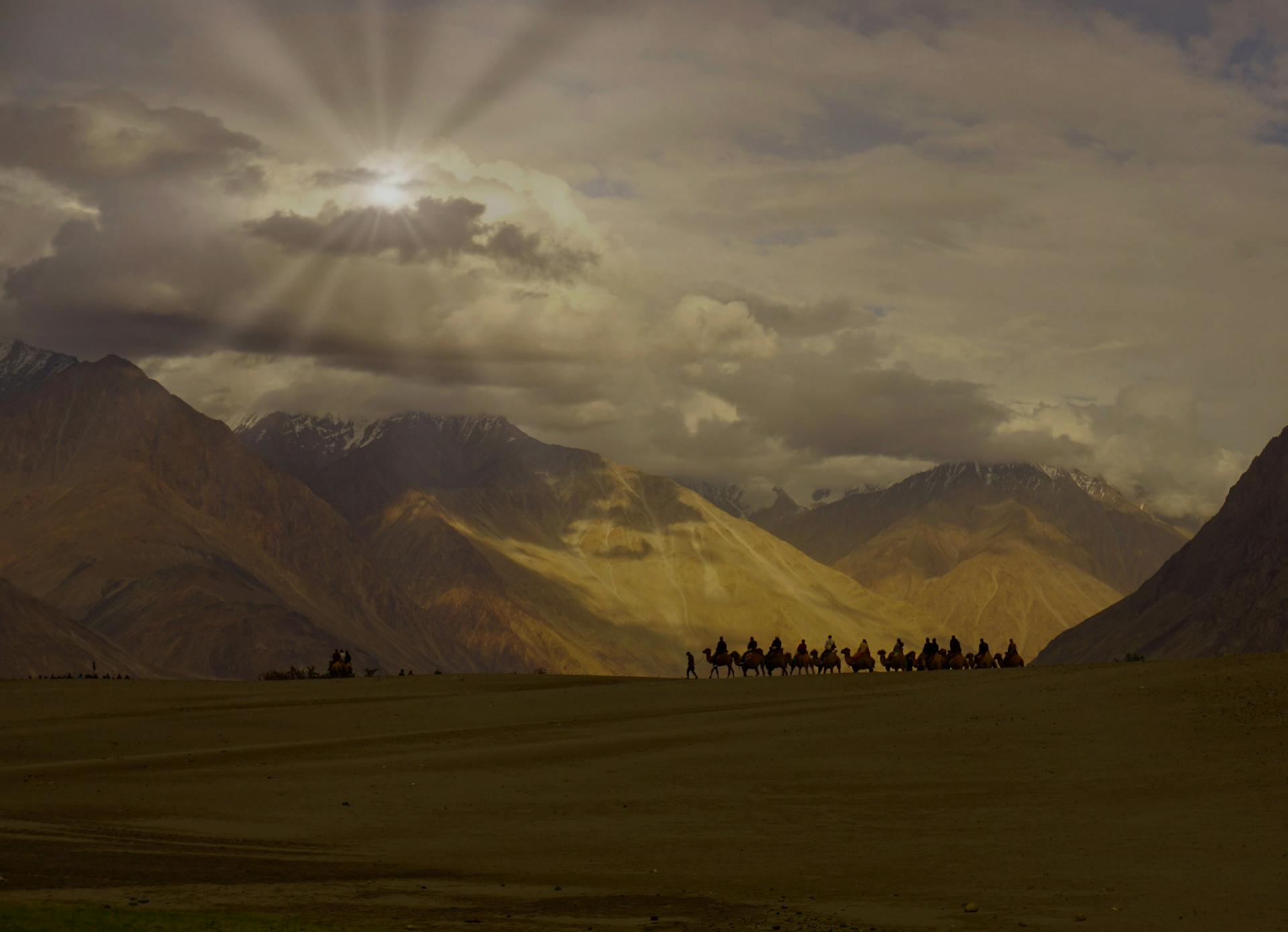
Nubra Valley Trek
⏳ 5N/6D | ⚡ Moderate | 🏔️ ~17,500 ft | 📍 Ladakh
Nubra routes combine high passes, isolated settlements, and stark desert terrain shaped by glacial systems and ancient trade routes.
During monsoon, the dry climate and stable conditions allow long valley movement across landscapes that feel completely detached from the wetter Himalayan regions further south.
🔴 Kashmir Monsoon Trek
Kashmir during monsoon feels different from both Himachal and Ladakh.
Here, rainfall exists — but the combination of alpine lakes, vast meadows, and massive mountain basins creates some of the most visually dramatic trekking landscapes in the Himalayas.
The monsoon months bring fresh grasslands, overflowing streams, and deep green valleys framed by rugged peaks still holding snow at higher elevations.

Kashmir Great Lakes Trek
⏳ 7N/8D | ⚡ Moderate | 🏔️ 13,800 ft | 📍 Kashmir
Kashmir Great Lakes is one of the most scenic alpine traverses in India. Every day reveals a completely new lake system surrounded by ridgelines, grasslands, and snow-fed valleys.
During monsoon, the region reaches peak visual intensity — green meadows, flowing streams, dramatic clouds, and constantly changing weather create a landscape that feels almost unreal in scale and color.
🏔️ The Planethimalayas Way
Monsoon in the Himalayas is not about avoiding the mountains — it’s about understanding them better.
Every region behaves differently. Rainfall, terrain stability, altitude, and geography all shape the experience in ways most trekkers only begin noticing after spending time in the mountains.
Choose routes that match the season. Respect weather windows. Move patiently through unstable terrain. And understand that in monsoon, decision-making matters just as much as fitness.
Because the Himalayas during monsoon are not closed.
They simply demand a deeper understanding before they allow you through.