
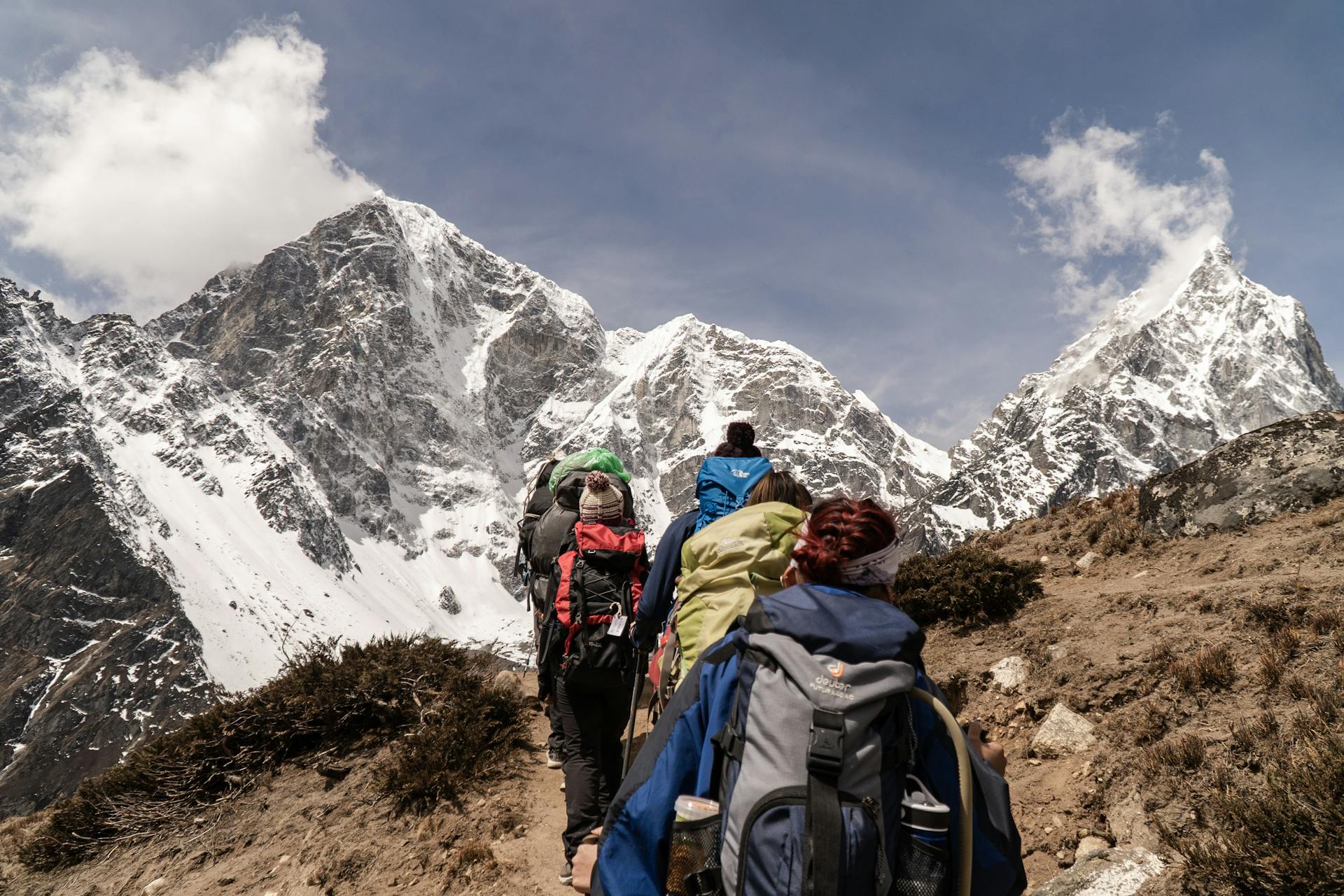
Choosing a Himalayan trek is not just about picking a destination — it is about making a decision that directly affects your safety, experience, and confidence in the mountains.
The Himalayas are not forgiving of poor decisions. A trek that looks “beautiful” on social media may involve high altitude exposure, unpredictable terrain, or technical challenges that your body and experience level may not yet be ready for.
And here’s something most beginners don’t realize — choosing the wrong trek doesn’t just affect you. In a group setting, one unprepared trekker can slow down the entire team, affect acclimatization schedules, and in extreme cases, lead to evacuation scenarios.
This guide is not about listing treks — it is about helping you think like a trek planner, so you choose wisely, trek safely, and grow sustainably in the Himalayas.
⚠️ Why Choosing the Right Trek Matters More Than You Think
Every Himalayan trek is defined by three core variables:
- Altitude (oxygen levels and acclimatization requirements)
- Terrain (forest trails, scree, snowfields, ridgelines)
- Weather (temperature, wind exposure, precipitation)
At higher elevations, reduced oxygen levels — explained in altitude sickness — can affect anyone, regardless of fitness.
This is why “fitness alone” is not enough. Trek selection must align with your experience, adaptability, and awareness.
❗ Reality: The mountains don’t test your strength first — they test your decisions.
🧠 Fitness vs Experience: A Common Misjudgment
A fit beginner often feels ready to attempt an intermediate trek — and in some cases, that can work. But only under the right conditions.
Example:
A trek like Har Ki Dun is a great moderate trek with gradual ascent and well-defined trails. A fit beginner can attempt it safely.
But compare that with Rupin Pass — also categorized as moderate to difficult. It involves:
- Steep ascents
- Snow crossings
- Exposed sections
For a beginner, this is not just a step up — it is a completely different challenge.
The takeaway: Difficulty labels are broad. Terrain and conditions matter more.
🌦️ Season Can Completely Change a Trek
This is one of the most underestimated aspects of trek selection.
The same trail behaves very differently across seasons due to changing snow conditions, weather patterns, and accessibility.
Example:
- Buran Ghati Pass in early summer (May–June) involves heavy snow sections and steep descents that may require technical support.
- The same trek in autumn (September–October) is mostly snow-free, making it significantly more manageable.
Similarly:
- High pass treks like Pin Bhaba Pass or Rupin Pass become far more demanding in early season snow conditions.
What this means: A trek rated “moderate” in autumn can feel like a “difficult” or even “technical” trek in early summer.
💡 Tip: Always evaluate a trek based on season + terrain, not just its name or popularity.
👥 Choosing Based on Who You’re Trekking With
Trek selection is not about labels like “solo”, “female”, “family”, or “elderly” — it is about the combined experience, fitness, and decision-making ability of the group.
A common mistake is oversimplifying trek choices based on who you are, rather than how prepared you are. In the Himalayas, the mountain does not differentiate — it responds only to your capability and awareness.
🧍 Solo Trekkers:
If you have prior trekking experience, strong navigation skills, and an understanding of risk management, you can choose routes across difficulty levels — from beginner trails like Kedarkantha to more demanding routes like Mayali Pass or even remote expeditions.
However, if you are new to trekking, or even if you're experienced, joining an organized group is not a limitation — it is a strategic choice for safety, logistics, and learning.
👩 Solo Female Trekkers:
The decision framework remains exactly the same — experience, terrain understanding, and preparedness. An experienced trekker can confidently attempt demanding routes.
The only added layer to consider is logistical reliability — route familiarity, support systems, and exit options — not a restriction on difficulty.
👨👩👧 Families & Groups:
The key factor here is the least experienced member.
- If the group includes children or first-time trekkers, choose shorter, well-supported, and lower-altitude routes.
- If all members are experienced and physically prepared, there is no reason to limit the group — moderate treks like Gaumukh Tapovan or even more demanding routes can be planned.
👴 Elderly Trekkers:
Age alone is not a limitation — conditioning, acclimatization capacity, and prior experience matter far more.
An active and experienced trekker can comfortably attempt moderate Himalayan treks, provided the pace, acclimatization, and recovery are managed well.
What matters is not “how old” — but how adapted your body is to sustained effort and altitude.
The Real Rule:
Trek selection in a group is always dictated by:
- The least experienced member
- The group’s ability to adapt to changing conditions
- Shared decision-making under pressure
💡 In the mountains, strength is individual — but safety is collective.
🧳 Logistics: The Hidden Factor in Trek Selection
Many trekkers focus only on the trail — but logistics can make or break your experience.
Before choosing a trek, consider:
- How to reach the base village (long drives vs easy access)
- Availability of transport and buffer days
- Network connectivity and emergency evacuation options
For example, treks starting from remote regions like Kinnaur or Spiti involve longer travel times and require better planning compared to Uttarakhand treks.
For first-time trekkers, choosing a trek with simpler logistics reduces stress and allows you to focus on the experience.
🎒 Gear & Investment: What Beginners Should Know
Choosing a trek also impacts how much you need to invest in gear.
A beginner-friendly trek in summer may require minimal equipment, while a winter trek demands:
- Thermal layers
- Insulated jackets
- Better footwear
If you're just starting, avoid over-investing initially. Focus on essentials and build your gear gradually.
👉 Not sure how to prepare? Read our complete trek preparation guide.
🏔️ The Planethimalayas Way
There is no “perfect trek” — only the right trek for where you are right now.
At Planethimalayas, we believe trekking is a journey of progression. You don’t jump levels — you build experience step by step.
Start with routes that teach you how your body reacts to altitude, how weather behaves, and how to move efficiently in the mountains.
The goal is not just to complete a trek — it is to come back stronger, wiser, and ready for the next challenge.
📞 Still Confused?
Explore our Upcoming Treks or contact us — we’ll help you choose the right trek based on your fitness, goals, and season.
❓ FAQs – Choosing the Right Himalayan Trek
- Can a beginner do a moderate Himalayan trek?
Yes, if you are physically fit and choose the right season and trail conditions. Avoid technical or high-risk terrain initially. - How does season affect trek difficulty?
Snow, weather, and trail conditions can significantly change difficulty. A moderate trek in autumn can become much harder in early summer due to snow. - What is the biggest mistake while choosing a trek?
Ignoring altitude, terrain, and personal readiness, and choosing based only on popularity. - Should I prioritize fitness or experience?
Both matter. Fitness helps performance, but experience helps decision-making and safety. - How do I know which trek is right for me?
Assess your fitness, experience, preferred terrain, and season — and start slightly below your perceived capacity to build confidence safely.
