
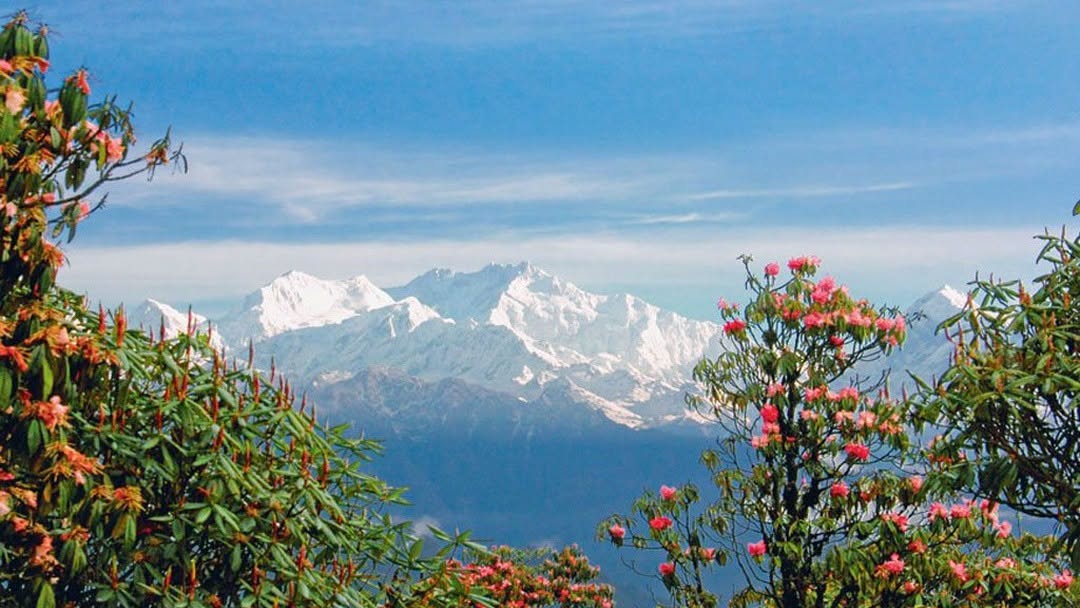
🌄 Sikkim & Darjeeling: Where the Eastern Himalayas Reveal Their Many Faces
There is something distinctive about trekking in the Eastern Himalayas. The mountains do not reveal themselves all at once. Sometimes they remain hidden behind forests and drifting clouds for days, only to appear suddenly above a ridge. Sometimes the trail follows an ancient mountain path through villages and prayer-flagged clearings. And sometimes, after several days of climbing, the forest falls away and an immense Himalayan horizon opens before you.
Across Sikkim and Darjeeling, the landscapes change remarkably over relatively short distances. There are deep valleys, ancient forests, rhododendron-covered slopes, alpine lakes, open grasslands and long mountain ridges. Above them rises the immense Kangchendzonga massif, one of the most revered mountain landscapes in the world.
This is also a region where no two trekking journeys need to feel alike. The approach to Goechala takes you deep into the high valleys of Khangchendzonga National Park. The Singalila Ridge offers a different perspective, with long ridgelines, borderland villages and extraordinary views stretching from Kangchendzonga towards Everest. Elsewhere, quiet forest routes lead to lesser-known viewpoints and high-altitude lakes that see far fewer trekkers.
In this guide, we bring together six treks across Sikkim and Darjeeling. Some are demanding high-altitude journeys. Others are quieter forest and ridge walks. One is a classic mountain panorama route that has earned its place among the most celebrated treks in the Eastern Himalayas.
The aim is not simply to tell you which trek is the best. It is to help you understand what each journey offers, what it asks of you, and which landscape you might want to experience.
🏔️ Six Treks, Six Different Ways to Experience the Eastern Himalayas
Although these routes share the wider mountain landscape of Sikkim and Darjeeling, their character is remarkably different. The right choice depends on whether you are drawn to high mountain wilderness, panoramic ridges, forest biodiversity, alpine lakes or quieter trails away from the familiar trekking circuit.
1. Goechala Trek – Into the Mountain Kingdom of Kangchendzonga
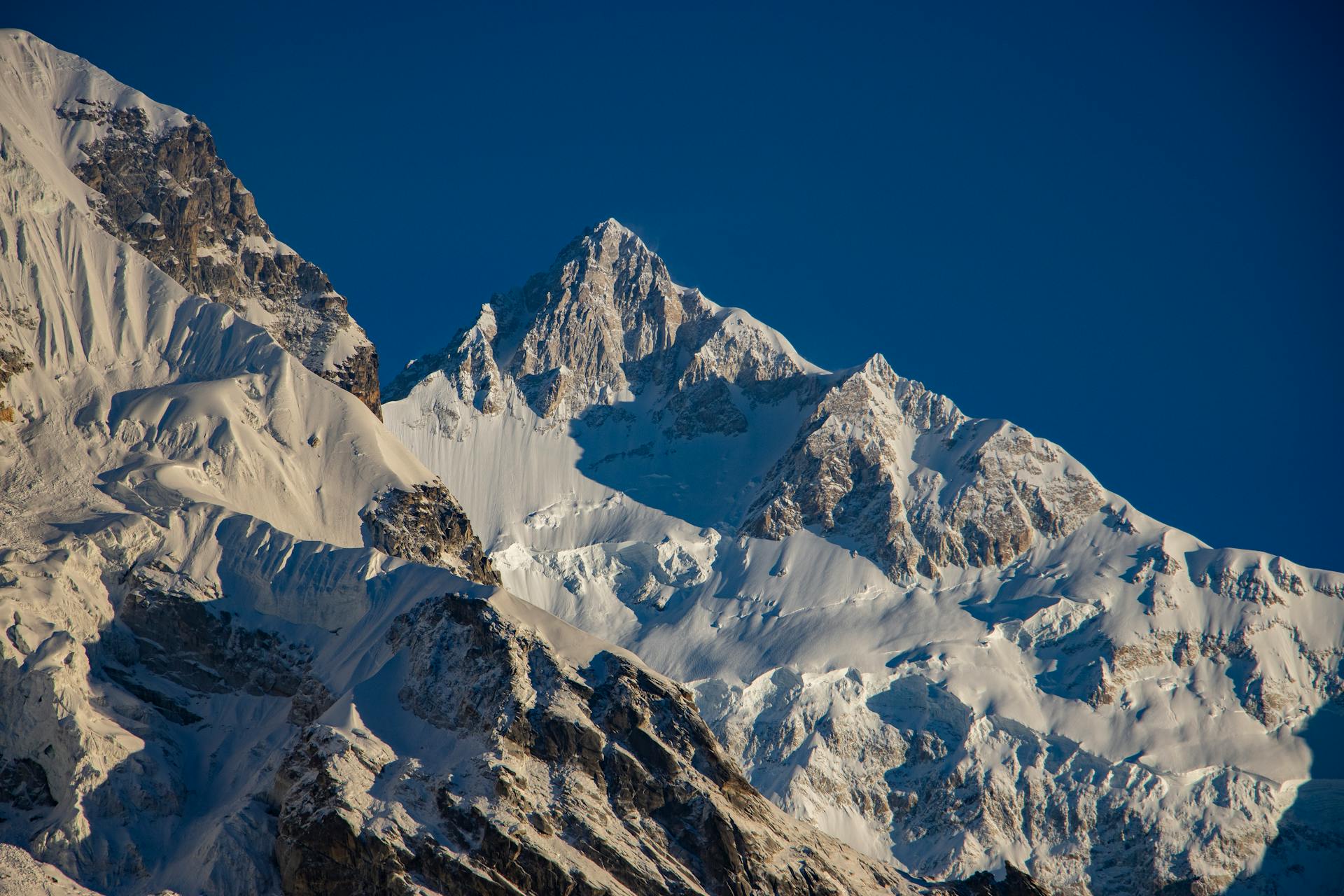

📍 Yuksom, Sikkim | ⏳ 9 Nights / 10 Days | ⚡ Difficult | 🏔️ Approx. 15,200 ft
Some mountain journeys are remembered for a particular viewpoint. Goechala is remembered for the entire approach.
Beginning in Yuksom, the trail enters the wilderness of Khangchendzonga National Park, moving through ancient forests, wooden bridges, cascading streams and increasingly open mountain terrain. The early days are filled with the sounds and textures of the forest. Gradually, the trail climbs towards the high meadows of Dzongri, where the surrounding peaks begin to dominate the horizon.
The journey continues through Kokchurang and Thansing before reaching the beautiful Samiti Lake. Set beneath an extraordinary mountain amphitheatre, the lake is one of the most memorable places along the route. Beyond it, the landscape becomes more rugged and exposed as trekkers approach Goechala Viewpoint 1.
At approximately 15,200 ft, the viewpoint offers a magnificent perspective of the massive south face of Kangchendzonga. The surrounding peaks, glacial valleys and immense scale of the landscape make this one of the most rewarding high-altitude trekking experiences in India.
Goechala is not a route to choose simply because of its famous mountain views. Long trekking days, substantial altitude gain, cold campsites and demanding terrain require preparation and previous trekking experience. The journey rewards those who are ready to give the mountains time.
Best suited for: Experienced trekkers looking for a demanding Himalayan journey, high-altitude camps, alpine lakes and an unforgettable approach towards the Kangchendzonga massif.
📖 Explore the Complete Goechala Trek Guide →
2. Dzongri Trek – Where the Himalayas Fill the Horizon
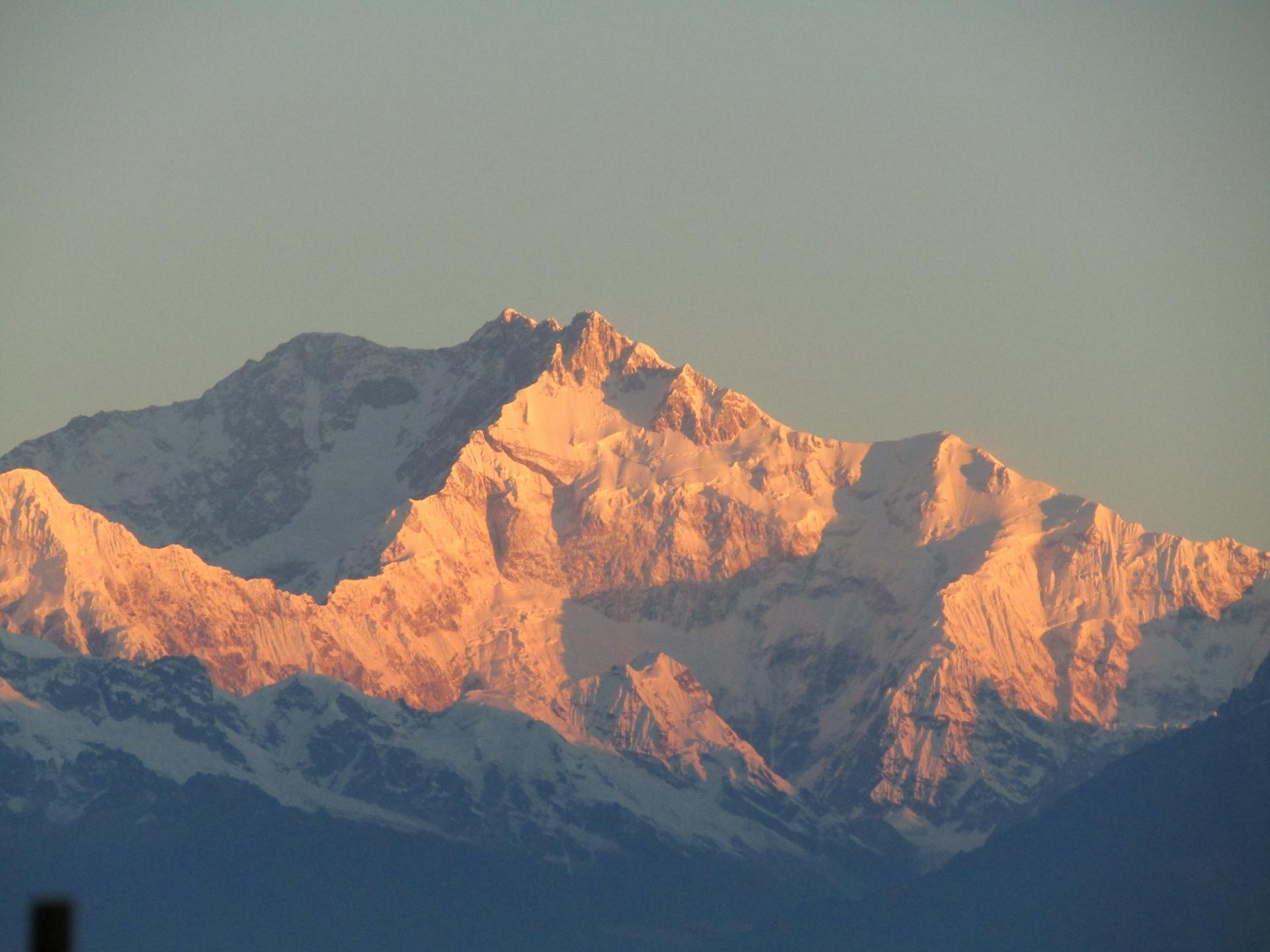
📍 Yuksom, Sikkim | ⏳ 5 Nights / 6 Days | ⚡ Moderate–Difficult | 🏔️ Approx. 13,675 ft at Dzongri Top
Dzongri is one of Sikkim's most rewarding high-altitude trekking destinations, taking you deep into the mountain wilderness of the Kangchendzonga region. The trail climbs through beautiful forests and traditional mountain campsites before opening into vast alpine meadows and rugged high-altitude terrain.
The highlight is the ascent to Dzongri Top, where an extraordinary Himalayan panorama unfolds. Kangchendzonga and its neighbouring summits dominate the skyline, creating a view that stays with you long after the journey ends.
From quiet forest trails to expansive mountain ridges, Dzongri offers a wonderful progression through the landscapes of the Eastern Himalayas. It is a trek where the journey itself is as memorable as the summit viewpoint.
Best suited for: Fit trekkers seeking a challenging high-altitude journey, spectacular Himalayan panoramas and an immersive experience in Sikkim's mountain wilderness. Previous trekking experience is recommended.
📖 Explore the Complete Dzongri Trek Guide →
3. Bajre Dara Trek – A Quiet Ridge Above the Sacred Lake
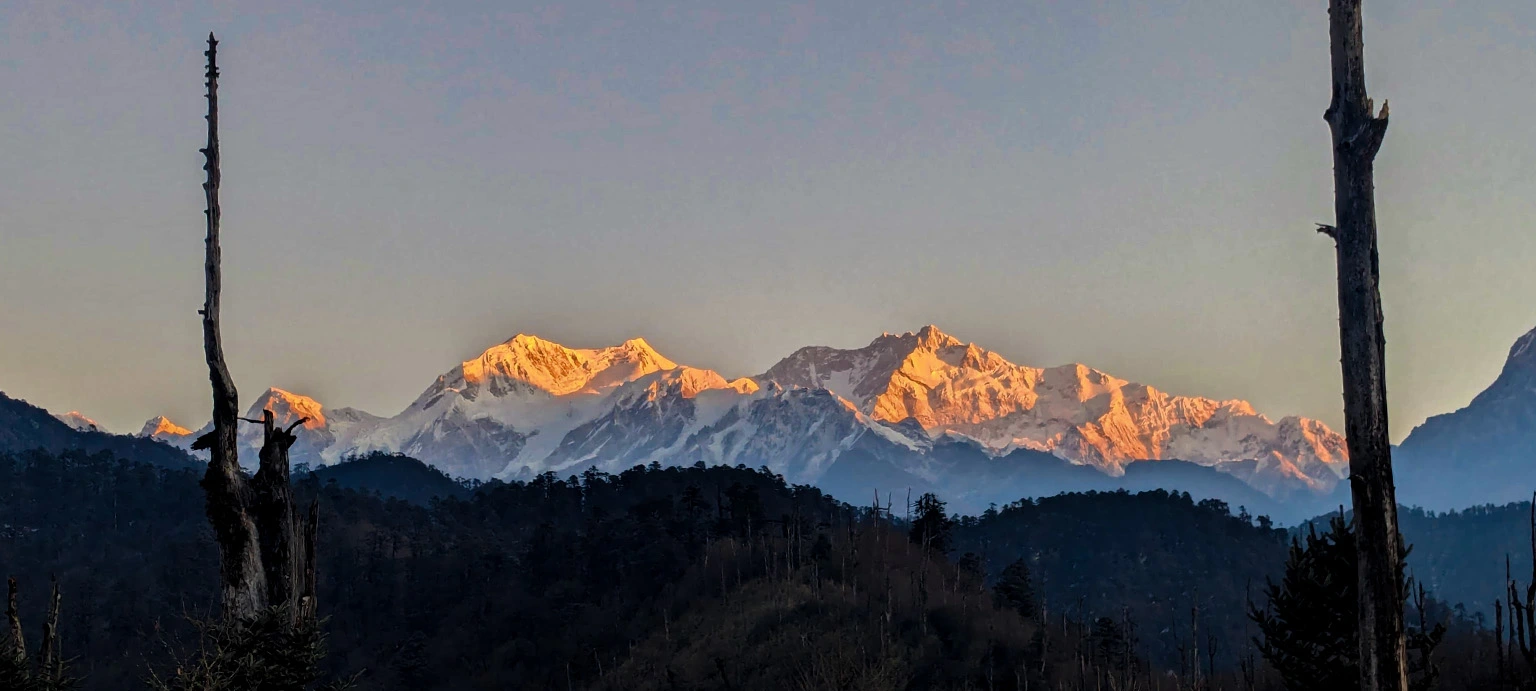
📍 Khecheopalri, West Sikkim | ⏳ 4 Nights / 5 Days | ⚡ Moderate | 🏔️ Approx. 10,990 ft
Not every Himalayan journey needs to lead into the highest mountains. Some of the most memorable experiences come from discovering a quieter corner of the hills, where the journey is shaped by the places you pass through as much as the viewpoint at the end.
The Bajre Dara Trek begins in the peaceful surroundings of Khecheopalri, home to the sacred Khecheopalri Lake. Revered by both Buddhist and Hindu communities, the lake gives the journey a cultural and spiritual beginning that is quite different from most trekking routes.
From here, the trail climbs through forested mountain paths towards Bhanjyang and the open ridge of Bajre Dara. The landscape gradually changes as you gain height, moving away from the quiet village surroundings into a more exposed mountain setting.
The summit area is particularly distinctive. Weathered trees shaped by lightning and the elements give the ridge an unusual character. Spending a night in this high mountain setting and watching the first light reach the Himalayan horizon can become the defining memory of the trek.
Bajre Dara is a compact journey, but it should not be mistaken for an effortless walk. The ascent and the long descent require reasonable fitness, particularly on the final trekking day.
Best suited for: Trekkers looking for a shorter, quieter Himalayan experience combining local culture, forest trails, mountain camping and a rewarding ridge viewpoint.
📖 Explore the Complete Bajre Dara Trek Guide →
4. Dafeybhir La Trek – The Remote Alpine Lakes of the Singalila Ridge
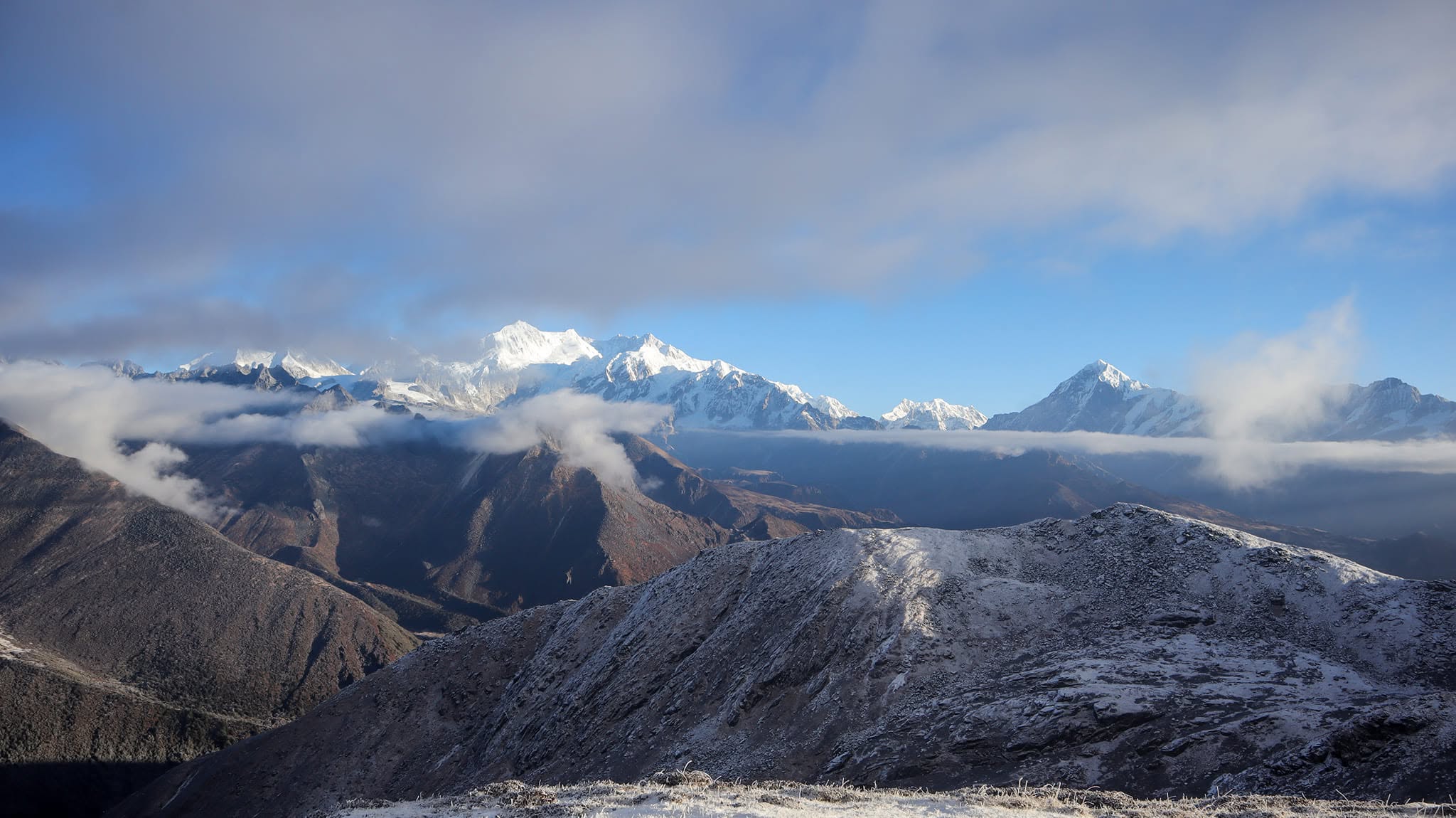
📍 Uttarey to Senkhola, West Sikkim | ⏳ 9 Nights / 10 Days | ⚡ Difficult | 🏔️ Approx. 14,862 ft
For trekkers who want to move beyond the better-known Himalayan trails, Dafeybhir La opens up an entirely different side of Sikkim.
Beginning in Uttarey, this demanding journey follows a remote section of the Singalila Ridge near the India–Nepal border. The first part of the route climbs through forests of oak, bamboo and rhododendron before reaching Chewabhanjyang. Beyond the forest, the landscape opens into long mountain ridges, exposed campsites and high-altitude grasslands.
One of the defining features of this trek is its remarkable collection of alpine lakes. Lampokhri, Nepal Jumley Pokhri and Sikkim Jumley Pokhri, also known as Ram and Laxman Pokhri, are among the lakes associated with this high mountain region. Other lakes, including Laxmi Pokhri and Tembong Pokhri, may require additional walking and route adjustments.
The journey is not only about reaching a pass. It is about spending several days in a remote mountain landscape where the ridgelines stretch across the horizon and the lakes appear in unexpected places along the trail.
Dafeybhir La is a serious undertaking. Its altitude, long walking days, remote campsites, exposed terrain and variable water availability make it unsuitable as a first Himalayan trek. Good physical preparation, previous high-altitude trekking experience and reliable logistical support are essential.
Best suited for: Experienced trekkers seeking remote mountain wilderness, high-altitude lakes, long ridge walks and a demanding route away from the more familiar trekking corridors.
📖 Explore the Complete Dafeybhir La Trek Guide →
5. Singalila Phoktey Dara Trek – From Rhododendron Forests to the Himalayan Horizon
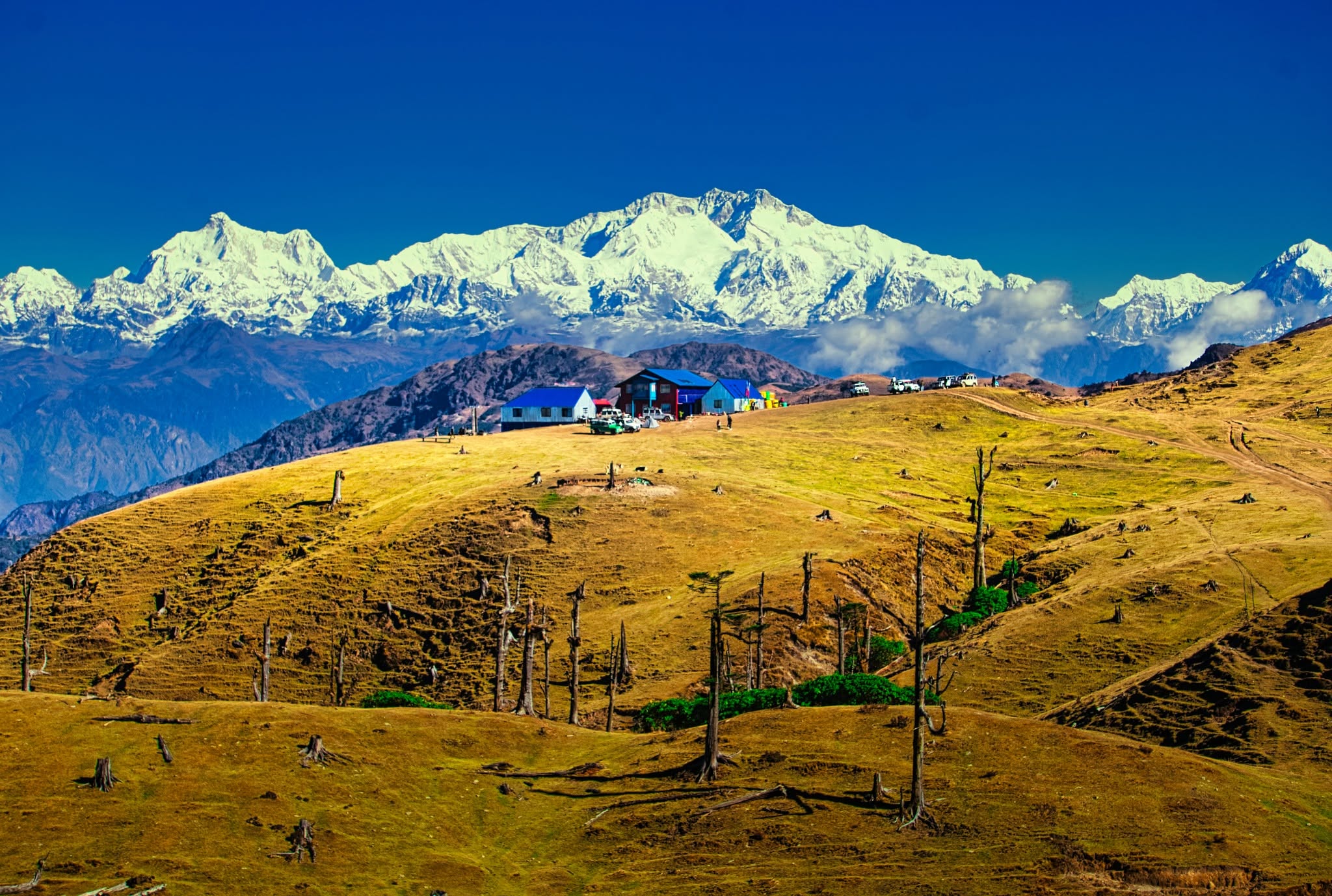
📍 Hilley to Uttarey, West Sikkim | ⏳ 6 Nights / 7 Days | ⚡ Easy–Moderate | 🏔️ Approx. 12,150 ft
Some trails are about the mountains you see. Others are about the world you walk through before the mountains finally appear. The Singalila Phoktey Dara Trek brings both experiences together.
The journey begins at Hilley and enters Barsey Rhododendron Sanctuary, one of the important forest landscapes of West Sikkim. For much of the route, the trail remains beneath a dense canopy of oak, magnolia and rhododendron, with mosses, ferns and lichens covering the forest floor.
Spring brings a special character to these forests. Rhododendrons and magnolias flower at different elevations, adding colour to the trail. The sanctuary is also an important wildlife habitat, although sightings of animals such as the red panda are never guaranteed.
As the route climbs towards Kalijhar, Phoktey Dara and Singalila Pass, the forest gradually gives way to open ridgelines. The views change dramatically. On clear mornings, the horizon can include Kangchendzonga, Everest, Lhotse and Makalu, with the celebrated Sleeping Buddha formation appearing across the skyline.
At around 50 km over six trekking days, this is a rewarding route for those who enjoy nature, quiet camping and expansive mountain views. It is not a trek where you spend every day above the treeline. Its appeal lies in the contrast between the immersive forest experience and the dramatic high-ridge panorama.
Best suited for: Nature lovers, photographers and trekkers who want a relatively gentle multi-day camping journey with rich forest landscapes and exceptional Himalayan views.
📖 Explore the Complete Singalila Phoktey Dara Trek Guide →
6. Sandakphu–Phalut Trek – The Legendary Sleeping Buddha Panorama
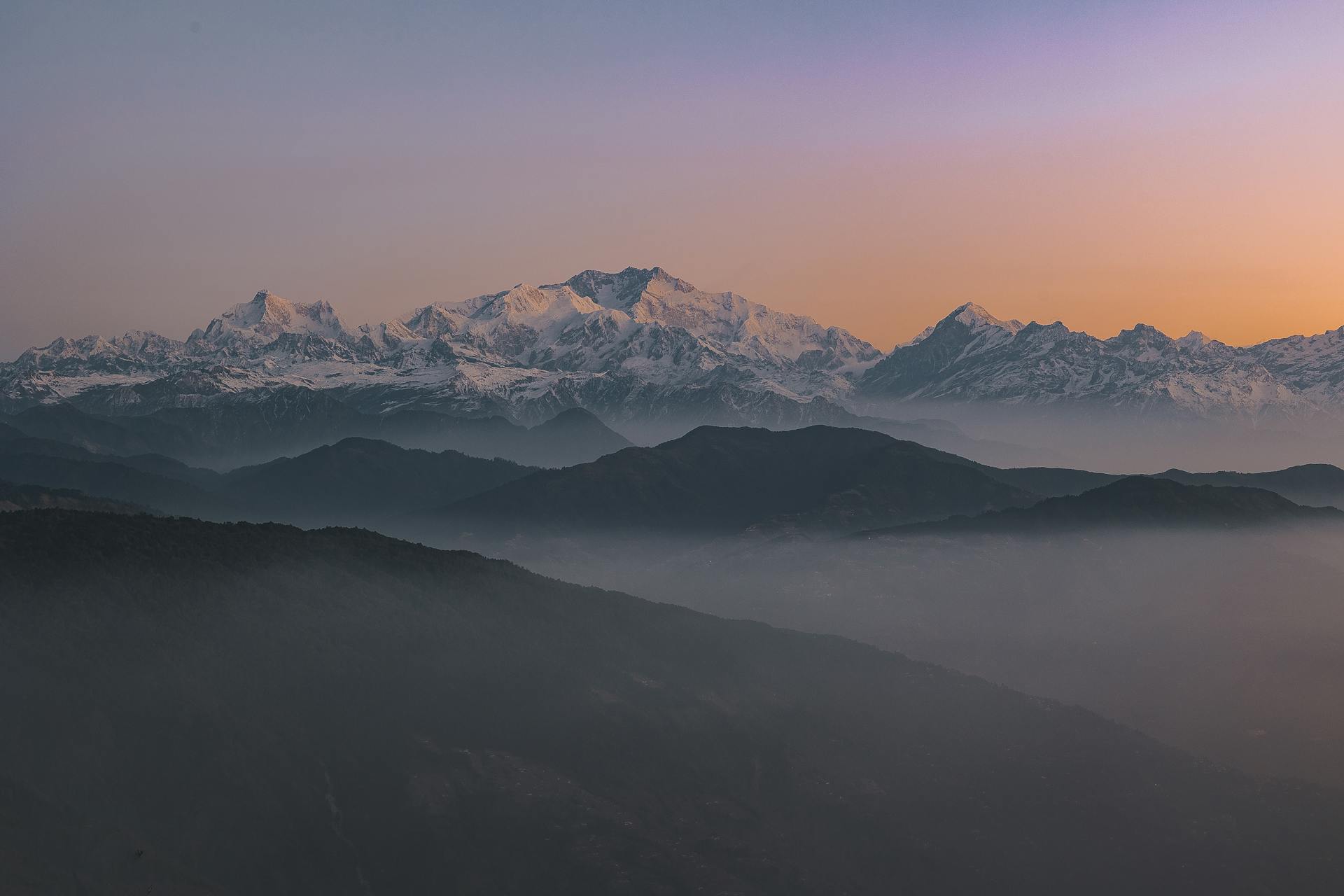
📍 Manebhanjan to Srikhola, Darjeeling | ⏳ 6 Nights / 7 Days | ⚡ Moderate | 🏔️ Approx. 11,930 ft
Sandakphu is one of the most recognisable trekking destinations in the Eastern Himalayas, and for good reason. The trail follows the Singalila Ridge, offering an extraordinary panorama of some of the highest mountains on Earth.
Beginning at Manebhanjan, the route climbs through forests and small mountain settlements before reaching Tumling, Kalipokhri and Sandakphu. Along the way, the trail moves between India and Nepal, passing through a landscape shaped by both mountain geography and a rich mix of local cultures.
The defining moment comes when the Himalayan horizon opens up. On clear days, four of the world's five highest mountains can be seen from the wider Sandakphu–Phalut region: Everest, Lhotse, Makalu and Kangchendzonga. The formation created by Kangchendzonga and its neighbouring peaks is popularly known as the Sleeping Buddha.
The journey does not end at Sandakphu. Continuing towards Phalut, trekkers follow a long and beautiful ridge walk with mountain views stretching across the horizon. The trail then descends through forests towards Gorkhey and Srikhola, where the landscape becomes greener and more intimate once again.
Unlike most high-altitude camping treks, Sandakphu offers village stays and tea-house accommodation along much of the route. This adds a cultural dimension to the journey and makes the trail more accessible to fit beginners, although its long walking days and altitude still demand preparation.
Best suited for: Trekkers who want a classic Himalayan ridge journey, exceptional panoramic views, village hospitality and a route that can appeal to both fit beginners and experienced walkers.
📖 Explore the Complete Sandakphu Trek Guide →
🧭 How Do You Choose the Right Trek?
These six journeys offer very different experiences. A trek that is perfect for someone seeking remote high-altitude wilderness may not be the right choice for someone who wants a relaxed forest journey and panoramic viewpoints.
Before choosing, think about the kind of experience you want, the time you have available and the level of physical challenge you are prepared for.
If you want the grandest high-mountain experience
Choose Goechala. Its long approach through Khangchendzonga National Park, alpine camps and close perspective of the mountain massif make it one of the region's defining high-altitude journeys.
If you want a winter mountain experience
Consider Dzongri in winter. Snow-covered forests and alpine meadows give this route a different character. It requires appropriate winter preparation and should only be attempted when the local team considers conditions suitable.
If you want a shorter and quieter trek
Consider Bajre Dara. Its combination of Khecheopalri Lake, forest trails and an open mountain ridge makes it a distinctive shorter journey in West Sikkim.
If you want remote wilderness and alpine lakes
Choose Dafeybhir La. This is the demanding option for experienced trekkers who want long ridge walks, remote campsites and a remarkable collection of high-altitude lakes.
If you love forests as much as mountain views
Choose Singalila Phoktey Dara. Its journey through Barsey Rhododendron Sanctuary and its eventual opening onto the high ridge make it particularly rewarding for nature lovers.
If you want a classic Himalayan panorama
Choose Sandakphu–Phalut. Its celebrated views, borderland villages and tea-house stays make it one of the most distinctive trekking experiences in the Darjeeling Himalayas.
📊 Comparing the Six Treks
Here is a quick comparison to help you understand the differences before exploring the individual itineraries.
| Trek | Duration | Difficulty | Highest Point |
|---|---|---|---|
| Goechala | 9N/10D | Difficult | Approx. 15,200 ft |
| Dzongri | 5N/6D | Moderate | Approx. 13,675 ft |
| Bajre Dara | 4N/5D | Easy-Moderate | Approx. 10,990 ft |
| Dafeybhir La | 9N/10D | Difficult | Approx. 14,862 ft |
| Singalila Phoktey Dara | 6N/7D | Easy–Moderate | Approx. 12,150 ft |
| Sandakphu–Phalut | 6N/7D | Moderate | Approx. 11,930 ft |
Altitude and duration are based on the supplied Planethimalayas trek itineraries. Actual route conditions, itinerary details and achievable viewpoints can vary with weather, permits and local operating arrangements. The Dzongri figure refers to Dzongri Top, while the Goechala figure refers to Viewpoint 1, not the actual mountain pass.
🌿 When Is the Best Time to Trek in Sikkim & Darjeeling?
Spring and autumn are the two best seasons for trekking across Sikkim and Darjeeling. Whether you are drawn to flowering rhododendron forests, high mountain passes, alpine lakes or sweeping Himalayan panoramas, these seasons generally offer the most favourable conditions to explore all six treks in this region.
Spring: March to May
Spring transforms the forests and mountain slopes of Sikkim and Darjeeling. Rhododendrons and magnolias bloom across the hillsides, bringing vibrant colour to trails around Barsey and the Singalila Ridge. The lower forests come alive with fresh foliage, while higher elevations offer dramatic contrasts of flowering landscapes and snow-covered peaks.
All six treks in this region can be planned during their suitable spring windows, making it an excellent season to experience the diversity of the Eastern Himalayas.
Autumn: September to November
Autumn is widely regarded as one of the finest times to explore these mountains. As the monsoon withdraws, the skies often clear, opening up magnificent views of the Himalayan range. Crisp mountain air, clearer horizons and generally favourable trail conditions make this season especially rewarding for high-altitude journeys and panoramic ridge walks.
All six treks are suitable for consideration during their respective autumn windows. For trekkers seeking expansive mountain views, this is an especially beautiful time to visit Sikkim and Darjeeling.
Winter: December to February
Winter brings a completely different charm to the mountains of Sikkim and Darjeeling. Snow-covered forests, white mountain slopes and crisp Himalayan mornings make this a beautiful season for trekking.
Dzongri, Bajre Dara, Singalila Phoktey Dara and Sandakphu are all winter trekking options in this region. Each offers its own experience of the Eastern Himalayas, from high mountain panoramas to snow-covered ridgelines and peaceful forest trails.
Monsoon: June to August
The monsoon season is closed for trekking across these routes. Heavy rainfall, landslides, slippery trails, leeches and poor visibility make this period unsuitable for mountain journeys. Trekking departures are not operated during these months, and the trails are approached again only after the monsoon season has passed and conditions permit.
🎒 Preparing for a Trek in the Eastern Himalayas
The region's variety is part of its appeal, but it also means that preparation cannot be identical for every trek.
- Build your endurance: Prepare for consecutive days of walking, not just one long hike. Stair climbing, brisk walking, strength training and regular hikes can help build the required fitness.
- Understand the altitude: Goechala, Dzongri and Dafeybhir La reach elevations where altitude-related illness is a genuine concern. Follow the planned acclimatisation schedule and report symptoms early.
- Pack for the season: Spring and autumn still bring cold nights at higher camps. Winter journeys require more substantial insulation, appropriate footwear and equipment suited to snow and ice.
- Respect the terrain: Forest trails can be wet and slippery, while exposed ridges may be windy and cold. A good pair of broken-in trekking boots and suitable layers matter.
- Be prepared for limited connectivity: Remote sections of these routes may have little or no mobile network. Inform family and friends about your itinerary before departure.
- Respect local communities and sacred places: Follow local customs, avoid disturbing religious sites, carry your waste back and leave the mountain environment as you found it.
Most importantly, choose a trek that matches your experience. A high-altitude route should never be selected only because its photographs look extraordinary. The right preparation and a well-managed itinerary are what make the experience rewarding.
🤝 Trekking with Care: The Planethimalayas Approach
We believe the best Himalayan journeys are not necessarily the ones that take you the highest or cover the greatest distance. They are the ones that allow you to experience a place with understanding, confidence and respect.
We value small groups, experienced trek leaders and itineraries that leave room for individual attention. We do not believe in treating every trek as a race to a viewpoint. The forests, villages, mountain lakes and local cultures are part of the journey too.
Our responsibility is to help you choose wisely, prepare properly and travel responsibly. Because a Himalayan trek should be more than a list of campsites and altitudes. It should be an experience you remember for the right reasons.
The Eastern Himalayas are not one landscape, and they are not one kind of journey.
They are forests and ridges, sacred lakes and remote passes, familiar trails and places still waiting to be discovered. Find the journey that speaks to you. Prepare for it with care. And give the mountains the time and respect they deserve.
More Than Just A Trek.
Explore the trails of Sikkim and Darjeeling with Planethimalayas. We look forward to welcoming you to the mountains.
❓ Frequently Asked Questions
1. Which are the best treks in Sikkim and Darjeeling?
Some of the most distinctive treks in this region include Goechala, Dzongri, Bajre Dara, Dafeybhir La, Singalila Phoktey Dara and Sandakphu–Phalut. Each offers a different experience, from demanding high-altitude expeditions to forest trails and panoramic mountain ridges.
2. Can Kangchendzonga be seen from all the treks in this region?
Yes. Kangchendzonga is the heart of the Sikkim and Darjeeling trekking region and is visible from all six treks featured here. The experience, however, changes with the trail. Dzongri, Goechala and Dafeybhir La bring you closer to the great massif, offering more intimate views of its towering peaks. From Sandakphu, Phoktey Dara and Bajre Dara, Kangchendzonga appears from a greater distance, forming part of a much wider Himalayan panorama. Different perspectives, but the same magnificent mountain at the centre of them all.
3. Is Sandakphu in Sikkim or Darjeeling?
Sandakphu is in the Darjeeling district of West Bengal, along the Singalila Ridge near the India–Nepal border. It is included in this regional guide because of its close geographical and trekking connection with the wider Eastern Himalayas and Sikkim.
4. Which trek is suitable for beginners?
Singalila Phoktey Dara and Sandakphu can be considered by fit beginners who are prepared for multi-day walking. Bajre Dara may also suit prepared beginners, although its long descent requires reasonable fitness. Goechala and Dafeybhir La are demanding routes and are not recommended as first Himalayan treks.
5. Which is the most challenging trek in this list?
Goechala and Dafeybhir La are both demanding high-altitude treks. Goechala involves a long approach through Khangchendzonga National Park, while Dafeybhir La combines remote campsites, exposed ridges and high-altitude lake exploration. The exact challenge depends on conditions and the trek itinerary.
6. Can I go trekking in Sikkim during winter?
Absolutely. Dzongri, Bajre Dara, Singalila Phoktey Dara and Sandakphu are among the winter trekking options in the Sikkim and Darjeeling region. These trails offer a wonderful opportunity to experience snow-covered forests, mountain ridges and the magnificent Himalayan panorama in a different season.
7. When can I see rhododendrons in Sikkim and Darjeeling?
Spring, generally from March to May, is the main flowering season. The timing varies with elevation, weather and the species of rhododendron. Barsey Rhododendron Sanctuary and the Singalila region are particularly rewarding during the flowering period.
8. Can I see Everest from Sikkim?
Yes. Everest can be visible from viewpoints along parts of the Singalila Ridge, including Phoktey Dara and Dafeybhir, on clear days. Lhotse and Makalu may also appear on the Nepal horizon. Visibility depends on weather and atmospheric conditions.
9. Do these treks require previous trekking experience?
It depends on the route. Previous multi-day trekking experience is strongly recommended for Goechala, Dzongri in winter and Dafeybhir La. Fit beginners may consider routes such as Sandakphu or Singalila Phoktey Dara with proper preparation and guidance.
10. Are these treks available as fixed departures or private groups?
Departure arrangements vary by trek. Some routes may have scheduled fixed departures, while others are organised on request. Private groups can also enquire about suitable dates, subject to permits, local logistics and the availability of trekking staff.
11. Are mountain views guaranteed on these treks?
No. Mountain visibility depends on weather, cloud cover and atmospheric conditions. Even during the best trekking seasons, views cannot be guaranteed. The experience of the forests, villages, lakes and mountain trails remains an important part of the journey.
