WhatsApp FAQs
×

Trek Grade Guide:


Trekking in the Himalayas is a true adventure experience — a journey into high-altitude wilderness where nature exists in its most raw and powerful form. Every trek comes with physical challenges, unpredictable weather, and varying terrain. Choosing the right trek grade is essential not just for a great experience, but also for safety and proper acclimatization.

To help you make the right choice, treks are categorized into three levels based on altitude, terrain, duration, and overall difficulty:

Easy (Beginner-Friendly Treks):
Ideal for first-time trekkers or those looking for an easy trek in the Himalayas. These treks usually last up to a week, with shorter hiking days, gradual altitude gain, and a maximum altitude of around 14,000 ft. The terrain remains well-defined, often within or near the tree line, with civilization relatively accessible. Weather conditions are more predictable, making these treks safer and easier to manage, with quicker rescue access if required.

Moderate Treks:
Designed for trekkers with some prior experience or good fitness levels. These treks may extend beyond a week and include a mix of short and long trekking days, with altitudes reaching up to 16,000 ft. You move above the tree line into more rugged landscapes — including alpine meadows, moraines, and high-altitude terrain. Weather becomes more unpredictable, and conditions can change suddenly. While still manageable, these treks require better preparation, endurance, and mental strength.

Difficult (Expedition-Level Treks):
These are high-altitude expeditions meant for experienced trekkers. Routes often exceed 17,000 ft and pass through glaciers, snowfields, steep ascents, river crossings, and technical terrain. Treks can last up to two weeks, taking you far from civilization into extreme Himalayan conditions. Weather can shift rapidly, and sections may require technical equipment like ropes or ice axes. Rescue in such regions is complex, making experience, self-sufficiency, and strong mental resilience absolutely essential.

Understanding these categories helps you choose a trek that matches your fitness, experience, and expectations — ensuring a safe, enjoyable, and truly memorable Himalayan adventure.

×


PriceNote – Listed Price & Customisation Rules:
The listed trek price applies to our fixed departures for the specified itinerary. Trek fees including any add-ons for customized groups may vary based on your preferences, ensuring every adventure is tailored to your needs.

Group Booking Offer:
For groups of 8 or more booking together, the trek fee for 1 participant will be waived as a token to encourage shared adventures.

Scholarship for Kids:
Children under 15 years receive a 30% discount on the trek price, making it easier for families to explore the Himalayas together.

×


Transport Price Note:
The transport price mentioned is only an current indicative estimate per person, assuming a Non-AC vehicle like Bolero shared by at least 4 participants.
Fewer participants → cost rises;
More participants → cost decreases.

Transport Selection During Booking:
Selecting transport during booking informs us of your preference. No payment is collected at booking.

Final Cost & Payment:
Final transport cost will be communicated before departure and to be paid directly to the cab driver.

×

Itinerary Note:
This itinerary represents the most updated plan, but minor adjustments may occur due to operational needs or mountain conditions.

Singalila Phoktey Dara Trek

Through the Rhododendron Forests of Varsey to the Legendary Singalila Pass

Gallery

Trek Overview

  • ⏳ Trek Duration: 6 Nights / 7 Days
  • ⚡ Trek Grade: Easy to Moderate ?
  • 🏔️ Max Altitude: ≈3710 m (Singalila Pass)
  • ⚡ Trek Distance: ≈52 km
  • 🌤️ Best Time: Spring, Autumn, & Winter
  • 🗺️ Region: Sikkim
  • 📍 Start / End: Hilley / Uttarey
  • 🧥 Cloakroom Facility: Not Available
No Regular Fixed Departures

This trek is organised on request rather than through scheduled group departures. You can plan it as a solo journey, a couple's getaway, a family trek or a private group experience.

Starting price per person ?

INR 19,400 *NJP to NJP

Indicative pricing is based on a reference group of 5 trekkers. Your final quote will depend on group size and the level of customisation.

*Price inclusive of all applicable taxes (GST included).

Small group sizes • High guide-to-trekker ratio • No hidden costs

Addons (Optional)

  • Offloading Bags – INR 4,900 (* Maximum weight 9kg / bag)

Make This Trek Your Own

Prefer to travel on your own dates or at your own pace? We love to customise trek around your plans — whether you're travelling solo, as a couple, with family or with your own group.

Walking The Trail

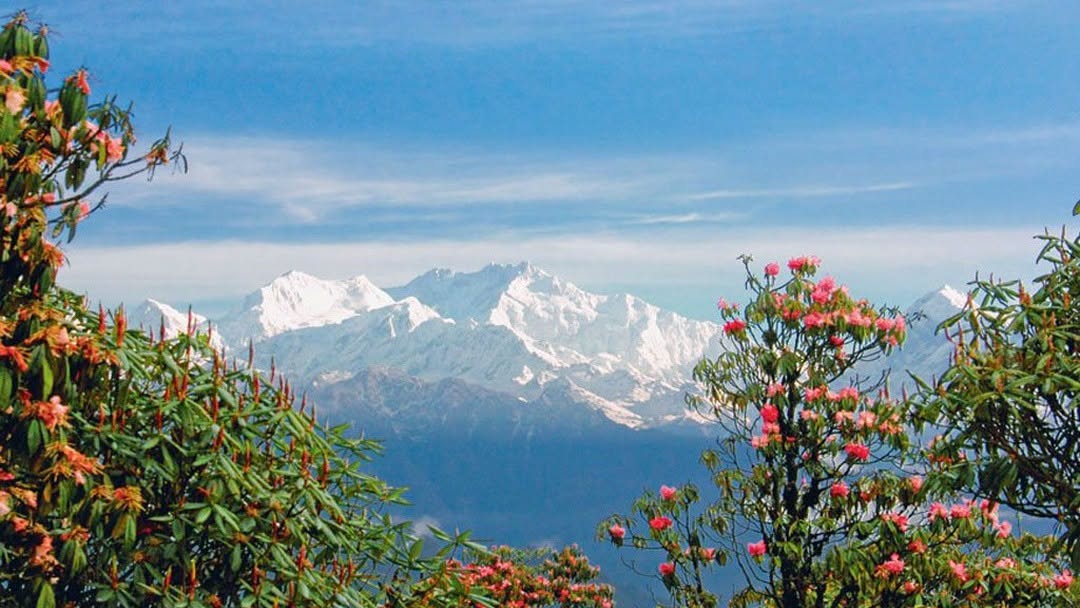
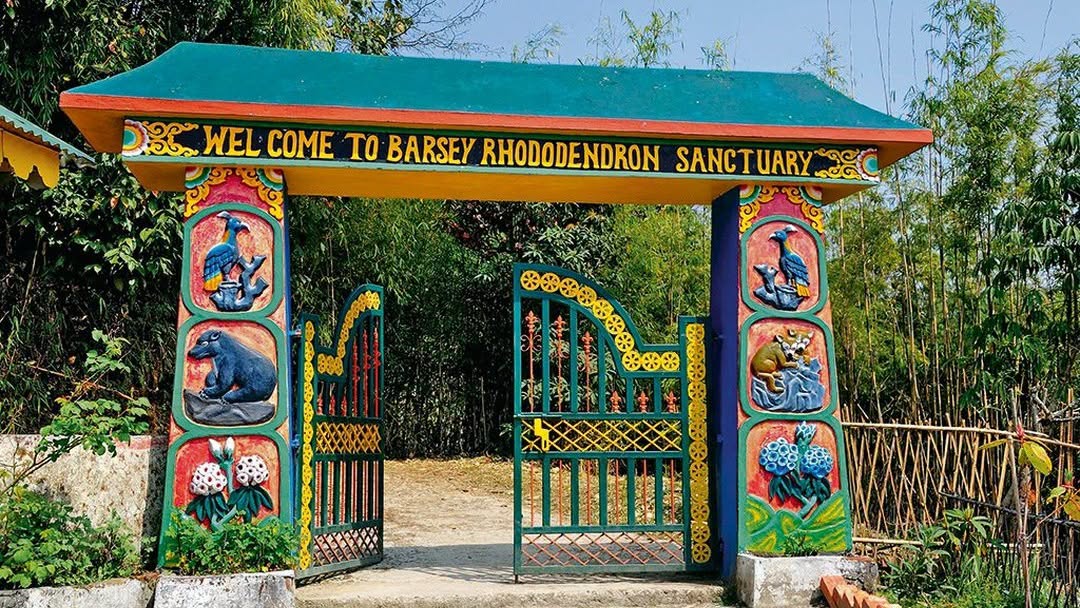
The Singalila Phoktey Dara Trek takes you into one of the quieter forest landscapes of West Sikkim, following a trail through Barsey Rhododendron Sanctuary before climbing towards the high ridges of Phoktey Dara and Singalila Pass. This is not a trek where the mountains are constantly in view. Much of the journey unfolds beneath a dense forest canopy, along damp trails lined with moss, ferns, lichens, oak, magnolia and rhododendron. The experience is as much about being immersed in this living forest as it is about reaching the high points.

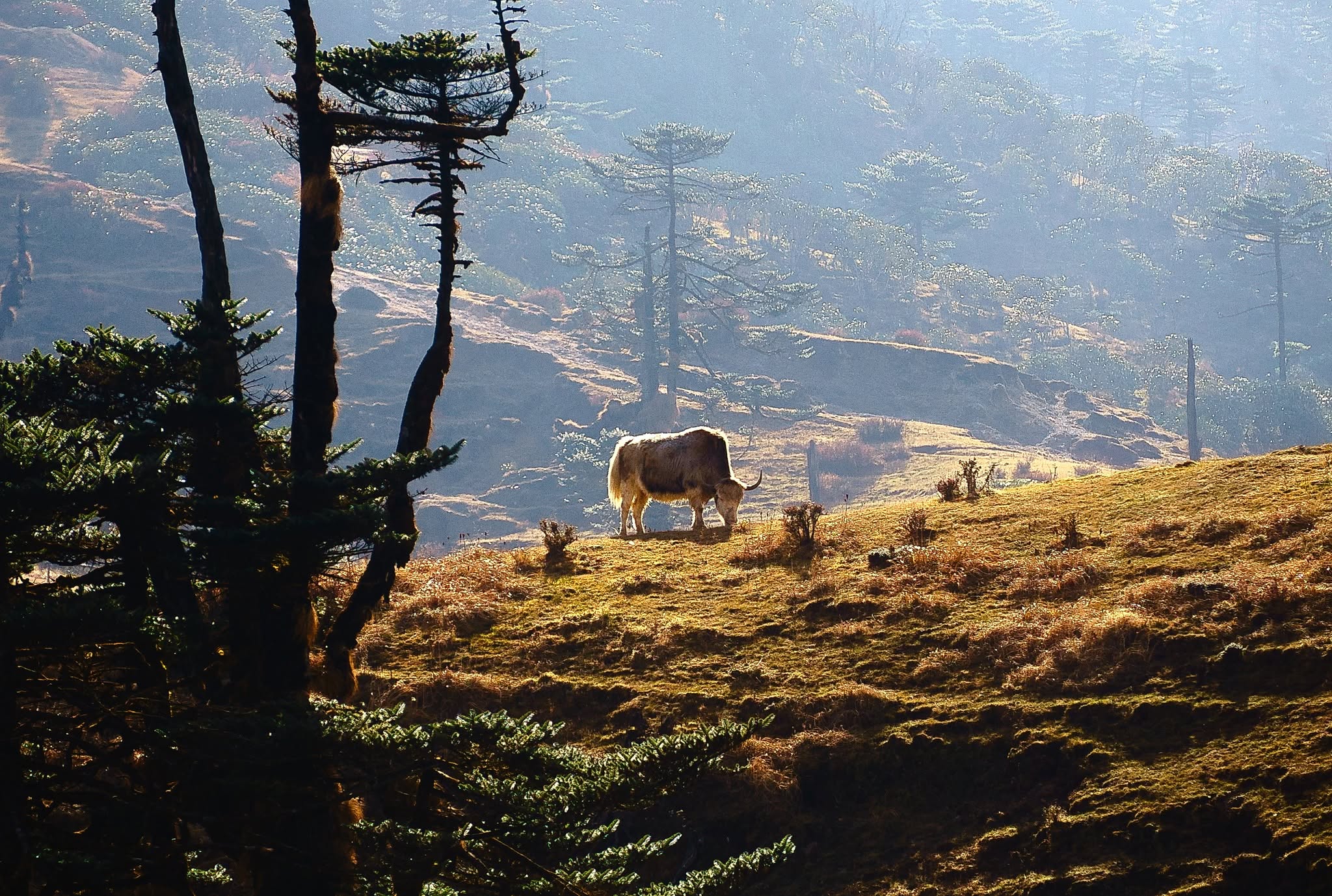
The route moves through Barsey, Deolingali Dhaap, Joributey and Kalijhar, with nights spent at quiet campsites surrounded by forest and open clearings. In spring, rhododendrons and magnolias bring colour to the trail, while birdsong and the rich ground flora make this a rewarding journey for nature lovers. The sanctuary is also home to wildlife including the red panda, barking deer and Himalayan black bear, although sightings are never guaranteed.

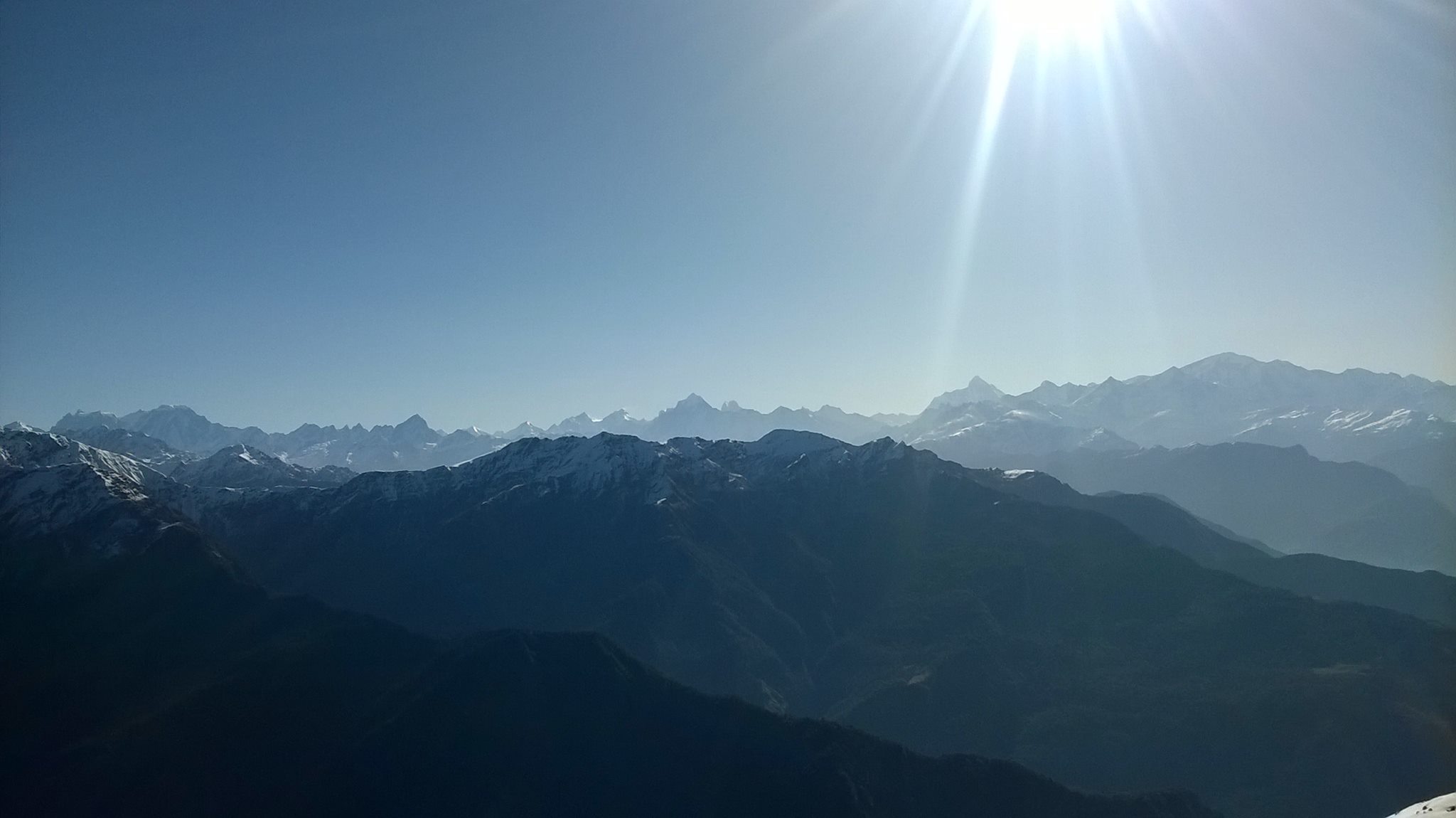
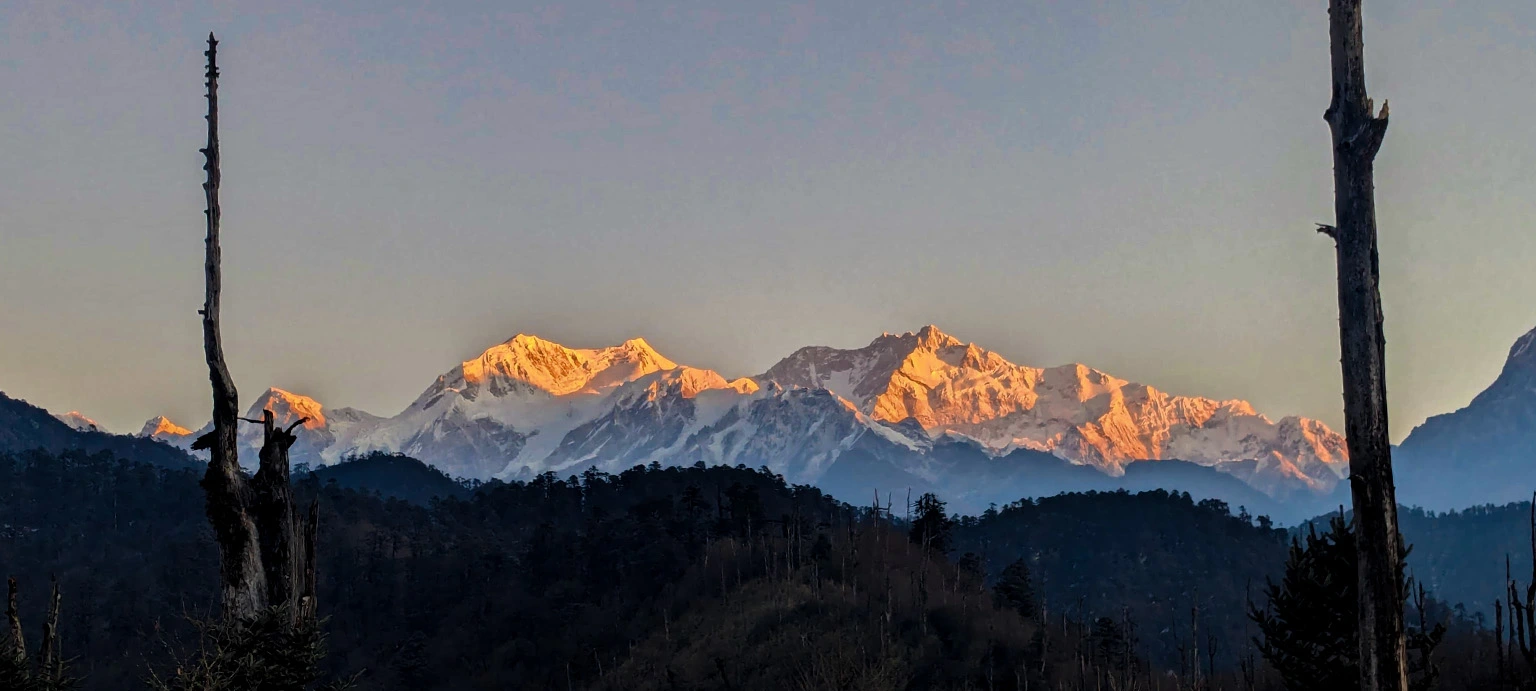
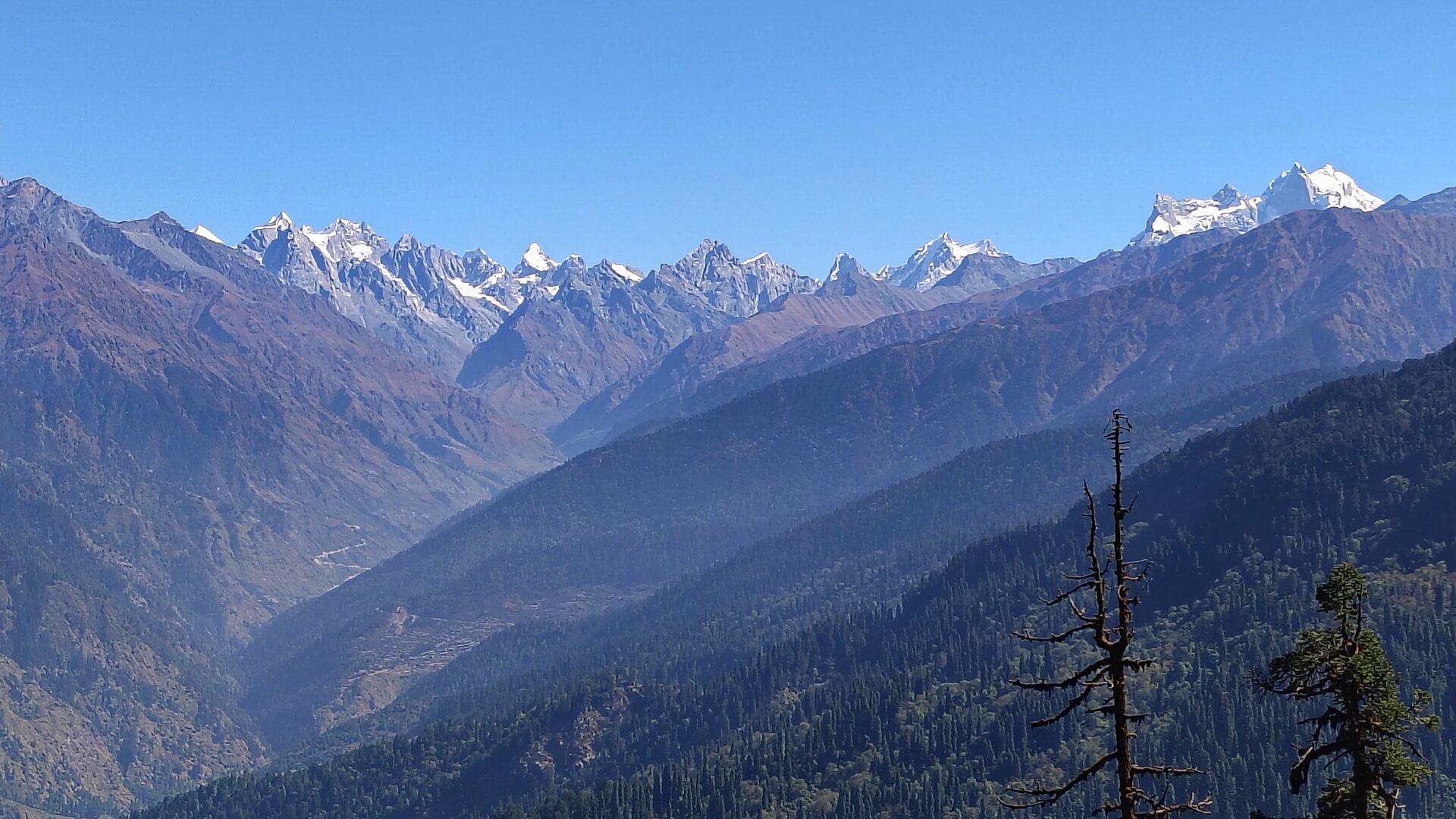
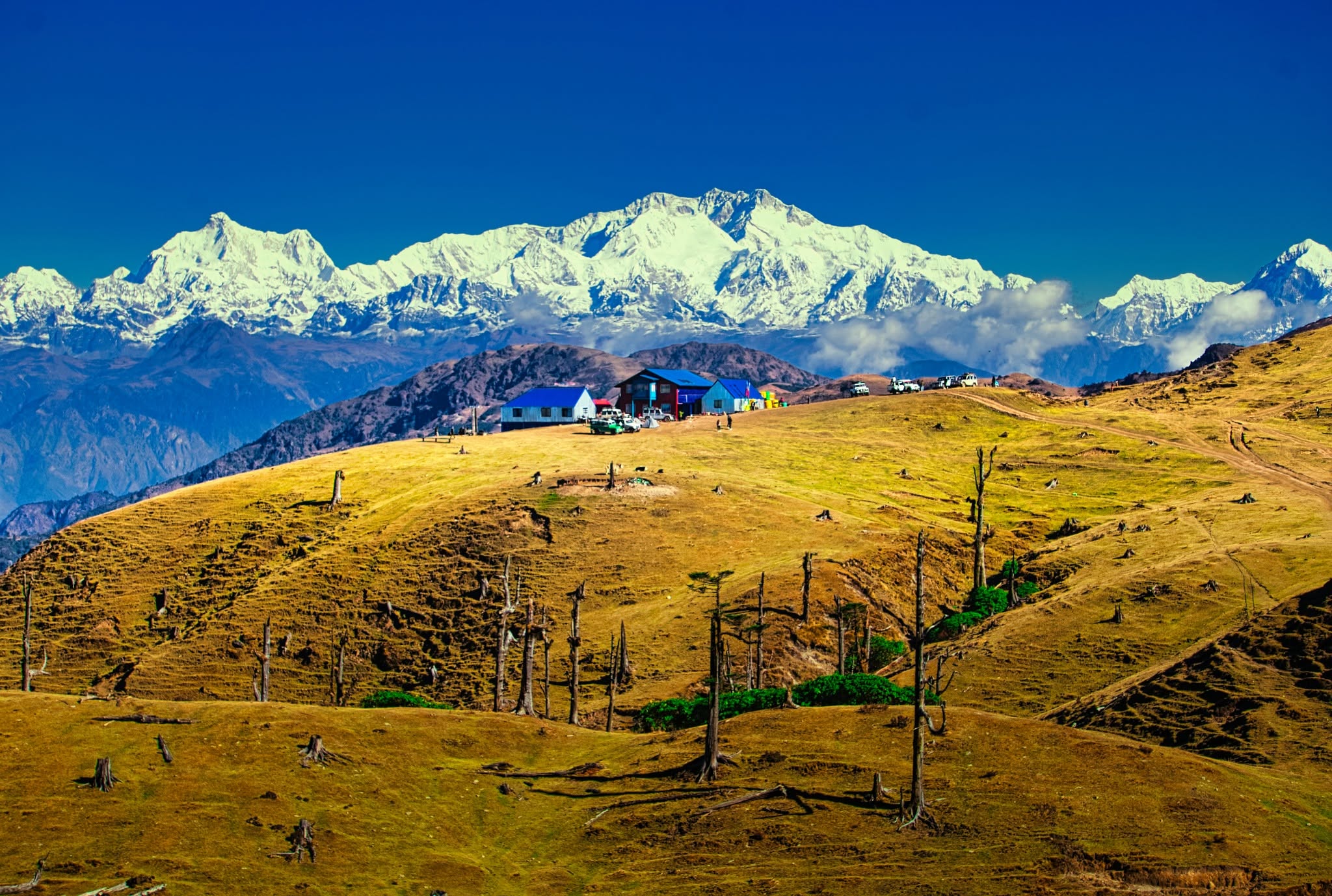
The character of the landscape changes as the trail gains height. From Phoktey Dara and Singalila Pass, the forest gives way to open mountain panoramas. On a clear morning, the Himalayan horizon can include Everest, Lhotse and Makalu in Nepal, along with the immense Kangchendzonga massif and its neighbouring peaks. The Sleeping Buddha formation is particularly striking from this part of the Singalila Ridge.

At around 50 km over six trekking days, this is a relatively gentle high-altitude route, but it is not simply a short viewpoint walk. It offers several days of forest trekking, remote camping and a rewarding high-ridge experience. For those who enjoy nature, quiet trails and expansive Himalayan views, Phoktey Dara is a distinctive way to explore the forests and mountains of West Sikkim.

Read More

Highlights

✅ Walk through a rich forest landscape of oak, magnolia, rhododendron, ferns, mosses and lichens in one of West Sikkim's important biodiversity areas.

✅ Spend nights at Barsey, Joributey, Kalijhar and Thulo Dhaap, with the experience of camping in remote forest clearings.

✅ Reach the viewpoint early for a wide Himalayan panorama as the first light reaches the high peaks.

✅ Visit the high ridge at approximately 3,700 metres, with sweeping views towards the Kangchendzonga range and the Nepal Himalayas.

✅ The sanctuary supports varied birdlife, butterflies and wildlife habitat, making the trail especially rewarding for nature enthusiasts and photographers.

✅ Rather than spending every day above the treeline, this journey gives you time to experience the forests and quieter landscapes of the Eastern Himalayas.

Itinerary

?
• Drive distance: Approximately 140 km.
• Drive duration: Approximately 7–8 hours.

Begin your journey from New Jalpaiguri (NJP), Bagdogra Airport or Siliguri, with a morning pickup around 10 AM. Drive towards Hilley in West Sikkim, passing through the foothills and winding mountain roads via Jorethang.

As the road climbs into the mountains, the landscape gradually changes from the busy settlements of the plains to quieter villages, forested slopes and distant Himalayan views. Reach Hilley, the gateway to Barsey Rhododendron Sanctuary, and settle into your guesthouse. Spend the evening resting and preparing for the trek ahead.
• Trek distance: Approximately 4.5 km.
• Trek duration: Approximately 2–3 hours.
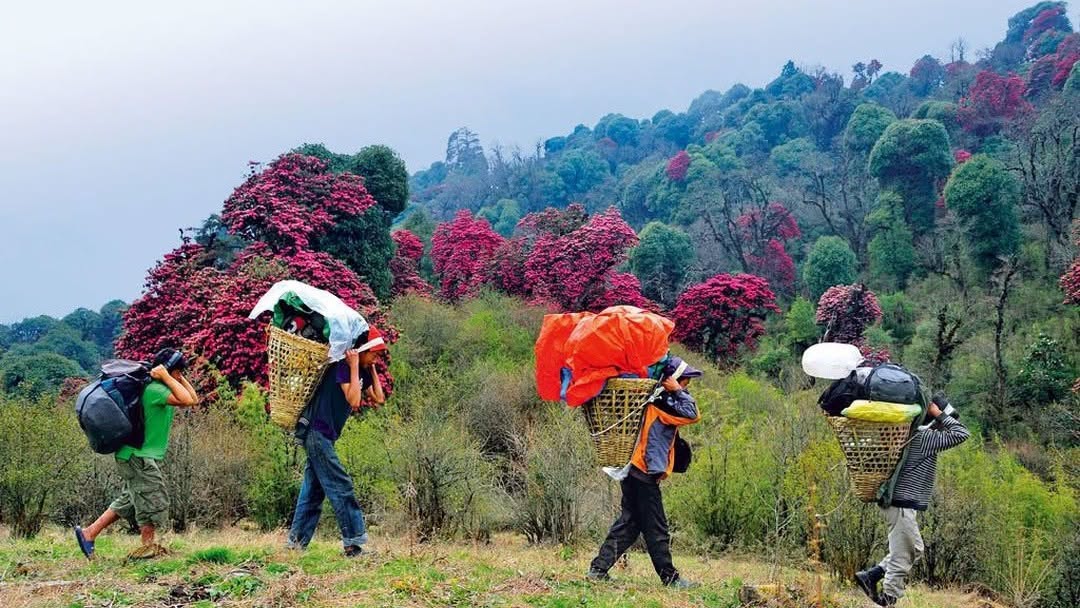
After breakfast, begin the trek from Hilley towards Barsey. The trail follows a gradual ascent through the forest, entering the beautiful landscape of Barsey Rhododendron Sanctuary.

The walk is relatively short, giving you time to appreciate the forest surroundings. Oak, magnolia and rhododendron trees form much of the canopy, while mosses, ferns and lichens add to the rich character of the trail. During the flowering season, the forest takes on a particularly colourful appearance.

Reach Barsey and settle into camp. Spend the remaining time exploring the surroundings and enjoying your first evening in the sanctuary.
• Trek distance: Approximately 12 km.
• Trek duration: Approximately 6 hours.
Leave Barsey after breakfast and continue deeper into the sanctuary. Today's trail takes you through long stretches of forest, where the changing vegetation, moss-covered trees and occasional clearings make the walk particularly rewarding.

En route, pass Deolingali Dhaap, a marshy forest clearing that forms a distinctive feature of this section. Continue through the woodland towards Joributey, following a mostly gradual trail.

Reach Joributey and set up camp for the night. With the forest surrounding the campsite, this is an opportunity to experience the quieter side of the Singalila landscape, away from the more frequently travelled trekking routes.
• Trek distance: Approximately 12 km.
• Trek duration: Approximately 6 hours.
After breakfast, leave Joributey and continue towards Thulo Dhaap. The trail winds through the forest, passing clearings and gradually gaining altitude as you move towards the higher reaches of the sanctuary.

From Thulo Dhaap, continue the climb towards Kalijhar. The ascent becomes more noticeable as the trail gains height, and the surrounding forest gradually takes on a different character.

Reach Kalijhar and settle into camp. You are now closer to the high ridges of Singalila, with the following day bringing the trek's major highlight: an early morning visit to Phoktey Dara.
• Trek distance: Approximately 10 km.
• Trek duration: Approximately 6–7 hours.
• Highest point: Approximately 3,700 m / 12,140 ft.
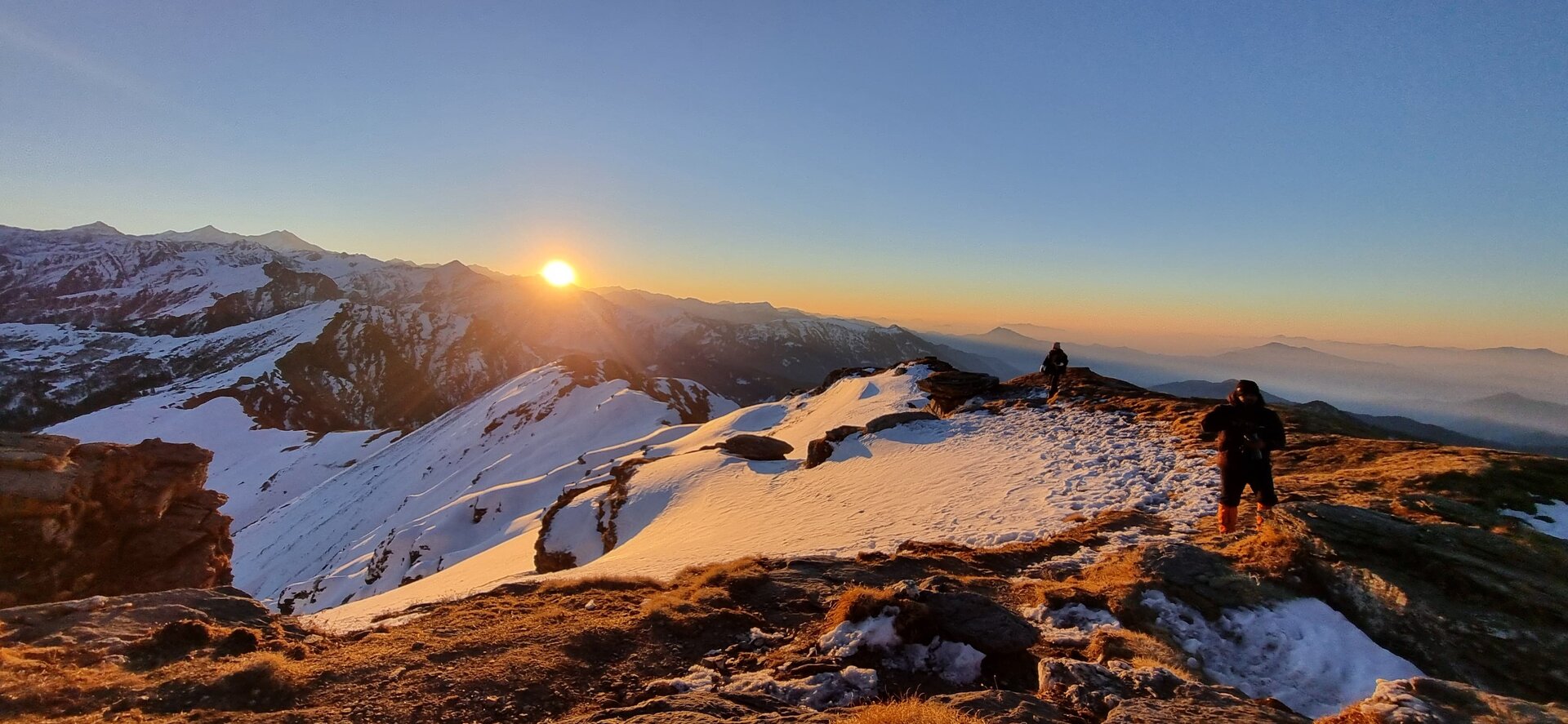
Start early in the morning and make your way towards Phoktey Dara Top. Reach the viewpoint around sunrise, when the first light begins to illuminate the Himalayan skyline. On a clear day, the panorama can include the mighty Kangchendzonga massif, along with Everest, Lhotse and Makalu on the Nepal horizon. Watching the changing colours of the mountains from this high ridge is one of the most memorable moments of the trek.

After spending time at Phoktey Dara, continue towards Singalila Pass, another remarkable vantage point along the ridge. Take in the expansive mountain landscape before beginning the return journey.

Retrace the trail towards Kalijhar and continue descending to Thulo Dhaap, where camp will be set up for the night. After a long and rewarding day on the ridge, settle in and enjoy the quiet of the high forest landscape.
• Trek distance: Approximately 12 km.
• Trek duration: Approximately 6–7 hours.
After breakfast, begin the long descent from Thulo Dhaap towards Uttarey. The trail passes through Achaley and gradually takes you back into the lower forested slopes of West Sikkim.

As you lose altitude, the landscape changes once again. The high ridges and open clearings give way to denser vegetation and the familiar sights and sounds of the lower forests. Continue at a steady pace, taking care on the descending sections.

Reach Uttarey, marking the end of the trekking journey. Check into your lodge or guesthouse and enjoy a well-earned rest after completing the Singalila Phoktey Dara trail.
• Drive distance: Approximately 170 km.
• Drive duration: Approximately 7–8 hours.
After breakfast, begin the return drive from Uttarey towards New Jalpaiguri or Bagdogra. The route winds through the mountain settlements of West Sikkim before gradually descending towards the plains.

Arrive at NJP or Bagdogra by evening, bringing the Singalila Phoktey Dara Trek to an end. Please plan onward train or flight connections with sufficient buffer, as mountain road conditions and traffic can affect travel time.
Packing list

For a comprehensive packing list, download the PDF below: Download Packing List

Did you know?

✅ Barsey is more than a rhododendron destination.
The sanctuary contains several forest types, from temperate broadleaf and mixed coniferous forests to sub-alpine birch-fir and alpine scrub. The changing vegetation is part of what makes this trail interesting throughout its length.
✅ Spring changes the character of the forest.
Rhododendrons and giant magnolias flower at different elevations as the season progresses. Early spring colour appears at lower levels, with flowering gradually moving higher into the sanctuary.
✅ Phoktey Dara offers a remarkable Himalayan horizon.
On clear days, the viewpoint can offer views of Everest, Lhotse and Makalu towards Nepal, alongside the Kangchendzonga massif.
✅ The sanctuary is an important wildlife habitat.
Barsey is home to species including the red panda, barking deer and Himalayan black bear. These animals inhabit the forest, but sightings are never guaranteed.
✅ Water availability can influence campsite selection.
Streams along this trail are seasonal, and water can be limited around higher camps such as Kalijhar. The actual camping location may need to be adjusted according to water availability and conditions.

Route Map

How to reach

✈️ Air: Bagdogra Airport is the nearest major airport. Travellers arriving by air can arrange a pickup from Bagdogra, subject to the transport arrangements for their departure.

🚆 Train: New Jalpaiguri (NJP) is the nearest major railway station and the designated pickup point for this trek. From NJP, the journey continues by road to Hilley, the starting point of the trek. Morning arrival is recommended.

🛣️ Road: Hilley is reached by road through the hills of West Sikkim, generally via Sevoke, Melli, Jorethang, Sombaria and Uttarey. The drive from NJP takes approximately 7–8 hours, covering around 140 km, depending on road and traffic conditions.

🗺️ Travel Tip: Hilley is a remote mountain village, and the final stretch involves winding hill roads. Start the journey early and avoid planning a late arrival, particularly during the monsoon when travel can take longer.

TrekFAQs

  • The trek is graded Easy in the supplied itinerary. It involves approximately 50.5 km of walking over six trekking days, with a highest point of around 3,700 metres. Although the route is not technically difficult, the long walking days and remote campsites require reasonable fitness and preparation.
  • The itinerary is 7 days and 6 nights, beginning with a drive from NJP or Bagdogra to Hilley and ending with the drive back from Uttarey.
  • The highest points are Phoktey Dara Top and Singalila Pass, at approximately 3,700 metres or 12,150 feet.
  • The two main trekking windows are spring, from early March to mid-May, for rhododendron and magnolia blooms, and autumn to winter, from mid-October to January, for generally clearer mountain views. Weather can vary, and mountain visibility is never guaranteed.
  • Yes, Everest can be visible from Phoktey Dara on a clear day. Lhotse and Makalu may also be seen towards Nepal, along with the Kangchendzonga range. Visibility depends on weather and atmospheric conditions.
  • The route is graded Easy, and its gradual introduction to forest trekking makes it an option for beginners with reasonable fitness. However, it is a multi-day camping trek reaching approximately 3,700 metres, so preparation and an understanding of basic trekking conditions are important.
  • This trek is organised on request rather than through a regular fixed-departure calendar. You can enquire about arranging it around your preferred dates, whether travelling solo, as a couple, with family or with a private group.
  • The starting and ending transfers are between NJP or Bagdogra and two different trek points: Hilley and Uttarey. Confirm the transport arrangements and their inclusion in the final trek quotation before booking.
  • Barsey Rhododendron Sanctuary is an important habitat for red pandas, barking deer, Himalayan black bears and many bird species. However, wildlife sightings are unpredictable and should never be treated as a guaranteed part of the trek.

Helpful Resources

Explore our collection of trek-specific guides and practical articles covering preparation, mountain safety, gear, weather, permits, logistics, and more—designed to help you make informed decisions before every Himalayan adventure.

Trekking in the Himalayas: The Real Picture You Need to Know (2025)
Flagship Guides

Trekking in the Himalayas: The Real Picture You Need to Know (2025)

Discover how trekking has changed in 2025 — from a raw, humbling adventure to a crowded social media trend — and why responsible trekking with Planethimalayas is the key to preserving the true spirit of the Himalayas.

Why Deoriatal–Chandrashila Is a Complete Himalayan Experience for Beginners
Flagship Guides

Why Deoriatal–Chandrashila Is a Complete Himalayan Experience for Beginners

Discover why the Deoriatal–Chandrashila trek is one of the most rewarding introductory Himalayan treks. From the reflections of Chaukhamba in Deoriatal Lake and the forests and birdlife of Chopta to the sacred Tungnath Temple and the panoramic Chandrashila summit, explore its villages, landscapes, comfortable stays and seasonal beauty in spring, winter and autumn.

Himalayan Trekking Safety: How Planethimalayas Manages Risk on Every Trek
Flagship Guides

Himalayan Trekking Safety: How Planethimalayas Manages Risk on Every Trek

Himalayan trekking safety starts long before a trekker steps onto the trail. Discover how Planethimalayas approaches mountain safety through trained trek leaders, acclimatization protocols, technical and rescue equipment, small groups, communication planning, and disciplined decision-making.

Responsible Trekking in the Himalayas: How Planethimalayas Practices Sustainable Travel
Flagship Guides

Responsible Trekking in the Himalayas: How Planethimalayas Practices Sustainable Travel

Responsible trekking is more than carrying a waste bag down a mountain. Discover how Planethimalayas approaches sustainable trekking through practical waste reduction, respect for local cultures, protection of water sources, minimal disturbance to wildlife and ecosystems, and responsible behaviour in the Himalayas.

Why Children Should Trek in the Himalayas: Learning Beyond the Classroom
Flagship Guides

Why Children Should Trek in the Himalayas: Learning Beyond the Classroom

Children can learn far beyond the classroom when they experience the Himalayas at an appropriate age and on the right trail. Discover how trekking can teach children about nature, ecosystems, resilience, problem-solving, different cultures, mountain life and the world beyond their everyday surroundings.

Getting Prepared for a Trek in the Himalayas
Preparation Tips

Getting Prepared for a Trek in the Himalayas

Trekking in the Himalayas is a dream adventure — but it demands smart preparation. Whether you're planning a snowy winter trek like Kedarkantha, a scenic route like HarKiDun, or a thrilling climb like Rupin Pass, here’s everything you need to know to get prepared and trek safely and confidently.

Mountain Manners - Responsible Trekking (LNT Principles & Best Practices)
Preparation Tips

Mountain Manners - Responsible Trekking (LNT Principles & Best Practices)

Learn the essential Leave No Trace (LNT) principles for responsible trekking in the Himalayas. Discover how to respect nature, minimize impact, and preserve mountain beauty for future generations.

Complete Himalayan Trek Packing List | Essential Trekking Gear & Tips
Preparation Tips

Complete Himalayan Trek Packing List | Essential Trekking Gear & Tips

Packing smart is the key to a safe and comfortable trek. Here’s a complete checklist of everything you’ll need for a week-long Himalayan adventure. Download the full PDF packing list inside.

Choosing the Right Himalayan Trek: A Strategic Guide for Safety, Experience & Growth
Preparation Tips

Choosing the Right Himalayan Trek: A Strategic Guide for Safety, Experience & Growth

Choosing the right Himalayan trek is not just about destination—it’s about safety, experience, and preparedness. Learn how fitness, season, terrain, and group type influence trek selection and avoid mistakes that can impact your entire journey.

AMS - Acute Mountain Sickness
Health & Wellness

AMS - Acute Mountain Sickness

If you’re planning a high-altitude trek in the Himalayas, it’s important to understand one of the most common health risks in the mountains: Mountain Sickness, also known as Acute Mountain Sickness (AMS).

Preventing AMS-Mountain Sickness
Health & Wellness

Preventing AMS-Mountain Sickness

Trekking in the Himalayas is an unforgettable experience—but it comes with a silent danger: Mountain Sickness, also known as Acute Mountain Sickness (AMS). The good news? With the right precautions, mountain sickness is completely preventable.

Staying Fit & Healthy on a Himalayan Trek (Complete Guide)
Health & Wellness

Staying Fit & Healthy on a Himalayan Trek (Complete Guide)

A complete, practical guide to staying fit and healthy on a Himalayan trek. Covers training, nutrition, hydration, altitude sickness (AMS), sleep, hygiene, and real on-trail survival tips for beginners and experienced trekkers.

Advanced Health & Survival Guide for Himalayan Treks (Real Problems Trekkers Face)
Health & Wellness

Advanced Health & Survival Guide for Himalayan Treks (Real Problems Trekkers Face)

A deep dive into real health challenges faced on Himalayan treks — from gut issues and menstrual health to sleep deprivation, infections, and mental health. Practical solutions based on real trekking scenarios.

Ideal Trekking Shoes for Himalayan Treks | Buying Guide, Features & Top Brands
Gear & Logistics

Ideal Trekking Shoes for Himalayan Treks | Buying Guide, Features & Top Brands

Your footwear can make — or break — your trekking experience. Trekking in the Himalayas means walking through snow, mud, rocks, rivers, and forest trails. Your regular sneakers or running shoes won’t cut it here. Investing in a reliable pair of trekking shoes is one of the smartest decisions you'll make before stepping onto the trail.

Ideal Trekking Backpack for Himalayan Treks | Capacity, Fit & Top Brands Guide
Gear & Logistics

Ideal Trekking Backpack for Himalayan Treks | Capacity, Fit & Top Brands Guide

Your backpack is your lifeline on the trail — it carries your essentials, supports your back, and travels with you every step of the way. Choosing the right backpack for a Himalayan trek is all about fit, comfort, size, and smart features — not just brand or looks. Confused about which backpack to buy for your Himalayan trek? Learn how to choose the right capacity, fit, features & top brands like Forclaz, Osprey & Deuter.

How to Pack Your Backpack for a Himalayan Trek | Smart Packing Guide
Gear & Logistics

How to Pack Your Backpack for a Himalayan Trek | Smart Packing Guide

Packing your backpack correctly can make a huge difference on a Himalayan trek — from comfort and balance to quick access and weather protection. A poorly packed bag leads to back pain, frustration, and unnecessary energy drain. Learn how to pack your trekking backpack the smart way. Discover backpack zones, weight distribution, waterproofing & common mistakes to avoid on Himalayan treks.

How to Take Care of Your Trekking Shoes for Durability | Pre-Trek Checklist
Gear & Logistics

How to Take Care of Your Trekking Shoes for Durability | Pre-Trek Checklist

Your trekking shoes are your most trusted companion on the trail. They protect your feet, provide grip, and carry you across snow, rocks, mud, and rivers. Properly maintaining your trekking shoes ensures comfort, durability, and safety on the trail. Learn cleaning, drying, storage, and a pre-trek checklist before reusing them.

Complete Guide to Trekking Jackets | Types, Layering & Care for Himalayan Treks
Gear & Logistics

Complete Guide to Trekking Jackets | Types, Layering & Care for Himalayan Treks

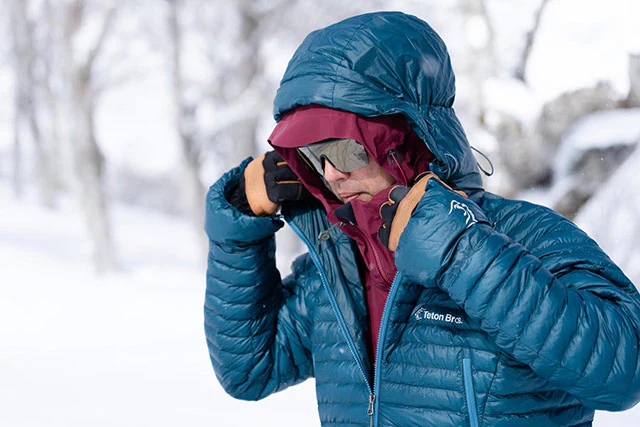
When you step into the Himalayas, your jacket is your shield against cold winds, snowfall, and unpredictable mountain weather. The right trekking jacket keeps you warm, dry, and comfortable — but with so many options (down, synthetic, fleece, waterproof shells), choosing can be confusing. Here's all that you need to know about trekking jackets — from waterproof vs synthetic vs down jackets, to proper layering, care, washing, drying, and storage. Learn how to choose the right jacket for your Himalayan adventure.

Layering Clothing for Extreme Himalayan Microclimates
Health & Wellness

Layering Clothing for Extreme Himalayan Microclimates

Layering clothing is the most critical skill for trekking in the Himalayas, where temperatures can swing from hot sun to freezing winds within hours. Learn how to layer effectively across seasons, manage microclimates, and stay safe, comfortable, and efficient on your trek.

Trekking Poles: Do You Really Need Them in the Himalayas?
Gear & Logistics

Trekking Poles: Do You Really Need Them in the Himalayas?

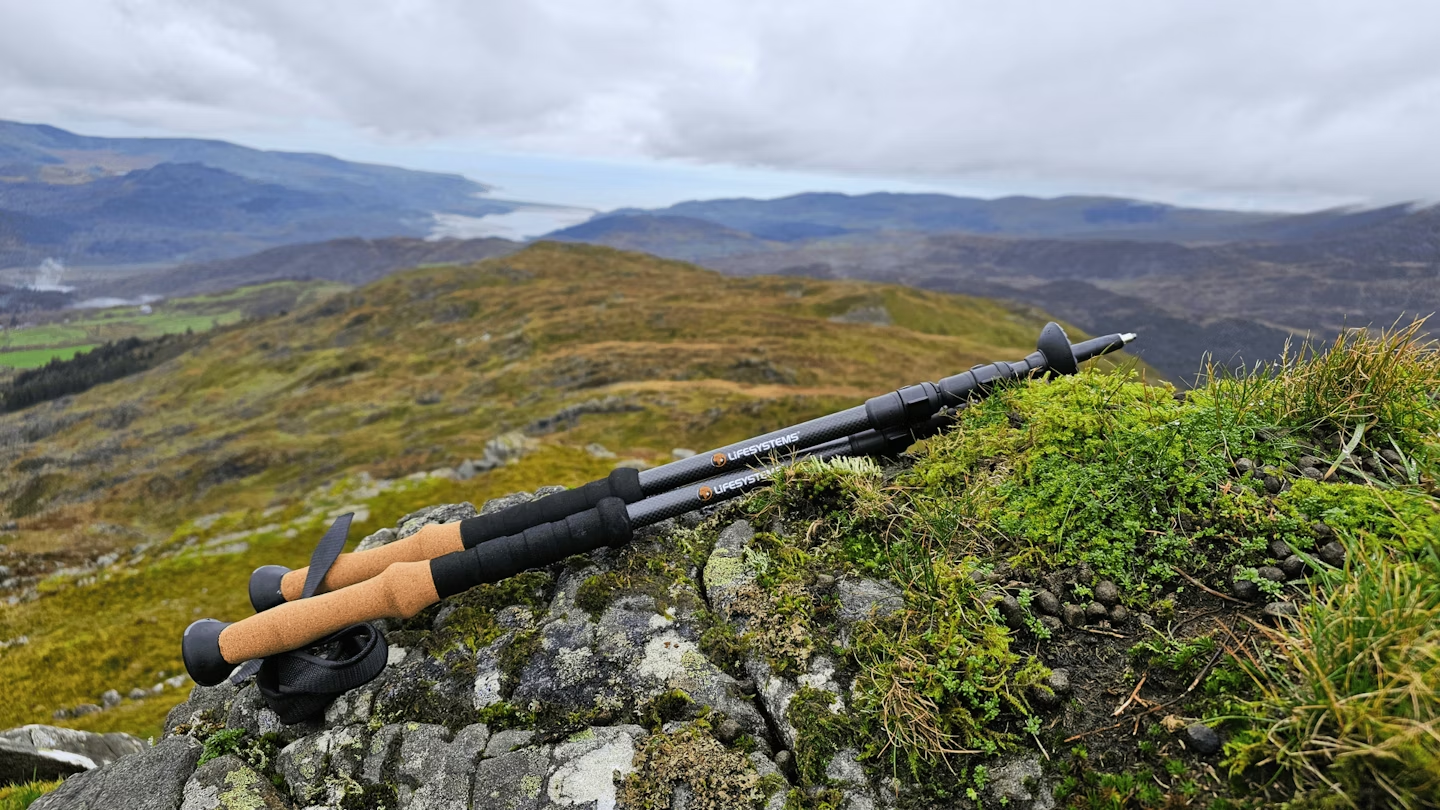
Trekking poles are often underestimated, but they play a crucial role in reducing fatigue, protecting your knees, and improving stability in the Himalayas. Learn how and when to use trekking poles for maximum safety and performance.

Similar Treks

View of Bajre Dara Trek trek Easy

Bajre Dara Trek

4N/5D
Sikkim
View of Deoriatal Chandrashila Trek trek easy

Deoriatal Chandrashila Trek

5 Nights / 6 Days
uttarakhand-garhwal
View of Phulara Ridge Trek trek easy

Phulara Ridge Trek

5 Nights / 6 Days
uttarakhand-garhwal
View of Kedarkantha Trek trek easy

Kedarkantha Trek

4 Nights / 5 Days
uttarakhand-garhwal
View of Brighu Lake Trek trek easy

Brighu Lake Trek

3 Nights / 4 Days
himachal pradesh
View of Chandrakhani Pass Trek trek easy

Chandrakhani Pass Trek

3 Nights / 4 Days
himachal pradesh
View of Ali Bedni Bugyal Trek trek easy

Ali Bedni Bugyal Trek

4 Nights / 5 Days
uttarakhand-garhwal
View of Harkidun Trek trek easy

Harkidun Trek

6 Nights / 7 Days
uttarakhand-garhwal

What our trekkers say

Suvajit Ghosh

Suvajit Ghosh

Kolkata, West Bengal

★★★★★

We did a small trek to Dodital in Uttarakhand with Planethimalayas. I did this trek with my family.My daughter of 9years was the most excited member. As it was a family trek, I requested Planethimalayas to be mindful of the probable challenges as a family. Planethimalayas made all necessary arrangements for timely meals, suitable tent, sleeping bag, toilet tent, etc. The support team consisting of guide, cook, porter has been very helpful. Thank you Planethimalayas for making this possible.

Atul Azad

Atul Azad

Jaipur, Rajasthan

★★★★★

Pin Parvati Pass — my first trek and expedition ever. 🏔️
I first heard about Planethimalayas through a few friends, and what an experience it turned out to be!
Pin Parvati Pass is one hell of a ride. It’s not just another trek — it demands immense physical strength, mental resilience, and the right knowledge to be out there for 10 days in such challenging terrain.
A huge part of this experience goes to Kamal and the entire team. Kamal was not just our leader, but more importantly, a great companion throughout the journey. What I appreciated most was that he never treated us like clients. There was no unnecessary strictness — just the right balance of discipline, guidance, support, and freedom to experience the mountains.
With the team’s guidance and encouragement, I discovered a lot about my own potential and what I’m capable of pushing through.
Can’t thank you guys enough for making my first expedition such a memorable one. ❤️
More adventures to come. ⛰️

Jytte Scheepens

Jytte Scheepens

Freelancer | Breda, Netherlands

★★★★★

I had the best experience with Planethimalayas. I went on Pin Parvati trek this august with them which is for sure a very challenging trek, however because of the great organization, well arranged team and the best trek leader you could ever wish for, Kamal Ji, this was something I will never forget!!!!
There isn’t anything which could or should have been done differently. I felt safe all the way throughout.
I’d also like to mention that i was the only female in the team and was so well looked after. Everyone looked after me like one big family, just like Kamal feels like a big brother to me now. It was my second trek with Kamal, and im a 1000% sure it wouldnt be my last. Thank you for everything Planethimalayas and Kamal in special! ❤️

Himanshu Sharma

Himanshu Sharma

Delhi

★★★★★

Had the best experience with Planethimalayas. I did the Pin Parvati trek with them and everything was organised so well. We had very experienced guides, incredible porters and the best chef!! The food was actually even better than in most restaurants. Big thanks to the trek leader Kamal Ji who is such a genuine and knowledgeable soul. He made this trek even more special than it already was. Thanks for everything Planethimalayas!!

Abhay Poddar

Abhay Poddar

Pune

★★★★★

The experience with Planethimalays on the Beas Kund Trek was really Great. I took a group of College students on a Himalayan Trek for the 1st Time. Everything was planned very well. The 2 female guides Raksha and Deepika ensured the group especially the girls were made comfortable. The safety of the group, food and tents were all araangd very well. Looking forward to trekking with them next year too.

Yashesh Vora

Yashesh Vora

Pune

★★★★★

We had an amazing experience with Planethimalayas organized by Kamal sir. Everything from stay and food to overall arrangements was perfectly managed. Manish, Satish and Ashish were extremely supportive throughout the trip. We completed Tungnath and Deoriatal treks, and the food was simple, local, and delicious. The beautiful Sari village visit was truly beautiful my parents even walked 5 km, which was a big surprise for us!
The itinerary was very thoughtfully planned and suitable for my parents as well as my little one. Highly recommended for all kind of treks in the Himalayan ranges!

Ananya Mitra

Ananya Mitra

Kolkata

★★★★★

Kamal Das the leader and founder is a great person and had good knowledge about the route. The food was great and the stays were comfortable which was above the expectation in that altitude.
Thanks to Planethimalayas.

Jytte Scheepens

Jytte Scheepens

Freelancer | Breda, Netherlands

★★★★★

I did the Kashmir Great Lakes trek with Kamal. This was such an unforgettable experience. Kamal is such an amazing guide. He told us so many interesting facts, I had beautiful deep talks with him about the mountains and listened to many of his stories about the experiences he's had while trekking. He's such a genuine and pure soul. I was the only female in the team, but not once I felt uncomfortable or left out. Everyone was incredibly respectful and nice. We were allowed to walk on our own pace and didn't feel rushed or pushed. Everyone can do the trek as they want, in the way they want. He respects you and really goes out of his way to make you enjoy the most. Till this day he's still a dear friend of mine and I hope to have the privilege to go to the mountains again, together with him. If you're planning to do a trek, definitely do it with Kamal — he will 100% make sure this trip is something you'll never forget.

Clare Fisher

Clare Fisher

Marketing | Canada

★★★★★

I had some nerves about going on a trek solo but Kamal took excellent care of me and made sure I felt safe and looked after. He was able to customize the trek to my needs and we went on lots of side quests to explore the area. Kamal is very knowledgeable and has some fantastic stories to tell, so was the best company the entire time — it felt like I had friends adventuring with me! Thanks again :)

Suramita Chakrabarty

Suramita Chakrabarty

Kolkata

★★★★★

Amazing staff with good and decent behaviour. Food quality was also very good. Throughout the trek they had taken utmost care of everything.
Will definitely plan again with Mr. Kamal Das.

Samar

Samar

Automotive UX Designer | Pune

★★★★★

I made friendship with the mountains through Kamal sir’s experience. The moment I met him at my last trek at Kedarkantha, I was impressed by his mountaineering knowledge and friendly nature that this year too (to Tungnath) and every year hereafter I am going to partner him to a new peak and new experiences in those journeys. Kudos to Planethimalayas for the exceptional work in making the love of mountains more accessible and enjoyable.

Akshata Poojari

Akshata Poojari

Bangalore

★★★★★

The trekking experience was absolutely unforgettable. Our guide was friendly and knowledgeable, making the whole journey fun and safe.

How Our Treks Are More Than Just a Trek

Every journey with us is carefully crafted for a deeply personal mountain experience.

Not Just a Trek — A Journey That Stays With You

Every trail we walk is a carefully chosen path into the heart of the Himalayas — not just to witness their grandeur, but to feel them under your skin and soul. Our treks are designed not as bucket list checkmarks, but as life-affirming journeys. At Planethimalayas, we believe a mountain journey is deeply personal — and that belief runs through everything we do.

Individual Care, Every Step of the Way

We keep our groups small and intimate so we can focus on you — your pace, your concerns, your joy. From pre-trek guidance to trail-side support, our leaders walk with intention, offering safety and attention without intrusion. It’s this deep care that turns strangers into friends and walks into memories.

Built on Genuine Love for the Himalayas

We don’t just operate in the Himalayas — we live and breathe them. From respecting mountain communities to following Leave No Trace ethics, our treks are shaped by humility and care. With Planethimalayas, your trek becomes a way of giving back to the mountains that give us so much.

Why Choose Us

Experience the difference of trekking with genuine mountain experts who truly care.

Trek Leader & Guide

Led by certified mountaineers with wilderness first aid training, ensuring your safety and confidence at every step.

Cook & Support Staff

Our mountain crew comprises local experts who bring unmatched experience, warmth, and deep knowledge of the region.

Small Group Size

We cap our group departures at just 8 trekkers — ensuring individual attention, deeper connections, and better trail discipline.

Safety Standards

From personal well-being to technical preparedness, we maintain the highest safety standards — using certified high-altitude gear and comprehensive safety protocols to ensure a secure and reliable Himalayan experience.

24×7 Online Support

We're always available — before, during, or after your trek. Reach out anytime, and you'll always hear back from a real human.

We Care for the Mountains

We strictly follow Leave No Trace ethics. Limited group sizes and mindful practices help protect the fragile Himalayan ecosystem.