
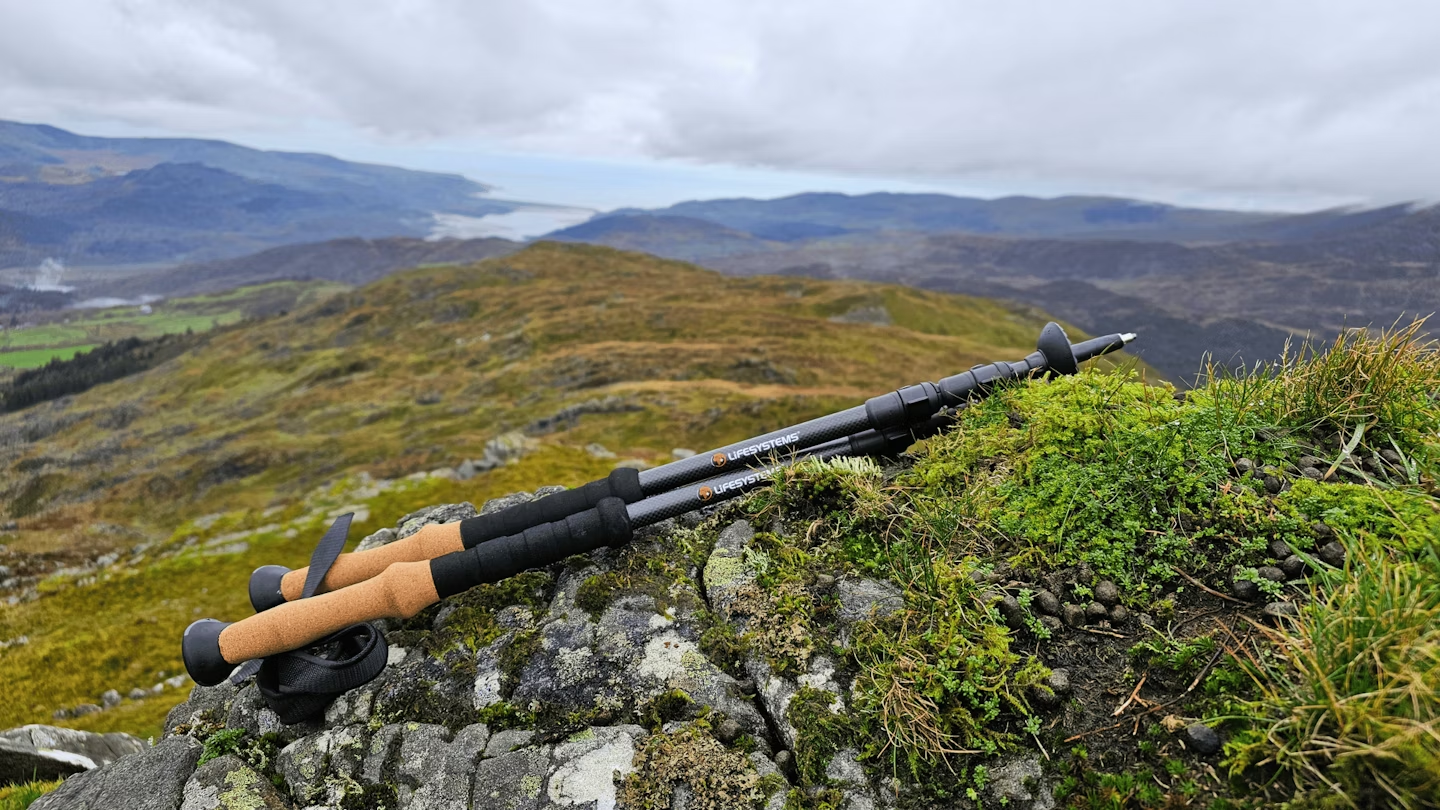
At first glance, trekking poles might seem optional — even unnecessary. Many beginners assume they’re just an accessory. But once you spend long days walking on steep Himalayan terrain, you quickly realize they are one of the most underrated tools in trekking.
From reducing strain on your knees to improving balance on unpredictable trails, trekking poles are not about convenience — they are about efficiency, safety, and long-term endurance.
In this guide, we break down how trekking poles actually work, when they matter most, and how to use them correctly in real mountain conditions.
🧭 What Are Trekking Poles and Why Are They Used?
Trekking poles (also known as hiking poles) are lightweight, adjustable poles designed to assist your movement while walking on uneven terrain.
They essentially turn your two-legged movement into a four-point support system, improving balance and distributing effort across your body.
This becomes especially important in the Himalayas, where trails involve:
- Steep ascents and descents
- Loose rocks and gravel
- Snow, mud, and river crossings
⚖️ The Real Benefit: Load Distribution
The biggest advantage of trekking poles is how they redistribute physical load.
When you walk without poles, your legs — especially your knees — absorb most of the impact. Over multiple days, this leads to fatigue and strain.
With trekking poles:
- Your arms and upper body share the effort
- Impact on knees reduces significantly
- Your posture improves while walking
This is particularly helpful during descents, where knee strain is highest.
💡 Tip: Downhill sections are where trekking poles make the biggest difference — not uphill.
🦵 Do Trekking Poles Reduce Knee Pain?
Yes — and this is backed by both experience and research.
Descending steep slopes puts continuous pressure on your knee joints. Trekking poles absorb a portion of this force, reducing stress on joints and ligaments.
For trekkers carrying backpacks, this benefit becomes even more significant.
Over long treks like Rupin Pass or Goecha La, this reduction in strain can be the difference between finishing strong and struggling with pain.
🌄 Stability on Unpredictable Terrain
The Himalayas are rarely stable underfoot. Trails can shift between rock, snow, mud, and loose scree within minutes.
Trekking poles provide:
- Extra balance on narrow trails
- Support during river crossings
- Confidence on slippery descents
They act as an additional point of contact, helping you react faster to sudden slips.
⛰️ Efficiency and Endurance Over Long Days
Trekking is not about one difficult moment — it’s about sustained effort over multiple days.
Trekking poles help maintain rhythm and reduce cumulative fatigue by:
- Improving walking efficiency
- Reducing muscle strain
- Helping maintain a steady pace
This becomes especially important at high altitudes, where oxygen levels are lower and energy conservation is critical.
🎯 When Trekking Poles Matter the Most
While useful in all conditions, trekking poles become essential in certain situations:
- Long descents (high knee impact)
- Snow-covered trails
- Loose scree or rocky terrain
- River crossings
- High-altitude treks with heavy backpacks
In easier forest trails, they may feel optional. But as terrain gets technical, their importance increases significantly.
🧠 The Right Way to Use Trekking Poles
Simply carrying trekking poles is not enough — technique matters.
- Adjust pole height so elbows form a ~90° angle
- Use wrist straps correctly to reduce grip fatigue
- Shorten poles while ascending, lengthen while descending
- Plant poles in rhythm with your steps
Using them efficiently ensures you get maximum benefit without unnecessary strain.
⚠️ Common Mistakes Beginners Make
- Using only one pole instead of two
- Holding poles too tightly (causes hand fatigue)
- Not adjusting height for terrain
- Ignoring poles until descent (when damage is already done)
Like layering, using trekking poles is a skill that improves with awareness.
🏔️ The Planethimalayas Way
In the Himalayas, small tools create big differences.
Trekking poles are not about making trekking easier — they are about making it smarter. They help you conserve energy, protect your body, and move with confidence across unpredictable terrain.
At Planethimalayas, we focus on practical efficiency. The goal is not just to complete a trek, but to complete it safely, comfortably, and sustainably.
Use the right tools, understand your body, and adapt to the terrain — that’s how strong trekkers are built.
📞 Ready to Trek Better?
Explore our Upcoming Treks or contact us for gear guidance and expert-led Himalayan experiences.
❓ FAQs – Trekking Poles
- Are trekking poles necessary for beginners?
Not mandatory, but highly recommended for better balance and reduced fatigue. - Do trekking poles reduce fatigue?
Yes, by distributing effort across your upper and lower body. - Are trekking poles useful on easy treks?
They are helpful, but become more important as terrain difficulty increases. - Can trekking poles prevent injuries?
They reduce strain and improve stability, which lowers the risk of injuries. - Should I carry one or two poles?
Two poles are always better for balance and efficiency.
